
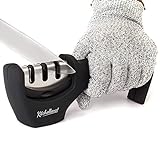
- Top Pick: 4-in-1 Kitchen Knife Accessories: 3-Stage Knife Sharpener Helps Repair, Restore, Polish Blades and Cut-Resistant Glove (Black)
- Best Value: Astercook Knife Set for Kitchen with Block and Sharpener 15pcs German
- Premium Choice: 2026 New Electric Knife Sharpener for Kitchen Knives, 3-Stage Professional Automatic Quickly Sharpening/Polishing System with 100% Diamond Abrasives, 20° Precision Angle, Non-Slip Base, Black/Orange
Disclosure: As an Amazon Associate we earn from qualifying purchases. We may receive a small commission when you buy through links on this page, at no extra cost to you. We only recommend products we genuinely believe offer value to home cooks.
- Honing vs. Sharpening: Know the Difference
- Sharpening With a Whetstone (Best Results)
- Using a Pull-Through Sharpener
- Maintaining the Edge With a Honing Steel
- Choosing the Right Angle for Your Knives
- How to Test for a Sharp Edge
- Frequently Asked Questions
- Keep Your Whole Kitchen Cutting Well
- Related Articles
As an Amazon Associate we earn from qualifying purchases at no extra cost to you.


Learning how to sharpen kitchen knives is one of the highest-value skills a home cook can develop. A sharp knife slices cleanly with less force, which means more control and far fewer accidents than a dull blade that slips and skids across food. The good news is that you do not need a professional service or expensive equipment to keep your knives in great shape. With a whetstone, a simple pull-through sharpener, or even a honing steel, you can maintain a keen edge in just a few minutes a week. This guide walks through every method, explains the difference between honing and sharpening, and shows you how to test your results so your knives stay reliably sharp.
🛒 Best Price Today on Amazon
Prime members get fast, free shipping on everything above, plus member-only deals. New members get a 30-day free trial — cancel anytime.
Honing vs. Sharpening: Know the Difference
These two terms are often confused, but they do very different jobs. Sharpening removes metal from the blade to create a new, fresh cutting edge. It is done occasionally, when the knife has become genuinely dull. Honing does not remove meaningful metal at all; it simply realigns the microscopic edge that bends and rolls over during normal use. A honing steel (the long rod that comes with most knife sets) should be used frequently, even before each cooking session, while actual sharpening on a stone might only be needed every few months. Understanding this distinction saves you from grinding away your blade unnecessarily and helps your knives last for years.
Sharpening With a Whetstone (Best Results)
A whetstone, also called a water stone, gives you the most control and the sharpest edge. Most home cooks do well with a dual-grit stone: a coarse side around 400 grit for repairing dull or nicked edges, and a finer side around 1000 grit for refining. Premium stones go up to 3000 grit or higher for a polished, razor finish.
- Soak the stone in water for 5 to 10 minutes until bubbles stop rising, unless you have a splash-and-go stone.
- Set the angle. Most Western knives are sharpened at about 20 degrees per side; many Japanese knives prefer 15 degrees. A useful trick is to stack two stacked coins under the spine to approximate the angle.
- Stroke the blade across the stone, edge first, using light pressure. Push the knife away from you as if shaving a thin layer off the stone, covering the entire edge from heel to tip.
- Work in passes. Do 8 to 10 strokes per side on the coarse grit, then check for a burr (a tiny rough lip on the opposite edge). When you feel the burr along the whole blade, flip and repeat.
- Refine on the fine grit with lighter pressure to remove the burr and polish the edge.
Keep the stone wet throughout and maintain a consistent angle. Consistency matters more than speed.
Using a Pull-Through Sharpener
Pull-through sharpeners are the fastest and most beginner-friendly option. They have fixed slots, usually a coarse carbide slot and a fine ceramic slot, that set the angle for you. Place the sharpener on a stable surface, insert the knife at the heel, and pull the blade through with light, even pressure three to six times. Start with the coarse slot only if the knife is quite dull, then finish in the fine slot. These tools remove more metal than a stone and offer less control over the final edge, so they are best for everyday knives rather than high-end Japanese blades. Still, for most households they keep knives perfectly functional with almost no learning curve.
Maintaining the Edge With a Honing Steel
A honing steel keeps a sharp knife sharp between full sharpenings. Hold the steel vertically with the tip resting on a cutting board. Place the heel of the knife near the top of the rod at roughly a 15 to 20 degree angle, then sweep the blade down and toward you so the entire edge passes across the steel. Alternate sides for five to ten light strokes. Do this regularly and you will dramatically extend the time between sharpenings. Note that a honing steel cannot fix a truly dull blade; if honing no longer restores cutting performance, it is time to sharpen.
Choosing the Right Angle for Your Knives
The sharpening angle affects both sharpness and durability. A lower angle (around 15 degrees) creates a thinner, sharper edge ideal for slicing vegetables and delicate work, but it is more fragile. A higher angle (around 20 to 22 degrees) is more robust and better suited to heavy chopping or cutting through tougher foods. As a rule of thumb, German and other Western chef’s knives are sharpened around 20 degrees per side, while Japanese knives are often sharpened at 15 degrees or less. Always match the original factory angle when you can, since changing it requires grinding away a lot of metal.
How to Test for a Sharp Edge
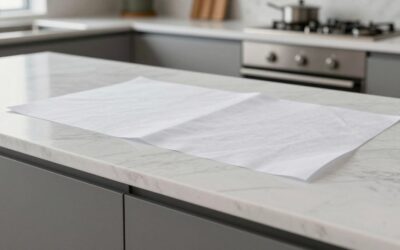
There are several safe ways to confirm your knife is sharp. The paper test is the classic: hold a sheet of printer paper vertically and slice down through it. A sharp knife glides through cleanly, while a dull one tears or catches. You can also try slicing a ripe tomato; a properly sharpened blade should bite into the skin with no sawing. Avoid running your thumb along the edge, which risks cuts. Once your knife passes the paper test, give it a quick rinse and dry it before storing.
Frequently Asked Questions
How often should I sharpen my kitchen knives?
For a home cook, full sharpening every two to six months is usually enough, depending on how much you cook. Honing, on the other hand, can be done weekly or even before each use to keep the edge aligned.
Can I sharpen serrated knives at home?
Serrated knives need a tapered sharpening rod that fits into each individual scallop, sharpened one groove at a time. A standard whetstone or pull-through sharpener will not work on the serrations and can damage them.
Is it better to use a whetstone or an electric sharpener?
A whetstone gives the sharpest, most controlled edge and removes the least metal, making it ideal for quality knives. Electric and pull-through sharpeners are faster and easier but remove more material, which is fine for everyday knives.
Why does my knife get dull so quickly?
Common causes include cutting on hard surfaces like glass or stone, putting knives in the dishwasher, and storing them loose in a drawer where the edge bangs against other utensils. Use a wooden or plastic board and store knives in a block or on a magnetic strip.
What angle should I sharpen at if I am not sure?
When in doubt, 20 degrees per side is a safe, durable angle for most Western kitchen knives. It balances sharpness with edge strength and works well for general home cooking.
Keep Your Whole Kitchen Cutting Well
Sharpening is only part of good knife care. Pairing a sharp blade with the right tools makes a big difference. If you are shopping for a new set, our guide to the best kitchen knife sets covers quality options for every budget. A sharp knife also deserves a proper surface, so see our roundups of the best wood cutting boards and best solid maple cutting boards to protect your edge. To keep those boards in shape, read how to clean and oil a wood cutting board. For more practical maintenance know-how, browse our Kitchen Guides, and explore our Knives & Cutlery section for everything related to blades. With a little regular attention, your knives will stay sharp, safe, and a pleasure to use.



Write Your Review
No reviews yet. Be the first to share your experience!