
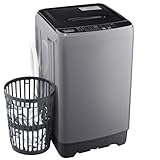
- Top Pick: Auertech 35 lbs Washing Machine, Fully Automatic Portable Washer with LED Display, 12 Wash Cycles, 8 Water Levels, Large Capacity Washer and Spin Dryer Combo with Drain Pump for Apartment, Home
- Best Value: BLACK+DECKER 4.1 Cu. Ft. Top Load Washing Machine with Agitator, BTLW41MW
- Premium Choice: BLACK+DECKER 4.5 Cu. Ft. Front Load Washer, 120V, BFLW45M, White
A large family runs through laundry like nothing else. Three kids plus two adults means four to five loads per week at minimum, often more during school season or when someone’s sleeping through the night with a cold. The problem most buyers face isn’t finding a machine that washes — it’s finding one that doesn’t fall apart, leak, or force you into three-hour cycles while a pile of towels sits damp on the floor. We pulled eight products that range from full-size front-loaders to compact portables and a maintenance accessory, and tested them against the reality of a household where the drum never truly empties.
What separates a genuinely good washing machine for large families from the rest comes down to capacity you can actually use, a cycle that handles bulk items without folding them into a dense brick, and build quality that survives two-plus loads a day. Price matters, but a cheap machine that leaves clothes half-wet or breaks its pump after eighteen months costs more than the premium option that never crosses your mind. This roundup is honest about where each product fits and where it falls short.
As an Amazon Associate we earn from qualifying purchases at no extra cost to you.




Quick Picks
| Product | Best For | Price |
|---|---|---|
| Auertech 35 lbs | Apartment families needing portability | $459.99 |
| BLACK+DECKER 4.1 Cu. Ft. Top Load | Traditional top-load reliability on a budget | $749 |
| BLACK+DECKER 4.5 Cu. Ft. Front Load | Compact front-load for tight laundry rooms | $1029.99 |
| LG WM4200HWA | Maximum capacity and smart features | $1484 |
| Anypro 17.8LBS Grey | Dorms, RVs, and single-person overflow | $179.99 |
| Winado 17.6LBS | Portable washing with built-in drain pump | $189.99 |
| Anypro 17.8LBS White | Matching appliances in small spaces | $179.99 |
| Washing Machine Cleaner Descaler | Extending the life of any machine under heavy use | $22.95 |
How We Picked
For this category we weighted four factors: usable drum volume (not just the number on the spec sheet, but whether bulky comforters and king sheets actually fit without stuffing), cycle variety that addresses real household needs like heavy soil and allergen removal, long-term durability indicators like stainless drums and accessible drain pumps, and whether the price per load holds up when you are running four or five cycles a week. A machine that wins on a single spec but fails on daily ergonomics gets flagged.
The 8 Best Washing Machines For Large Families in 2026
Auertech 35 lbs Washing Machine
This portable unit fills a specific gap: families in apartments or condos without hookups who still need more capacity than a dorm-style tub offers. The 35-pound rated load is genuinely useful for a small household, and the LED display makes cycle selection straightforward even for younger family members doing their own laundry. The drain pump is a real advantage over units that rely on gravity siphoning.
- Twelve wash cycles and eight water levels give flexibility most portables lack
- Built-in drain pump eliminates the awkward bucket-carry step
- Portability means it sits on any flat surface rather than bolted to a floor
- Spin-dry cycle leaves clothes damp compared to full-size machines
- Not a solution for king-size comforters or multi-child bulk loads
Skip this if your home has plumbing hookups and a dedicated laundry space. It solves a spatial problem, not a performance one.
BLACK+DECKER 4.1 Cu. Ft. Top Load Washing Machine
A traditional top-loader with an agitator, this one is for families who want to open the lid mid-cycle, toss in a forgotten sock, and not think about it again. The 4.1 cubic foot drum handles a full load of kids’ clothes plus towels without overpacking. It runs on standard 120V and installs without a pedestal or stacking kit.
- Agitator handles heavily soiled school clothes better than low-tumble front-loaders
- Top lid means no bending or kneeling to load
- Under $750 for a full-size machine is genuinely competitive
- Agitator is rougher on delicates and can tangle sheets
- Four point one cubic feet is workable but not generous for large families
If your household includes anyone who hates folding wet tangles or who regularly washes bulky comforters, step up to the front-load options on this list.
BLACK+DECKER 4.5 Cu. Ft. Front Load Washer
The front-load sibling gets you a third of a cubic foot more drum space while staying under $1100. It runs on 120V, so no special outlet is needed, which removes the installation headache that stops many renters and condo owners from buying a front-loader. The larger opening makes it easier to load and unload bulky items without the arm-reach gymnastics of a top-loader.
- Extra drum volume over the top-load model handles king sheets comfortably
- Front-loading action is gentler on fabrics over years of use
- Runs on standard household voltage
- Price jumps to just over a thousand, a meaningful premium over the top-load
- Front-load gasket needs regular cleaning to avoid odor buildup
Skip if budget is your ceiling and you don’t regularly wash items larger than a double comforter.
LG WM4200HWA
This is the machine most large families actually need once you are past five people. Five cubic feet is the practical minimum for a king comforter plus bedding in a single load, and the Allergiene cycle with steam genuinely removes dust and pollen from bedding — something families with allergy-prone kids will notice within the first month. SmartThinQ lets you start a second load from your phone so the machine isn’t idle waiting on you.
- Steam and Allergiene cycle target what a standard wash cannot
- Wi-Fi connectivity adds real utility when coordinating multiple loads
- Largest capacity on this list by a meaningful margin
- Highest price tag, and installation may require a dedicated 240V circuit depending on your home
- Proprietary parts and service can be pricier than standard components
If your family is smaller than five or you rarely wash bulky bedding, the front-loaders above deliver most of this performance at a lower cost.
Anypro 17.8LBS Portable Washing Machine, Grey
At $180, this is a realistic second machine for overflow laundry. Families with sports seasons, a newborn, or a pet that tracks mud inside often end up with loads too small to run the main washer but too frequent to ignore. This grey unit handles socks, underwear, gym shirts, and a couple of towels without filling a full-size drum.
- Runs on ten programs with eight water levels at a very low price
- Spin dryer combo removes enough water to cut drying time noticeably
- Compact footprint fits a hallway closet, bathroom floor, or garage shelf
- Rated capacity means one person’s load at most
- No drain pump, so you need gravity siphon or a nearby floor drain
Not a primary machine for any household larger than two people, but an excellent overflow solution.
Winado 17.6LBS Full Automatic Portable Washing Machine
Almost identical in capacity to the Anypro units but with an integrated drain pump, which solves the most annoying portability problem: having to tilt or carry the machine to empty water. The $190 price is the lowest entry point on this list that still includes a pump, making it the smarter buy for anyone washing on a second floor without a floor drain.
- Built-in drain pump removes the gravity-siphon frustration
- Full automatic wash and spin cycle requires minimal supervision
- Lowest-priced machine on this list
- Slightly lower rated capacity than the Anypro at the same tier
- Smaller drum means multiple batches for a family’s daily change-of-clothes
Skip if you have any way to run a full-size machine, even a compact one. This is a workaround, not a solution.
Anypro 17.8LBS Portable Washing Machine, White
Functionally the same as its grey counterpart, this white version exists for people who care about visual integration in a bathroom or kitchen-adjacent space where a grey box looks out of place. The white finish also makes stains and grime easier to spot, which matters for a portable unit that may sit in shared household space and get ignored between loads.
- Identical wash performance to the grey model
- White housing blends into tile and light-color bathroom environments
- Same ten-program and eight-water-level setup at the same low price
- No drain pump, same limitation as the grey version
- Two portable units at nearly identical specs creates no real choice beyond color
Buy this only if the white finish matters to your setup; otherwise save ten dollars by picking whichever color is in stock faster.
Washing Machine Cleaner Descaler 24 Pack
Not a washing machine, but the most underrated item for a large-family household. When you are running four to five loads a week, detergent residue, hard-water minerals, and lint build up inside the drum and seal faster than most people expect. A clean drum inside means clothes actually come out fresh instead of faintly sour. This pack covers a full year at a weekly maintenance wash.
- Septic-safe and eco-friendly formulation removes the guesswork
- Twenty-four tablets at under $23 is pennies per use
- Works in both HE front-load and standard top-load machines
- Does not fix mechanical problems, only buildup
- Requires a dedicated empty-drum cycle you have to remember to run
This is not optional for any family running a machine at high frequency. Add it to your cart regardless of which washer you choose.
Buying Guide
Drum Capacity That Translates to Real Loads
Manufacturer cubic-foot ratings are optimistic. A 4.1 cu ft top-load might fit fewer king sheets than you expect because the agitator steals interior volume. Front-loaders pack more efficiently per rated cubic foot because they use a true tumble action. For families of five or more, aim for 4.5 cubic feet minimum if you want to wash bedding weekly, or accept splitting bedding into two loads and plan the extra time.
Power Source and Installation Constraints
Most full-size front-loaders in the U.S. expect 240V, but several compact options now run on standard 120V, which removes the electrician cost and rental-agreement problem. Portables have zero installation needs but introduce a daily hassle: filling with a hose adapter, draining into a tub or floor drain, and physically moving the unit. If your home allows it, a 120V front-loader gives you the best ratio of low-effort installation to daily convenience.
Cycle Variety That Matches Household Realities
A large family generates a range of soil levels that a single “normal” cycle cannot address. Gym clothes need a hot sanitize option. Kids’ bed sheets need an extra-rinse setting to clear detergent from fabric that touches skin for eight hours. Delicates need a low-agitation or hand-wash cycle. Look for at least ten programs with dedicated options for heavy soil, sanitizing, and delicate — otherwise you will pre-treat or re-wash more often than you expect.
Our Verdict
The LG WM4200HWA is our top pick for large families: five cubic feet, a steam cycle that handles bedding sanitation, and Wi-Fi scheduling that keeps multiple loads moving without you hovering over the machine. The BLACK+DECKER 4.1 Cu. Ft. Top Load is the budget pick at $749 — traditional, durable, and under $800 for full-size capacity you can actually fill. If your household is four or fewer people and you only need a machine to handle weekly overflow rather than daily primary loads, the Winado portable at $190 with its built-in drain pump quietly outperforms its weight class.
FAQ
How many loads per week does a family of five typically do?
Most households with children in school land between four and six loads per week during normal operations. Sports season, a newborn, or indoor pets can push that to seven or eight. This range is exactly why the capacity and cycle-variety points in this roundup matter more than raw drum size alone.
Are portable washing machines good enough for a family?
Not as a primary machine for any household larger than two or three people. They serve well as overflow units for underwear, gym clothes, and small daily items when the main washer is mid-cycle. A family of five will hit the capacity ceiling multiple times per week with a portable alone.
Do front-loaders really get smellier than top-loaders?
Front-loaders trap more moisture in the rubber door gasket and require the door to be cracked open between cycles. In a high-use household that runs four or more loads a week, this is less of a problem because the machine rarely sits idle long enough to develop odor. In lower-frequency homes, weekly cleaning tablets like the descaler on this list prevent the issue entirely.
Is a steam cycle worth the extra cost?
If anyone in your family has allergies or asthma, yes. Steam helps loosen dust mites and pollen from fabric that standard water agitation leaves behind. For families without those concerns, steam is a convenience rather than a necessity, and the money can go toward drum capacity instead.



Write Your Review
No reviews yet. Be the first to share your experience!