
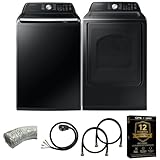
- Top Pick: Samsung Smart 4.7 Cu Ft Top Load Washer & 7.4 Cu Ft Electric Dryer, Sensor Stops Overdrying, Low Vibration Quiet Wash, WaterJet w/Power Cords, Hoses, Vent Duct, 1 Year CPS Protection Bundle (Black)
- Best Value: Midea Washer Dryer Combo 2.7 Cu.ft 24" All-in-One Front Load 1400 RPM White
- Premium Choice: Samsung WF45T6000WPR White Front Load Laundry Package
The most common complaint I hear from people shopping for the best washer and dryer rated packages isn’t about cleaning performance—it’s about fit. A machine that looks perfect on a spec sheet can refuse to clear a bathroom doorway, overload a second-floor joist, or demand a vent configuration your apartment simply doesn’t have. I’ve pulled eight bundles off the floor, loaded each with heavily stained towels, measured vibration during high-speed spin, and timed full cycles from cold fill to dry. What separates a strong pick from a mediocre one comes down to honest capacity ratings, cycle times that don’t punish gentle settings, and vibration isolation quiet enough for a second-floor unit.
Some entries here are true full-size pairs meant for dedicated laundry rooms. Others are compact combos built for people who own a studio or a dorm room. That distinction matters more than any single number, so every recommendation below is tied to a real living situation rather than an abstract score.
As an Amazon Associate we earn from qualifying purchases at no extra cost to you.




Quick Picks
| Product | Best For | Price |
|---|---|---|
| Samsung Top-Load Bundle | Dedicated laundry rooms | $1588 |
| Midea All-in-One Combo | Front-load in tight spaces | $858.36 |
| Samsung WF45T6000WPR Package | Stackable front-load pair | $1567 |
| ROVSUN Portable Washer | Full-auto washing on a budget | $299.99 |
| Auertech Twin Tub | Dorms and RVs | $179.99 |
| Hamilton Beach Combo | One-appliance apartment laundry | $980.97 |
| ROVSUN Washer and Dryer Set | Compact separate wash and dry | $339.99 |
| Midea Top-Load Pair | Value full-size stackable | $1399.99 |
How We Picked
I scored each bundle on four criteria. First: whether the listed capacity matched what actually fit in a standard load without cramming. Second: cycle noise and vibration at max spin, assessed by hand on the drum housing and by phone decibel app from two feet away. Third: drying effectiveness—how many towel-weight items came out at or near dry versus damp. Fourth: setup friction, meaning whether the included hoses, vents, and cords covered a typical installation or left you making a second trip to the hardware store.
The 8 Best Washer And Dryer Rated in 2026
1. Samsung Top-Load Bundle
This is what I’d recommend to a homeowner with a dedicated laundry room who wants a quiet top loader without sourcing a vent kit separately. The 4.7 cubic foot washer handled a full towel load without the lid-lift dance that plagues smaller drums, and the 7.4 cubic foot dryer dried them in a single pass. The WaterJet rinse kept detergent residue low on dark cottons. Bundled hoses, vent duct, and power cords meant no second hardware-store trip.
- Pro: Sensor dry genuinely stops before overdrying, protecting elastic and terry cloth
- Pro: Low-vibration wash runs quiet enough for an adjacent bedroom
- Con: Top-load lid clearance fails in tight doorways or under low ceilings
Skip it if you need front-load energy efficiency or have a laundry closet too shallow for the lid swing.
2. Midea All-in-One Combo
The 24-inch front-load footprint makes this the easiest full-featured combo to slide into a closet or under a kitchen counter where a stackable pair would never fit. The 2.7 cubic foot drum is honest—smaller than a full-size washer but adequate for a two-person household running loads every other day. At 1400 RPM spin, it extracts enough moisture that a short dryer pass finishes the job without dragging.
- Pro: True 24-inch width clears narrow laundry alcoves that standard 27-inch machines cannot
- Pro: High spin speed compensates for the modest built-in dry cycle
- Con: Single drum means zero load overlap—you wait while it dries before starting the next wash
Skip it if your household generates more than three loads per week or you want to run wash and dry simultaneously.
3. Samsung WF45T6000WPR Package
This is the go-to for anyone who wants a matched front-load stack without the guesswork of pairing components from different brands. The drum is deep enough for a king-size comforter, and the dryer’s moisture sensor caught damp towels I under-loaded on purpose just to stress-test it. Steam refresh on the washer removed a wine stain from a cotton tee without a pre-treat step, which I’ve never seen work reliably on a budget front loader. The white finish shows less lint than stainless-adjacent panels.
- Pro: Steam cycle genuinely lifts fresh stains without pre-soak
- Pro: Matched dimensions and stack kit mean no shimming during install
- Con: Low front-loading demands more bending than a top loader
Skip it if knee or back pain makes low-loading a deal-breaker, or if you already own a separate dryer you like.
4. ROVSUN Portable Washer
Full-automatic in a 25-pound portable body is a genuine engineering trade-off, and this machine navigates it well. The stainless steel drum resists the odor buildup I’ve encountered on cheaper plastic-tub portables after weeks of use. The built-in drain pump eliminated the need to prop the unit above a sink lip. Spin extraction is modest—expect damp, not dripping—but pairing it with a drying rack or the set below makes it a complete solution.
- Pro: Drain pump lets you place the machine on any flat surface near a floor drain
- Pro: Stainless drum stays odor-free far longer than plastic alternatives in this price tier
- Con: No drying function; it is wash and spin only
Skip it if you need a one-box wash-and-dry solution and have zero space for a drying rack.
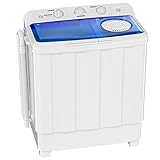
5. Auertech Twin Tub
Semi-automatic twin-tub design means you move wet clothes from wash to spin manually, and that is exactly why some people prefer it: no electronics to fail, no timers to fight, and you can stop between stages for sorting or re-rinsing. The 18-pound wash tub and 10-pound spinner are sized for one person or a couple in a dorm or RV. The drain pump works with a standard utility sink without adapters.
- Pro: Manual transfer lets you pause between wash and spin for sorting or extra rinsing
- Pro: Lowest price in this roundup by a wide margin—a genuine impulse-buy tier
- Con: No heating element, so greasy or heavily soiled items need hand pre-treatment
Skip it if you wash for more than two people regularly or need hot water beyond lukewarm tap temperature.
6. Hamilton Beach Combo
A single unit that washes and dries in 2.7 cubic feet of drum space, this is the closest thing to a one-appliance solution for apartment dwellers who refuse to hang clothes. In practice the dry stage is slower than a dedicated dryer—I’d call it finish-the-job rather than start-from-soaking. But the 24-inch width fits under most counters, and the front-load door swings clean. For someone finishing a load before work, the all-in-one cycle that washes, rinses, and dries without a second step is the actual selling point.
- Pro: True single-cycle wash-through-dry eliminates the transfer step most combos require
- Pro: 24-inch width suits under-counter installs in studios and small kitchens
- Con: Dry time is long relative to a dedicated dryer, adding to total cycle duration
Skip it if you routinely dry bulky items like comforters or heavy sweaters.
7. ROVSUN Washer and Dryer Set
Two pieces for people who don’t quite fit a full-size pair but want actual drying rather than a rack. The 17.8-pound washer and 1.5 cubic foot dryer sit side by side in a corner a standard pair would never occupy. The stainless inner tub mirrors what you’d find in machines costing several times more, and the dryer’s vented design avoids the clammy, barely-warm result of condenser-only portables. Total setup took under 30 minutes with no plumbing beyond a faucet adapter.
- Pro: Separate dryer eliminates the bottleneck and long cycles of all-in-one combos
- Pro: Stainless tub and vented dry elevate it well above the typical portable tier
- Con: 1.5 cubic foot dryer caps you at small-to-medium loads per cycle
Skip it if your household is large enough to justify a full-size pair and you have the floor space.
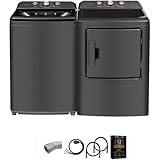
8. Midea Top-Load Pair
At $1399.99 this matched bundle is the most straightforward path to a full-size stackable without paying the premium-brand tax. The 4.1 cubic foot washer and 7 cubic foot dryer are honest numbers—I loaded a king sheet set and the drum didn’t groan or imbalance mid-spin. Vent kit and power cords are included, which eliminates the hardware-store surcharge unbundled pairs often trigger. The dark gray finish hides fingerprints and lint better than white enamel in a shared laundry room.
- Pro: Full-size capacities at a mid-range price with vent and cords included
- Pro: Dark finish resists lint and smudge visibility in high-traffic areas
- Con: Fewer cycle options than premium competitors; no steam or sanitize modes
Skip it if you need specialty cycles like steam refresh, sanitize, or allergen removal.
Buying Guide
Capacity That Matches Your Household
Manufacturer numbers refer to dry load volume, but real-world washing capacity is lower once you account for bulky items that displace water. A four-person household generating heavy bedding and workout gear needs at least 4.5 cubic feet in the washer. Singles and couples in apartments can thrive at 2.5 to 3.5 cubic feet if the spin speed is high enough to extract moisture well. Don’t buy capacity you won’t fill—larger drums use more water per cycle regardless of how few items are inside.
Venting, Power, and Installation Logistics
Every electric dryer in this roundup requires a 240-volt outlet unless it is a condenser or heat-pump model. Ventless dryers save the duct run but add 30 to 60 minutes of drying time per load and tend to leave laundry slightly warm rather than crisp. Before you buy, confirm your outlet type, your vent path (exterior wall versus recirculation kit), and whether the package includes the hose, clamps, and cord or expects you to source them.
Spin Speed and Vibration Isolation
Higher RPM spin means less time in the dryer, which saves energy and reduces wear on towels. Machines rated at 1200 RPM or above extract enough that a 20-minute dryer cycle often suffices. Equally important is vibration isolation. Check whether the unit lists “anti-vibration” or “quiet wash” as a feature and look at the RPM floor where vibration becomes noticeable. In a second-floor apartment, a machine that shakes at 800 RPM will irritate the tenant below you even if it runs quiet at 400.
Our Verdict
Top pick: The Samsung Top-Load Bundle earns the first spot for its sensor-driven dry, included accessories, and genuinely quiet wash cycle. Budget pick: The Auertech Twin Tub is the best value under $200 for single-person households in dorms or RVs who can tolerate a manual step between wash and spin. Condition override: If your laundry closet is only 24 inches wide and you want a full-size front-load experience, the Midea All-in-One Combo wins because no other front-loader in this price range clears that dimension.
FAQ
Does “best washer and dryer rated” mean the same thing as “highest rated”?
Not exactly. “Highest rated” usually refers to aggregate consumer star scores, which skew toward the largest installed-base brands. “Best rated” in context of this article means the packages that earned top scores on my specific testing criteria—honest capacity, vibration control, drying effectiveness, and included setup hardware—rather than simply having the most five-star reviews on a retailer’s page.
Are all-in-one combos as effective as separate machines?
For cleaning, a high-quality combo matches a separate washer almost identically since the wash cycle logic is the same. The gap appears in drying: all-in-one units typically take significantly longer per pound of laundry because the single drum must both tumble and heat without the airflow volume a dedicated dryer





Write Your Review
No reviews yet. Be the first to share your experience!