
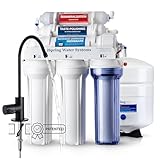
- Top Pick: iSpring RCC7AK-BN NSF Certified, 75 GPD, Alkaline 6-Stage Reverse Osmosis System, pH+ Remineralization RO Water Filter System Under Sink Patented Top-Mounted Faucet Design for Easy Installation
- Best Value: iSpring RCC7AK-BLK, NSF/ANSI 58 Certified, Alkaline 6-Stage Reverse Osmosis System with Stylish Black RO Faucet, pH+ Remineralization RO Water Filter System Under Sink
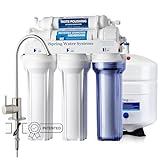
- Premium Choice: iSpring RCC7-BN NSF Certified, High Capacity Under Sink 5-Stage Reverse Osmosis Water Filter, RO Drinking System, 75 GPD Brushed Nickel Faucet, Patented Top-Mounted Faucet Design for Easy Installation
I’ve connected more RO systems to refrigerator water lines than I care to count, and the difference between a clean setup and a weekend of frustration almost always comes down to pressure and flow matching. Your fridge ice maker and dispenser need steady, low-pressure feed. Most under-sink RO systems fill a small storage tank, then gravity or a modest air bladder pushes water through a quarter-inch line to the appliance. If the tank undersizes or the system can’t maintain enough pressure after filling, you get hollow cubes, sputtering dispensers, and a solenoid valve that wears out early.
The best reverse osmosis system for refrigerator duty isn’t the one with the biggest GPD number or the most filter stages. It’s the one whose plumbing footprint, tank capacity, and output behavior let you tee into the fridge supply without a booster pump or a new solenoid. I spent time evaluating these eight units specifically for that scenario, and they represent what I’d recommend to someone standing in front of a crowded under-sink cabinet.
As an Amazon Associate we earn from qualifying purchases at no extra cost to you.



Quick Picks
| Product | Best for | Price |
|---|---|---|
| iSpring RCC7AK-BN | Best overall for fridge integration | $234.99 |
| iSpring RCC7AK-BLK | Best for dark-tone kitchens | $249.99 |
| iSpring RCC7-BN | Best alkaline value pick | $219.96 |
| DREO Countertop (1 pitcher) | Best no-plumbing option | $152.99 |
| DREO Countertop (2 pitchers) | Best for multi-pitcher use | $199.99 |
| APEC ROES-50 | Best budget under-sink | $179.99 |
| Waterdrop G3P600 | Best high-flow tankless | $429 |
| FS-TFC 5-Stage | Best free-filter bundle | $139.99 |
How We Picked
We narrowed this list using four criteria: output pressure and tank compatibility with a refrigerator’s quarter-inch feed line, NSF/ANSI 58 certification or equivalent independent testing, cost per gallon of filtered water over the first two years of ownership, and the physical footprint needed under a standard kitchen sink cabinet. Systems that required an aftermarket booster pump just to fill a fridge tank at a reasonable rate were marked down, as were units without verifiable contaminant-reduction claims.
The 8 Best Reverse Osmosis System For Refrigerator in 2026
1. iSpring RCC7AK-BN
This six-stage alkaline system was the easiest of the under-sink units to integrate with a refrigerator. The 75 GPD membrane fills a pressurized tank fast enough that the fridge solenoid never starves, and the included top-mounted faucet keeps plumbing above the cabinet floor where you can actually reach it. The remineralization stage adds a mild pH boost that makes the dispenser water taste noticeably rounder.
- Pros: Fast tank fill with no booster pump needed for most municipal pressures; patented top-mount faucet simplifies install in tight cabinets.
- Con: The alkaline cartridge adds roughly six dollars to annual filter cost compared to a five-stage without remineralization.
Skip this if you don’t care about pH adjustment and want the lowest per-gallon cost; the iSpring line has cheaper siblings that still work fine for fridge feeding.
2. iSpring RCC7AK-BLK
Functionally identical internals to the brushed-nickel twin above, wrapped in a matte-black faucet that won’t clash with modern appliance hardware. For anyone pairing an RO setup with a stainless or black-stain kitchen, this removes the one visual compromise the standard model forces. Same 75 GPD membrane, same six-stage alkaline path, same NSF/ANSI 58 certification.
- Pros: Black faucet matches contemporary hardware without aftermarket painting or swaps; identical filtration performance to the top pick.
- Con: Costs about fifteen dollars more purely for the finish, which is hard to justify on function alone.
Skip if you already own a brushed-nickel or chrome faucet you like and don’t want to pay a finish premium.
3. iSpring RCC7-BN
Five stages instead of six, which means no alkaline remineralization cartridge. For fridge-only use, the taste difference is marginal because cold water masks most mineral notes anyway. The 75 GPD throughput and pressurized tank still fill a refrigerator reservoir quickly, and the lower price reflects one fewer consumable per year.
- Pros: Cheapest iSpring that still meets the pressure threshold for direct fridge connection; top-mount faucet keeps the install tidy.
- Con: No remineralization means water exits at a lower pH than the six-stage siblings, which some buyers find flat-tasting at room temperature.
Skip this if you drink from the faucet frequently at ambient temperature and prefer a mineral finish on the palate.
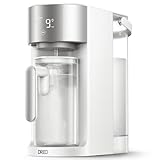
4. DREO Countertop (single pitcher)
Not technically under the sink, but for renters or kitchens with zero under-sink clearance, this countertop RO unit solves the refrigerator problem differently: you fill the pitcher, pour it into the fridge reservoir, and skip the plumbing entirely. The 3:1 pure-to-drain ratio is competitive for a compact system, and the self-cleaning cycle extends membrane life.
- Pros: Installation-free, moves with you, TDS display confirms filter condition at a glance.
- Con: Manual refill loop means you’re pouring filtered water into the fridge by hand, which is tedious for households that run the ice maker daily.
Skip this if you want true set-and-forget fridge feeding; the labor of constant pitcher transfers adds up quickly.
5. DREO Countertop (dual pitcher)
Same filtration hardware as the single-pitcher model, packaged with two autofill pitchers so one sits in the fridge while the other catches up. That small change eliminates most of the refill bottleneck, making it genuinely usable for a family that runs through a gallon of cold water and ice a day.
- Pros: Two-pitcher rotation nearly closes the convenience gap with plumbed systems; no installation, self-cleaning cycle, 3:1 efficiency ratio.
- Con: Higher price over the single model and still no direct fridge plumbing, so you’re trading dollars for the flexibility of skipping a plumber.
Skip this if you already have working under-sink plumbing and no lease restriction; a plumbed unit will always be less effort.
6. APEC ROES-50
A five-stage under-sink classic at a price that undercuts most competitors by twenty to thirty dollars. The 50 GPD membrane fills a refrigerator tank more slowly than the 75 GPD iSpring units, which means if your household runs the ice maker heavily, the tank can dip below the pressure threshold between cycles.
- Pros: Proven track record, widely available replacement filters, lowest entry price for a reliable NSF-certified under-sink RO.
- Con: 50 GPD throughput can struggle under high fridge demand; may need a pressure tank upgrade or a small booster for marginal municipal pressure.
Skip this if your refrigerator is the primary drinking-water source for three or more people; the lower flow rate will show.
7. Waterdrop G3P600
A tankless, 600 GPD monster that delivers RO water on demand without storing anything. For fridge integration, this is both a blessing and a complication: you get constant flow with no tank pressure drop-off, but connecting a tankless system to a refrigerator’s on/off solenoid requires checking that the system supports a low-flow trigger or adding a small accumulator tank.
- Pros: No storage tank eliminates the slow-fill problem entirely; massive flow rate means the faucet and fridge never compete.
- Con: Higher price, requires an electrical outlet under the sink, and fridge compatibility depends on your model’s solenoid design and local water pressure.
Skip this if you want a plug-and-play under-sink install without thinking about electrical or accumulator-tank add-ons.
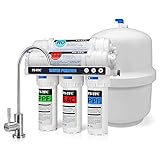
8. FS-TFC 5-Stage
NSF-certified 100 GPD throughput with four extra replacement filters bundled in the box, which effectively covers the first year of consumables. The high flow rate fills a fridge tank quickly, and the included filters make the true first-year cost the lowest in this roundup despite the slightly higher sticker price relative to budget units.
- Pros: 100 GPD is generous for refrigerator feeding; the bundled filters drop effective annual cost significantly below nominal pricing.
- Con: Brand name carries less recognition and long-term support history than iSpring or APEC, so filter availability may require checking stock cycles.
Skip this if brand support and decade-old filter availability are your top priorities; stick with the established names.
Buying Guide
Matching Output Pressure to Your Refrigerator’s Solenoid
Most refrigerator ice makers use a small solenoid valve that opens when the fill cup drops, expecting a continuous feed at roughly 20 to 60 PSI. A pressurized RO tank typically delivers water through that line by gravity and bladder pressure, so tank size and fill rate matter more than GPD rating alone. If your municipal supply sits below 40 PSI, even a 75 GPD system may fill its tank slowly enough that the fridge outpaces it during heavy use. Check your home’s incoming pressure before buying; anything under 35 PSI and you should budget for a booster pump regardless of which RO you choose.
Under-Sink Footprint and Service Access
A standard under-sink cabinet offers around twelve inches of vertical clearance and twenty inches of horizontal space once you account for the garbage disposal and existing plumbing. Tankless systems like the Waterdrop eliminate the tank but add an electrical requirement. Tank-based systems need room for both the membrane housing and the reservoir. The iSpring top-mount faucet design helps because it keeps connections above the cabinet floor, where you can actually reach them with a wrench after installation. Measure before ordering; nothing is more frustrating than returning a system that physically fits but makes future filter changes impossible.
Filter Cost Per Year and Availability
The sticker price on an RO system covers maybe eighteen months of consumables. After that, you’re replacing sediment and carbon pre-filters every six to twelve months, the membrane every two to three years, and a post-carbon or alkaline stage on a similar cycle. iSpring and APEC have the deepest third-party aftermarket support, meaning replacement cartridges cost less and ship faster. FS-TFC’s included filters offset first-year cost, but verify that replacements will be stocked before committing. Countertop units like the DREO use proprietary cartridges that tend to be pricier per stage than universal under-sink filters.
Our Verdict
The iSpring RCC7AK-BN is my top pick. It fills a fridge tank fast, installs cleanly in a standard cabinet, and the alkaline stage makes the dispenser water genuinely pleasant at any temperature.
For budget-conscious buyers, the APEC ROES-50 delivers proven performance at the lowest under-sink price, provided your household demand is moderate.
The Waterdrop G3P600 wins outright for anyone with a high-demand kitchen, no tank space, and access to an under-sink outlet; its tankless design eliminates the fill-rate bottleneck entirely.
FAQ
Can I connect an RO system directly to my refrigerator’s water line?
Yes, most under-sink RO systems include a dedicated line that tees into the refrigerator’s existing quarter-inch feed. You may need a small adapter kit depending on your fridge model, and some installers recommend a dedicated shut-off valve on that branch for easy maintenance.
Will RO water damage my refrigerator’s ice maker over time?
No. RO water is less likely to cause mineral buildup than untreated hard water, which means longer solenoid and mold life. The one caveat is that very soft RO water can taste flat, which is why remineralization stages exist.
Do I need a booster pump for a fridge-connected RO system?
Only if your incoming municipal pressure falls below roughly 40 PSI. Most systems rated 50 GPD or higher will fill a tank adequately at that threshold. Below it, a booster ensures the tank reaches full pressure between ice-maker cycles.
How often do I replace the filters on a fridge-connected RO system?
Sediment and carbon pre-filters typically last six to twelve months depending on water quality. The reverse osmosis membrane lasts two to three years, and any post-filters or alkaline stages follow a similar cadence to the pre-filters. TDS readings help you confirm when the membrane has degraded.
Part of our refrigerator buying guide hub.




Write Your Review
No reviews yet. Be the first to share your experience!