
- Top Pick: PriorityChef Large 15oz Potato Ricer
- Runner-up: Joseph Joseph Helix Potato Ricer
- Also consider: Bellemain 15 oz Potato Ricer with 3 Interchangeable Discs
A potato ricer presses cooked potatoes through a plate of small holes, producing fine, even strands that fold into light, fluffy mash. Because the potato is pressed once instead of beaten or whipped, the starch stays intact, so the result avoids the gluey texture that overworked potatoes often develop. A hand masher can leave lumps, and an electric mixer can quickly turn a pot of mash dense and sticky, which is why many cooks reach for a ricer when texture matters most.
The five ricers below cover the main designs on the market: a classic squeeze press, an ergonomic twist-action model, two presses with interchangeable discs for different textures, and a jumbo press built for big batches. Every specification is drawn from the manufacturer’s own information or the product’s Amazon listing, and each pick includes an honest note on where it falls short, so you can match the tool to your batch size, your hands, and your storage space.
As an Amazon Associate, we earn from qualifying purchases.
Quick picks
- Best overall: PriorityChef Large 15oz Potato Ricer — a roomy stainless steel press with a fine 3 mm plate and cushioned handles.
- Best for sore hands: Joseph Joseph Helix Potato Ricer — a twist-action design that swaps squeezing for a horizontal turning motion.
- Best for texture options: Bellemain 15 oz Potato Ricer — three interchangeable discs in polished 18/10 stainless steel.
- Best lightweight option: RSVP International SPUD Potato Ricer — a one-pound plastic frame with two stainless steel plates.
- Best for big batches: Norpro Deluxe Jumbo Potato Ricer — a 3-cup cast aluminum press with a hopper perforated on all four sides.
1. PriorityChef Large 15oz Potato Ricer

The PriorityChef is the classic ricer shape done well: a deep stainless steel basket, long handles for leverage, and a fixed plate with 3 mm holes that produce a fine, smooth mash. The 15 oz hopper is larger than the basket on many standard ricers, so a family-size batch takes fewer refills, and the silicone-covered handles are easier on the palms than bare metal when you are pressing several loads in a row.
Specs
- Capacity: 15 oz hopper
- Plate: fixed plate with 3 mm holes
- Material: stainless steel
- Handles: silicone-covered for grip and comfort
- Length: 12.5 inches
- Weight: 590 grams
- Care: dishwasher safe
Who it suits: Cooks who make mashed potatoes regularly and want one dependable, fine-textured result without extra parts to store. The deep basket and long handles also help when ricing other soft vegetables, such as carrots, parsnips, and cauliflower.
Limitations: The plate is fixed, so this version offers one texture only. A separate three-disc version exists in the same range, but if you want to switch between fine and coarse results, one of the interchangeable-disc models below is a better fit. The 12.5-inch length also needs a reasonably deep drawer or a hanging spot.
2. Joseph Joseph Helix Potato Ricer

Most ricers ask you to squeeze two handles together vertically, which puts the load on your grip and wrists. The Helix works differently: you twist the handles, and the pressing force is applied horizontally, drawing on the strength of your arms and shoulders instead. For anyone who finds a standard press uncomfortable, that change in mechanics is the main reason to choose this model.
Specs
- Action: twist-action, horizontal pressing force
- Material: stainless steel and nylon
- Design: two-piece construction that separates for cleaning
- Model number: 20100
- Weight: 0.48 kilograms
- Care: dishwasher safe
Who it suits: Cooks with limited grip strength, sore wrists, or stiff hands, and anyone who finds the vertical squeeze of a conventional ricer awkward. The two-piece design pulls apart, which makes it easier to clear potato residue from around the pressing plate.
Limitations: The hopper is compact, so large batches mean more refills than with the bigger presses in this guide. It is also a single-texture tool: there are no interchangeable discs, so the fineness of the result is set by the built-in plate.
3. Bellemain 15 oz Potato Ricer with 3 Interchangeable Discs
The Bellemain takes the opposite approach to the fixed-plate models: it ships with three interchangeable discs, so you can move from a fine disc for silky mash to coarser discs for chunkier textures, gnocchi, spaetzle, or purees. The body is polished 18/10 stainless steel, and the maker has shaped the contours and fitted a non-slip knob to keep the press steady against the rim of a bowl while you work.
Specs
- Material: 18/10 stainless steel
- Discs: 3 interchangeable discs for fine, medium, and coarse textures
- Capacity: 15 oz
- Grip: formed contours with a non-slip knob
- Care: dishwasher safe
- Guarantee: money-back guarantee from the maker
Who it suits: Cooks who want one press to cover several jobs, from smooth mashed potatoes to coarser purees, baby food, and cauliflower. If you regularly change textures, swapping a disc is simpler than owning two separate tools.
Limitations: Interchangeable discs are loose parts, so you need somewhere sensible to keep the two you are not using, and the disc change adds a step when you switch textures mid-recipe. As with most disc-based ricers, starchy residue can lodge around the disc seat if the press sits unwashed after use.
4. RSVP International SPUD Potato Ricer
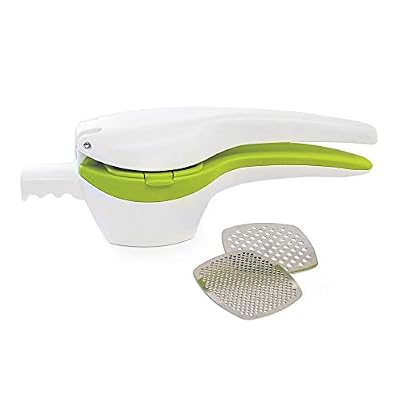
The SPUD is one of the few ricers built around a plastic frame rather than an all-metal body. That keeps the weight down to a single pound and makes it an easy tool to handle, while the working parts that touch the food, the two interchangeable plates, are stainless steel. A pot resting extension hooks over the rim of a pot or bowl to keep the press stable while both of your hands are busy squeezing.
Specs
- Model: SPUD
- Frame: heavy-duty plastic
- Plates: 2 interchangeable stainless steel plates, medium and coarse
- Dimensions: 13.5 x 4.5 x 3.75 inches
- Weight: 1 pound
- Features: pot resting extension; disassembles for cleaning
- Care: dishwasher safe
Who it suits: Cooks who want a light, simple ricer for regular family batches, and anyone who values the choice between a medium plate for everyday mash and a coarse plate for a more rustic texture. It also suits cooks who prefer a tool that comes apart fully for washing.
Limitations: A plastic frame will flex more than a steel body under heavy loads, so it is not the pick for very large or dense batches. The two plates cover medium and coarse textures only; there is no fine plate for the silkiest results.
5. Norpro Deluxe Jumbo Potato Ricer
The Norpro is the heavyweight of this guide, built for volume. Its stainless steel hopper holds up to 3 cups at a time and is perforated on all four sides rather than just the base, so potato exits in several directions and each load clears faster. The frame and handles are cast aluminum, which keeps the structure rigid when the hopper is full, and the hopper is large enough to take a whole russet potato without cutting it down first.
Specs
- Model: 469
- Capacity: 3 cups (24 oz)
- Body: cast aluminum frame and handles
- Hopper: stainless steel, perforated on all four sides
- Dimensions: 15 x 4.5 x 6 inches
- Weight: 2 pounds
Who it suits: Cooks who regularly make mash for a crowd, holiday dinners, or meal prep, and anyone who wants to cut down on refills and pressing time. The all-side perforations also make it a practical choice for squeezing moisture from cooked greens.
Limitations: At 2 pounds and 15 inches long, it is the bulkiest tool here, both in the hand and in storage. The bare cast aluminum handles offer less cushioning than the silicone-covered grips on the PriorityChef, and cast aluminum is best washed by hand to protect its finish.
How to choose the best potato ricer
Capacity. A standard hopper around 15 oz handles family batches comfortably with a few refills. If you regularly cook for a crowd, a jumbo hopper of 3 cups noticeably reduces the number of presses. Compact hoppers are fine for one or two servings but slow down bigger jobs.
Fixed plate or interchangeable discs. A fixed plate is simpler, with nothing to lose and less to clean, and a fine fixed plate gives a consistently smooth mash. Interchangeable discs add range: fine for purees and baby food, medium for everyday mash, coarse for rustic textures and gnocchi. An adjustable dial design offers the same idea without loose parts, though none of the picks above use that system.
Material. Stainless steel bodies resist rust and handle heavy loads without flexing. Cast aluminum is rigid and strong but prefers hand washing. A plastic frame keeps weight and cost down and can still perform well, though it will flex more under pressure.
Handles and effort. Long handles give leverage; cushioned or silicone-covered grips reduce palm strain across a big batch. If squeezing itself is the problem, a twist-action design moves the effort from your grip to your arms and shoulders.
Cleaning and storage. Ricers are easiest to clean if you rinse them immediately, before the starch dries and sets in the holes. Most steel models are dishwasher safe. Also check the length: many ricers are 12 to 15 inches long, so confirm your drawer or plan to hang the tool by its handle loop.
FAQ
What is the difference between a potato ricer and a potato masher?
A masher crushes potatoes against the base of the pot with a flat or wavy head, which usually leaves some lumps and can overwork the starch if you keep going. A ricer forces the cooked potato through small holes in a plate, producing fine, uniform strands in a single pass. The riced potato then needs only gentle folding with butter and warm milk or cream, which keeps the mash light instead of dense.
Do potatoes need to be peeled before ricing them?
No. Many cooks rice potatoes with the skins on, because the skin stays behind in the hopper while the flesh passes through the plate, which saves the peeling step entirely. The hopper does fill with skins as you work, so for a large batch you may need to pause and empty them out. Peeled potatoes give the cleanest workflow, but unpeeled ones work well, especially in a large hopper.
What else can a potato ricer be used for?
Plenty beyond mashed potatoes. Ricers puree cooked carrots, parsnips, sweet potatoes, and cauliflower, and they make smooth baby food from soft fruits and vegetables. With a coarse disc, a ricer can shape spaetzle and gnocchi dough, and a ricer is also handy for squeezing excess liquid from cooked spinach, grated zucchini, or thawed frozen vegetables before they go into a recipe.
How should a potato ricer be cleaned?
Rinse it as soon as you finish, because dried potato starch sets hard in the perforations and is stubborn to remove. Most stainless steel ricers can go in the dishwasher, and models that disassemble or use removable discs are easier to clear completely. Cast aluminum bodies are better washed by hand and dried promptly, since dishwasher detergent can dull and pit the finish over time.
Final verdict
For most kitchens, the PriorityChef Large 15oz is the easiest recommendation: a generous stainless steel hopper, a fine fixed plate, cushioned handles, and nothing extra to store. If squeezing is hard on your hands, the Joseph Joseph Helix replaces that motion with a twist and is the clearest comfort upgrade. The Bellemain suits cooks who want three textures from one tool, the RSVP SPUD keeps things light and simple with two plates, and the Norpro Deluxe Jumbo is the one to pick when the batch is big and refills are the enemy. Any of the five will produce smoother, fluffier mash than a standard masher, as long as the potatoes are cooked until tender before they go in the press.


Write Your Review
No reviews yet. Be the first to share your experience!