
If you want the short answer: choose a french press for a richer, fuller-bodied cup and direct control over every brew, and choose a drip coffee maker for set-it-and-forget-it convenience, programmable mornings, and larger batches with almost no effort. Neither brewer is objectively better. They solve different problems, and the right pick depends on how you drink coffee, how many people you brew for, and how much of your morning you want to spend standing at the counter.
This guide compares the two brewing methods head to head, then walks through five well-known models — two french presses and three drip machines — so you can see what each side actually offers at the budget, mid-range, and premium tiers.
As an Amazon Associate, we earn from qualifying purchases.
Table of Contents
- Quick Verdict
- How Each Brewer Works
- Head-to-Head: The Key Differences
- Side-by-Side Comparison
- The French Press Picks
- The Drip Coffee Maker Picks
- Who Should Choose Which
- FAQ
- Conclusion
- Product and ASIN Reference
Quick Verdict
A french press steeps coarse grounds directly in hot water and then separates them with a mesh plunger, producing a heavy, textured cup with more of the coffee’s natural oils in the mug. A drip coffee maker showers hot water over grounds held in a paper or reusable filter, producing a cleaner, lighter-bodied cup with far less sediment — and, on programmable models, coffee that is ready before you get out of bed.
Pick the french press if flavor and ritual matter most and you usually brew one to four cups at a time. Pick the drip machine if you brew for a household, want a timer, or simply want to press one button and walk away.
How Each Brewer Works
French press (immersion brewing). You add coarse-ground coffee to an empty beaker, pour in hot water, let it steep for about four minutes, then press a mesh filter down to trap the grounds at the bottom. Because the grounds sit in the water the whole time, extraction is even and forgiving, and because there is no paper filter, oils and fine particles pass into the cup. That is what gives press coffee its signature weight and mouthfeel.
Drip coffee maker (percolation brewing). The machine heats water in a reservoir and drips or sprays it over a bed of medium-ground coffee in a filter basket. Gravity pulls the water through once, and the brewed coffee collects in a glass or thermal carafe below. A paper filter traps oils and sediment, so the cup tastes cleaner and brighter. Most models add a warming plate or insulated carafe to hold the batch, and many add a clock and timer for scheduled brewing.
Head-to-Head: The Key Differences
Flavor and body
This is the biggest divide. French press coffee is full-bodied, round, and intense, with a slightly silky texture from the oils that a metal mesh lets through. Drip coffee is cleaner and more delicate, with clearer separation between flavors — the style most people picture when they think of a classic diner or office pot. If you drink dark roasts and add milk, the press flatters them. If you drink light roasts and like to taste subtle notes, drip usually shows them off better.
Control over the brew
The french press puts every variable in your hands: water temperature, dose, grind size, and steep time. That is a strength if you enjoy dialing in a recipe and a burden if you do not. A drip machine automates temperature and flow, so results are consistent from pot to pot, but you can only adjust the dose and grind. Certified drip brewers hold water in the ideal brewing range automatically, which removes the most common home-brewing mistake — water that is too cool.
Batch size and speed
Most french presses hold about 34 ounces, enough for roughly four mugs, and a brew cycle takes around ten minutes including heating water and steeping. Drip machines commonly brew 8 to 12 cups at once, and a full pot typically finishes in about ten minutes with no attention required. For a crowd, drip wins easily. For one or two people, the press is just as fast in practice.
Convenience and cleanup
Drip machines are the convenience champions: fill the reservoir, add a filter and grounds, and press start — or set the timer the night before. Cleanup means discarding a filter full of grounds and rinsing the carafe. A french press has no timer and needs a separate kettle, and cleanup means scooping wet grounds out of the beaker and rinsing the mesh screen. None of it is hard, but it is a few more steps every single morning.
Cost and counter space
A french press is a single, compact vessel with no electronics, no heating element, and nothing to descale, so it sits at the budget end of the market and stores in a cabinet. Drip machines take up permanent counter space and include pumps, heaters, and electronics that eventually wear out, though plenty of dependable models sit in the budget and mid-range tiers.
Side-by-Side Comparison
| Factor | French Press | Drip Coffee Maker |
|---|---|---|
| Brew method | Full immersion steeping | Gravity percolation through a filter |
| Cup profile | Full-bodied, rich, some sediment | Clean, bright, sediment-free |
| Filter type | Reusable stainless mesh | Paper or reusable basket filter |
| Typical batch | About 34 oz | 8 to 12 cups |
| Programmable timer | No | Yes, on most models |
| Extra gear needed | Kettle for heating water | None |
| Cleanup | Scoop grounds, rinse mesh | Toss filter, rinse carafe |
| Counter footprint | Small, stores in a cabinet | Permanent counter appliance |
The French Press Picks
Bodum Brazil French Press, 34 oz — French Press
The Brazil is the classic entry point into press brewing: a heat-resistant borosilicate glass beaker held in a BPA-free plastic frame with a stainless steel plunger and a three-part mesh filter. It is made in Portugal, the beaker and filter parts are easy to rinse clean, and the 34-ounce size suits one to three coffee drinkers. As a budget-tier pick, it covers the fundamentals — glass beaker, fine mesh filtration, comfortable handle — without extras you may never use. Glass is the trade-off: it shows the brew beautifully but needs more care than steel.
Specs:
– Capacity: 34 oz (8-cup press sizing)
– Beaker: High-heat borosilicate glass
– Frame and handle: BPA-free polypropylene
– Filter: Stainless steel plunger with 3-part mesh filter system
– Model number: 1548-01US
– Origin: Made in Portugal
– Tier: Budget
MuellerLiving French Press, 34 oz — French Press
The MuellerLiving press swaps glass for a double-walled 304 stainless steel body, which keeps coffee hot longer and removes breakage worries entirely. Its four-level filtration system combines a coiled spring filter, two stainless screens, and a cross plate to keep grounds out of the cup, and the whole unit is dishwasher safe and rust-free. It is a mid-range step up for households that brew press coffee daily and want a pot that can survive a busy kitchen, travel, or camping trips.
Specs:
– Capacity: 34 oz
– Body: Double-walled 304 stainless steel, insulated
– Filtration: 4-level system (coiled filter, dual screens, cross plate)
– Handle: Cool-touch handle and knob
– Care: Dishwasher safe, rust-free
– Dimensions: 4.17 x 7.05 x 8.25 inches
– Model number: MU-SSHYDPRESS
– Tier: Mid-range
The Drip Coffee Maker Picks
Mr. Coffee 12-Cup Programmable Coffeemaker — Drip
This is the straightforward household workhorse on the drip side: a 12-cup glass carafe, a programmable timer so you can set the brew the night before, and an auto-pause feature that lets you pour a cup mid-brew without drips running onto the warming plate. It represents the budget tier well — the core drip experience of scheduled, hands-off brewing for a full household, with no specialty features to learn.
Specs:
– Capacity: 12 cups
– Carafe: Glass with warming plate
– Programming: Brew Now or Later delay timer
– Feature: Grab-A-Cup auto pause
– Model number: 2176667
– Tier: Budget
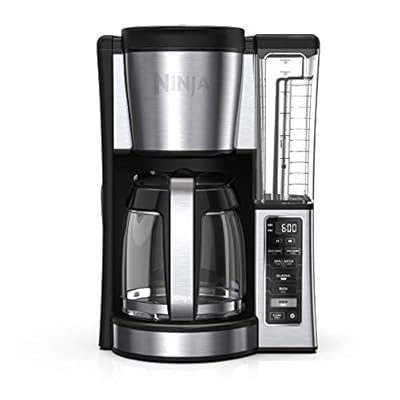
Ninja 12-Cup Programmable Brewer CE251 — Drip
The CE251 adds flexibility to the standard drip format. It offers two brew styles — Classic and Rich — so you can adjust strength without changing your dose, a 60-ounce removable water reservoir that is easier to fill at the sink, and an adjustable warming plate that keeps the glass carafe warm without scorching the coffee. A 24-hour delay brew covers the morning routine, and a mid-brew pause lets you pour early. It is a mid-range pick for households that want one machine to handle both weekday pots and slower weekend brewing.
Specs:
– Capacity: 12-cup glass carafe
– Reservoir: 60 oz, removable
– Brew styles: Classic and Rich
– Warming plate: Adjustable temperature settings
– Programming: 24-hour delay brew
– Model number: CE251
– Tier: Mid-range
Bonavita 8-Cup One-Touch Coffee Maker BV1900TS — Drip
The Bonavita is the premium drip pick, built around extraction quality rather than features. It is certified by the Specialty Coffee Association, uses a powerful heater to hold water between 195 and 205 degrees Fahrenheit, and offers an optional pre-infusion mode that lets fresh grounds bloom before brewing. A flat-bottomed basket and large showerhead spread water evenly, and the stainless steel thermal carafe keeps coffee hot without a warming plate cooking it. Operation is a single button — no clock, no timer — which is exactly the point for buyers who value the cup over the schedule.
Specs:
– Capacity: 8 cups (about 40 oz)
– Heater: 1500 watts, maintains 195–205 °F
– Certification: Specialty Coffee Association certified home brewer
– Carafe: Stainless steel thermal carafe
– Features: One-touch operation, optional pre-infusion mode, auto shut-off
– Filter size: #4
– Dimensions: 12.4 x 6.8 x 12.2 inches
– Weight: 6.13 pounds
– Model number: BV1900TS
– Tier: Premium
Who Should Choose Which
Choose a french press if you brew for one to three people, enjoy a heavy, full-flavored cup, like controlling steep time and strength yourself, or want a brewer that travels, stores in a drawer, and has no electronics to fail. It also suits households that already own a good kettle.
Choose a drip coffee maker if you brew for a family or a group, want coffee waiting when you wake up, prefer a clean cup without sediment, or would rather spend your morning on anything other than watching a steep timer. Programmable mid-range models cover most households; certified premium brewers suit drinkers who care about extraction temperature.
Choose both if your household splits down the middle — many kitchens keep a drip machine for weekday volume and a press for weekend cups. The two methods complement each other rather than replacing each other.
FAQ
Which makes stronger coffee, a french press or a drip machine?
Strength depends on the coffee-to-water ratio more than the brewer, but the french press usually tastes stronger because its metal mesh lets oils and fine particles into the cup, adding body and intensity. A drip machine with a rich or bold setting and a generous dose can close most of that gap while keeping the cup cleaner.
Does a french press need special coffee?
It works best with a coarse, even grind, because fine grounds slip through the mesh and make the cup muddy. Beyond that, any beans work. Drip machines prefer a medium grind suited to their filter type. If you buy pre-ground coffee, a drip machine is generally the more forgiving choice.
Which is easier to clean and maintain?
The drip machine wins day to day: lift out the filter, discard the grounds, rinse the carafe. A french press asks you to scoop out wet grounds and rinse the mesh screen after every use. Over the long term the press is simpler, though — there is no heating element to descale and no electronics to fail.
Can a drip coffee maker match french press flavor?
Not exactly, because the paper filter removes the oils that give press coffee its body. A certified drip brewer with proper water temperature and a pre-infusion mode gets remarkably close on clarity and sweetness, and many drinkers prefer that cleaner profile. The difference is a matter of style, not quality.
Conclusion
French press and drip are two answers to two different mornings. The press rewards a little attention with a rich, full-bodied cup and the lowest possible complexity — one vessel, one mesh filter, no electronics. The drip machine rewards you with scale and automation: bigger batches, a cleaner cup, and coffee that can be ready before your alarm finishes ringing. Decide which morning sounds like yours, then pick the tier that fits — a glass press or programmable budget machine at the entry level, a steel press or feature-rich brewer in the middle, or a certified drip brewer at the top — and either method will serve you well for years.

Write Your Review
No reviews yet. Be the first to share your experience!