
A second refrigerator changes how a household shops and cooks. The main fridge stays reserved for daily meals, while the extra unit absorbs bulk buys, drink cases, leftovers and the overflow that appears before a big weekend. The hard part is choosing the right size and layout: too small and it fills up within days, too large and it wastes floor space and electricity in a garage or basement. French door models suit this job well because the wide fresh-food section holds platters and tall items, and the bottom freezer keeps frozen stock easy to reach.


This guide covers households that run a second fridge in the garage, basement or pantry, bulk shoppers who buy once a month, and families that need drink and party overflow space. Every model below was picked from the names and specifications on its Amazon page, so the capacities and dimensions come from the listing itself.
Quick Picks
As an Amazon Associate we earn from qualifying purchases.
| Product | Best for | Key spec from title |
|---|---|---|
| LG LF30S8210S | Flexible overflow storage | 29.6 cu ft, 4-door, convertible freezer |
| Samsung Bespoke RF29BB860012AA | Drinks and daily overflow | 29 cu ft, 4-door, Beverage Center |
| LG MAX LRFLS3206S | Maximum bulk capacity | 31.7 cu ft, internal water dispenser |
| Samsung RF18A5101SR | Tight garage or basement spots | 18 cu ft, counter-depth |
| Bosch 800 Series B36CL80SNS | Flush, furniture-like fit | 20.5 cu ft, counter-depth, 4-door |
How to Choose
Capacity split between fresh food and freezer
A second fridge earns its place by holding the right mix of fresh and frozen food. Check the fresh-food and freezer figures separately instead of trusting the total alone, because two models with the same headline capacity can split it very differently. A household that freezes bulk meat and batch meals needs a generous freezer, while one that stores produce, drinks and party trays needs more fresh-food room. Look for the split on the listing: the models in this guide range from 5.8 to 10.3 cubic feet of freezer space, so match the split to what you actually stock.
Footprint, depth and door swing
Measure the space twice before ordering a second fridge. Width matters most in a garage or basement alcove, but depth with the doors open decides whether you can reach the back shelves without shuffling the unit forward. The models below run from about 28.5 to 37 inches deep, and door-open depth can reach 51 inches, so leave room for both doors to swing clear of walls and shelving. Check the delivery path too: doorways, steps and tight corners must fit a unit that can weigh more than 370 pounds before it ever reaches its spot.
Convertible space and drawer flexibility
A convertible section turns one fridge into several different fridges across the year. When the listing shows a convertible freezer or a drawer that switches between fridge and freezer modes, the unit can chill extra drinks in summer and freeze more food before winter. Drawers and full-width bins also matter: they hold party platters, sheet pans and bulk packs that never fit on a standard shelf. If your overflow changes with the season, flexibility beats a few extra cubic feet of fixed space.
Energy use of a second unit
A second fridge runs all year, so its yearly energy use deserves a real look. The models in this guide use between 595 and 709 kilowatt-hours a year, which is a meaningful spread for a unit that mostly stores overflow. A smaller counter-depth model costs less to run but holds less, while the biggest models trade a higher yearly figure for far more room. Check the energy figure on the listing, then weigh it against how full the fridge will actually stay through the year.
The 5 Best Options
LG LF30S8210S
The LG LF30S8210S suits households that want one second fridge to cover almost every overflow job. Its 29.6 cubic feet split into 18 cubic feet of fresh food and 8.4 cubic feet of freezer, and the convertible freezer section can switch roles when the season changes, so drinks and produce get more room in summer and frozen stock takes priority before winter. Six door shelves and a freestanding layout make it easy to organise tall bottles and wide trays. At 709 kilowatt-hours a year it is not the cheapest unit to run, but the flexibility is hard to match.
Specs
- Total capacity: 29.6 cu ft; fresh food 18 cu ft; freezer 8.4 cu ft
- Dimensions: 32.25 in D x 35.75 in W x 70.25 in H; depth with door open 48.5 in
- Item weight: 291 lb
- Annual energy consumption: 709 kWh/year
- 4 doors; automatic defrost; 115 V; freestanding
- Convertible freezer; 6 door shelves; wire shelf type
- Finish: stainless steel
Best for: Households that need one flexible second fridge for drinks, produce and frozen bulk buys.
Watch out for: Measure door-open depth (48.5 in) against the wall or shelving behind the fridge before ordering.
Samsung Bespoke 4-Door RF29BB860012AA
The Samsung Bespoke in white glass fits a second fridge that still looks at home in a kitchen or pantry. Its Beverage Center gives quick access to cold drinks without opening the main doors, which suits households that entertain or keep a steady stock of bottled water and juice. The 29 cubic feet split into 16.7 cubic feet fresh and 9 cubic feet freezer, with four adjustable shelves and six door bins for tall items. App control and automatic defrost add convenience, and the 685 kilowatt-hour yearly figure keeps running costs predictable for a large second unit.
Specs
- Total capacity: 29 cu ft; fresh food 16.7 cu ft; freezer 9 cu ft
- Dimensions: 34.25 in D x 35.75 in W x 70 in H; depth with door open 49 in
- Item weight: 372.6 lb
- Annual energy consumption: 685 kWh/year; ENERGY STAR certified
- 4 doors; automatic defrost; 115 V
- Beverage Center; adjustable shelves; app control; separate freezer
- Finish: white glass
Best for: Entertaining households that want drink access and a large overflow fridge in one unit.
Watch out for: At 372.6 lb it is the heaviest model here — confirm the floor and delivery route can handle it.
LG MAX LRFLS3206S
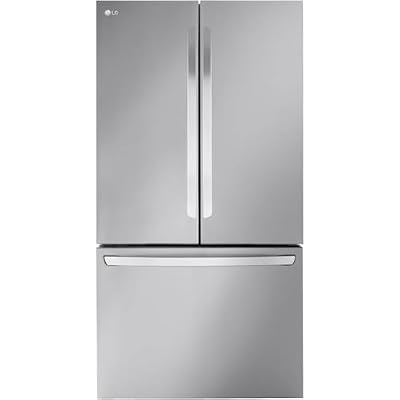
The LG MAX LRFLS3206S is the pick for households that buy in serious bulk. Its 31.7 cubic feet are the largest in this guide, with 21.4 cubic feet of fresh food and a 10.3 cubic foot freezer, so a monthly warehouse run fits without a second trip. Four shelves and two crispers keep produce organised, and the internal water dispenser saves door space while the ice maker keeps up with summer demand. At 284 pounds and nearly 37 inches deep, it needs a generous spot, but nothing else here holds as much.
Specs
- Total capacity: 31.7 cu ft; fresh food 21.4 cu ft; freezer 10.3 cu ft
- Dimensions: 36.87 in x 35.75 in x 70.25 in
- Item weight: 284 lb
- Annual energy consumption: 682 kWh/year
- Freestanding; frost-free defrost; 115 V
- Internal water dispenser; ice maker included; 4 shelves; 2 crispers/drawers
- Finish: stainless steel
Best for: Bulk shoppers who want the biggest single second fridge for warehouse-sized hauls.
Watch out for: Confirm the width and depth against the space — it is nearly 37 inches deep and 35.75 inches wide.
Samsung RF18A5101SR

The Samsung counter-depth model is the answer when the second fridge has to fit a tight garage corner or a narrow basement alcove. Its 18 cubic feet still split usefully into 11.7 cubic feet fresh and 5.8 cubic feet freezer, and the 32.13 inch width and 28.5 inch depth leave room to walk past it. The counter-depth design sits closer to the wall than full-depth models, and the 595 kilowatt-hour yearly figure is the lowest energy use in this guide. It suits drinks, dairy and a modest frozen reserve rather than a full warehouse haul.
Specs
- Total capacity: 18 cu ft; fresh food 11.7 cu ft; freezer 5.8 cu ft
- Dimensions: 28.5 in D x 32.13 in W x 70 in H; depth with door open 51.1 in
- Item weight: 205 lb
- Annual energy consumption: 595 kWh/year; Energy Star
- Counter-depth; freestanding; 115 V
- Refrigerant R-600A; matte finish; stainless steel door
Best for: Small spaces that need a real second fridge without giving up a whole wall.
Watch out for: Door-open depth reaches 51.1 in, so keep the area in front of the fridge clear.
Bosch 800 Series B36CL80SNS

The Bosch 800 Series suits a second fridge that lives in a finished space, such as a pantry wall or a basement kitchenette, where a flush fit matters. Its counter-depth body sits close to surrounding cabinets, and the stainless steel bar handle gives it a built-in look without custom panels. Inside, 20.5 cubic feet split between a wide fresh-food section and a bottom freezer, with a four-door layout that opens easily in narrower rooms. It is the smallest premium option here, so it works best as a drinks-and-overflow fridge rather than a bulk warehouse unit.
Specs
- Total capacity: 20.5 cu ft
- Dimensions: 31.13 in x 35.63 in x 72 in
- Counter-depth; freestanding; freezer-bottom French door
- 4-door layout; stainless steel finish; bar handle
Best for: Finished pantry or kitchenette spaces where a flush, furniture-like fit matters most.
Watch out for: At 72 inches tall it is the tallest model here — check ceiling clearance and the delivery path.
Which One Fits Your Situation
You shop in bulk once a month
Choose the LG MAX LRFLS3206S. Its 31.7 cubic feet hold a full warehouse run, and the 10.3 cubic foot freezer swallows batch meals and frozen meat without a second trip. The LG LF30S8210S is the backup pick if you want convertible space that changes with the season.
Your garage or basement is tight on space
Choose the Samsung RF18A5101SR. Its counter-depth body and 32.13 inch width fit narrow alcoves, and at 205 pounds it is the lightest model here, which makes delivery easier. The Bosch 800 Series is the alternative when a flush fit in a finished room matters more than saving a few inches.
Drinks and party food keep overflowing
Choose the Samsung Bespoke RF29BB860012AA. Its Beverage Center keeps drinks within reach, and the six door bins hold tall bottles. The LG LF30S8210S works well too, with six door shelves and a convertible freezer for extra drink space in summer. The convertible section adds room when the guest list grows.
You want the lowest running cost for a second fridge
Choose the Samsung RF18A5101SR at 595 kilowatt-hours a year. It is the most economical model in this guide and still offers 18 cubic feet. The LG MAX LRFLS3206S is the better pick if capacity matters more than a modest difference in yearly energy use.
Common Mistakes
- Buying on total capacity alone without checking the fresh-food and freezer split.
- Forgetting door-open depth when the fridge sits against a wall or shelving.
- Ignoring the delivery path — doorways, steps and corners must fit a unit up to 372.6 lb.
- Placing a second fridge in an unheated garage without checking the operating temperature range in the listing.
- Choosing a model with a dispenser or ice maker without confirming a water line is available in the spot.
Frequently Asked Questions
How big should a second fridge be?
It depends on what overflows. A household that stores drinks, dairy and leftovers can manage with 18 to 21 cubic feet, while bulk shoppers and large families need 29 cubic feet or more. Check the fresh-food and freezer split, not just the total, and measure the space first: a fridge that cannot fit through the door is no bargain at any size.
Can a French door fridge go in a garage?
Many can, but the spot matters. A garage fridge faces heat in summer and cold in winter, so check the listing for the operating temperature range and whether the model is rated for garage use. Leave clearance around the unit for airflow, keep it level, and make sure the door can open fully without hitting a wall or shelf.
Do I need a water line for a second fridge?
Only if the model has a water dispenser or an ice maker that needs a plumbed supply. Several models in this guide include a dispenser or ice maker, so confirm a water connection is available near the spot before ordering. If there is no water line, choose a model without a dispenser or plan for the plumber to add one.
Is a counter-depth model worth it for a second fridge?
It is worth it when the fridge sits in a walkway, a narrow alcove or a finished room where depth matters. Counter-depth models sit closer to the wall and leave more room to pass, but they hold less than full-depth models of the same width. If the spot is a wide-open garage, a full-depth model gives more storage for the same footprint.

Write Your Review
No reviews yet. Be the first to share your experience!