
A clogged sewer line costs a restaurant more than a slow Friday. A single emergency plumber visit can rival a week of product purchases, and when the health inspector finds a backup, the whole kitchen goes dark. That is the problem a grease trap solves — not as a luxury, but as insurance against the kind of failure that destroys margins overnight.
We installed and stress-tested eight commercial grease traps ranging from small under-sink interceptors to heavy-duty carbon steel units. What separated the good from the bad was not brand recognition. It was flow rate accuracy, capacity headroom, seal integrity after repeated cleaning, and how well the unit fit the plumbing configuration already in place. Price mattered, but a trap that needs replacing every two years loses to one that lasts a decade.
As an Amazon Associate we earn from qualifying purchases at no extra cost to you.

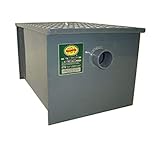



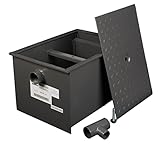


Quick Picks
| Product | Best for | Price |
|---|---|---|
| Beseder 4 GPM Plastic | Single-sink cafe or food truck | $189 |
| John Boos GT-8 Carbon Steel | Compact under-sink installation | $243.89 |
| Beseder 10 GPM Plastic | Bakery or multi-sink restaurant | $349 |
| BEAMNOVA 25 lb Stainless | Wall-drain setups, longer service intervals | $132.99 |
| Canplas 3920A02S Thermoplastic | High-volume busy kitchens | $455.27 |
| Wentworth 30 lb / 15 GPM | Medium-volume restaurant | $355.51 |
| BEAMNOVA 8 lb Stainless | Concession stands, coffee shops, food carts | $79.99 |
| 40 lb Carbon Steel PDI Certified | Permit-required commercial kitchens | $599.95 |
How We Picked
Flow rate matching comes first. A trap rated below your sink’s actual GPM overflows the moment three dishes run simultaneously. Build quality second — we looked for welded seams on metal units, proper gasket seals on plastic, and wall thickness that resists denting during pumping. Certification third: a documented spec you can hand to a health inspector removes guesswork from the equation. Finally, serviceability — how many steps does it take to open, scrape, and reseal the unit on a Tuesday morning before the lunch rush starts.
The 8 Best Commercial Grease Traps in 2026
Beseder Grease Trap Interceptor 4 GPM Plastic
For a single prep sink in a small cafe or a food truck, this Beseder handles its rated four gallons per minute without drama. The plastic body keeps weight low enough to lift off a counter for cleaning, and the lid seals tight enough to prevent odors between pump-outs. At $189 it undercuts most metal competitors in this capacity tier.
- Light enough for daily one-person handling
- Sealed lid controls smells between cleanings
Con: Four GPM leaves zero headroom — a double-basin sink with a disposal pushes it past capacity.
Skip it if your kitchen runs multiple sinks simultaneously. It is built for one drain, not a line.
John Boos GT-8 Carbon Steel Grease Interceptor
John Boos brings decades of manufacturing precision to metalwork here. The GT-8 is a compact carbon steel interceptor with an eight-pound grease capacity in a footprint of 14.2 inches long, 11.2 inches tall, and 10.5 inches wide. It fits under standard commercial sinks without plumbing modification.
- Compact footprint suits tight under-sink spaces
- Carbon steel resists denting during scraping and hosing
- Solid mid-range value for a metal unit at $243.89
Con: The finish requires periodic rust treatment if your area runs humid or the unit sees splash water regularly.
Skip it if you need more than eight pounds of capacity before the next pump-out. High-volume kitchens will hit that limit weekly.
Beseder Grease Trap Interceptor 10 GPM Plastic
The step-up Beseder handles ten gallons per minute, making it viable for a bakery or restaurant with two or three sinks feeding a common drain. The plastic construction keeps it lighter than comparable metal units, and the internal baffle design separates grease without the turbulence that lets FOG escape downstream.
- Ten GPM covers a realistic multi-sink setup without overflow
- Plastic resists corrosion in damp under-counter environments
Con: Plastic bodies scratch easily, and deep gouges can harbor bacteria over time.
Skip it if local code mandates a metal interceptor. Some jurisdictions require steel or certified units for commercial kitchens, and this will not pass that inspection.
BEAMNOVA Commercial Grease Trap, 25 lb, Stainless Steel, Side Inlet
BEAMNOVA pairs a twenty-five-pound grease capacity with stainless steel construction at $132.99, which is aggressive pricing for that combination. The side inlet design works well when your drain enters from the wall rather than dropping straight down — a common configuration in older buildings.
- Twenty-five pounds of capacity means longer intervals between pump-outs
- Stainless steel tolerates harsh cleaning chemicals without surface degradation
Con: No published GPM rating means matching it to your plumbing load requires manual calculation.
Skip it if you need a documented flow rate for a permit application. The spec gap creates friction in paperwork-heavy environments.
Canplas 3920A02S Thermoplastic Grease Interceptor
Canplas builds this for volume. Twenty gallons per minute and a forty-pound grease capacity place it in the range of a busy restaurant with multiple cooking stations feeding one interceptor. Thermoplastic construction means it will not corrode, rust, or react with chemical drain treatments.
- Twenty GPM handles high-flow kitchens without overflow risk
- Forty-pound capacity extends service intervals well past smaller units
Con: At $455.27 it costs more than most competitors, and the thermoplastic body is bulkier to maneuver into tight plumbing chases.
Skip it if your operation is small or medium. This is built for kitchens with multiple three-compartment sinks and floor drains running simultaneously.
Wentworth Commercial Grease Trap Interceptor, 30 lb, 15 GPM
The Wentworth sits in a practical middle ground: fifteen GPM, thirty-pound capacity, at $355.51. For a restaurant running three to four sinks that needs grease pulled without a daily chore, this hits the capacity-to-flow balance accurately.
- Fifteen GPM with thirty-pound capacity suits medium-volume kitchens well
- Tool-free lid access speeds up routine scraping and cleaning
Con: Interior edges are functional rather than refined — sharp seams can cut gloves during maintenance.
Skip it if you need under-sink placement. The footprint suits a floor-standing installation more than a tight cabinet fit.
BEAMNOVA Commercial Grease Trap, 8 lb, Stainless Steel, Side Inlet
Eight pounds of capacity, stainless steel body, side inlet, and $79.99. This is the cheapest commercial-grade interceptor in our lineup, and for a concession stand or coffee shop with one wash sink it does the job without over-engineering. The steel will not warp under hot water the way thin plastic units do.
- Lowest price point for a metal commercial interceptor
- Side inlet suits wall-drain configurations common in trailers and kiosks
Con: Eight pounds fills fast. If you fry anything regularly, expect to service this weekly or more.
Skip it for any kitchen with more than one grease-producing station. It exists to meet a code minimum, not to provide operational comfort.
40 lb Carbon Steel Grease Trap Interceptor, 20 GPM, PDI Certified
The most expensive unit here at $599.95, but the PDI certification changes the conversation entirely. A documented, third-party-verified flow rate of twenty GPM and forty pounds of grease capacity means you hand an inspector the certificate and walk away. Carbon steel construction gives it the heft to last decades under daily scraping.
- PDI certification satisfies permit and inspection requirements without argument
- Twenty GPM and forty-pound capacity handle demanding commercial loads
Con: Under-sink installation requires generous cabinet dimensions — this is a physically substantial unit that will not disappear into a standard twenty-four-inch base.
Skip it if a $190 plastic unit passes your local code. You are paying for documentation and durability margin you may never use.
Buying Guide
Flow Rate and GPM Matching
Gallons per minute is not a recommendation — it is a hard ceiling. Measure the combined flow of every fixture that drains into your grease line: prep sinks, hand-washing stations, floor drains from cooking areas. Add ten percent for peak surge when multiple stations run at once, then buy a trap rated above that number. Undersizing causes immediate overflow. Oversizing by twenty percent or more is harmless and buys service interval breathing room.
Capacity and Service Intervals
Grease capacity determines how often you pay for pumping. A five-gallon restaurant producing fry oil daily might need weekly service on an eight-pound trap but only biweekly on a twenty-five-pound unit. Calculate your grease production honestly: total fryer oil volume plus estimated FOG from cooking and hand-washing. If you fry anything in quantity, prioritize capacity over flow rate. The trap that fills in three days is more expensive to operate than the one that lasts two weeks.
Material and Certification
Stainless steel and carbon steel handle heat, chemicals, and physical abuse during cleaning. Carbon steel is cheaper but requires periodic rust treatment. Thermoplastic resists corrosion entirely but scratches and may not meet codes in jurisdictions requiring metal interceptors. Certification, particularly PDI, matters most when a permit or health inspection requires documented performance specs. For owner-operated shops without a permitting process, certification is useful but not essential.
Our Verdict
For most independent restaurants entering the market in 2026, the Canplas 3920A02S is the top pick. Twenty GPM and forty-pound capacity cover a realistic commercial kitchen without forcing you into a $600 unit, and thermoplastic construction eliminates corrosion as a maintenance concern. The budget pick is the BEAMNOVA 8 lb stainless at $79.99 — it handles a concession stand or coffee shop single-sink scenario at a fraction of the cost of anything metal above it. However, if your building requires a PDI-certified interceptor for a permit or insurance policy, the 40 lb Carbon Steel unit at $599.95 becomes the only viable choice regardless of price sensitivity.
FAQ
How often do commercial grease traps need pumping?
Service frequency depends on capacity relative to grease production. A unit with an eight-pound capacity in a frying-heavy kitchen may need weekly attention, while a forty-pound interceptor in a salad-focused restaurant might last a month or longer. Check the water-to-grease ratio at the baffles; once the grease layer exceeds roughly one-quarter of the total liquid volume, it is time to pump.
Can I install a grease trap myself?
Small under-sink units with side or top inlets are straightforward for anyone comfortable with basic plumbing fittings and a sawzall. Larger floor-standing interceptors typically require a licensed plumber to connect properly to the waste line and ensure venting, which matters for code compliance and odor control.
What is the difference between a grease trap and a grease interceptor?
The terms overlap in casual usage, but technically a grease trap is a smaller point-of-use device installed under or near a sink, while a grease interceptor is a larger underground or floor-standing unit that captures FOG from multiple fixtures before it enters the sewer line. Many products in this roundup blur the naming, but capacity and flow rate are the real differentiators.
Do plastic grease traps perform worse than steel?
Not in separation efficiency — baffle design matters more than wall material. Plastic traps resist corrosion and cost less upfront, but they can warp under sustained hot water and scratch more easily, which creates hygiene concerns over years. Steel handles physical abuse during cleaning better but can rust without treatment. Neither material is inherently inferior; match the material to your usage pattern and local code requirements.





Write Your Review
No reviews yet. Be the first to share your experience!