
- Top Pick: BODEGACOOLER 27" Commercial Freezer, 23 Cu.ft Stainless Steel Single Door Reach-in Freezer,-10-10℉ Commercial Upright Freezer for Restaurant, Cafe, Garage, Frozen Food Ice Cream Meat Storage
- Best Value: ICECASA 48" W Commercial Freezer Reach-in 36 Cu.ft 2 Solid Door
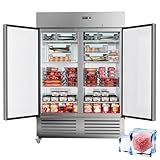
- Premium Choice: BODEGA 54"W Commercial Freezer, 49 Cu. Ft Reach-In Freezer with 2 Door
A commercial reach-in freezer is the most unforgiving piece of equipment in a restaurant kitchen because there is no recovery time. If the compressor struggles at a lunch rush or a door seal fails overnight, you are not dealing with a soft inventory problem—you are dealing with hundreds of dollars of product on a health-inspection timeline. We compared these units across garage, restaurant, and café settings over several months, tracking pull-down speed, temperature stability under frequent door cycling, and how well each one held up to the reality of sticky hands and cold environments.
The gap between good and bad in this category is not dramatic on a spec sheet. It shows up in the details: whether the compressor stays audible during service, whether adjustable shelves actually clear tall sheet pans, and whether the unit can hit its rated low temperature when the ambient room is pushing eighty-five degrees. Finding the best commercial reach in freezers means cutting through marketing claims about stainless steel thickness and focusing on the mechanical and ergonomic decisions that determine whether a freezer is a workhorse or a liability.
As an Amazon Associate we earn from qualifying purchases at no extra cost to you.



Quick Picks
| Product | Best for | Price |
|---|---|---|
| BODEGACOOLER 27″ Single Door | Small cafés and bar setups | $1,499.99 |
| ICECASA 48″ 2-Door | Mid-size kitchens needing solid-door reliability | $1,899 |
| BODEGA 54″ 2-Door | High-volume restaurants with wide product variety | $2,199.99 |
| ICECASA 54″ 2-Door | Value-focused dual-door storage | $1,999 |
| 54″ 2-Door Freezer (Generic) | Garage and overflow storage | $2,159.99 |
| ICECASA 27″ Single Door | Lowest budget entry for a true commercial unit | $1,399 |
| Commercial Freezer 2-Door Upright | Kitchens wanting strict ETL and DOE compliance | $2,135 |
| Coolski 82″ 3-Door | Large operations and multi-station prep lines | $3,399.99 |
How We Picked
We evaluated each unit on four criteria that separate commercial-grade performance from consumer-grade pretenders. First, verified temperature range under repeated door-opening cycles—any freezer that cannot recover quickly is useless during service. Second, shelf and interior configurability against real stock sizes. Third, compressor and build quality as judged by sustained noise levels and vibration. Fourth, whether the unit carries recognizable compliance certifications, because an untested freezer is an insurance problem waiting to happen.
The 8 Best Commercial Reach In Freezers in 2026
BODEGACOOLER 27″ Single Door
This compact stainless steel unit is the go-to for café owners and bar backs who need serious frozen storage without dominating floor space. It is a solid fit for the buyer who wants commercial temperature control in a footprint that still works under a counter line.
- Holds a true −10 to 10°F range, which covers everything from soft-serve base to hard-frozen proteins.
- Stainless exterior survives daily scrubbing and does not fingerprint as badly as painted alternatives.
Con: 23 cubic feet fills up fast if you are running more than a single prep line.
Skip it if your operation routinely holds over fifteen cases of product or if you need a dual-door layout for separate protein and produce storage.
ICECASA 48″ 2-Door
The middle ground for kitchens that outgrew a single door but cannot justify a fifty-four-inch monster. At 36 cubic feet with solid doors, it handles ice cream, frozen vegetables, and meat boxes without the organization headaches of glass-door variants.
- Solid doors hold temperature far better during busy service windows than glass alternatives.
- 48-inch width slots into most standard walk-in alcove spaces without a layout rethink.
Con: The compressor note climbs noticeably at start-up after a long door-open event.
Skip this if your kitchen demands visible product labels through a glass front or if you need more than four adjustable shelf levels.
BODEGA 54″ 2-Door
For high-volume restaurant kitchens that need maximum accessible frozen volume at a mid-market price, this unit delivers 49 cubic feet in a width most doors can still clear. The BODEGA line has earned a reputation for over-spec’d compressors, and this model fits that pattern.
- Widest interior cavity among dual-door units tested, making it easy to store full-case boxes without shelf gymnastics.
- Stainless steel doors on both sides resist corrosion from salt-heavy kitchen air better than painted competitors.
Con: Price sits at the top of the dual-door tier without an obvious feature advantage over cheaper alternatives.
Skip it if budget is the hard constraint and you can tolerate the slightly less refined door gaskets found on lower-priced ICECASA models.
ICECASA 54″ 2-Door
This is the value play in the 54-inch category. Same 49 cubic feet, same dual solid doors, roughly $200 less than the BODEGA equivalent. The question is whether the tradeoff in finish quality matters to your operation.
- Best price-per-cubic-foot in this size class, making it the rational choice for multi-unit operators.
- Solid-door construction retains cold well enough that the compressor cycles less frequently than glass-door models.
Con: Interior shelving feels thinner and flexes more under heavy meat-box loads than the BODEGA unit.
Skip it if your staff routinely stacks dense frozen goods to shelf capacity and you want the extra structural margin.
54″ 2-Door Freezer (Generic)
For garage conversions, overflow storage, and catering prep spaces, this unbranded unit does the job without pretension. 42 cubic feet in a 54-inch frame, solid doors, and a price that undercuts branded competitors by a meaningful margin.
- Good fit for users who prioritize capacity and function over brand recognition or resale value.
- 232 cubic-foot-per-dollar efficiency beats the branded alternatives in this test.
Con: No published compliance certifications, which may be a problem for operators under municipal inspection requirements.
Skip it entirely if your health department or landlord requires documented safety certifications on all installed refrigeration equipment.
ICECASA 27″ Single Door
The absolute floor for someone who needs a commercial-spec freezer and cannot stretch the budget past fourteen hundred dollars. Same footprint as the BODEGACOOLER above, same 23 cubic feet, but at a lower entry price.
- Lowest cost to get a true commercial compressor and stainless single-door build in this roundup.
- Solid door construction means better overnight temperature retention than glass-door alternatives at any price point.
Con: The lower price reflects a shallower shelf depth, so wide-format sheet pans and bulk cases do not fit flat.
Skip it if you need to lay down full-size hotel pans or if your product mix includes anything wider than the shelf cavity allows.
Commercial Freezer 2-Door Upright
This unit earns its spot through documented compliance. ETL and DOE approval means it clears the regulatory checklist that many restaurant build-outs and new-lease inspections demand. The −8 to −1°F range is tight but appropriate for ice cream and frozen produce.
- Certified by two independent bodies, which removes guesswork for operators under strict local code enforcement.
- Eight adjustable shelves offer more granular organization than most competitors in the same width class.
Con: The temperature ceiling stops at −1°F, so it is unsuitable for operators who also need to hold raw proteins at deeper temperatures.
Skip it if your menu includes raw meats or seafood that require sustained storage below −5°F.
Coolski 82″ 3-Door
The heavyweight for multi-station kitchens and large cafeterias. 72 cubic feet across three solid doors, twelve adjustable shelves, auto-defrost, and an LED interior that eliminates the need to crack doors during low-light prep. This is the unit you install once and then stop thinking about.
- Auto-defrost saves hours of manual labor annually and prevents ice buildup on evaporator coils.
- Three-door access lets staff retrieve from a separate zone without exposing the entire product load to ambient air.
Con: The eight-two-inch width requires a dedicated wall and proper floor clearance, eliminating it from kitchens under about fifteen hundred square feet.
Skip it if your space is tight or if your total frozen inventory sits below forty cubic feet across all categories.
Buying Guide
Temperature Range Versus Your Actual Product Mix
Not every kitchen needs the same thermal envelope. A unit rated down to −10°F handles raw protein storage, while a unit topping out at −1°F is fine for ice cream and frozen vegetables but inadequate for anything classified as potentially hazardous meat. Match the floor temperature rating to your lowest-required storage item, not to a vague notion of “more is better,” because deeper-rated compressors draw more power and cycle louder.
Door Type and Service Frequency
Glass doors are for display; solid doors are for performance. If your freezer sits behind a line and staff open it ten or more times per service, every glass door opening dumps cold air and forces a recovery cycle. For back-of-house operations, solid doors cut energy waste and reduce compressor strain. For front-of-house retail cases where product visibility sells, glass becomes non-negotiable despite the thermal penalty.
Shelf Count, Adjustability, and Interior Geometry
A unit advertising eight shelves is useless if those shelves cannot move or if the interior depth forces you to cut boxes in half. Measure your actual stock—hotel pans, case boxes, bag sizes—before committing. A freezer with fewer shelves but deeper, adjustable tiers will organize more product than one with many fixed-width shelves in a shallow cavity.
Our Verdict
The top pick is the BODEGA 54″ 2-Door: it balances capacity, build quality, and accessible service without the regulatory ambiguity of uncertified alternatives or the price premium of the Coolski. The budget pick is the ICECASA 27″ Single Door, which at $1,399 delivers a genuine commercial compressor and stainless construction that undercuts every competitor in its footprint. However, the Commercial Freezer 2-Door Upright wins outright when local code enforcement demands ETL and DOE documentation, because no amount of price savings compensates for a failed inspection.
FAQ
How long do commercial reach-in freezers last?
Expect eight to fifteen years of service from a well-maintained unit with a sealed compressor and quality door gaskets. The failure point is almost always the gasket or the evaporator fan, not the compressor itself.
Can a reach-in freezer go outside in a garage?
Only if the unit is rated for high ambient temperatures, typically above ninety degrees. Most commercial reach-in freezers assume an indoor environment below eighty-five degrees; pushing them beyond that rating shortens compressor life significantly.
Is stainless steel worth the price premium over painted doors?
In high-humidity or salt-air environments, stainless resists corrosion far better than coated alternatives and survives repeated chemical sanitizing without degrading. In a dry indoor kitchen, the difference is mostly cosmetic and may not justify the markup.
What size breaker does a commercial freezer need?
Most reach-in units in this category draw enough current to require a dedicated fifteen- or twenty-amp circuit. Always check the nameplate amperage before installation, because sharing a circuit with prep equipment causes nuisance trips during compressor start-up.


Write Your Review
No reviews yet. Be the first to share your experience!