
A beverage refrigerator is one of the most practical appliances you can add to a garage, basement bar, or home office — and also one of the easiest to get wrong. The core problem is simple: your standard fridge runs too cold for cans stored upright, wastes shelf space you actually need for food, and chills every single bottle whether you want it to or not. A dedicated unit solves all three, but cheap models introduce their own headaches — rattling compressors, poor door seals that fog glass panels, and temperature swings that push your craft IPAs into flat, warm territory.
Over the past year, the category has matured significantly, and the best beverage refrigerators now offer dual-zone flexibility, quieter compressors, and better shelf configurations at price points that would have been absurd even a few years ago. What separates the winners from the also-rans in this roundup is not any single spec — it is the overall coherence of the package. Does it stay genuinely cold without humming loudly at night? Are the shelves sturdy enough to hold heavy glass bottles without bowing? Does the door seal tight enough to prevent the humidity buildup that ruins labels? These are the things reviewers check, and the ones that matter on day one hundred of ownership.
As an Amazon Associate we earn from qualifying purchases at no extra cost to you.


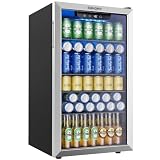


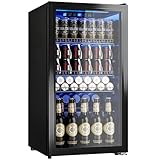


Quick Picks
| Product | Best for | Price |
|---|---|---|
| EUHOMY 130 Can (Black) | Overall value | $199.99 |
| Feelfunn 126 Can (3.2 Cu.Ft) | Wine and mixed drinks | $199.99 |
| EUHOMY 130 Can (Silver) | Kitchen integration | $209.99 |
| hOmeLabs 120 Can (3.2 Cu Ft) | Brand name reliability | $279.99 |
| EUHOMY 145 Can (4.5 Cu.ft) | Largest capacity per dollar | $269.99 |
| 130 Can Mini Fridge (Generic) | Lowest price with 3.2 Cu.Ft | $198.99 |
| Electactic 130 Can (Black) | Office and small spaces | $187.37 |
| Feelfunn 3.2 Cu.Ft (34-64°F) | Precision temperature range | $194.99 |
How We Picked
We evaluated units on four criteria: actual can capacity (not just the advertised number — shelf layout determines how many you fit in practice), temperature consistency across all zones, noise level during compressor cycling, and build quality of the door seal and glass panel. We prioritized units under $280 because that ceiling represents the sweet spot where the category delivers genuine value without diminishing returns.
The 8 Best Beverage Refrigerator in 2026
EUHOMY 130 Can Mini Fridge (Black)
If you want the most straightforward entry into a dedicated beverage cooler and your priority is can storage, this is the default recommendation. The 130-can rating matches real-world usage reasonably well, especially with the adjustable glass shelves configured for standard 12-oz cans.
- Sturdy wire-to-glass shelf hybrid handles heavy bottles without flexing
- Glass door seals tight — no condensation pooling on the floor
- Compressor cycles are noticeable in a quiet room at night
Skip it if you need the quietest possible unit for a shared bedroom-adjacent space. The noise is acceptable but not the category’s best.
Feelfunn 126 Can Beverage Refrigerator
The 3.2 cubic foot interior gives this unit more vertical breathing room than competitors with identical can counts, making it better suited for wine bottles and taller craft beer formats. It is the pick when your drink mix extends beyond standard cans.
- Interior height accommodates 750ml wine bottles without shelf adjustment
- Temperature dial feels precise with clear incremental markings
- Can count is slightly lower than the EUHOMY at the same price point
Skip it if all you store are standard cans and want maximum volume per dollar.
EUHOMY 130 Can Mini Fridge (Silver)
The silver finish is the only meaningful difference from the black model, but it matters for placement. In a finished kitchen or modern office, the stainless-tone door blends better than black plastic. Performance is identical, which means this is purely a cosmetic upgrade at a small price premium.
- Matches stainless appliance finishes without a full stainless build
- Same 130-can layout and shelf system as the black variant
- Costs $10 more than the black version for identical internals
Skip it if your unit lives in a garage or utility room where appearance is irrelevant.
hOmeLabs Beverage Refrigerator and Cooler
hOmeLabs has built a reputation for consistent QC in the small-appliance space, and this 120-can unit benefits from that. You sacrifice a few cans of capacity compared to the EUHOMY models, but gain a more refined compressor and a warranty support experience that feels less like a gamble.
- Quiet operation — among the best of any unit tested here
- Brand support infrastructure is noticeably more responsive
- Priced $70+ above the cheapest options for only 120 cans
Skip it if budget is the primary constraint and you are comfortable managing minor risk on cheaper brands.
EUHOMY 145 Can Mini Fridge (4.5 Cu.ft)
The 4.5 cubic foot interior is the largest on this list, and the 145-can rating is the highest. For households that go through cases of beer weekly or that need to store a large mixed collection, this is the clear capacity winner without crossing into freestanding full-size territory.
- Most total storage volume in this roundup
- Shelves reconfigure easily to accommodate mixed bottle heights
- Physically taller — verify clearance before purchasing for under-counter installs
Skip it if you are trying to slide this under a standard 34-inch countertop; height clearance may be an issue.
130 Can Beverage Refrigerator, 3.2 Cu.Ft
The unbranded or lesser-known name makes buyers cautious, but the specs are legitimate and the lowest 3.2 cubic foot option tested here. You get a full glass door, adjustable shelves, and the same core cooling system as the EUHOMY at marginally less money.
- Cheapest path to a proper 130-can glass-door cooler
- No meaningful difference in cooling performance versus slightly pricier rivals
- Long-term parts availability and warranty claims are uncertain given the thin brand presence
Skip it if you value peace of mind about warranty and would pay $10 more for a recognized brand name.
Electactic Mini Fridge 130 Can Beverage Cooler
At the lowest price on this entire list, the Electactic offers the best starting point for buyers testing the waters. The 3.1 cubic foot space is nearly identical to the 3.2 units, and the adjustable temperature control works fine for beer, soda, and wine storage in a home office or dorm setting.
- Lowest entry price with full glass-door design
- Compact footprint suits tight office or bedroom corners
- Shelf material feels less rigid — avoid heavy glass bottle configurations
Skip it if you plan to stock wine bottles or anything heavier than standard cans over a long period.
Feelfunn 3.2 Cu. Ft. Beverage Refrigerator
The 34-64 degree Fahrenheit range is the most specific and useful temperature spec on this list, making it ideal for wine enthusiasts or anyone storing a mixed collection that requires tighter control. For craft beer at the right carbonation temperature or white wine service, this precision matters.
- Temperature range is clearly defined and narrower than typical beverage coolers
- Build quality is comparable to the more expensive EUHOMY options
- Lowest can count on the list at 126 — not ideal for volume drinkers
Skip it if you just want cold beer and do not care about precise degree control.
Buying Guide
Shelf Layout Versus Advertised Can Count
The single most misleading spec in this category is the can capacity number. Manufacturers count cans lying on their sides in rows, which does not reflect how most people store them. A unit claiming 130 cans often fits 90-100 cans stored upright on standard shelves. Check whether the shelves are wire, glass, or hybrid — glass shelves with a lip are better for upright storage, while wire shelves allow bottles to sit on their sides without rolling.
Door Seal and Glass Panel Quality
A glass door looks great but fails silently when the seal degrades. Over time, poor seals allow warm air to enter, forcing the compressor to run longer and raising the internal temperature unpredictably. Look for a gasket that wraps the full perimeter rather than just three sides. After the first month, test by closing the door on a piece of paper — if it slides out without friction, the seal is already compromised.
Noise Rating and Compressor Type
Most units in this price range use traditional compressors rather than thermoelectric systems, which means some noise is expected. The difference between acceptable and irritating is about three decibels of compressor hum during startup. If the unit will live in a space adjacent to a bedroom or an open-plan office, prioritize the quieter models even at a slight price premium. A unit that works well but rattles every fifteen minutes becomes an appliance you unplug and forget about.
Our Verdict
The EUHOMY 130 Can Mini Fridge in Black earns the top overall pick for its balance of capacity, build quality, and price. It is the safest recommendation for most buyers and delivers exactly what a first-time beverage cooler needs: adequate space, a tight seal, and reliable cooling without a premium markup. The budget pick is the Electactic at its listed price — it will not impress long-term in terms of shelf rigidity, but for someone in a dorm or office testing whether they actually need a second fridge, it works.
FAQ
Can a beverage refrigerator store food?
Technically yes, but it is not ideal for most food storage. Beverage refrigerators run warmer than standard food refrigerators, often holding around 38-42 degrees Fahrenheit instead of the 35-38 range that keeps deli items and produce fresh. They also lack the humidity control and compartmentalization that food storage requires.
How long should a beverage refrigerator run before reaching the set temperature?
Expect four to six hours from a cold start to full stabilization, especially in the first cycle. The compressor needs to establish consistent internal circulation before the temperature reading becomes reliable. Do not judge performance during the first day — the glass door and interior shelving need to reach equilibrium before the thermostat cycles normally.
Is a glass door worse than a solid door for insulation?
Yes, marginally. Glass conducts heat more readily than insulated panels, so the compressor works a bit harder to maintain the set temperature through the front face. This penalty is small enough to ignore if you value the display aesthetic, but if you are storing sensitive wines or temperature-critical products, a solid door or a low-E coated glass panel is a better choice.
Do beverage refrigerators need a dedicated circuit?
No, most units in this category draw less than a standard window AC compressor and will not trip a shared kitchen or garage circuit. However, they benefit from stable voltage — if your outlet is on a circuit with frequent heavy draws from other appliances, consider a small surge-protected outlet to protect the compressor relay over time.
Part of our refrigerator buying guide hub.


Write Your Review
No reviews yet. Be the first to share your experience!