
- Top Pick: 4 Pack Bamboo Drawer Dividers 17-22" Adjustable Kitchen Organizer, Natural
- Best Value: Besilord Silverware Organizer Kitchen Drawer Organizer Utensil Organizer Bamboo Silverware Holder Cutlery Organizer in Drawer Flatware Organizer Tray(5 slots, Natural
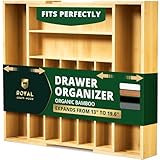
- Premium Choice: ROYAL CRAFT WOOD Luxury Bamboo Kitchen Drawer Organizer – Silverware Organizer, Utensil Holder & Cutlery Tray Drawer Dividers for Flatware (9 Slot, Natural)
Opening a deep kitchen drawer should be a satisfying experience. Instead, for many of us, it is a source of daily frustration. You pull the handle, and a chaotic heap of soup ladles, whisks, rolling pins, and potato mashers clatters together, jamming the drawer mechanism. Standard silverware organizers are usually only two inches tall, leaving up to six inches of empty, wasted vertical space above them. Buying a shallow organizer for a deep drawer is one of the most common organizational mistakes homeowners make, leading to stacked, messy piles and scratched tools.
Another frequent misstep is choosing fixed-size trays that slide like hockey pucks every time the drawer is opened and closed. If your dividers do not stay anchored, they cannot do their job. When researching what to look for in deep drawer utensil dividers, you must shift your focus from basic aesthetics to structural integrity, vertical height, and surface grip. A high-quality set of dividers should utilize the entire volume of your drawer, keeping heavy-duty cooking tools separated, visible, and easy to grab.
As an Amazon Associate we earn from qualifying purchases at no extra cost to you. Product prices and availability are accurate as of the date shown and are subject to change.



Decide These 3 Things First
Before you begin shopping and comparing materials, you need to make three fundamental decisions about your kitchen workflow and drawer architecture:
First, measure your exact interior drawer depth. A drawer is typically considered “deep” if it has an interior vertical clearance of 5 to 8 inches. Do not guess these measurements. Use a metal measuring tape to measure from the drawer floor to the top edge of the drawer box, and subtract half an inch to ensure proper clearance. Standard flatware organizers will fail in these spaces; you need dividers designed specifically for deep profiles.
Second, choose between individual spring-loaded tension dividers and a unified expandable tray. Spring-loaded tension dividers are individual planks that compress to fit the length or width of your drawer, allowing you to create custom-width lanes. They are highly flexible and perfect for irregular collections of oversized baking tools. Unified expandable trays are single-piece units with sides that slide outward to fill the entire drawer floor. Trays offer a clean, built-in look and protect your drawer bottom from scratches, but they have fixed compartment configurations.
Third, identify your primary storage goal. Are you trying to organize high-volume everyday silverware, or are you trying to tame a collection of bulky, heavy-duty cooking utensils? If you are organizing flatware, you need a multi-slot tray with narrow, deep compartments. If you are organizing long silicone spatulas, metal tongs, and wooden spoons, you need long, open-ended tension dividers that can accommodate varied lengths and weights without shifting.
1. Vertical Height and Clearance
The single most important factor when evaluating deep drawer dividers is their height. Standard drawer dividers are 2 to 2.5 inches tall. If you place these in a 6-inch-deep drawer, your utensils will quickly spill over the tops of the dividers, recreating the very mess you bought the organizers to solve.
For deep drawers, look for dividers that stand between 4 and 6 inches tall. This extra height provides a physical barrier that keeps stacked items, such as sets of measuring cups or bulky whisks, contained within their designated lanes. Ensure that the divider height is at least 0.5 inches shorter than your drawer’s interior clearance to prevent the tops of the dividers from rubbing against the cabinet frame when the drawer slides open.
2. Material Integrity and Weight
Utensil dividers are subjected to constant impact from heavy metal tools. The material you choose dictates how well the dividers resist denting, cracking, and sliding.
- Bamboo: This is the most popular material due to its sustainability, warm aesthetic, and natural water resistance. Look for bamboo planks that are at least 0.3 inches (approx. 8mm) thick. Cheaper bamboo dividers are often thin (0.15 inches) and prone to warping or splitting under pressure.
- Hardwood (Maple, Oak, Walnut): If you want a seamless, custom-cabinetry look, hardwood is the gold standard. It is exceptionally heavy and durable, but it is also the most expensive option and requires sealing to prevent food stains.
- Acrylic and Plastic: High-quality clear acrylic (around 0.15 to 0.2 inches thick) offers excellent visibility and a modern aesthetic. It is completely waterproof and easy to sanitize. Avoid thin, flexible plastics, which flex and warp when packed with heavy tools.
Weight is also a critical factor. A heavier divider or tray naturally resists sliding. A solid bamboo or hardwood expandable tray can weigh between 3 and 5 pounds, providing a stable foundation that stays anchored without adhesives.
3. Tension and Grip Quality
If you opt for spring-loaded tension dividers, the internal spring mechanism and end pads will determine the product’s lifespan. The spring must exert enough outward pressure to hold the divider firmly in place against the drawer walls, but not so much pressure that it bows the drawer box outward.
Look for dividers featuring heavy-duty steel springs with a tension force of 3 to 5 pounds. The ends of the dividers must be capped with non-slip pads. Look for thick EVA (Ethylene-Vinyl Acetate) foam or textured rubber pads that are at least 0.1 inches thick. These pads serve a dual purpose: they provide the friction necessary to prevent the divider from slipping out of alignment, and they protect your expensive drawer interiors from scratches and gouges.
4. Adjustability and Expansion Mechanisms
Very few drawers conform to standard, round-number dimensions. Therefore, adjustability is key to achieving a flush, built-in look.
For expandable trays, examine the nesting channels. High-quality trays feature interlocking wooden or plastic tracks that slide smoothly but fit tightly enough to prevent the tray from wobbling. Avoid designs where the expandable wings simply sit loosely next to the main body; they will collect crumbs in the gaps and slide shut when the drawer is closed quickly.
For spring-loaded dividers, verify the expansion range. Standard sizes typically expand from 17 to 22 inches, or 12 to 17 inches for smaller drawers. Measure your drawer front-to-back and side-to-side to ensure your drawer falls comfortably in the middle of the divider’s expansion range. If your drawer is exactly 17 inches deep, buying a 17-to-22-inch divider ensures the spring is compressed enough to provide maximum tension.
5. Maintenance and Cleanability
Kitchen drawers are high-traffic zones that accumulate crumbs, dust, and sticky residues from cooking spoons. Your dividers must be easy to clean to maintain a hygienic kitchen environment.
Acrylic and plastic dividers are the easiest to clean; they can be removed and hand-washed in warm, soapy water. Some plastic models are dishwasher safe, though hand-washing prevents warping from high-heat drying cycles. Wood and bamboo dividers cannot be submerged in water. They must be wiped down with a damp microfiber cloth. To prevent the wood from drying out and cracking over time, you should apply a thin coat of food-safe mineral oil to bamboo or hardwood dividers every 6 to 12 months.
6. Price Tiers and Value
The market for kitchen organization is vast, but prices generally fall into three distinct tiers based on materials, construction quality, and brand reputation:
- Budget ($10 – $20): In this range, you will find basic 4-packs of standard bamboo spring-loaded dividers (typically 2.5 inches tall) or simple plastic flatware trays. These are functional but often lack the height needed for deep drawers and may feature weaker springs or thinner materials.
- Mid-Range ($20 – $40): This is the sweet spot for deep drawer organization. Here, you will find robust 4-to-6-packs of deep bamboo tension dividers (4 to 5 inches tall) with strong steel springs and thick foam pads. You will also find high-quality, 9-slot expandable bamboo cutlery trays designed to fit drawers up to 22 inches wide.
- Premium ($40 – $100+): Premium options include custom-fit modular organizing systems made from solid hardwoods like maple or walnut, thick polished acrylic dividers, and heavy-duty metal insert systems. These products offer superior aesthetics, seamless integration, and lifetime durability.
7. Assembly and Installation
Most homeowners prefer a tool-free installation process. Spring-loaded dividers are the easiest to install: you simply compress the spring, align the divider with the drawer wall, and release. This process takes less than ten seconds per divider and allows for instant reconfiguration as your cooking tool collection changes.
Expandable trays are similarly simple, requiring you to place the collapsed tray into the drawer and slide the sides outward until they meet the drawer walls. However, some premium solid wood systems may require small wood screws or locking pins to secure the expanded sections in place. While this requires a tool for installation, it guarantees that the organizer will never shift or slide during use.
Spec Checklist
Use this convenient comparison table to determine which tier of deep drawer utensil dividers aligns with your kitchen needs and budget:
| Specification | Budget Tier | Mid-Range Tier | Premium Tier |
|---|---|---|---|
| Price Range | $10 – $20 | $20 – $40 | $40 – $100+ |
| Divider Height | 2.0 to 2.5 inches | 4.0 to 5.0 inches | 5.0 to 6.0+ inches |
| Primary Materials | Thin bamboo, basic plastic | Thick bamboo, heavy-duty acrylic | Solid maple, walnut, polished thick acrylic |
| Tension Mechanism | Lightweight plastic springs | Heavy-duty steel coil springs | Premium steel springs or locking screw brackets |
| End Pad Quality | Thin felt or no pads | 0.1-inch EVA foam or rubber pads | Thick, non-marring silicone or rubber pads |
| Best For | Light silverware, shallow drawers | Standard deep kitchen drawers, heavy utensils | Custom kitchens, heavy heirloom cookware, luxury aesthetics |
Red Flags
When shopping for deep drawer dividers, keep an eye out for these warning signs of poor quality and design flaws:
- Weak or Sagging Springs: If customer reviews mention that the spring-loaded dividers frequently slip, collapse, or lose their tension after a few weeks, avoid them. Weak springs turn organized drawers back into chaotic piles.
- Rough, Unfinished Edges: Run your fingers along the edges of wooden or bamboo dividers. If you feel splinters, rough patches, or sharp corners, the manufacturer cut corners on sanding and sealing. These rough spots can snag kitchen towels, scratch your hands, and damage delicate silicone utensils.
- Strong Chemical Odors: Low-end bamboo and wood products are sometimes finished with cheap, high-VOC varnishes or glues that emit a strong chemical smell. Because these dividers will live in enclosed spaces with items that touch your food, opt for food-safe, low-odor oil finishes.
- Under-Sized End Pads: If the foam or rubber pads on the ends of a tension divider are thin, poorly glued, or offset, they will peel off under pressure. Once the pad falls off, the exposed wood or metal spring will scrape your drawer’s paint or veneer.
FAQ
How tall should a deep drawer divider be?
For a true deep kitchen drawer (which typically measures 5 to 8 inches deep), your dividers should be between 4 and 6 inches tall. Using dividers of this height ensures that bulky items like soup ladles, potato mashers, and balloon whisks do not slide over the top of the divider into adjacent compartments. Always measure your interior drawer height and leave at least 0.5 inches of top clearance.
How do I stop my deep drawer dividers from sliding around?
To prevent sliding, choose spring-loaded dividers with thick, high-friction EVA foam or rubber pads on the ends. If you are using an expandable tray, look for a model that expands flush against all four walls of your drawer. If your tray is slightly smaller than your drawer cavity, you can place small, non-slip silicone bumper pads or a roll of non-slip drawer liner underneath the tray to anchor it in place.
Is bamboo better than plastic for kitchen drawer organization?
It depends on your priorities. Bamboo is highly durable, eco-friendly, and offers a warm, premium aesthetic that matches wood cabinets beautifully. However, it requires occasional maintenance with mineral oil and cannot be submerged in water. Plastic and acrylic are completely waterproof, maintenance-free, and easy to clean, making them highly practical for busy kitchens, though they lack the classic look of natural wood.
Can I use deep drawer dividers for items other than kitchen utensils?
Absolutely. Deep drawer dividers are highly versatile organization tools. They are excellent for separating folded clothing (like t-shirts, socks, and jeans) in deep bedroom dresser drawers. They also work beautifully in bathroom vanities to organize tall bottles of lotion, hair dryers, and styling tools, or in craft rooms to keep yarn, paint bottles, and office supplies upright and categorized.
Ready to decide? Our #1 pick for 2026 is the Price Range.
Live price & availability on Amazon.



Write Your Review
No reviews yet. Be the first to share your experience!