
The listings in this roundup are not jar sets, so the honest answer starts with the jars themselves: use glass jars made for home canning, in pints or quarts, with new two-piece lids, and process them in a true pressure canner. Of the products listed, the T-fal 22-quart pressure canner is the best overall pick because it gives you the equipment low-acid foods require, and the two canning books and starter kits fill in the guidance and tools. Pressure canning means processing sealed jars above boiling temperature, which is the only approved route for low-acid foods such as vegetables, meat and soups.
Quick List
- Pressure Canning Meals in Jars (book) – best for learning ready-to-eat soup, stew and bean recipes
- Mason Jar Pressure Canning (book) – best for a beginner who wants a step-by-step jar method
- LEONICE Canning Starter Kit, Beginner Full Set – best for gathering basic tools in one box
- T-fal 22-Quart Aluminum Pressure Canner – best for a first stovetop canner on a gas or electric coil range
- LEONICE Canning Supplies Kit with Rack – best for stainless funnel, lid lifter and handling tools
- 24-Quart Pressure Canner for Induction and Gas – best for induction cooktops and larger batches
Which One Is Right for You?
| If you… | Choose |
|---|---|
| need an actual pressure canner for a gas or electric coil stove | T-fal 22-Quart Aluminum Pressure Canner |
| cook on induction | 24-Quart Pressure Canner for Induction and Gas |
| want a recipe book built around complete meals in jars | Pressure Canning Meals in Jars |
| are brand new and want a method for filling and sealing jars | Mason Jar Pressure Canning |
| already own a canner and need funnels, a lid lifter and a jar lifter | LEONICE Canning Supplies Kit with Rack |
| want a one-box starter set of accessories | LEONICE Canning Starter Kit, Beginner Full Set |
Pressure canning is a system: jars, lids, a canner, a validated recipe and a tool kit all matter. The canner is the one purchase you cannot substitute, since a regular pot or an electric multi-cooker is not a safe stand-in for processing low-acid foods. Books and tool kits are supporting items and should never replace current USDA-style processing guidance.

PRESSURE CANNING MEALS IN JARS: Easy Homemade Soups, Stews, Meats, Beans & Complete Meals for Long-Term Storage, Emergency Preparedness & Everyday Eating.
Included for '6 Best Canning Jars for Pressure Canning (October 2026) Expert Picks' because the listing specifies Stews and Meats, details this guide uses to compare options.
View on Amazon
Mason Jar Pressure Canning: Verified Safe Every Time (The Mason Jar Method Series)
Included for '6 Best Canning Jars for Pressure Canning (October 2026) Expert Picks' as a relevant option in this category; details come from the product listing.
View on Amazon
LEONICE Canning Supplies,Home Canning Starter kit for Beginner Full Set
Included for '6 Best Canning Jars for Pressure Canning (October 2026) Expert Picks' because the listing specifies Home Canning Starter kit for Beginner Full Set, details this guide uses to compare options.
View on Amazon
T-fal 22-Quart Aluminum Pressure Canner, 3 PSI Settings, Home Canning, Includes Racks & Canning Guide, Large Capacity, Pressure & Water Bath Canning for Vegetables, Meats, Seafood & Fruits, Silver
Included for '6 Best Canning Jars for Pressure Canning (October 2026) Expert Picks' because the listing specifies 3 PSI Settings and Home Canning, details this guide uses to compare options.
View on Amazon
LEONICE Canning Supplies Starter Kit with Rack, Canner Essential Tools | Food-Grade Stainless Steel,2pc Funnel,3in 1 Lid Lifter, Canning Starter Kit Full Set Tool for WaterBath Canner,Beginner
Included for '6 Best Canning Jars for Pressure Canning (October 2026) Expert Picks' because the listing specifies Canner Essential Tools and Food-Grade Stainless Steel, details this guide uses to compare options.
View on Amazon
24 QT Pressure Canner for Induction and Gas, 14.5 PSI Precision Pressure Cooker for Canning, includes 2 Stainless Steel & 1 Aluminum Steamer Racks, 7-Piece Canning Supplies Starter Kit
Included for '6 Best Canning Jars for Pressure Canning (October 2026) Expert Picks' because the listing specifies 14.5 PSI Precision Pressure Cooker for Canning and includes 2 Stainless Steel & 1 Aluminum Steamer Racks, details this guide uses to compare options.
View on AmazonAll 6 Picks in Detail
None of the six listed products is a set of canning jars. They are books, kits and canners that you would use with jars, so they appear here as a canning system rather than as jar comparisons. Where a listing leaves details unstated, check the product page.
1. Pressure Canning Meals in Jars (Book) – Best for Soup, Stew and Bean Recipes
As an Amazon Associate we earn from qualifying purchases at no extra cost to you.

This title is a recipe-style guide focused on soups, stews, meats, beans and complete meals in jars for long-term storage and emergency preparedness. It is not a canning jar and not equipment, so treat it as a reading companion to a canner. Books built around finished meals can be appealing for busy households, but the safety of any recipe depends on following processing times validated for the exact ingredients and jar size.
Before you rely on any recipe, compare the processing time, pressure and headspace against current USDA or university-extension guidance. Soups and stews have specific limits: thickeners such as flour or cornstarch, pasta, rice, dairy and similar ingredients are generally added after opening rather than before canning.
- Format (print or digital) and page count: confirm on listing
- Subject: pressure-canned soups, stews, meats, beans and meals
- Stated use: long-term storage and emergency preparedness
- Does not include a canner or jars
- Recipe sources and testing method: confirm on listing
A reasonable approach is to treat a meals book as a menu planner. Pick two or three recipes, then compare each one with the processing tables published by an extension service. If the book’s time or pressure is lower than the published number for the same food and jar size, follow the published number. Recipes with multiple ingredients are processed for the time needed by the slowest-heating ingredient.
Pros
- Meal-focused ideas reduce the guesswork on what to can
- Pairs with any compliant pressure canner
Cons
- Not equipment, so it does not solve the jar or canner question
- Recipes need cross-checking against official guidance
Compared with the Mason Jar Pressure Canning book, this one is recipe-led, while the other is method-led.
2. Mason Jar Pressure Canning (Book) – Best for a Step-by-Step Jar Method

The listing calls this a method book, part of a Mason Jar Method series, promising verified-safe results. It is a book, not a jar, but its title puts the focus on the part many beginners worry about: filling, sealing and processing Mason jars. As with any text, the claim of safety on a cover is not a substitute for checking processing times against USDA or extension guidance.
A beginner benefits most from a book that explains why steps exist: venting the canner, holding steady pressure, cooling naturally and checking seals. If this title does that, it can complement the canner manual, which always takes priority for your specific model.
- Series: The Mason Jar Method Series
- Subject: pressure canning in Mason jars
- Format and page count: confirm on listing
- Includes no jars, canner or lids
- Sources used for processing times: confirm on listing
Beginners often underestimate how much of canning is routine. Wash jars, keep them hot, fill to the proper headspace, remove air bubbles, wipe rims, apply lids and bands, load the canner, vent, process, cool and check seals. A book that walks through each step in order, with pictures, can reduce mistakes more than any equipment upgrade. Keep a notebook with dates, pressure and altitude adjustments for every batch.
Pros
- Method-led, helpful for first-time canners
- Easy to keep beside the stove
Cons
- Not a physical jar or tool
- Safety claims should be verified independently
Choose it over the meals book if you need technique before recipes.
3. LEONICE Canning Starter Kit, Beginner Full Set – Best for a One-Box Tool Set

LEONICE lists this as a canning supplies starter kit for beginners, described as a full set. The listing name does not say whether jars are included, and most kits of this kind are tool collections intended for water-bath canning, so confirm the contents before you assume it includes jars or anything rated for a pressure canner. Typical kit items include a funnel, jar lifter and lid wand, but check the listing for the exact list.
Tools in a kit are useful for pressure canning too, mainly the funnel, headspace gauge and jar lifter, because they reduce spills and burns. A rack designed for a water-bath pot is not necessarily the right rack for your pressure canner, so use the one that came with the canner.
- Brand: LEONICE
- Kit type: beginner canning supplies, full set
- Included jars: confirm on listing
- Included tools and quantity: confirm on listing
- Material: confirm on listing
If the kit includes jars, confirm they are canning jars of a standard size, and count how many pints or quarts you actually get. If it does not, you will need to buy jars separately. Either way, plan on buying a box of new flat lids for every batch, since lids are single-use, and keep a few extra bands on hand in case one rusts or bends.
Pros
- Bundles several small tools in one purchase
- Reasonable starting point for accessories
Cons
- Contents unclear from the listing title
- Not a pressure canner or a jar set
Next to the second LEONICE kit, this one has a looser listing, while the other names stainless steel parts.
4. T-fal 22-Quart Aluminum Pressure Canner – Best for a First Stovetop Canner
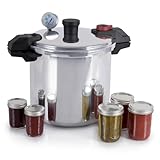
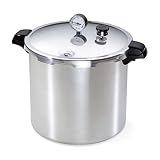
This is the most relevant product here for anyone asking about pressure canning jars. T-fal lists it as a 22-quart aluminum pressure canner with three pressure settings, racks and a canning guide, and says it handles both pressure and water-bath canning. A canner in this size class is meant to hold multiple pint or quart jars at once, but the listing name does not give the exact jar count, so confirm that on the product page.
Aluminum conducts heat well and keeps weight down, but it is not magnetic, so it will not work on an induction cooktop. On a smooth-top glass range, many stove makers warn about heavy canners and base overhang, so check your range manual first.
- Capacity: 22 quarts
- Material: aluminum
- Three pressure settings stated in the listing
- Includes racks and a canning guide
- Pressure and water-bath use stated
- Induction compatibility: not suitable for induction, as aluminum is non-magnetic
Before the first batch, read the manual, inspect the gasket and vent pipe and run a practice session with water and empty jars. Practicing builds confidence with the heat control you need to hold steady pressure. Watch for pressure swings, and when the weight rocks gently or the gauge holds steady, keep the burner just high enough to maintain it. If your canner has a dial gauge, have it checked each year.
Pros
- Purpose-built canner with racks and guide included
- Handles both pressure and water-bath tasks
Cons
- Not usable on induction
- Heavy when full of jars and water
Against the 24-quart induction canner, the T-fal is the more conventional choice for gas and electric coil stoves.
5. LEONICE Canning Supplies Kit with Rack – Best for Stainless Handling Tools

This second LEONICE listing names a rack, canner essential tools, food-grade stainless steel, a two-piece funnel and a three-in-one lid lifter. It is a tool set, not a canner and not jars. The stainless parts are easier to clean than plastic and tolerate hot jar handling.
The rack in a tool kit like this is typically sized for a water-bath pot, so do not place it in a pressure canner unless the maker states it is compatible. Always use the rack supplied with your canner so jars sit off the bottom and steam circulates.
- Brand: LEONICE
- Included: rack, funnel (two pieces), three-in-one lid lifter
- Material: food-grade stainless steel per listing
- Jar count or jars included: confirm on listing
- Compatibility with pressure canners: confirm on listing
A stainless set pairs well with a pressure canner as long as you use each piece for what it does best. The funnel keeps rims clean, the lifter handles hot jars safely, and the lid tool saves your fingers from hot water. Wash and dry the pieces after each batch to avoid water spots and keep them ready for the next session, and store them together in a drawer.
Pros
- Stainless tools are durable and easy to wash
- Named items are clearer than in the first kit
Cons
- No canner or jars
- Rack may not suit a pressure canner
Relative to the first LEONICE set, this one spells out more of its contents.
6. 24-Quart Pressure Canner for Induction and Gas – Best for Induction Cooktops

This listing describes a 24-quart pressure canner for induction and gas, with a 14.5 PSI rating, two stainless steel steamers and one aluminum steamer. The wording also calls it a pressure cooker for canning, which deserves a closer look. Before you buy, confirm that the maker states it is approved for home canning, that it holds at least four quart jars and that it can hold the pressures called for in your recipes, typically 10 or 11 pounds at lower elevations and up to 15 pounds at higher ones.
Induction needs a magnetic base, and the canner base should be flat and not overhang the burner by more than about an inch. Check your cooktop manual for weight limits too, because a full canner is heavy.
- Capacity: 24 quarts
- Stated pressure: 14.5 PSI
- Induction and gas compatibility stated
- Includes two stainless steel steamers and one aluminum steamer
- Gauge or weight type: confirm on listing
- Jar capacity: confirm on listing
If you decide to buy it, read the maker’s manual for the recommended water level, venting time and pressure settings, then compare them to extension guidance for the foods you can. Watch for an overpressure valve, a locking lid and a clear gauge or weighted regulator. The included steamers are useful for steaming but are not a replacement for the jar rack the manual specifies.
Pros
- Works on induction per the listing
- Larger capacity than the T-fal
Cons
- Canning approval needs to be confirmed
- Pressure regulation details are not stated in the listing name
Pick this over the T-fal only if your cooktop is induction; otherwise the T-fal’s clearer canning positioning is simpler.
Specs Compared
| Product | Type | Capacity | Pressure | Material | Induction |
|---|---|---|---|---|---|
| Pressure Canning Meals in Jars | Book | Not applicable | Not applicable | Confirm on listing | Not applicable |
| Mason Jar Pressure Canning | Book | Not applicable | Not applicable | Confirm on listing | Not applicable |
| LEONICE Starter Kit, Beginner Full Set | Tool kit | Confirm on listing | Not applicable | Confirm on listing | Not applicable |
| T-fal 22-Quart Pressure Canner | Canner | 22 quarts | Three settings stated | Aluminum | No (non-magnetic) |
| LEONICE Kit with Rack | Tool kit | Confirm on listing | Not applicable | Food-grade stainless steel | Not applicable |
| 24-Quart Pressure Canner | Canner | 24 quarts | 14.5 PSI stated | Stainless and aluminum steamers | Yes per listing |
How We Chose These
This guide compares the six listed products against what the home-canning guidance from university extension services and the National Center for Home Food Preservation says a safe pressure-canning setup needs: a true pressure canner, proper jars, new lids, validated recipes and basic handling tools. Four of the six listings are books or tool kits rather than jars or canners, and we say so plainly in each section. We relied on listing titles and descriptions and flagged anything that the title does not state. This is a research-based comparison, not a product-by-product evaluation, and it should not replace your canner manual.
What to Look For
The Right Jars for Pressure Canning
Use glass jars made for home canning, usually sold as regular-mouth or wide-mouth Mason-style jars in half-pint, pint and quart sizes. Regular-mouth jars have a roughly 2.75-inch opening and wide-mouth jars about 3.4 inches, and wide-mouth jars are easier to fill with chunky foods such as meat or stew. Do not reuse commercial food jars, such as those from mayonnaise or pasta sauce, because the glass may crack under pressure cycles. Inspect every jar for chips or hairline cracks around the rim, since a damaged sealing surface can prevent a seal. Pints and quarts are the common sizes in processing charts, and half-gallon jars are generally not approved for low-acid foods.
Lids, Rings and Headspace
Home canning lids are a two-piece system: a flat lid with a sealing compound and a screw band. Flat lids should be new for each batch, while bands can be reused if clean and not rusted. Apply the band fingertip-tight, not forced, so air can escape during processing. Headspace is the gap between the food and the rim, and for most low-acid foods it is about one inch; your recipe will say. Use a headspace tool or a ruler to measure rather than guessing, and wipe the rim with a clean cloth before the lid goes on.
Canner Basics and Pressure
Low-acid foods must be processed in a pressure canner because boiling water only reaches 212 degrees Fahrenheit, and the spores of the bacteria that cause botulism need a higher temperature to be destroyed. Extension guidance generally calls for a canner that holds at least four quart jars. Weighted-gauge canners typically process at 10 pounds up to 1,000 feet of elevation and 15 pounds above that. Dial-gauge canners process at 11 pounds up to 2,000 feet and rise by one pound per 2,000 feet after that. If you use a dial gauge, have it checked for accuracy every year. An electric multi-cooker or standard pressure cooker is not a substitute.
A Worked Example
Say you live at 1,500 feet and plan to can pint jars of green beans with a weighted-gauge canner. Because you are above 1,000 feet, you would use the 15-pound weight rather than 10. The approved processing time for green beans in pints is commonly 20 minutes, and for quarts 25 minutes, but always check your current recipe source. Vent steam for 10 minutes, bring the canner to pressure, start the timer only when pressure is reached, and let the canner cool naturally. Never open it by forcing the pressure down with cold water.
Before Your First Batch
Set aside a calm afternoon, clear the counter and read through the whole recipe before touching a jar. Have everything within reach: hot jars, new lids, funnel, ladle, jar lifter, clean cloths and a timer. Check your altitude, because pressure depends on it, and write down the pressure and time you will use. Start with a simple food such as plain green beans or carrots rather than a complex meal in a jar. Once you have a few uneventful batches behind you, move on to meats and soups.
Tools That Make Canning Safer
A jar lifter protects against burns, a wide-mouth funnel keeps rims clean, a bubble remover and headspace tool help with air pockets, and a magnetic lid wand lifts lids from hot water. Stainless or silicone tools are easy to clean. These items are the reason starter kits are popular, but none of them substitutes for following a validated processing time.
Questions
Can I use any glass jar for pressure canning?
No. Use jars made for home canning, which are tempered to handle heat and pressure cycles. Commercial food jars may crack or fail to seal, so skip them.
Do I need new lids every time?
Yes, flat lids should be new for each use because the sealing compound is designed for a single seal. Screw bands can be reused if they are clean and not bent or rusty.
Can I pressure can on an induction cooktop?
Only with a canner that has a magnetic, flat base and that the maker says works on induction. Aluminum canners will not work. Also check your cooktop manual for weight limits and overhang rules.
Is an electric pressure cooker safe for canning?
Extension guidance does not recommend using electric multi-cookers or small pressure cookers to process low-acid foods in jars. A stovetop pressure canner that holds at least four quart jars is the recommended tool.
Are canning books reliable?
They vary. Compare any recipe’s processing time, pressure and headspace with current guidance from a university extension service or the National Center for Home Food Preservation, and follow the more conservative figure if there is a mismatch.
How do I know a jar sealed properly?
After cooling for 12 to 24 hours, the lid center should be concave and not flex when pressed. Remove the band, lift the jar by the lid edge to confirm the seal holds, and refrigerate or reprocess any jar that did not seal.
Update History
- October 20, 2026 – Initial publication; product set drawn from current catalog listings.
- Check the product page for current specifications and availability before buying.
Sources
- University extension service publications on pressure canner use, altitude adjustment and canner care, as compiled for National Center for Home Food Preservation guidance
- Retailer listing titles and specification fields for the six products covered
- Extension and home-canning references on induction and smooth-top cooktop use with canners
Write Your Review
No reviews yet. Be the first to share your experience!