
- Top Pick: QHH Cold Brew Coffee Maker, 64 oz Mason Jar Pitcher with Stainless Steel Filter, Pour Spout Handle Lid, Airtight & Leak-Proof for Iced Coffee,Tea & Lemonade
- Best Value: JunVpic Cold Brew Coffee Maker, 64 oz Glass Mason Pitcher
- Premium Choice: County Line Kitchen 64oz Cold Brew Coffee Maker with Leak Proof Lid – Gray
Disclosure: As an Amazon Associate we earn from qualifying purchases. We may receive a small commission when you buy through links on this page, at no extra cost to you. We only recommend products we genuinely believe offer value to home cooks.
As an Amazon Associate we earn from qualifying purchases at no extra cost to you.


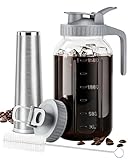


A cold brew coffee maker turns coarse grounds and cold water into a smooth, low-acid concentrate over a long steep, with no heat and no bitterness. Because cold water extracts coffee gently, the result is naturally sweeter and easier on sensitive stomachs than iced hot coffee. The maker itself is simple: a vessel, a fine filter, and a lid. This guide compares five reliable options, from pitcher-style Takeya to the mess-free OXO.
| Rank | Product | Best For | Buy |
|---|---|---|---|
| 1 | Takeya Deluxe Cold Brew (1 qt) | Compact, leakproof | View on Amazon |
| 2 | OXO Brew Compact Cold Brew | Mess-free brewing | View on Amazon |
| 3 | OXO Brew Cold Brew (32 oz) | Paper-filter clarity | View on Amazon |
| 4 | Takeya Patented Deluxe (2 qt) | Larger batches | View on Amazon |
| 5 | Takeya Glass Cold Brew (2 qt) | Glass, no plastic | View on Amazon |
🛒 Best Price Today on Amazon
Prime members get fast, free shipping on everything above, plus member-only deals. New members get a 30-day free trial — cancel anytime.
Top Picks
1. Takeya Deluxe Cold Brew (1 quart)
The Takeya Deluxe is the compact favorite. Its BPA-free Tritan pitcher has an airtight, leakproof lid, so you can steep on its side to save fridge space and pour without spills. The fine-mesh filter keeps grounds out, and the whole thing is dishwasher safe.
2. OXO Brew Compact Cold Brew
OXO’s compact maker is built around a clever rainmaker lid that distributes water evenly over the grounds for consistent extraction. A switch releases the brew through a paper filter into the carafe below, keeping the process tidy and the cup clean.
3. OXO Brew Cold Brew (32 ounce)
This OXO model pairs the same even-saturation design with optional paper filters for an extra-clean concentrate. The 32-ounce carafe stores the finished brew in the fridge, ready to dilute over ice for up to a week or two.
4. Takeya Patented Deluxe (2 quart)
When one quart is not enough, the 2-quart Takeya doubles your batch. It keeps the airtight lid and fine-mesh filter of the smaller model, making it the pick for households or anyone who drinks cold brew daily through the week.
5. Takeya Glass Cold Brew (2 quart)
For those who prefer glass over plastic, this 2-quart Takeya uses a glass pitcher with an airtight lid and handle. It avoids any plastic taste and looks clean in the fridge, while still steeping a large batch of concentrate.
Immersion vs Slow-Drip Cold Brew
Every maker here uses the immersion method: grounds soak fully in cold water for 12 to 24 hours, then you remove the filter. It is simple, forgiving, and produces a strong concentrate you dilute to taste. Slow-drip towers, by contrast, drip water through grounds over hours for a brighter, more delicate result, but they are fussy and expensive. For home use, immersion is the practical and reliable choice.
Pitcher-style makers like Takeya let you steep and store in the same vessel, which is convenient. The OXO design separates brewing from storage, filtering the concentrate into a clean carafe so spent grounds do not keep extracting. Both approaches work; pick based on whether you value simplicity or an extra-clean cup.
How to Make Great Cold Brew at Home
Use a coarse grind, similar to raw sugar, because fine grounds slip through the filter and make the brew muddy and over-extracted. A common ratio is 1 part coffee to 4 parts water by weight for concentrate, which you then dilute roughly one to one with water or milk over ice. Steep in the refrigerator for 12 to 18 hours; longer steeps grow stronger but can turn woody.
Once filtered, the concentrate keeps in the fridge for one to two weeks, so a single batch covers several days. Stir a little into milk for an instant iced latte, or top with hot water for a smooth hot cup. Quality beans still matter, so start with coffee you would happily brew in a French press or an automatic maker.
Who Cold Brew Is For
Cold brew suits iced-coffee lovers, anyone sensitive to acidity, and people who want their coffee ready in the fridge with no morning effort. Choose the 1-quart Takeya or compact OXO if you brew for one or two, and a 2-quart model for a household. Those avoiding plastic should reach for the glass Takeya.
The biggest convenience of cold brew is that it shifts your effort to the night before. Spend five minutes adding grounds and water in the evening, and you wake up to a fridge full of ready concentrate with zero morning fuss. That batch-and-store rhythm is why cold brew has become a household staple rather than a summer novelty. It is also forgiving: unlike a hot pour over, where timing and temperature are precise, cold brew tolerates a wide window of steep times and ratios, so even a first attempt usually tastes good. Once you settle on a ratio you like, the process becomes second nature.
Frequently Asked Questions
How long does cold brew take to make?
Most home cold brew steeps for 12 to 24 hours in the refrigerator. Around 12 to 18 hours hits a sweet spot; steeping much longer can taste woody or overly strong.
What grind size is best for cold brew?
A coarse grind, similar to raw sugar, works best. Fine grounds pass through the filter and make the brew muddy and bitter.
How long does cold brew last in the fridge?
Cold brew concentrate keeps for one to two weeks refrigerated in a sealed container. Diluted cold brew is best enjoyed within a few days.
Is cold brew less acidic than hot coffee?
Yes. Brewing with cold water extracts fewer acidic compounds, so cold brew tends to taste smoother and is often easier on sensitive stomachs.
How do I dilute cold brew concentrate?
Start by mixing the concentrate roughly one to one with water or milk over ice, then adjust to taste. A stronger concentrate gives you more flexibility.





Write Your Review
No reviews yet. Be the first to share your experience!