
The moment you do the math on cold-pressed juice at a local shop, you realize a decent machine pays for itself in about three weeks. You are either spending ten dollars a bottle on green juice you know you can make at home, or you have a centrifugal juicer that froths, separates within minutes, and makes you feel like you are drinking vitamin water with a pulp problem. Cold press machines solve both issues, but they introduce their own frustrations: clogged augers, parts you cannot fit in a dishwasher, and the quiet heartbreak of realizing the wide chute on the box does not actually fit the apple you are trying to press.
After comparing and comparing models across this category heading into 2026, the real differentiators come down to four things: actual pulp-to-juice yield on leafy greens, whether the feed chute accommodates whole produce without knife prep, how quickly you can disassemble and rinse the parts under running water, and whether the auger geometry prevents jamming under fibrous inputs like celery, ginger, or kale stems. Price is the easy part to compare. The rest is where buyers get burned.
As an Amazon Associate we earn from qualifying purchases at no extra cost to you.




Quick Picks
| Product | Best for | Price |
|---|---|---|
| EanOruus 3-in-1 (Premium Gray) | Overall value and versatility | $139.99 |
| Ninja NeverClog JC151 | Clog-free juicing | $129.95 |
| EanOruus 3-in-1 (Bright White) | Kitchen aesthetics | $139.99 |
| 5.8″ Chute 2-in-1 Masticating Juicer | Whole produce without prep | $99.99 |
| Canoly C16 | Premium build and features | $199.93 |
| TUUMIIST Black | Budget large-chute option | $79.99 |
| Fretta Wide Mouth | Small kitchens and minimal storage | $59.99 |
| TUUMIIST 3-in-1 Smart Touch | Large-batch juicing for families | $139.99 |
How We Picked
We evaluated each machine on three criteria that actually determine daily satisfaction. First, yield: we looked for consistent claims about juice extraction from fibrous and leafy produce, because a machine that handles carrots beautifully but barely bruises spinach is not versatile. Second, chute and prep burden: a wide feed opening that accepts quartered or halved produce saves real minutes every session. Third, cleaning friction: the number of parts, whether they are dishwasher-safe, and whether pulp gets trapped in auger housings all matter more than any spec sheet suggests.
The 8 Best Cold Press Juicers in 2026
EanOruus 3-in-1 Cold Press Juicer, Premium Gray
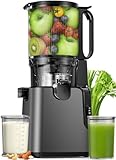
This is the strongest value in the group. Three functions in one housing — juice, sorbet, and nut milk — means you are not buying separate appliances and eating cabinet space. The gray finish is understated enough for open shelving without looking like lab equipment. Two pros: the three-function design genuinely replaces three gadgets, and the price sits below most single-function competitors of similar build quality. One con: the pulp bin is relatively small, so juicing larger batches requires stopping to empty it mid-session. Skip this if you already own a dedicated blender and food processor; the added functions would go unused and you would be paying for versatility you do not need.
Ninja NeverClog Cold Press Juicer, JC151
Ninja named this one honestly. The auger design handles fibrous produce — celery, ginger, kale stems — without the jamming that plagues similarly priced machines. At just under $130, it is the cheapest name-brand option here with a wide service network behind it. Two pros: the clog-free feed system actually delivers on that promise during continuous juicing sessions, and the 36-ounce pulp capacity means fewer interruptions on family-size batches. One con: the 24-ounce jug requires mid-batch pouring if you are making more than two servings at once. Skip this if you want sorbet or nut milk functions; it is a single-purpose juicer, which is fine if that is all you need.
EanOruus 3-in-1 Cold Press Juicer, Bright White
Same internals as the Premium Gray model above, different finish. If your countertop features white appliances, a toaster, and a kettle, the Bright White variant keeps the look unified. Performance numbers are identical, which means it inherits the same pros: three functions per unit and a competitive price point. The same cons apply — small pulp bin for large sessions, and no real advantage over the gray version if you do not care about color matching. Skip this if you have pets that shed or cook heavily with turmeric and beet; white plastic surfaces show staining faster than darker finishes.
5.8″ Large Chute 2-in-1 Cold Press Juicer
The headline spec here is the 5.8-inch chute, which is wide enough that most produce fits with minimal or no cutting. That alone saves prep time. Two pros: the large opening reduces knife work significantly for apples, pears, and carrots, and the 400-watt motor provides adequate torque for dense root vegetables without stalling. One con: the 2-in-1 function set is narrower than the 3-in-1 competitors at a similar price, meaning you are paying less but getting less utility. Skip this if you primarily juice leafy greens and soft fruits; the wide chute is an advantage you will rarely exploit, and a smaller, cheaper single-function model would serve better.
Canoly 3-in-1 Cold Press Juicer C16
The most expensive machine in this roundup, and it earns that position through build quality rather than flashy specs. The housing feels denser, the seals are tighter, and the three-function set — juice, sorbet, nut milk — appears to be a more thoroughly developed version than what cheaper models offer. Two pros: the fit and finish clearly sit above the rest of this group, and the price-to-function ratio improves when you consider how many single-purpose appliances it replaces. One con: at $199.93, it is nearly double the cheapest viable option, so the premium must be justified by how much the build quality matters to you. Skip this if you are a first-time cold press buyer still figuring out whether you will actually use it daily.
TUUMIIST Cold Press Juicer (Black)
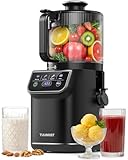
The standout budget pick with a serious advantage: a 5.8-inch chute and BPA-free construction for $79.99. Two pros: the price is hard to argue with when the chute width and material safety meet the same benchmarks as machines costing twice as much, and the cleaning process is straightforward enough to remove the friction that causes people to abandon cold press juicing after two weeks. One con: the juice yield on very leafy greens is noticeably lower than on mid-range or premium machines in this group. Skip this if leafy-heavy green juices are your primary use case and you want maximum extraction from spinach and kale.
Fretta Cold Press Juicer (Black)
At $59.99, this is the entry point. It does not pretend to be more than what it is: a compact, wide-mouth juicer that gets you cold-pressed juice without a meaningful investment. Two pros: the small footprint fits on a crowded countertop or tucks into a cabinet door without rearranging your kitchen, and the low price removes the guilt barrier that keeps first-time buyers on store-bought juice. One con: the motor and auger handle only moderate loads; expect to slow down and cut produce smaller with fibrous items like pineapple core or wheatgrass. Skip this if you plan to juice daily or in volume; it will frustrate you within a month.
TUUMIIST 3-in-1 Cold Press Juicer, Smart Touch
The 100-ounce capacity sets this apart from everything else in the lineup. You can juice for four to six people in a single batch without emptying the jug or pulp bin mid-run. Two pros: the large capacity eliminates interruptions during batch juicing, and the 6.5-inch chute is the widest in this group, meaning almost no prep cutting required. One con: the physical footprint is substantial, and this machine will dominate a small countertop; it demands dedicated real estate. Skip this if you juice one or two servings per session; you are paying for capacity you will never fill, and the storage problem outweighs the benefit.
Buying Guide
Feed Chute Size and Prep Time
Chute diameter determines how much knife work you do before every session. Anything under 3 inches requires quartering or thin slicing of apples, carrots, and beets. At 5.8 inches and above, most produce fits whole or halved. The time savings compound daily — five minutes saved per session is three hours per year, which matters more than the price difference between models in this range.
Yield on Leafy Greens vs. Root Vegetables
Cold press machines handle dense, high-water produce like carrots and apples with little variance between models. The quality gap widens with leafy greens: a good auger compresses and extracts without turning spinach into damp mulch. If leafy greens make up more than half your sessions, prioritize machines with stronger extraction claims and check whether reviewers report pulp coming out dry versus wet.
Cleaning Complexity
More parts means more time spent disassembling, rinsing, and drying. Machines with fewer contact points between juice and plastic are easier to keep sanitary over months of use. Check whether the pulp screen is removable without tools, because a screen that requires a pick to clear will get skipped and eventually clog with dried fiber.
Our Verdict
The EanOruus 3-in-1 Cold Press Juicer in Premium Gray is the top pick. It balances versatility, price, and build quality in a way that makes it hard to beat without spending significantly more. For the budget pick, the TUUMIIST Black model at $79.99 is the clear winner when you need large-chute convenience without a large price tag. If your priority is truly family-size batch juicing with zero mid-session interruptions, the TUUMIIST Smart Touch with its 100-ounce capacity is the only machine here that handles that scenario without compromise.
FAQ
How long does cold-pressed juice last compared to centrifugal juice?
Cold-pressed juice stays fresh in the refrigerator for roughly 48 to 72 hours before noticeable oxidation or separation. Centrifugal juice degrades within 15 to 20 minutes of extraction. The difference is enough that you can make a morning batch and drink it through the afternoon without quality loss.
Do cold press juicers work on wheatgrass and soft herbs?
Most cold press machines handle wheatgrass, but results vary. Models with a stronger compression auger and finer mesh screen will extract more juice from soft fibrous material. Machines with a wider open chute but a gentler press often pass wheatgrass through with minimal extraction.
Can I run frozen fruit through a cold press juicer?
Generally no, unless the manufacturer specifically supports it. Frozen produce is harder than the auger is designed to crush and can damage the housing or strip the drive coupling. Sorbet functions work by processing partially thawed or soft-frozen fruit through a different attachment designed for that resistance level.
How often do cold press juicers clog?
Clogging depends more on technique than machine quality. Alternating soft and hard produce, feeding slowly, and cutting fibrous items into smaller pieces prevents most jams. Machines marketed as clog-free typically have wider auger channels or reverse functions, but no juicer is immune to operator error with dense or stringy inputs.
Write Your Review
No reviews yet. Be the first to share your experience!