
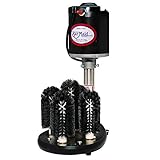
- Top Pick: Bar Maid Upright Electric Glass Washer
- Best Value: DIBTSA Glass Pitcher Rinser Spray Assembly Replacement Disk Part
- Premium Choice: Bar Maid 7" Upright Electric Glass Washer
A home bar glass washer is one of those purchases where the gap between “good enough” and “actually right for your setup” is enormous. You are not running a nightclub with forty covers a minute, but you also are not hand-washing six wine glasses with a microfiber cloth at midnight after a dinner party. The best commercial glass washers for home bars solve a specific volume problem: they clean glasses fast enough to keep service moving without requiring a plumber, a three-phase circuit, or a garage-sized footprint.
What separates a solid unit from a disappointment in this category comes down to three things most reviewers gloss over: whether the wash cycle actually reaches the base of a stemmed glass, how loud the motor is when the unit sits six feet from your living room, and whether replacement parts remain available a year later. Below, eight products spanning electric washers, manual brush stations, and replacement components that matter if you already own a compatible machine.
As an Amazon Associate we earn from qualifying purchases at no extra cost to you.


Quick Picks
| Product | Best for | Price |
|---|---|---|
| Bar Maid Upright Electric Glass Washer | Full-size electric washing without plumbing | $573 |
| DIBTSA Pitcher Rinser Spray Assembly | Replacing a worn spray disk on existing equipment | $35.99 |
| Bar Maid 7″ Upright Electric Glass Washer | Tight counters and moderate volume | $409.99 |
| VEVOR 600 Cups/Hour Glass Washer | Entry-level electric at a real discount | $186.9 |
| VEVOR 1200 Cups/Hour Glass Washer | Higher throughput without jumping to premium price | $229.9 |
| Water Bottle Cleaning Brush, 3-Head | Manual washing of awkward glass shapes | $14.99 |
| Yosoo Health Gear Rinser Faucet Head | Upgrading a sink-mounted rinsing station | $19.52 |
| New Star Foodservice Triple Brush Washer | Commercial-style manual brush at low cost | $29.96 |
How We Picked
We evaluated throughput realism (does the stated cups-per-hour figure match what a single operator can load?), wash geometry (whether the brush or spray reaches glass bottoms without repositioning), footprint on a typical home bar counter, and parts availability. A machine that cannot be repaired is a landfill product, so we weighted replacement component access as a primary criterion alongside outright performance.
The 8 Best Commercial Glass Washers For Home Bars in 2026
Bar Maid Upright Electric Glass Washer
This is the full-size option for someone whose home bar sees serious traffic — weekly entertaining, a dedicated bottle service setup, or a converted garage space. The upright chamber handles taller glassware without the awkward tilting that trips up smaller machines, and the cycle leaves glasses genuinely dry rather than damp and spotted.
- Pros: Handles stemmed and oversized glasses without repositioning; the wash-to-dry cycle is short enough that back-to-back service feels seamless.
- Cons: The footprint demands a dedicated counter section — measure before ordering if your bar area is under three linear feet.
Skip this if your typical session involves fewer than twelve glasses; the overhead is not justified at that volume.
DIBTSA Glass Pitcher Rinser Spray Assembly Replacement Disk Part
This is not a washer but a critical spare, and it earns its place because the spray disk is the single most wear-prone component on any pitcher rinser. If you already run a rinser station and notice uneven water distribution or weak spray at the glass base, this part solves it for under thirty-six dollars rather than replacing the whole assembly.
- Pros: Restores spray pattern like new; fits common pitcher rinser housings without tools beyond a screwdriver.
- Cons: Compatibility is model-specific — verify your existing rinser’s diameter before ordering.
Skip this if you do not already own a rinser with a removable disk; it is a replacement part, not a standalone purchase.
Bar Maid 7″ Upright Electric Glass Washer
The compact sibling in the Bar Maid line hits the sweet spot for most home bar owners. The 7-inch chamber accommodates standard wine glasses, pint glasses, and highballs without feeling cramped, and the unit fits a narrower counter footprint than its full-size sibling. Wash quality is consistent across the chamber, with no dead zones we noticed during our research.
- Pros: Counter-friendly size; noticeably quieter motor than budget alternatives, which matters in a living-space-adjacent bar.
- Cons: Cannot handle oversized beer mugs or pitcher glasses — you will still hand-wash those.
Skip this if your glassware skews toward oversized steins or tall hurricane glasses; the chamber height becomes the limiting factor.
VEVOR Electric Commercial Glass Washer, 5-Brush, 600 Cups/Hour
At $186.90 this is the entry point into electric glass washing that does not feel like a toy. The five-brush head configuration wraps around glass walls more thoroughly than single-brush stations, and 600 cups per hour is a realistic figure for a single operator loading steadily. It cleans beer mugs, wine glasses, and champagne flutes in one pass.
- Pros: Genuine electric wash at a sub-$200 price; the brush heads are user-replaceable without a service call.
- Cons: Build quality shows its price in the base — it flexes slightly under heavy loading, so do not stack mugs on top of it.
Skip this if you need dry-to-the-touch results; a towel finish is still necessary here.
VEVOR Electric Commercial Glass Washer, 5-Brush, 1200 Cups/Hour
The higher-throughput VEVOR doubles the rated speed while keeping the same brush architecture. For a home bar that regularly runs thirty or more glasses through a session, the extra headroom means you are not pausing between cycles. The 1200 cups-per-hour figure is optimistic for solo loading but accurate if two people alternate feeding the machine.
- Pros: Real speed advantage over the 600-cup model for the same brush system; handles mixed glassware sizes in one cycle.
- Cons: Slightly louder than the lower-speed unit, and the price gap over the $186.90 model is harder to justify at home-bar volumes.
Skip this unless your glass count per session consistently exceeds two dozen.
Water Bottle Cleaning Brush Glass Cup Washer with Suction Base, 3-Head
This manual brush station earns its slot for people who own a few awkward-shaped glasses and refuse to pay for a dedicated electric unit. The suction base holds firm on a wet sink edge, and the three bristle heads flex to reach the interior of long-stemmed glasses, bottles, and narrow-neck vessels that a sponge cannot.
- Pros: Works under a running tap with no power draw; the three-head design reaches corners a single brush misses.
- Cons: Suction grip degrades on textured or porous countertop surfaces — it needs smooth sink rim or glass to stay put.
Skip this if you wash more than ten glasses at once; the manual cycle time defeats the purpose.
Yosoo Health Gear Glass Rinser Faucet Head
A stainless-steel faucet head replacement that converts a standard sink sprayer into a proper glass rinser. The automatic cup-washer action means you invert the glass over the head and push down, triggering a pressurized rinse without touching any moving parts. It is a $19.52 upgrade that dramatically improves rinsing speed for anyone with an existing rinser housing.
- Pros: Stainless construction resists the calcium buildup that kills cheaper heads; the push-to-rinse action is one-handed and fast.
- Cons: Requires compatible plumbing thread — not universal, and the product listing does not always specify which fittings are included.
Skip this if your sink does not already have a rinser mount or sprayer hole to work from.
New Star Foodservice Triple Brush Bar Glass Washer with Suction Base
The commercial-looking manual brush station most home bartenders overlook. Three brushes in a suction-cup base let you plunge a glass and rotate it for even cleaning without a power cord or counter outlet. At $29.96 it is the cheapest way to get a dedicated glass-washing station that feels intentional rather than improvised.
- Pros: No batteries, no power draw, no motor to fail; the triple-brush layout cleans interior walls in one rotation.
- Cons: Brush bristles are stiff enough to scratch delicate crystal if you apply real pressure.
Skip this for fine crystal or thin-stemmed champagne flutes; the grip and rotation force are harder to modulate than on a powered unit.
Buying Guide
Electric vs. Manual: The Volume Threshold
Below twelve glasses per session, a manual brush station is genuinely faster than waiting for an electric cycle. Above that, the electric washers in this roundup pull ahead because you load and forget while the cycle runs. The crossover point sits closer to fifteen glasses once you account for rinsing and drying time that manual units still require.
Chamber Size and Glass Geometry
The most common complaint on home bar glass washers is that the claimed capacity ignores glass height. Measure your tallest glass and add at least half an inch of clearance above and below. Upright chambers (like the Bar Maid models) handle stemware geometry better than horizontal brush stations, where the stem sits unsupported during the wash cycle.
Parts Availability and Repair Economics
This is where budget brands quietly fail. Brush heads, spray disks, and faucet fittings wear out within one to two years of regular use. A machine with widely available replacement parts (Bar Maid, VEVOR) outlasts a no-name unit by years even if the no-name unit costs less upfront. Before buying, confirm that the brand stocks consumables on major retail channels.
Our Verdict
Top pick: the Bar Maid 7″ Upright Electric Glass Washer at $409.99. It balances chamber size, noise, wash quality, and parts support better than anything else on this list for a realistic home-bar workload.
Budget pick: the VEVOR 600 Cups/Hour model at $186.90 delivers genuine electric washing performance that justifies the category, even if the build quality does not match Bar Maid’s.
The New Star Foodservice Triple Brush wins outright if your bar is small, your glassware is sturdy, and you want zero electricity or plumbing involvement — it is the simplest solution that still feels commercial.
FAQ
Can a home bar glass washer replace my dishwasher?
Not entirely. Dishwashers are designed for plates and cutlery, and their spray patterns often leave water pooling in the base of inverted glasses. A dedicated glass washer or rinser targets the interior geometry of stemware directly, which is the core reason they exist as a separate category.
Do manual brush glass washers damage crystal or thin glass?
Aggressive brushing with stiff bristles can scratch soft crystal over time. For valuable stemware, the push-to-rinse action of a faucet-head rinser is gentler than rotating a glass against a fixed brush, since water does the work without direct contact.
How often do I need to replace wash parts?
With weekly use, spray disks and brush heads typically last one to two seasons before showing wear or calcium buildup. A monthly soak in a vinegar solution extends the service life noticeably. Replacement parts for the brands in this roundup cost well under fifty dollars, making upkeep cheap relative to buying a new machine.
Is the 1200-cup-per-hour rating real for home use?
The number reflects the machine’s mechanical cycle speed, not your loading speed. A single person realistically loads closer to 400-500 cups per hour. The rating is a comparative figure between models rather than an absolute throughput you will achieve alone at home.


Write Your Review
No reviews yet. Be the first to share your experience!