
- Top Pick: Rev-A-Shelf 36" 3-Tiered Trimmable Wooden Pull-Out Spice Rack, Maple
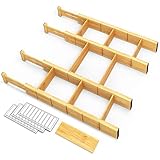
- Best Value: SpaceAid Bamboo Drawer Dividers with Inserts and Labels, Kitchen Adjustable Drawer Organizers, Expandable Organization for Home, Office, Dressers, 4 Dividers with 9 Inserts (17"-22" Natural)
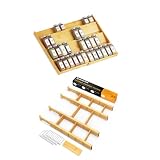
- Premium Choice: SpaceAid Bamboo Spice Drawer Organizer and Bamboo Drawer Dividers with Inserts and Labels, Kitchen Adjustable Drawer Organizers
An organized kitchen is the backbone of an efficient home, and few projects offer as much daily satisfaction as a perfectly curated spice drawer. Instead of rummaging through cluttered wall cabinets or spinning a lazy Susan, a dedicated spice drawer keeps your seasonings visible, accessible, and protected from heat and light. However, the success of this setup relies entirely on spatial precision. If your dividers are spaced too far apart, your jars will roll and slide every time you open the drawer; if they are too narrow, your favorite gourmet blends won’t fit at all.
When planning your kitchen layout or upgrading your storage solutions in 2026, understanding the exact dimensions of your spice collection and drawer inserts is essential. This guide covers everything you need to know about spacing, drawer depths, and choosing the right insert materials for a flawless, custom-fit finish.
As an Amazon Associate we earn from qualifying purchases at no extra cost to you.


The Short Answer
For standard 2-ounce to 4-ounce spice jars, your spice drawer insert dividers should be spaced 2.25 to 2.75 inches (5.7 to 7.0 cm) wide. This range accommodates the vast majority of commercial glass spice jars, whether they are round or square.
If you prefer larger, bulk-sized spice containers (typically 6 to 8 ounces), you will need a wider spacing of 3.25 to 3.5 inches (8.3 to 8.9 cm). For a highly versatile, future-proof drawer, look for adjustable divider systems. These allow you to customize individual rows to accommodate varying jar diameters, ranging from slim 1.75-inch specialty tins up to oversized 3.75-inch shaker tubs, without wasting valuable drawer space.
Standard Sizes
To help you plan your drawer layout, here is a breakdown of common spice jar sizes alongside their recommended divider spacing and the corresponding metric measurements.
| Jar Type & Capacity | Average Jar Diameter/Width | Recommended Divider Spacing (Inches) | Recommended Divider Spacing (Metric) | Best Insert Style |
|---|---|---|---|---|
| Small Specialty Tins / Test Tubes (1–1.5 oz) | 1.5″ – 1.75″ | 1.85″ – 2.0″ | 4.7 cm – 5.1 cm | Custom horizontal grids or shallow acrylic trays |
| Standard Round/Square Jars (2–4 oz) | 2.0″ – 2.25″ | 2.25″ – 2.5″ | 5.7 cm – 6.4 cm | Angled tiered trays or adjustable bamboo dividers |
| Gourmet Square Glass Jars (4 oz) | 2.125″ – 2.35″ | 2.5″ – 2.75″ | 6.4 cm – 7.0 cm | Angled wood inserts or spring-loaded tension dividers |
| Large Bulk Spice Jars (6–8 oz) | 2.75″ – 3.25″ | 3.25″ – 3.5″ | 8.3 cm – 8.9 cm | Deep drawer dividers or wide vertical pull-out trays |
| Oversized Commercial Shakers (10–12 oz) | 3.5″ – 3.75″ | 3.75″ – 4.0″ | 9.5 cm – 10.2 cm | Heavy-duty wooden pull-out racks |
How to Measure Your Space
Before purchasing any spice inserts or adjustable dividers, you must take precise measurements of your drawer cavity. Do not rely on the exterior dimensions of your cabinet face, as drawer glides and box construction significantly reduce the usable interior space.
- Step 1: Measure the Interior Width
Open your drawer fully and measure the distance from the inside of the left drawer wall to the inside of the right drawer wall. Measure at both the front and back of the drawer, as older wooden drawers can warp slightly over time. Use the smaller of the two measurements. - Step 2: Measure the Interior Depth
Measure from the inside of the front drawer panel to the inside of the back panel. This determines how long your dividers or tiered trays can be. If you are using spring-loaded tension dividers, this measurement dictates the expansion range you need (typically 17 to 22 inches). - Step 3: Measure the Interior Height (Clearance)
Measure from the drawer bottom to the lowest point of the cabinet frame above the drawer. This is your clearance height. If you are using angled tiered inserts, you must add the height of the angled tray to the thickness of your spice jars to ensure the drawer can close smoothly without catching the lids. - Step 4: Measure Your Spice Jars
Gather a representative sample of your spice collection. Measure the widest point of the jars, including the lids. If you use a mix of brands, sort them by size to determine how many narrow, medium, and wide channels you will need to create with your dividers.
By Room or Use Case
The ideal spacing and style of your spice drawer dividers depend heavily on how you use your kitchen and the specific layout of your cabinetry. Here is how to approach different design scenarios:
Standard Spice Drawers (Standard 2-oz to 4-oz Jars)
In a standard kitchen setup, most homeowners opt for uniform, pre-packaged glass jars to create a clean, cohesive look. For this application, angled tiered trays or fixed-width dividers are highly effective. If you use adjustable bamboo dividers (which typically cost between $20 and $45 for a multi-pack), you can set the spacing to a consistent 2.5 inches. This leaves enough wiggle room to easily retrieve a jar without scraping your knuckles, but keeps the jars upright and aligned when the drawer is opened quickly.
Deep Drawers & Bulk Storage
If you are allocating a deep pot-and-pan drawer for your spices, standard angled trays will leave too much wasted vertical space. Instead, utilize deep vertical dividers. A set of deep bamboo drawer dividers with modular inserts (ranging from $25 to $50) allows you to partition the deep drawer into a grid. Space the primary dividers 3.5 inches apart to accommodate larger bulk containers, and use smaller slot-in cross-dividers to keep smaller jars from sliding underneath the larger ones.
Multi-Purpose Kitchen Drawers
If you have limited cabinet space, you may need to share a single wide drawer between spices, cooking utensils, and measuring cups. In this scenario, modular bamboo divider kits are invaluable. You can use long tension dividers to section off a 6-inch wide channel for utensils, and then use smaller, 2.5-inch cross-inserts to build a dedicated grid for your spices. High-quality modular packs, containing various insert lengths, typically range from $12 to $25 and provide the flexibility needed to build a multi-functional layout.
Built-In Wooden Pull-Outs
For high-end, custom kitchen renovations, a built-in wooden pull-out spice rack offers a premium, integrated look. Products like a 36-inch 3-tiered trimmable maple pull-out (ranging from $150 to $180) are designed to be cut down by a professional carpenter or an advanced DIYer to fit the exact dimensions of your drawer box. These systems feature solid wood construction and lip barriers on each tier, keeping your spices organized in permanent, beautifully finished rows.
Common Sizing Mistakes
To ensure your spice drawer project is a success, avoid these common layout and measurement pitfalls:
- Ignoring the “Lid Factor”: Many homeowners measure the glass base of their spice jars but forget that the plastic or metal lids are often slightly wider. Always measure the widest part of the jar, which is frequently the cap or the shaker lip.
- Forgetting Vertical Clearance on Tiered Trays: When a spice jar sits on an angled tiered insert, it rests at an incline. This increases the total height of the jar relative to the bottom of the drawer. If your drawer clearance is under 3.5 inches, standard angled inserts may cause your jar lids to scrape against the cabinet frame when closed.
- Over-Compressing Spring-Loaded Dividers: Tension dividers are excellent for custom layouts, but over-tightening them in thin-walled, inexpensive melamine or plywood drawers can cause the drawer joints to bow or split. Always measure your drawer’s structural integrity before applying high-tension organizers.
- Zero Tolerance Spacing: Spacing your dividers exactly to the millimeter of your jar width makes it incredibly difficult to pull jars out during active cooking. Always add a minimum of 0.125 to 0.25 inches (3 to 6 mm) of clearance to your divider spacing for effortless handling.
FAQ
How deep does a drawer need to be for a spice insert?
For a flat-lay drawer organizer where jars lie completely flat, you need a minimum interior drawer depth (height) of 3 inches. If you are using an angled tiered insert, you will generally need an interior drawer clearance of 4 to 4.5 inches, depending on the diameter of your spice jars and the angle of the tray tiers.
Are wooden or bamboo dividers better than plastic?
Bamboo and hardwood dividers (such as maple) offer superior durability, a premium aesthetic, and eco-friendly appeal. They are also less prone to static, which means they won’t attract loose spice dust. Plastic and acrylic inserts are more budget-friendly (often under $15) and easier to wash in the sink, but they can scratch over time and lack the high-end feel of wood.
Can I trim standard wooden spice inserts to fit my drawer?
Yes, many high-quality wooden spice inserts and tiered trays are designed specifically to be trimmable. Using a table saw or a fine-tooth hand saw, you can trim the outer edges of maple or birch inserts to match your drawer’s exact interior width and depth for a seamless, built-in appearance.
How do I prevent spice jars from rolling around if the divider is too wide?
If your dividers are slightly too wide for your jars, you can line the bottom of the drawer or the insert channels with a high-grip, non-adhesive silicone drawer liner. This adds friction and prevents the jars from sliding or rolling when the drawer is opened and closed.
Ready to decide? Our #1 pick for 2026 is the Small Specialty Tins / Test Tubes (1–1.5 oz).
Live price & availability on Amazon.


Write Your Review
No reviews yet. Be the first to share your experience!