
Choosing between metal wire vs plastic bins for walk in pantry storage is less about which material is “better” and more about how you shop, cook, and use every inch of the room. Wire shelving keeps food visible, allows air to circulate, and can hold bulky items without adding much visual weight. Plastic bins, by contrast, create defined categories that make small packages, snacks, and backup supplies easier to contain and carry.
The real decision is whether your pantry needs an open storage framework or a collection of portable compartments. A household with tall shelves and large appliances may prefer adaptable wire. A family managing snack packets, narrow shelves, or frequent spills may get more value from clear plastic bins. The comparison below breaks down the trade-offs so you can plan a pantry that remains useful beyond the first organizing day.
As an Amazon Associate we earn from qualifying purchases at no extra cost to you.


Quick Verdict
Choose metal wire when ventilation, weight capacity, and adjustable storage matter most. It is especially useful for canned goods, appliances, baskets, and oversized packages. Wire shelves also make it easier to see what is behind an item, although small products can fall through gaps unless you add shelf liners or trays.
Choose plastic bins when containment, portability, and quick cleaning are your priorities. Clear bins group similar products, prevent loose packets from spreading, and can be pulled off a high shelf as one unit. They use more material and can reduce usable width, but they often make a busy pantry easier to maintain.
For many walk-in pantries, the best answer is a combination: wire shelving as the foundation, with plastic bins on selected shelves for snacks, baking ingredients, produce, and small packages.
Side by Side
| Factor | Metal wire | Plastic bins |
|---|---|---|
| Comfort | Easy front access, but bending or reaching between open shelves can be less tidy | Handles make bins comfortable to pull down and carry |
| Durability | Strong steel shelving can support heavy cans and appliances; coatings may scratch or rust | Good for everyday dry goods, but thin plastic can crack under impact or heavy loads |
| Typical price range | About $40–$250 for a shelving unit; $6–$20 for simple wire accessories | About $8–$25 per medium or large bin; $30–$150 for a coordinated set |
| Maintenance | Wipe or vacuum dust from gaps; liners help with crumbs and leaks | Remove and wash when spills occur; smooth surfaces are usually easy to wipe |
| Space needed | Uses wall depth efficiently; common shelf depths are 12–16 inches | Needs clearance for the bin’s full width and handle; common depths are 10–15 inches |
| Look | Light, open, and utilitarian; contents remain visible from multiple angles | Clear bins create a more uniform, cabinet-like appearance |
| Resale and flexibility | Freestanding or adjustable systems can move to a laundry room or garage | Easy to reuse elsewhere, but bin sizes may not suit every future shelf |
| Best for | Cans, appliances, bulk foods, paper products, and large containers | Snacks, packets, baking supplies, produce, supplements, and small categories |
| Visibility | Excellent open visibility, though items can become visually busy | Good when clear; labels help when bins are crowded or stacked |
Where Metal Wire Wins
It handles a broad mix of sizes. A wire shelf can hold a 10-pound bag of flour beside a countertop appliance, a case of sparkling water, or a tall cereal container. Rather than buying a separate container for every shape, you can adjust shelf spacing around the items you already own. For a walk-in pantry with 16- to 24-inch vertical gaps, adjustable wire shelving is particularly practical.
Airflow is built in. Open construction helps reduce trapped moisture around onions, potatoes, paper goods, and frequently handled containers. It also makes the shelves feel less cramped in a narrow pantry. Wire does not guarantee ideal food storage—temperature and humidity still matter—but it avoids the closed-in effect of solid containers.
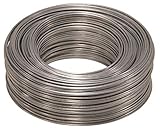
It offers a strong base for organization. A 36-inch-wide steel shelf may support several categories at once, while shelf liners, turntables, and a few baskets solve the smaller containment problems. A roll of craft wire such as Hillman Hobby Steel 20 Gauge x 175ft, priced at $6.98, or SciWil 20 Gauge Craft Wire, priced at $5.28, may be useful for household labeling or light DIY tasks. These are raw wire rolls, however, not substitutes for a load-rated pantry shelf or storage basket.
It can cost less per usable square foot. A basic freestanding unit may provide four or five shelves across 36 inches of width for roughly $60–$150. That is often more economical than filling the same footprint with a dozen individual containers. Wire also lets you postpone decisions: you can add bins only where loose items cause trouble.
The drawbacks are equally clear. Small packets can tip over or slide through wide openings, and crumbs may collect below the shelf. Wire can also be uncomfortable for items with unstable bases. A 12- to 16-inch plastic shelf liner is an inexpensive fix, but it adds another surface to clean and can reduce some of the ventilation advantage.
Where Plastic Bins for Walk in Pantry Wins
Bins create instant categories. One container can hold granola bars, another can hold drink mixes, and a third can corral frosting, sprinkles, and decorating tools. This “one bin, one category” approach limits clutter and makes restocking faster. Clear sides let you check inventory without opening every container.
They are easier to move. A bin with a cutout or molded handle can be pulled from a 16-inch-deep shelf, carried to the island, and returned when you finish cooking. That is more convenient than reaching to the back for several small packages. Handles are especially helpful on shelves above shoulder height, although avoid overloading a bin you need to lift overhead.
They contain messes. A leaking bottle or torn flour bag is less likely to spread across an entire shelf when it is inside a removable bin. Plastic is also useful for pet treats and children’s snacks because the contents stay grouped and are easy to inspect. Washable bins can be cleaned with warm water and mild dish soap; dry them fully before returning dry food.
Large clear organizers are commonly sold in the $10–$25 range per bin or pair. For example, the YIHONG six-pack of large clear bins with handles is listed at $23.99, while a two-pack from BINO’s SOHO Collection is listed at $21.99. Product dimensions vary, so measure the shelf opening before purchasing. A bin that is 12 inches wide may fit only two across a 25-inch shelf once you allow space for handles and wall clearance.
Plastic has limits. A bin itself occupies usable space, and tapered walls can waste a little capacity at the bottom. Clear plastic may become cloudy or scratched, while brittle containers can crack if dropped on a hard floor. Do not assume every bin is designed for heavy cans: check its stated capacity and keep dense items in smaller containers that are easier to lift.
Cost Over 5 Years
A basic wire-first setup may cost approximately $80–$180 for shelving, $15–$40 for liners or baskets, and $10–$30 for replacement accessories over five years. A reasonable total is $105–$250, assuming the shelving remains structurally sound and you do not remodel the room.
A plastic-bin-first setup for 12 to 20 categories may cost about $120–$400 initially, depending on size and whether you buy multipacks. Allow another $20–$60 for replacements if bins crack, disappear into other rooms, or no longer fit after a shelf change. The five-year total is roughly $140–$460.
These are planning ranges, not guaranteed lifetime costs. Wire can become more expensive if you add custom brackets or specialized baskets. Plastic can be the better value when it prevents duplicate purchases and food waste. In either case, measure first: buying containers that do not fit is one of the fastest ways to increase the real cost.
Which One for Your Home
Small apartment
Start with adjustable wire shelving or a narrow 12-inch-deep unit, then add two to six clear bins for small items. This combination preserves flexibility when the pantry doubles as a utility closet. Choose bins no wider than the shelf depth and leave at least 1 inch of side clearance where possible.
Family with kids or pets
Use wire for heavy and oversized supplies, but put snacks, lunch components, and pet treats in handled plastic bins. Store the most frequently used bins between waist and chest height. A 10- to 12-inch-high bin is usually easier for children to lift than a deep container packed with dense cans.
Rental
Favor freestanding wire shelving and removable plastic bins over wall-mounted systems. Wire can adapt if you move, while bins can transfer to kitchen cabinets, a laundry area, or a garage. Keep original packaging and avoid drilling unless your lease permits it.
Long-term home
Invest in a durable, adjustable wire system as the infrastructure, then customize by zone. Use plastic bins where categories change often or where spills are likely. This approach handles evolving shopping habits without requiring a complete pantry overhaul every few years.
FAQ
Are metal wire shelves better than plastic bins?
Neither is universally better. Wire shelves are better for flexibility, airflow, and heavy or oversized items. Plastic bins are better for containing small products, simplifying cleaning, and moving groups of items. A mixed system is usually the most functional choice.
Will plastic bins fit on standard pantry shelves?
Many do, but “standard” dimensions vary. Measure the shelf’s usable width, depth, and height, including door trim and brackets. Leave about 1 inch of clearance so a bin can slide out without scraping the wall or neighboring container.
How do I keep food from falling through wire shelving?
Add fitted shelf liners, shallow trays, or baskets. Liners should be easy to remove and clean, and they should not curl into walkways. For very small packets, a plastic bin is usually simpler than trying to block every opening.
How many pantry bins should I buy?
Begin with the categories that regularly become messy rather than filling every shelf. Six to 12 bins is enough for many households to test the system. Live with that arrangement for a few weeks, then add containers only where they solve a specific access or containment problem.
Ready to decide? Our #1 pick for 2026 is the Comfort.
Live price & availability on Amazon.



Write Your Review
No reviews yet. Be the first to share your experience!