
- Top Pick: Cuisinart Chef’s Classic 11-Piece Stainless Steel Pots and Pans Set, Cookware Set Compatible with Induction, Electric, Gas Cooktops, Aluminum Core for Even Heat, Cool Grip Handles, Dishwasher Safe
- Best Value: Ammeloo 17 Pcs Stainless Steel Cookware Set, Pots and Pans Set Non Stick
- Premium Choice: Ammeloo 17 Pcs Pots and Pans Set Non Stick, Stainless Steel Cookware Set
Disclosure: As an Amazon Associate we earn from qualifying purchases. We may receive a small commission when you buy through links on this page, at no extra cost to you. We only recommend products we genuinely believe offer value to home cooks.
As an Amazon Associate we earn from qualifying purchases at no extra cost to you.

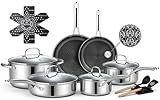


Choosing between nonstick vs stainless steel cookware is one of the first big decisions any home cook faces. Both have loyal fans, and the truth is that most well-equipped kitchens use both for different jobs. Nonstick excels at delicate, low-fat cooking and effortless cleanup, while stainless steel delivers high heat, durability, and the browning that builds deep flavor. This guide breaks down how each performs, where each shines, and how to decide what belongs in your kitchen.
🛒 Best Price Today on Amazon
Prime members get fast, free shipping on everything above, plus member-only deals. New members get a 30-day free trial — cancel anytime.
How the Two Surfaces Differ
Nonstick pans have a coating, usually a PTFE-based material such as the brand Teflon or a ceramic coating, applied over an aluminum or aluminum-clad base. That coating prevents food from bonding to the metal, so eggs slide right out and cleanup is quick. Stainless steel, by contrast, is a bare metal surface, typically with an aluminum or copper core sandwiched inside for even heating. Food can stick to stainless, especially proteins, but that contact is exactly what creates the flavorful browned bits, called fond, that form the base of pan sauces.
Heat and Browning
Stainless steel is the clear winner for high-heat cooking. You can crank the burner, get a screaming-hot surface, and develop a deep golden crust on steaks, chicken, and vegetables. It is also oven-safe to high temperatures and broiler-safe. Nonstick coatings, on the other hand, should not be used over very high heat. Most manufacturers recommend keeping nonstick to medium or lower, because excessive heat can degrade the coating over time and reduce its lifespan. If you love searing and want that restaurant-style crust, stainless is the tool for the job. For a related deep dive, see our guide to cast iron skillets for searing steak.
Ease of Use and Cleanup
Nonstick wins decisively on convenience. Eggs, pancakes, crepes, fish, and other delicate or sticky foods release effortlessly, and you can often cook with little to no oil. Cleanup is usually a quick wipe. This makes nonstick ideal for everyday breakfasts and for cooks who want minimal fuss. Stainless steel requires more technique: preheating the pan properly, adding fat, and letting food release naturally before flipping. It also takes more elbow grease to clean, though a little water and a gentle scrub, or a soak, handles most stuck-on bits.
Durability and Lifespan
Stainless steel is built to last decades. It tolerates metal utensils, abrasive scrubbing, the dishwasher, and high heat without complaint. Nonstick is far more fragile; the coating wears down over a few years of regular use, scratches if you use metal tools, and eventually loses its release properties. Even with careful use, most nonstick pans are considered consumable items to be replaced periodically. If long-term value and toughness matter most, stainless steel is the better investment, while nonstick is best viewed as a convenient but replaceable workhorse.
Health and Safety Considerations
Modern nonstick cookware is considered safe for normal cooking when used as directed, meaning medium heat and no metal utensils. The main caution is avoiding overheating an empty nonstick pan, which can release fumes. Ceramic-coated nonstick is a popular alternative for those who prefer to avoid PTFE altogether. Stainless steel has no coating to worry about, making it a favorite for high-heat cooking and for people who want the most durable, low-maintenance option. Both are safe choices when used appropriately.
Which Should You Choose?
The honest answer is that most cooks benefit from owning both. A common setup is one or two nonstick skillets for eggs and delicate foods, plus a stainless steel skillet and a stainless saucepan or saute pan for searing, sauces, and high-heat work. If you can only pick one to start, choose based on your cooking style: stainless steel for versatility and longevity, nonstick for convenience and easy breakfasts. For complete kitchens, you can also explore our roundup of pots and pans cookware sets and our full cookware section.
Caring for Each Type of Cookware
Proper care dramatically extends the life of both pan types, but the rules differ. For nonstick, use only wooden, silicone, or nylon utensils to protect the coating, keep the heat at medium or lower, and avoid metal scrubbers or abrasive powders. Hand washing is gentler than the dishwasher, even on dishwasher-safe models, and you should never use cooking sprays, which can leave a sticky residue that builds up over time. For stainless steel, you have far more freedom: metal utensils, high heat, and vigorous scrubbing are all fine. If food sticks or you see discoloration, a paste of baking soda and water or a dedicated stainless cleaner restores the shine. Deglazing a hot stainless pan with a splash of water or stock lifts stuck-on fond easily and gives you the base for a quick sauce. Matching your cleaning habits to the material keeps both pans performing their best for years.
Building a Versatile Cookware Collection
Rather than viewing this as an either-or decision, think about assembling a small core set that covers every cooking task. A practical starter collection includes one ten-inch nonstick skillet for eggs and delicate foods, one stainless steel skillet for searing and sauces, a stainless saucepan for grains and reheating, and a larger pot or Dutch oven for soups and braises. With those four pieces you can handle nearly any recipe, using the right surface for each job. As your skills grow, you might add a cast iron skillet for the highest-heat searing and a nonstick crepe or omelet pan for breakfast specialties. Investing in fewer, higher-quality pieces and caring for them well almost always beats buying a large cheap set that wears out quickly. Quality cookware is one of the few kitchen purchases that genuinely pays you back every single day.
Frequently Asked Questions
Can you sear meat in a nonstick pan?
You can cook meat in nonstick, but you will not get the same deep crust because nonstick should stay at medium heat and the coating limits the high-temperature browning that stainless or cast iron provides.
Is stainless steel hard to cook on?
It has a learning curve. Preheat the pan, add fat, and wait for food to release naturally before flipping. Once you learn the rhythm, sticking becomes much less of an issue.
How long does nonstick cookware last?
With careful use, most nonstick pans last around three to five years before the coating wears out. Avoid metal utensils, high heat, and abrasive scrubbing to extend their life.
Is one easier to clean than the other?
Nonstick is far easier; usually a quick wipe is enough. Stainless takes more effort, but soaking and a gentle scrub, or deglazing with water, removes stuck-on food.
Are nonstick coatings safe?
Modern nonstick is considered safe at normal cooking temperatures. The key precaution is never overheating an empty pan. Ceramic-coated options exist for those who prefer to avoid traditional coatings.
For more cookware care and selection help, see how to season a cast iron skillet, our Le Creuset Dutch oven guide, and the best cast iron skillets and frying pans.



Write Your Review
No reviews yet. Be the first to share your experience!