
A pour over coffee maker for entertaining can turn coffee service into an enjoyable part of hosting friends and family. However, brewing for several people is different from preparing one carefully measured cup. Dripper capacity, kettle volume, heat retention, filtration, and serving time all matter. This guide explains how to choose a pour-over setup that produces satisfying coffee without keeping guests waiting unnecessarily.
- Quick Verdict: Which Pour-Over Coffee Maker Is Best for Entertaining?
- Understanding Pour-Over Coffee
- Choosing the Right Pour-Over Design
- Matching Capacity to Guest Count
- Coffee-to-Water Ratio for Groups
- Filter Design and Flavor
- Choosing the Right Kettle
- Brewing Temperature and Extraction
- Understanding Blooming
- Pouring Technique for Consistent Coffee
- Grinding Coffee for Guests
- Choosing a Serving Carafe
- Keeping Coffee Warm for Guests
- A Practical Pour-Over Hosting Workflow
- Entertaining With Different Coffee Preferences
- Cleaning After Entertaining
- Safety When Serving Groups
- Choosing by Entertaining Style
- Common Buying Mistakes
- Frequently Asked Questions
- Conclusion
Quick Verdict: Which Pour-Over Coffee Maker Is Best for Entertaining?
For most hosts serving several guests, a large-capacity pour-over dripper or integrated glass-carafe brewer is a practical starting point.
The best design should accommodate the intended coffee dose, distribute water appropriately, and collect enough beverage for several servings.
However, a large dripper does not automatically produce good coffee.
Batch size affects coffee-bed depth, water flow, brew time, and temperature management.
| Buying Factor | Why It Matters for Hosting | Priority |
|---|---|---|
| Practical batch capacity | Determines how many guests can be served | Essential |
| Filter-basket design | Affects brewing flow and coffee-bed geometry | High |
| Compatible filter availability | Determines ongoing convenience | High |
| Carafe capacity | Supports serving several cups | Essential |
| Thermal retention | Helps preserve serving temperature | High |
| Kettle capacity | Determines whether water must be reheated | High |
| Stable brewing platform | Reduces spill and breakage risks | Essential |
| Cleaning access | Simplifies cleanup after guests leave | High |
| Replacement parts | Supports long-term ownership | Useful |
For occasional gatherings, one well-sized pour-over setup is usually more practical than several different specialty drippers. However, hosts preparing coffee for large groups may be better served by a batch drip brewer.
Understanding Pour-Over Coffee
How Pour-Over Brewing Works
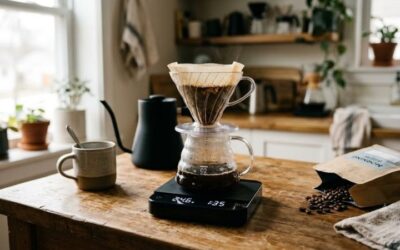
Pour-over coffee is a manual filter-brewing method.
Hot water is poured over ground coffee held in a filter.
Gravity draws water through the coffee bed and into a cup or carafe.
The person brewing controls how water is added, including pouring rate, direction, and timing.
These variables influence extraction.
Unlike a fully automatic drip coffee maker, a manual dripper generally does not heat water or regulate flow independently.
This gives the user control but also requires attention.
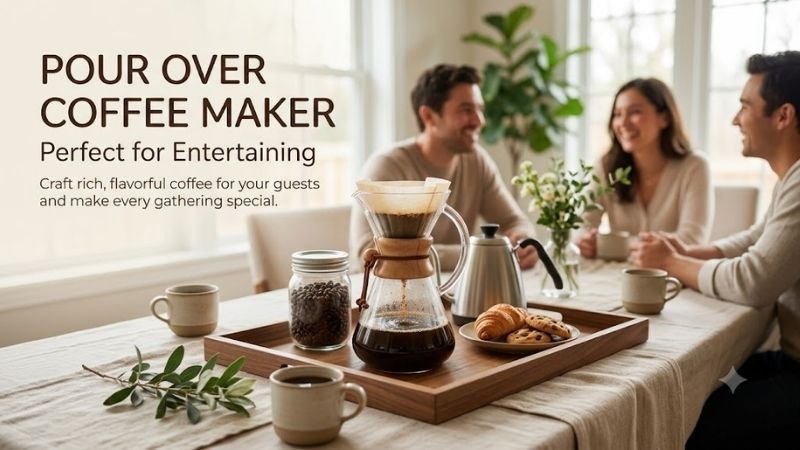
Why Pour-Over Appeals to Hosts
Pour-over brewing can be an engaging activity.
Guests may enjoy seeing coffee prepared and discussing different beans.
It can also provide flexibility for serving particular roasts.
However, hospitality should remain the priority.
A complicated brewing demonstration is less appealing when several guests are waiting for coffee after dinner.
Choose a setup that balances enjoyment with practical service.
Pour-Over vs. Automatic Drip Coffee
Automatic drip machines heat and distribute water.
Manual pour-over systems require a kettle and user-controlled pouring.
| Feature | Manual Pour-Over | Automatic Drip Coffee Maker |
|---|---|---|
| Brewing involvement | High | Lower |
| Flow control | Manual | Machine-controlled |
| Water heating | Separate kettle | Usually built in |
| Batch capacity | Depends on dripper and carafe | Depends on machine |
| Entertaining appeal | Hands-on preparation | Convenient batch service |
| Cleanup | Filter, dripper, carafe | Filter basket, carafe, machine |
| Storage | Can be compact when disassembled | Dedicated appliance footprint |
| Best fit | Hosts who enjoy manual brewing | Hosts prioritizing speed |
If coffee preparation is part of the gathering, pour-over can be rewarding.
If coffee is simply one beverage among many, an automatic brewer may be more practical.
Choosing the Right Pour-Over Design
Cone-Shaped Drippers
Cone-shaped drippers hold coffee grounds in a tapered filter.
Their shape affects coffee-bed geometry and drainage behavior.
Some designs use a relatively large opening at the bottom.
Others restrict flow more.
For entertaining, choose a size that supports the required coffee quantity.
A small cone dripper may be excellent for individual cups but inconvenient for serving six people.
Flat-Bottom Drippers
Flat-bottom drippers distribute coffee across a relatively broad lower surface.
Depending on the design, they may use wave-shaped filters or other arrangements.
They can be suitable for batch brewing, but performance depends on the complete system.
A flat bottom does not automatically guarantee more even extraction.
Grind, filter, pouring technique, and outlet geometry still matter.
Integrated Carafe Brewers
Some pour-over systems position a filter cone directly above a glass brewing vessel.
This can provide a convenient serving arrangement.
The complete design may also be visually attractive on a dining table.
However, an integrated glass carafe may be fragile and expensive to replace.
Choose a vessel that is comfortable to lift, pour, and wash.
Separate Dripper and Carafe
A separate dripper can offer more flexibility.
It may be placed over a compatible serving vessel.
However, stability is essential.
The dripper must sit securely on the carafe without tipping or blocking necessary airflow.
Check manufacturer compatibility rather than assuming every dripper fits every vessel.
Matching Capacity to Guest Count
Determine the Number of Coffee Drinkers
Not every guest at a gathering will necessarily drink coffee.
Start by estimating actual demand.
For example, eight dinner guests may include only five coffee drinkers.
Some may prefer tea or decaf.
Planning based on realistic demand can reduce wasted coffee and preparation time.
Define Serving Size
A small after-dinner coffee serving may be very different from a large breakfast mug.
For example, a six-fluid-ounce serving is approximately 177 milliliters.
Four such servings require about 710 milliliters of finished beverage.
However, the amount of water poured during brewing will be greater because coffee grounds retain some liquid.
Do not assume that a carafe holding 710 milliliters can produce exactly four full servings when the brewing setup has no remaining headroom.
One-Liter Batches
A dripper and carafe intended for roughly one liter of brewing water may support several modest servings.
However, the finished beverage yield is lower than the water added.
Check whether the brewer’s rated capacity refers to water input or collected coffee.
This distinction matters for hosting.
Multiple Smaller Batches
Two smaller batches can sometimes be preferable to one oversized batch.
They may offer better extraction control and allow different coffee choices.
However, repeated brewing takes more time and attention.
If many guests want coffee simultaneously, a larger automatic brewer may be more practical.
Planning for Second Servings
Some guests may want more coffee.
If you plan to offer refills, estimate additional demand.
However, brewing a large amount unnecessarily can waste coffee.
A practical hosting approach is to prepare the first round and assess interest before brewing another batch.
Coffee-to-Water Ratio for Groups
A Reliable Starting Point
A commonly used reference for filter coffee is approximately 55 grams of coffee per liter of water.
This corresponds to a coffee-to-water ratio near 1:18 by weight.
However, pour-over recipes vary.
Some use a stronger ratio around 1:15 or 1:16.
The best ratio depends on the coffee, grind, brewing method, and desired strength.
Use a repeatable recipe rather than guessing.
Example for a Small Gathering
Suppose you plan to pour 900 grams of brewing water.
At a starting rate of 55 grams per liter, that requires approximately 49.5 grams of coffee.
However, the finished coffee yield will be lower than 900 milliliters because some water remains in the grounds.
The exact amount retained varies.
Therefore, calculate the desired number of finished servings with some margin.
Why Large Batches Need Appropriate Filters
A large coffee dose expands as it becomes wet.
The filter and dripper must provide enough space for the grounds and brewing water.
Do not exceed the brewer’s recommended maximum dose.
Overfilling can cause spills or uneven extraction.
Does Doubling the Recipe Work?
Not always.
Doubling coffee and water changes the depth of the coffee bed.
This can affect water flow and contact time.
A recipe that works with 20 grams of coffee may not produce identical results with 40 grams.
For large gatherings, use a recipe developed for the larger batch size or adjust carefully.
Filter Design and Flavor
Paper Filters
Paper filters retain much of the coffee sediment and can absorb some coffee oils.
They often produce a relatively clear beverage.
However, filter thickness and material vary.
Different paper filters can influence drainage.
Choose filters designed for the dripper.
Metal Filters
Reusable metal filters allow different amounts of sediment and oils through, depending on mesh construction.
They can reduce recurring paper-filter purchases.
However, they require careful cleaning.
For entertaining, a metal filter may create more cleanup if many guests are served.
Cloth Filters
Some pour-over systems use cloth filters.
These can produce a distinct brewing experience.
However, cloth requires specific cleaning and storage to maintain hygiene.
For occasional hosts, the additional care may be inconvenient.
Filter Compatibility
Not all cone filters have the same dimensions or fold design.
Some flat-bottom drippers require specialized paper filters.
Before purchasing, check whether compatible filters are readily available.
A premium dripper can become impractical when its consumables are difficult to obtain.
Choosing the Right Kettle
Why Kettle Capacity Matters
A small kettle may be sufficient for one cup but require refilling during a large batch.
For entertaining, choose capacity that supports your intended brewing volume.
However, remember that a full kettle can be heavy.
A large gooseneck kettle may be harder to control when filled to its maximum.
Gooseneck Kettles
A gooseneck spout can provide controlled water delivery.
This can help with measured pour-over techniques.
However, a gooseneck kettle is not mandatory for every brewer.
Some drippers are more forgiving of pouring patterns.
Choose according to your technique and the size of your batches.
Electric vs. Stovetop Kettles
Electric kettles are convenient for households with suitable outlets.
Stovetop kettles use an existing cooking range.
The better option depends on available equipment and kitchen layout.
If you already own a kettle that provides suitable pouring control, another purchase may be unnecessary.
Temperature Control
Some electric kettles offer adjustable temperature settings.
This can help create repeatable brewing conditions.
However, a precise display does not guarantee that the water contacting the grounds is at the same temperature.
Heat can be lost during pouring.
Choose temperature features according to your preferences and brewing style.
Kettle Weight and Ergonomics
When serving guests, you may handle more water than usual.
A heavy kettle can cause fatigue.
Evaluate handle comfort, balance, and secure pouring.
Do not overfill or carry boiling water in an unstable vessel.
Brewing Temperature and Extraction
Starting Temperature
For hot filter coffee, water near 195–205°F is a commonly used brewing reference.
However, the appropriate temperature depends on the coffee and recipe.
A light roast may behave differently from a dark roast.
Do not assume that one water temperature produces the best flavor from every coffee.
Heat Loss During Pouring
Water cools during transfer from the kettle into the dripper.
The starting temperature of the brewing vessel also affects the process.
A cold ceramic dripper may absorb more heat initially than a preheated one.
However, the magnitude depends on construction and brewing conditions.
Preheating the Dripper and Carafe
Some pour-over recipes recommend rinsing the paper filter with hot water.
This can help remove loose paper-associated flavors and warm the brewing vessel.
However, the procedure varies with the dripper.
Discard rinse water before brewing when the recipe requires it.
Use care when handling hot glass or ceramic components.
Temperature Consistency for Multiple Batches
If you prepare several batches, maintain a repeatable water-heating routine.
Do not assume that the remaining kettle water is still at the original temperature.
A temperature-controlled kettle may simplify repeated preparation.
However, temperature control is one variable among many.
Understanding Blooming
What Is the Coffee Bloom?
When hot water first contacts freshly roasted ground coffee, gas may escape from the grounds.
This can create visible bubbling or expansion.
The initial wetting stage is commonly called blooming.
A bloom can help distribute water through the grounds before the main pours.
However, the exact duration and amount of water depend on the recipe.
How Much Water Should You Use?
A common starting approach is to use enough water to saturate the coffee bed.
Some recipes use approximately twice the coffee weight in water for the bloom.
For example, 40 grams of coffee might receive an initial 80 grams of water.
However, this is an illustrative technique, not a mandatory standard.
How Long Should Blooming Last?
Many recipes use roughly 30–45 seconds.
However, coffee age, roast, grind, and brewing method influence gas release.
A longer bloom is not automatically better.
Use the recommended method for the brewer and adjust based on results.
Blooming Large Batches
Larger coffee beds may need more careful wetting.
If dry pockets remain, extraction may become less uniform.
For entertaining-sized batches, ensure that the initial pour reaches the grounds appropriately.
Do not pour so aggressively that water overflows the dripper.
Pouring Technique for Consistent Coffee
Controlled Circular Pouring
Some recipes recommend circular pouring patterns to wet the coffee bed.
However, the ideal pattern depends on dripper shape and filter design.
Avoid directing most of the water against the paper wall unless the recipe specifically calls for it.
The goal is controlled distribution rather than performing an elaborate ritual.
Pulse Pouring
Pulse pouring involves adding water in several stages.
This can help manage the height of water above the grounds.
However, frequent small pulses may change flow and temperature conditions.
Follow a recipe suited to the dripper.
Continuous Pouring
Some brewers perform well with a relatively continuous stream after blooming.
This may simplify the process.
However, pouring rate still matters.
A large batch requires careful handling to avoid overflowing the filter.
Using a Scale
A scale allows you to track how much water has been added.
For entertaining, this can improve consistency between batches.
A compact scale with a suitable weight capacity is often sufficient.
However, it must safely support the brewing vessel and contents.
Brewing Time
The total brew time varies with coffee quantity, grind, filter, and pouring technique.
A larger batch may take longer than a small cup.
Do not rely on one universal brewing time.
Use flow behavior, beverage taste, and a suitable recipe to guide adjustments.
Grinding Coffee for Guests
Why Grind Size Matters
Grind size influences how quickly water flows through the coffee bed.
A fine grind may slow drainage.
A coarse grind may allow water to pass more quickly.
However, extraction also depends on dose, filter, and pouring pattern.
Choose a grind suitable for the brewer and batch size.
Burr Grinders
A capable burr grinder can provide more controlled particle-size adjustment than some blade grinders.
For hosts who frequently prepare specialty coffee, this can be valuable.
However, grinders add cost, noise, and cleaning requirements.
Pre-Ground Coffee
Appropriately ground coffee can be practical for occasional entertaining.
This avoids purchasing a separate grinder.
However, ground coffee generally loses aroma more readily during storage than whole beans.
Purchase and store it appropriately.
Grinding for Large Batches
Check the grinder’s capacity.
Some compact grinders may require several cycles to prepare enough coffee for a large group.
Avoid exceeding the manufacturer’s operating limits.
Serving Different Roasts
Guests may have different preferences.
However, offering several coffees can increase preparation time.
For casual gatherings, one well-chosen coffee and a decaf option may be more practical than an elaborate tasting menu.
Choosing a Serving Carafe
Glass Carafes
Glass carafes offer an attractive presentation and allow guests to see the coffee.
However, they can break and may lose heat relatively quickly.
Choose a heat-resistant vessel designed for the intended brewing method.
Do not pour boiling water into ordinary decorative glassware that is not heat-rated.
Thermal Carafes
An insulated thermal carafe can help retain beverage temperature without a warming plate.
This may be useful when guests drink coffee over an extended period.
However, some designs are difficult to clean.
A wide opening and practical pouring lid are valuable features.
Integrated vs. Separate Carafes
An integrated brewer and carafe can simplify setup.
However, the dripper may need to be removed before serving.
A separate carafe allows more flexibility but requires compatibility.
Pouring Comfort
A full carafe can be heavy.
Choose a handle that provides secure control.
Inspect the spout design and lid stability.
Avoid using vessels that drip excessively or feel unstable when filled.
Replacement Availability
Glass vessels can break.
Check whether replacement carafes are available.
A proprietary carafe can create long-term ownership problems if no replacement exists.
Keeping Coffee Warm for Guests
Serve Promptly When Possible
Coffee flavor changes after brewing.
For the best experience, serve relatively soon after preparation.
However, hosting involves conversation and other activities.
A thermal carafe can provide flexibility.
Avoid Prolonged Direct Heating
Keeping coffee on a hot plate for an extended time can change flavor.
Manual pour-over systems generally do not use hot plates.
If the coffee must remain warm, an insulated carafe may be a more practical choice.
Preheating the Serving Vessel
Some hosts warm a thermal carafe with hot water before transferring coffee.
This can reduce immediate heat loss.
However, follow the carafe manufacturer’s instructions and discard the preheating water.
Managing Refills
Instead of preparing an enormous batch, consider making a second smaller batch if guests want more coffee.
This can reduce waste and provide fresher coffee.
However, repeated brewing requires time.
Choose according to the size and style of the gathering.
A Practical Pour-Over Hosting Workflow
Step 1: Estimate Coffee Demand
Count likely coffee drinkers.
Decide whether you will serve small after-dinner cups or larger mugs.
Prepare a little flexibility for refills without assuming everyone will want multiple servings.
Step 2: Choose the Brew Size
Select a recipe that fits your dripper and carafe.
Check coffee dose and maximum water input.
Do not overfill the filter basket.
Step 3: Prepare Equipment Before Guests Need Coffee
Set out the dripper, filters, kettle, scale, grinder, and serving carafe.
This reduces searching and setup interruptions.
Step 4: Grind or Measure Coffee
Use a grind appropriate for the brewer.
Measure consistently.
If using pre-ground coffee, keep it appropriately stored until preparation.
Step 5: Heat Water
Follow the recipe’s water-temperature guidance.
Use a suitable kettle.
Allow sufficient time for heating.
Step 6: Prepare the Filter
Install the correct filter.
Rinse it when recommended.
Discard rinse water before adding coffee.
Step 7: Bloom the Coffee
Wet the grounds appropriately.
Follow the recipe’s bloom quantity and duration.
Step 8: Complete the Pouring Sequence
Add the remaining water in controlled stages.
Monitor the scale and water level.
Avoid splashing hot water.
Step 9: Allow the Brew to Finish
Let the coffee drain according to the method.
Do not remove the dripper while substantial hot water remains unless the system specifically supports it.
Step 10: Serve and Reset
Remove the dripper safely.
Pour coffee into suitable cups.
Clean the brewer and prepare for another batch if needed.
Entertaining With Different Coffee Preferences
Regular and Decaf Coffee
Some guests prefer decaf.
A manual pour-over setup can prepare decaf using separate coffee grounds.
However, cleaning between different coffees can reduce flavor carryover.
Light vs. Dark Roasts
Different roast levels can produce different flavor profiles.
However, roast preference is subjective.
One carefully selected coffee may be enough for a casual gathering.
Milk and Sweeteners
Provide appropriate milk and sweeteners separately when practical.
This lets guests customize their drinks.
Keep perishable milk refrigerated until serving.
Coffee Tasting Flights
For enthusiastic guests, several small pour-over batches can create an informal tasting experience.
However, each coffee may require grind and brewing adjustments.
Do not attempt an elaborate tasting menu unless you have time to manage it.
Pairing Coffee With Desserts
A pour-over coffee can complement chocolate, baked goods, and other desserts.
However, flavor pairing is subjective.
Choose a coffee that you enjoy and that fits the meal rather than following rigid pairing rules.
Cleaning After Entertaining
Paper Filter Disposal
Allow used grounds and filters to cool before handling.
Dispose of them appropriately.
Do not put large quantities of coffee grounds down household drains.
Cleaning Reusable Filters
Wash metal or cloth filters according to the manufacturer’s instructions.
Coffee oils can accumulate.
Dripper Cleaning
Clean the dripper after use.
Inspect narrow grooves or outlets for residue.
Carafe Cleaning
Wash the serving vessel using its approved method.
Some thermal carafes have narrow openings that require suitable cleaning brushes.
Drying and Storage
Allow components to dry completely.
Store fragile glass and ceramic items where they cannot fall.
Protect filters and other accessories from damage.
Safety When Serving Groups
Handling Hot Water
A large kettle contains substantial hot water.
Keep handles secure and avoid carrying it through crowded areas.
Stable Brewing Surface
The dripper and carafe should sit on a level, heat-resistant surface.
Avoid unstable serving trays.
Glass Thermal Shock
Use only heat-resistant glassware approved for hot brewing.
Avoid sudden temperature changes that could damage fragile vessels.
Electrical Cords
If using an electric kettle, keep the cord away from guests and walking paths.
Children and Pets
Keep hot water, brewing vessels, and cords away from areas where children or pets could knock them over.
Choosing by Entertaining Style
Small Dinner Parties
A medium-to-large pour-over carafe may be sufficient for several modest servings.
Weekend Brunch
A larger batch may be helpful when guests want full mugs.
However, an automatic drip brewer may offer greater convenience for very large groups.
Coffee Enthusiast Gatherings
A manual setup can support exploring different beans and techniques.
Casual Family Visits
A simple integrated brewer may be more practical than a complicated specialty setup.
Occasional Hosting
Avoid buying an oversized system for rare gatherings.
A medium-capacity dripper may provide sufficient flexibility for daily use and occasional guests.
Common Buying Mistakes
Buying a One-Cup Dripper for Large Groups
Repeated small brews can keep guests waiting.
Choosing Only by Carafe Volume
The dripper and filter must support the intended coffee dose.
Assuming a Larger Recipe Scales Perfectly
Coffee-bed depth and flow change with batch size.
Forgetting Kettle Capacity
A small kettle may require reheating during a large brew.
Ignoring Filter Availability
Specialized filters may be difficult to replace.
Choosing a Fragile Carafe Without Replacement Options
A broken proprietary vessel can make the system inconvenient.
Turning Coffee Service Into a Complicated Performance
Guests usually appreciate timely, enjoyable coffee more than an unnecessarily elaborate process.
Frequently Asked Questions
What Type of Pour Over Coffee Maker Is Best for Entertaining?
A large-capacity dripper or integrated carafe brewer is a practical starting point. Choose capacity based on actual serving demand.
Can I Make Four Cups of Pour-Over Coffee at Once?
Yes, with a brewer and carafe designed for the required coffee and water quantities. Remember that finished beverage yield is lower than the amount of water poured.
Is a Gooseneck Kettle Necessary?
It can improve pouring control, but some drippers are more forgiving than others. A suitable regular kettle may work depending on the brewing method.
Is Pour-Over Better Than a Drip Coffee Maker for Guests?
Pour-over offers hands-on control and can be enjoyable for small gatherings. Automatic drip brewing is generally more convenient when many people need coffee at once.
What Coffee-to-Water Ratio Should I Use?
Approximately 55 grams of coffee per liter of water is a useful filter-coffee starting reference. Adjust according to the recipe and desired strength.
How Do I Keep Pour-Over Coffee Warm for a Party?
A suitable insulated thermal carafe can help retain heat without prolonged direct warming. Serve coffee reasonably soon after brewing for the best flavor.
Conclusion
The best pour over coffee maker for entertaining combines appropriate batch capacity, a stable dripper, a practical serving carafe, and a repeatable brewing method. Choose a larger manual setup when coffee preparation is part of the gathering, but consider an automatic batch brewer when convenience and speed matter more. Match the dripper to the intended coffee dose, plan your kettle and serving workflow, and prioritize enjoyable coffee over unnecessary complexity.

Write Your Review
No reviews yet. Be the first to share your experience!