
The Short Answer
It depends on your kitchen layout and cooking habits. Magnetic spice jars mounted on a refrigerator are an incredible space-saving solution if you have a small kitchen, limited cabinet space, or live in an RV. However, they are only worth buying if your refrigerator is positioned away from direct sunlight and major heat sources like your range or oven. Heat and ambient UV light rapidly degrade ground spices, so if your fridge sits right next to a sunny window or your main burner, magnetic storage will cause your seasonings to lose flavor long before you finish them.
What You Actually Get
When you purchase a magnetic spice jar system, you are buying a vertical organizing setup designed to move 12 to 20 standard spice containers out of your drawers and onto an unused steel surface. The market primarily splits into two physical formats:
As an Amazon Associate we earn from qualifying purchases at no extra cost to you.
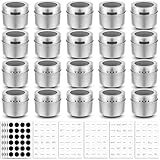
- Lightweight Stainless Steel Tins: Budget-friendly sets (typically $25 to $30 for a 20-pack) feature food-grade tinplate containers with clear PVC top windows. A 20-pack kit usually includes around 240 pre-printed and blank moisture-resistant labels. Each tin measures roughly 2.5 inches in diameter and 2 inches deep, holding about 3 ounces (approx. 6 tablespoons) of dry spices.
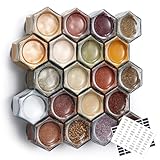
- Heavy-Duty Glass Jars: Premium sets (typically $50 to $60 for a 20-pack) use thick, hexagonal 4-ounce glass jars fitted with interior plastic shaker lids, twist-off metal caps, and strong rare-earth (neodymium) magnets built into the base or lid. A full 4-ounce glass jar weighs approximately 7 to 8 ounces when filled with dense spices like sea salt or garlic powder.
Most systems mount directly to the side or front door of any standard magnetic stainless steel or painted steel refrigerator. If your fridge front is non-magnetic stainless steel, you will need to stick a wall-mounted steel base plate (often sold separately or included in specialty kits) to your cabinet side or backsplash.
Pros
- Reclaims Prime Cabinet and Drawer Real Estate: The single biggest benefit is functional space recovery. Storing 20 standard spice bottles takes up roughly 120 to 150 square inches of flat shelf space or an entire dedicated kitchen drawer. Shifting those jars to the side of your fridge reclaims that storage for larger cookware or baking goods.
- Puts Seasonings at Eye Level: Instead of digging through deep, dark upper cabinets or rummaging through stacked tiers, a magnetic setup keeps every herb and spice clearly visible and immediately accessible while you prep food.
- Ideal for RVs, Micro-Apartments, and Travel Trailers: Because magnetic jars adhere directly to vertical metal surfaces, they keep kitchen counters completely clear. High-strength hexagon glass setups engineered for mobile living prevent containers from tumbling out of open cabinets during transit.
- Fosters Visual Organization: Matching containers paired with uniform minimalist labels eliminate the chaotic visual clutter of mismatched grocery store bottles, giving your kitchen an intentional, custom-designed feel.
- Simplifies Inventory Management: With clear top windows or transparent glass walls, you can see exactly when your cumin, oregano, or paprika is running low at a single glance, making grocery list creation much faster.
Cons
- Accelerated Spice Degradation from Light and Heat: Spices preserve their essential oils and potency best in dark, cool locations (ideally under 70°F). Exposing spices on an open fridge wall subjects them to ambient kitchen warmth and room lighting, which can cut the flavor shelf-life of delicate leafy herbs like basil and parsley by up to 50%.
- Risk of Sliding and Accidental Spills: Budget metal tins utilizing weak rubberized ferrite magnets frequently slide down the fridge surface when the appliance door slams shut. If a glass jar’s magnet is underpowered, a heavy jar ( filled with 4 ounces of salt) can hit the floor and shatter.
- Grease and Kitchen Dust Accumulation: Appliances sitting near active cooktops naturally attract airborne cooking oils and fine dust. Openly displayed magnetic jars require frequent wiping to prevent a sticky, dull film from building up on the lids and label surfaces.
- Limited Capacity for Bulk Buyers: Compact 3-ounce to 4-ounce jars cannot hold the contents of larger bulk spice bags (which are often 8 to 16 ounces). You will still need an overflow bin in your pantry to hold excess supply.
- Washing and Moisture Sensitivities: Metal tins with clear PVC windows are prone to water entrapment between the seal and clear layer if submerged during washing. If dry spices are poured into a tin that retains hidden moisture, clumping and rust can occur quickly.
Who Should Buy It
You should invest in a magnetic spice jar system if:
- You live in a small apartment, studio, or RV where counter space and cabinet shelves are extremely limited.
- Your refrigerator is positioned away from direct sunlight and sits at least three feet clear of your main cooktop.
- You buy standard-sized spice refills (2 to 4 ounces) and cook frequently enough to rotate through your supply every 3 to 6 months.
- You prefer visual organization where ingredients are visible while prepping meals.
Who Should Skip It
You should choose a traditional drawer or cabinet spice organizer if:
- Your refrigerator is directly adjacent to your gas range, oven, or a sun-drenched window.
- You have young children or pets who can reach the lower portion of the refrigerator exterior.
- You purchase spices in large bulk containers (8 ounces or larger) and hate managing overflow stock.
- You do not want to clean or wipe down exposed jars as part of your weekly kitchen dusting routine.
Cheaper Alternatives
As kitchen storage designs evolve into 2026, vertical storage remains popular, but it is far from the only low-cost way to declutter your kitchen. If mounting jars on your fridge isn’t the right fit for your layout, consider these alternative storage methods:
| Option | Cost | Trade-off |
|---|---|---|
FAQ
Will magnetic spice jars scratch my refrigerator finish?
Low-quality magnets with unshielded, rough edges can cause micro-scratches on stainless steel or painted appliance doors when moved around. To prevent scratching, choose glass jars with recessed magnets or apply thin felt/vinyl soft pads over raw magnetic bases before placing them on your fridge.
Do magnetic spice jars fall off when you slam the fridge door?
It depends entirely on the magnet strength and overall weight. Lightweight 3-ounce metal tins rarely fall, though cheap models may slide downward over time. Heavier 4-ounce glass jars require high-grade neodymium magnets; as long as the magnets are rated for at least twice the total weight of the full jar, normal door movements will not knock them down.
Are metal tin spice jars better than glass magnetic jars?
Metal tins are far cheaper, shatterproof, and lighter, making them great for budget buyers and moving RVs. However, glass jars are non-reactive, easier to sanitize without rusting, hold larger quantities (4 oz vs 3 oz), and allow you to see your spices from both the side and top.
How long do spices stay fresh in magnetic fridge containers?
Ground spices stored on a magnetic fridge wall usually stay fresh for 3 to 6 months, whereas whole spices retain potency for up to 12 months. Because they are exposed to room light and ambient temperature swings, spices on a fridge display spoil faster than those stored inside a dark, closed pantry cabinet.
Write Your Review
No reviews yet. Be the first to share your experience!