
As an Amazon Associate we earn from qualifying purchases.
- How Silicone Food Storage Works
- How Glass Food Storage Works
- 1. Stasher Stand-Up Mega Bag, Aqua
- 2. Zip Top Medium Cup, Peach
- 3. Ziploc Endurables Small Container, 2 Cups
- 4. Pyrex Simply Store 3-Pack Glass Containers
- 5. Glasslock 18-Piece Assorted Oven Safe Container Set
- Durability: Which Material Lasts Longer
- Heat Safety: Freezer, Microwave, and Oven
- Leak Protection and Seals
- Weight and Portability
- Odor, Stains, and Cleaning
- How to Choose the Right Material for You
- FAQ
- The Bottom Line
Picking between silicone and glass food storage is less about which material is better in general and more about how you actually use containers in your kitchen. Silicone bags and boxes bend, fold flat, and travel well. Glass containers hold their shape, show what is inside at a glance, and move from fridge to oven without a second thought. Both can replace single-use plastic, and both can last for years when you treat them well.
This guide compares the two materials side by side, then looks at five real containers you can buy today: three silicone picks and two glass sets.
How Silicone Food Storage Works
Silicone food storage is made from food-grade platinum silicone, a flexible rubber-like material that stays soft across a wide temperature range. Most silicone bags and containers are safe for the freezer, microwave, dishwasher, and oven up to about 425 degrees Fahrenheit. The material bends without cracking, so a bag can be squeezed into a crowded lunch tote or flattened when empty.
The seal is the heart of any silicone bag. Pinch-lock and zip-style closures press the two sides together to form a watertight barrier. A good seal keeps soup inside a bag and keeps freezer burn away from leftovers. Silicone also resists stains and odors better than plastic, though strong foods like tomato sauce can leave a faint tint after many uses.
One trade-off is structure. A silicone bag has no rigid walls, so it cannot hold a neat stack the way glass can. It also needs to be propped open while you fill it, which can be awkward with one hand.
How Glass Food Storage Works
Glass food storage uses borosilicate or tempered soda-lime glass for the container body, with a plastic or silicone-sealed lid on top. Glass does not absorb flavors or odors, and it never stains. You can see exactly what is inside without opening the lid, which makes it easy to find leftovers in a full fridge.
Glass handles heat well. Most glass containers go from fridge to microwave without a problem, and oven-safe sets can go straight into the oven with the lid removed. The rigid shape stacks neatly, so a set keeps a fridge drawer tidy.
The main drawback is weight and breakability. Glass is heavier than silicone, and a dropped container can chip or shatter. Glass lids also need care: the plastic lids on most sets should stay out of the oven, and the locking tabs on some lids can wear over time.
1. Stasher Stand-Up Mega Bag, Aqua
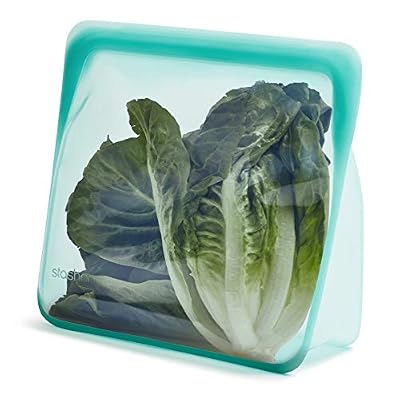
The Stasher Stand-Up Mega is the largest bag in the Stasher line, made for cooks who store big batches. At 104 fluid ounces, it holds a full pot of soup or several days of cut vegetables, and it stands upright on its own while you fill it.
Specs
- Capacity: 104 fluid ounces
- Material: food-grade platinum silicone
- Closure: patented Pinch-Loc seal
- Heat safe: freezer, microwave, dishwasher, oven up to 425 degrees Fahrenheit, sous vide
- ASIN: B08M3NT223
The Pinch-Loc seal is the feature that sets Stasher apart. It presses shut with a firm click and stays shut in a bag or a freezer drawer. The bag is also safe for sous vide cooking, which makes it useful beyond simple storage. The wide opening makes the bag easy to wash and dry.
The Mega size is not the best choice for a single lunch portion, since the bag is large and a small amount of food can slosh around inside. But for batch cooking and family-size leftovers, it is hard to beat.
2. Zip Top Medium Cup, Peach

The Zip Top Medium Cup is a rigid-sided cup that stands on its own, with a zip-style top that opens wide. The cup shape is ideal for single servings of soup, oatmeal, berries, or snacks.
Specs
- Capacity: medium cup size, about 16 fluid ounces
- Material: food-grade platinum silicone
- Closure: zip-top seal that opens flat
- Heat safe: microwave, dishwasher, freezer safe, made in the USA
- ASIN: B08747K58V
Because the cup holds its shape, you can set it on the table and eat straight from it, which is handy for desk lunches and kids. The wide mouth also makes it easy to load with a spoon and easy to clean by hand. The cup nests inside other Zip Top pieces when empty, so a set takes up little space in a drawer.
The trade-off is capacity. A medium cup will not hold a family-size portion, so it works best as part of a set rather than a single do-everything container.
3. Ziploc Endurables Small Container, 2 Cups

The Ziploc Endurables Small Container is a 2-cup container sized for a single serving of leftovers, a side dish, or a packed lunch. It comes in a 2-pack, so you get two containers in one purchase.
Specs
- Capacity: 2 cups per container, 2-pack
- Material: durable platinum silicone
- Closure: leak-resistant lid
- Heat safe: freezer, oven, microwave, dishwasher safe
- ASIN: B09J719DJ6
What makes Endurables different from a silicone bag is the temperature range. These containers are designed to go directly from the freezer to the oven and then to the table, which cuts down on dishes and makes reheating simple. The rigid base keeps the container upright in a lunch bag, and the lid seals well enough for liquids.
The 2-cup size is generous for one person but small for a family meal, so it suits single servings and side dishes best.
4. Pyrex Simply Store 3-Pack Glass Containers

The Pyrex Simply Store 3-pack includes three round glass containers in 2-cup, 4-cup, and 7-cup sizes, each with a BPA-free plastic lid. The range covers single servings, side dishes, and family leftovers in one purchase.
Specs
- Capacity: 2-cup, 4-cup, and 7-cup round containers
- Material: non-porous glass with BPA-free plastic lids
- Closure: snug-fitting lids
- Heat safe: dishwasher, microwave, and freezer safe; glass is oven safe with lids removed
- ASIN: B0000BYCGF
The non-porous glass is the main advantage here. It will not absorb odors or stains, and it stays clear after years of use. The round shape is easy to clean, and the containers stack neatly when the lids are off. Pyrex glass is made in the USA, and the brand has a long track record of durability in home kitchens.
The lids are the weak point, as they are with most glass sets. They are not oven safe, and they need to be removed before the glass goes into the oven. The lids also add a little bulk to the stack.
5. Glasslock 18-Piece Assorted Oven Safe Container Set

The Glasslock 18-piece set is the most complete glass option in this guide. With nine containers in assorted shapes and sizes, it covers everything from a small sauce portion to a large family casserole. The locking lids have four hinged tabs that snap shut for an airtight seal.
Specs
- Capacity: 9 glass containers in assorted sizes, 18 pieces including lids
- Material: tempered glass with BPA-free locking lids
- Closure: four-hinge locking lids, air and liquid tight
- Heat safe: oven, microwave, freezer, and dishwasher safe; lids stay out of the oven
- ASIN: B00LN810PM
The locking lids are what set Glasslock apart from snap-on lids. They hold tight enough for liquids, so a container of soup can travel in a bag without worry. The glass itself is oven safe, which means leftovers can go from fridge to oven with the lid removed. The assorted shapes include rectangles and rounds, so the set fits different foods and different fridge spaces.
The set takes up more room than a single bag or a small 3-pack, so it suits cooks who want a full system rather than a few extra containers.
Durability: Which Material Lasts Longer
Glass wins on scratch resistance. A glass container looks the same after years of use, while silicone can pick up scuffs and faint stains over time. Silicone wins on drop resistance. A silicone bag can fall off a counter and bounce, while a glass container can chip or crack.
For a household with young children or a busy kitchen floor, silicone is the safer bet. For a careful cook who wants containers that look new for years, glass has the edge.
Heat Safety: Freezer, Microwave, and Oven
Both materials handle the freezer and microwave well. Silicone has a slight edge in the oven, since many silicone bags can go in with no extra steps, while glass containers need their lids removed first.
For sous vide cooking, silicone bags are the clear winner. A silicone bag can be sealed and submerged in a water bath, which glass cannot do. For reheating a casserole in the oven, glass is the natural choice.
Leak Protection and Seals
A good seal matters most when food travels. Glass containers with four-hinge locking lids, like the Glasslock set, offer the most reliable seal for liquids. Silicone bags with a Pinch-Loc seal, like Stasher, are also very reliable when the seal is pressed shut fully.
Snap-on lids, like the ones on the Pyrex set, are fine for the fridge but less reliable in a bag that gets tossed around.
Weight and Portability
Silicone is lighter and more flexible, which makes it the better travel companion. A silicone bag can be folded flat when empty and squeezed into a crowded tote. Glass is heavier and needs more care in transit, but it holds its shape and protects delicate food like berries or a layered salad.
For a daily lunch bag, silicone is the practical pick. For a picnic or a potluck, glass looks better and holds its shape.
Odor, Stains, and Cleaning
Glass is the clear winner for odor and stain resistance. It does not absorb flavors, and it comes out of the dishwasher looking clean every time. Silicone resists odors well, but strong foods can leave a faint smell or tint after many uses. A soak in baking soda and water usually clears it.
Both materials are dishwasher safe. Silicone bags need to be turned inside out or propped open to dry fully, while glass containers air-dry quickly on a rack.
How to Choose the Right Material for You
Choose silicone if you pack lunch every day, freeze meals in batches, cook sous vide, or want containers that fold flat for storage. The Stasher Mega is the best pick for large batches, the Zip Top cup is ideal for single servings, and the Ziploc Endurables container bridges the gap between a bag and a rigid box.
Choose glass if you reheat food in the oven, want to see what is inside without opening the lid, or store strong-smelling foods. The Pyrex 3-pack is a good first glass set, and the Glasslock 18-piece set is the better choice if you want a complete system with locking lids.
Many cooks end up with both. A common setup is glass containers for the fridge and oven, plus a few silicone bags for the freezer and the lunch tote.
FAQ
Is silicone food storage safe for the microwave?
Yes, food-grade platinum silicone is microwave safe. Most silicone bags and containers can go from the freezer to the microwave without damage. Keep the seal open slightly when heating liquids so steam can escape.
Does glass food storage break easily?
Tempered glass is tougher than regular glass, but it can still chip or crack if dropped on a hard floor. Handle glass containers with care, and do not use one that has a visible crack or chip.
Can silicone bags go in the oven?
Many silicone bags and containers are oven safe up to about 425 degrees Fahrenheit. Always check the maker guidance first, and keep silicone away from direct flame. Glass containers are oven safe too, but their plastic lids must be removed first.
Which material is better for freezing leftovers?
Both work well for freezing. Silicone bags save space because they can be laid flat and stacked, while glass containers protect food from being crushed. For soup, a silicone bag laid flat freezes and thaws faster than a rigid glass box.
The Bottom Line
Silicone and glass both beat single-use plastic on durability, safety, and everyday ease. Silicone is lighter, more flexible, and better for travel and freezing. Glass is clearer, easier to clean, and better for oven reheating and long-term storage. Many kitchens work best with a mix of both, and the five containers in this guide give you a solid place to begin.
Disclosure: This article contains affiliate links. If you buy through a link on this page, we may earn a commission at no extra cost to you.
Write Your Review
No reviews yet. Be the first to share your experience!