
Someone buying a smoothie maker blender wants to drop frozen fruit and leafy greens into a cup, hit one button, and walk out the door. The entire category splits on whether the machine actually does that without stalling, leaking, or requiring you to stop and push ingredients down with a spoon. Personal blenders, which dominate this list, solve the cleanup problem that kills most people’s smoothie habit, because you blend and drink from the same container.
What separates a good model from a mediocre one comes down to a short list: motor wattage relative to price, blade geometry for frozen blending, lid and seal quality, and whether replacement parts exist after the warranty expires. Owner feedback consistently flags underpowered motors and leaking threaded lids as the two most common failure points. The eight products below earned their spots because published specifications and long-term owner reviews align on these criteria heading into 2026.
As an Amazon Associate we earn from qualifying purchases at no extra cost to you.



Quick Picks
| Product | Best for | Price |
|---|---|---|
| Magic Bullet MBR-1101 | Entry-level shakes and soft-fruit blends | $29.98 |
| Ninja Nutri-Plus BN301 | Frozen fruit and greens on a budget | $69.97 |
| Ninja Fit Compact QB3001SS | Small kitchens and tight counter space | $69.99 |
| Hamilton Beach Power Elite | Full-size pitcher for multi-person blending | $39.95 |
| Consciot 11-Piece | Maximum accessories per dollar | $25.15 |
| Ninja Professional Plus BN701 | Family-sized batches in one cycle | $109.99 |
| KOIOS Smoothie Blender | To-go cups at the lowest price floor | $29.97 |
| Ninja Nutri-Blender Pro BN401 | Silky texture in green smoothies | $99.99 |
How We Picked
We compared published motor ratings, accessory count, cup sizing, and long-term owner satisfaction scores. The four criteria that actually separate winners from also-rans in this category are sustained power relative to price, whether the blades handle frozen chunks without liquid shortcuts, how well lid seals hold up past year one, and whether replacement parts are stocked for the model.
The 8 Best Smoothie Maker Blender in 2026
Magic Bullet MBR-1101
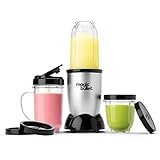
For someone making simple fruit-and-yogurt shakes who does not want to think about settings or cleanup. The 250-watt motor handles soft fruit and protein powders reliably, and the twist-on blade base doubles as a storage cap. Pros: the compact footprint fits under most upper cabinets, and replacement cups and blade rings are widely stocked. Con: it struggles noticeably with dense frozen chunks unless you add extra liquid and pulse repeatedly. Skip it if your daily smoothie includes kale stems, large frozen banana pieces, or anything that demands sustained high-torque blending for a silky result.
Ninja Nutri-Plus BN301
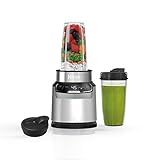
A clear step up in raw power while keeping the personal-blender format. The 900 peak-watt motor crushes frozen fruit in seconds, and three included 20-ounce cups mean two household members can blend without washing parts between rounds. Pros: Pro Extractor blades shred leafy greens cleanly without leaving chunks, and the cups carry BPA-free certification with tight-sealing lids. Con: the base unit is bulkier than rivals at this price point, so it claims more counter width. Skip it if your kitchen is extremely tight on real estate or if you blend only once a week and do not need the extra cups.
Ninja Fit Compact QB3001SS
Built for anyone who wants Ninja blending power in the smallest possible footprint. The 700-watt motor sits in a base barely wider than a standard coffee mug, and the two included 16-ounce cups fit in most car-cup holders. Pros: genuinely compact for storage in a drawer or corner, and the twist-to-start operation means zero buttons to learn. Con: the shorter cup height makes it harder to pour thick smoothies without scraping the sides. Skip it if you regularly drink 20-ounce or larger servings or if your smoothies are ice-heavy and need more liquid headroom to avoid overflow.
Hamilton Beach Power Elite
A full-size pitcher blender that earns its slot for anyone blending smoothies for two or more people simultaneously. The Wave Action system pushes ingredients back toward the blades, reducing the number of times you need to stop and scrape. Pros: the glass pitcher is dishwasher safe, and the price under $40 undercuts most personal blenders with comparable motor ratings. Con: making a single serving means washing a large pitcher for one glass of smoothie, which defeats the personal-blender time savings. Skip it if minimal cleanup is your top priority.
Consciot 11-Piece
The accessory-king of this roundup. Eleven pieces at roughly $25 means you get multiple cups, blade assemblies, and in some configurations a small food-prep attachment. The 900 peak-watt motor is competitive with models costing twice as much. Pros: exceptional hardware value per dollar, and the cups feature printed measurement lines for portion control. Con: the base housing feels noticeably plasticky compared to Ninja or Hamilton Beach equivalents, and some owners report lid threading wears faster under daily use. Skip it if you want a blender you plan to keep for five or more years without hunting for replacement parts.
Ninja Professional Plus BN701
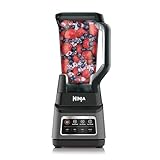
A full-size 1400-watt machine built for households that blend multiple servings without running a personal cup twice. The 72-ounce pitcher handles family breakfast smoothies in one pass, and Auto-iQ programs adjust pulse and run cycles so you do not have to babysit the blend. Pros: powerful enough to break down frozen chunks and nuts without any liquid shortcuts, and the pitcher spout pours cleanly without dribbling. Con: it is the largest unit here and will not fit under standard upper cabinets with the lid attached. Skip it if your kitchen layout forces you to store the blender inside a cabinet between uses.
KOIOS Smoothie Blender
At under $30 with three to-go cups included, this 900-watt personal blender targets the same buyer as the Consciot but with a slightly different accessory mix. The cups are tall and narrow, sliding into bag side-pockets more easily than wider alternatives. Pros: competitive wattage for the price, and the cup sizes cover both single and double servings. Con: brand recognition and replacement-part availability trail far behind Ninja and Hamilton Beach, so sourcing a replacement seal or blade assembly out of warranty requires more effort. Skip it if the security of a widely stocked parts ecosystem matters to you.
Ninja Nutri-Blender Pro BN401
For someone who wants personal-blender convenience but also expects the machine to fully break down leafy greens and seeds for smoother textures. The 1100 peak-watt motor paired with Pro Extractor blades produces noticeably silkier results than lower-wattage rivals, and the two 24-ounce cups are the tallest in this list. Pros: handles kale, spinach, and flax without leaving a gritty finish, and the generous cup size holds a full meal replacement. Con: at roughly $100 it asks you to pay a texture premium that a casual soft-fruit drinker may not perceive. Skip it if your main use is banana-and-milk shakes and you would rather stay under $70.
Buying Guide
Wattage and Frozen Blending
Motor power is the single spec that determines whether a smoothie maker blender handles your actual recipe. Below 400 watts you will need soft fruit or a generous pour of liquid. Between 400 and 700 watts works for most frozen chunks if you pulse and shake the cup. Above 900 watts crushes frozen ingredients without hesitation. Watch for the distinction between peak and continuous watts: peak ratings describe a brief burst, not sustained output, so a 900 peak-watt motor is not equivalent to a 900 continuous-watt motor.
Personal Cups versus Full-Size Pitchers
Personal blenders win decisively on cleanup because you blend, cap, and drink from the same container without touching a second vessel. The trade-off is volume: most personal cups top out at 16 to 24 ounces per batch. Full-size pitchers handle family quantities but require washing a jar every single use. If you are the only smoothie drinker in your household, the personal format saves several minutes of prep and cleanup each morning, which compounds into a real habit difference over a week.
Lid Seals and Long-Term Durability
The most common failure point reported in owner reviews across all price tiers is the lid seal or blade-base threading, not the motor itself. Check whether replacement gaskets and blade assemblies are sold separately before committing. Models with a twist-on blade that screws into the cup tend to wear threads faster than designs where the blade stays permanently mounted in the base. A blender you cannot service beyond its warranty window is effectively a disposable appliance, regardless of how powerful the motor was on day one.
Our Verdict
The Ninja Nutri-Plus BN301 is the top pick overall. It balances frozen-blending power, accessory count, and build quality at a price that stays under $70, making it the most rounded choice for a first serious personal blender. The budget pick goes to the Consciot 11-Piece: for roughly $25 you get the most hardware per dollar in this group, provided you accept a shorter expected lifespan. One condition where another product wins outright: if you blend for two or more people at the same time, the Ninja Professional Plus BN701 is the only option here with enough pitcher volume to do it in one cycle, making the smaller personal models impractical despite their lower prices.
FAQ
Can a personal blender handle ice and frozen fruit?
Models rated at 700 watts or higher generally manage frozen chunks without added liquid. Below that range you will need to pulse frequently or thin the mixture with juice or water to keep the blades engaged.
How many cups do I actually need?
One person blending daily gets by with a single cup, but having two eliminates any morning wash cycle. Three or more cups matter only if multiple household members share the blender on the same day.
Is a glass pitcher better than plastic?
Glass resists staining and odor absorption from leafy greens and strong flavors. Plastic is lighter and less likely to crack from an accidental drop, which matters in households with small children or tight shelving.
What is the expected lifespan of a budget personal blender?
Owner reports suggest three to five years for models under $30 with daily use, versus five to eight years for mid-range units whose seals and blades are replaceable after the initial warranty period ends.
Write Your Review
No reviews yet. Be the first to share your experience!