
As an Amazon Associate we earn from qualifying purchases.
Mashed potatoes can be rustic and chunky or silky and smooth, and the tool you reach for decides which one lands on the plate. A masher and a ricer both turn boiled potatoes into mash, but they work in completely different ways, and the texture they produce is not the same.


This guide compares the two tools side by side: how each one works, the texture each one gives, how much effort and cleanup each one needs, and which one fits the way you cook. We also picked five tools worth buying, three mashers and two ricers, so you can match a model to your answer.
How a Potato Masher Works
A potato masher is a hand tool with a handle and a flat mashing head. You press the head down into a pot of boiled potatoes and push, and the potatoes squeeze through the wires or holes in the head. The classic design uses a zigzag wire head, while newer designs use a flat plate with small holes or a silicone-coated head.
Mashers are fast and forgiving. You can mash right in the pot you boiled the potatoes in, which means one less bowl to wash. They handle large batches with ease, and they work on more than potatoes: cooked carrots, sweet potatoes, avocados, bananas, and beans all give way under a masher. The trade-off is texture. A masher crushes potatoes unevenly, so the mash keeps some lumps and a hearty, homemade feel. If you mash too long or too hard, the potatoes can turn gluey, because overworking releases the natural glue inside the potato.
How a Potato Ricer Works
A potato ricer looks like a large garlic press. You load cooked potato pieces into a basket, then squeeze two long handles together. The potato is forced through small holes and comes out in fine, rice-like strands that fall into a bowl below. Those strands mix with butter and warm milk with almost no effort, which is why ricers are the tool behind the lightest, fluffiest mash.
Ricers give a smoother, more even result than any masher, and they are gentler on the potato, so the risk of gluey mash drops sharply. The trade-offs are speed and capacity. You can only rice a few pieces at a time, so a big batch takes several rounds of loading and squeezing.
Texture: Chunky and Hearty vs Smooth and Fluffy
Texture is the biggest difference between the two tools, and it is the reason most cooks end up owning one or the other.
A masher gives a rustic mash with visible texture. Small lumps remain, and the mash holds its shape on the plate. That style suits comfort food: shepherd’s pie topping, mash served with gravy, and potatoes mixed with roasted garlic or herbs, where a little texture adds character.
A ricer gives a fine, even mash that feels light on the tongue. The strands fold together into a smooth pile that holds butter and cream beautifully. If you want mash like the version served in a good restaurant, a ricer is the way to get it.
Neither texture is wrong. The question is which one your table prefers. Families who like hearty, homestyle mash will be happy with a masher. Cooks who chase a smooth, elegant side dish will get more from a ricer.
Effort: Quick Presses vs Steady Squeezes
A masher wins on speed. You drop it into the pot and press, and a full pot of potatoes is mashed in a minute or two. The work is simple and the tool is light, though pressing down on a large batch can tire your wrist.
A ricer takes longer, because you work in small batches. Each squeeze handles only a handful of potato pieces, and you repeat the motion until the pot is empty. The squeeze itself needs more hand strength than a masher press, though the long handles give good leverage, and resting the ricer on the bowl rim takes some of the weight off your hands.
For a weeknight side dish for two, the difference is small. For a holiday table feeding ten people, a masher saves real time.
Cleanup: One Pot vs Many Parts
A masher is one of the easiest tools to clean in the kitchen. Rinse it under running water, or put it in the dishwasher, and it is done. Wire heads can trap a little potato between the wires, but a quick brush handles it.
A ricer has more parts to clean: the basket, the plunger plate, the holes, and the hinge. Potato dries into the small holes fast, so it pays to rinse a ricer right after use instead of leaving it in the sink. Most ricers are dishwasher safe, which helps, but a quick rinse by hand is still the fastest way to keep the holes clear.
If easy cleanup is high on your list, a masher is the simpler tool to live with.
Versatility: One Tool, Many Jobs
Mashers are the more versatile tool. A masher handles potatoes, root vegetables, avocados for guacamole, bananas for baking, and beans for dips. It works in the pot, in a bowl, or on a cutting board, and it never needs a second container.
Ricers are more specialized, but they do their specialty jobs very well. Beyond mash, a ricer makes gnocchi dough, presses spaetzle, and turns cooked carrots, cauliflower, and sweet potatoes into smooth purees. If you make gnocchi or spaetzle even a few times a year, a ricer earns its drawer space.
Which One Should You Buy?
Pick a masher if you want a fast, simple tool for everyday cooking, if you cook for a crowd, if you like rustic mash with a little texture, or if you want one tool that also handles avocados and beans.
Pick a ricer if smooth, fluffy mash is your goal, if you make gnocchi or spaetzle, or if you have had trouble with gluey mash and want a tool that prevents it. A ricer is the better second tool for cooks who already own a masher and want to upgrade their mash.
Many serious cooks own both: the masher for weeknights and big batches, the ricer for holidays and special dinners. If you can only buy one, let the texture you prefer decide.
The Masher Side: 3 Picks
1. OXO Good Grips Stainless Steel Potato Masher
The OXO wire masher is the classic that most kitchens reach for first. Its zigzag stainless steel wire head presses through boiled potatoes with little resistance, and the cushioned handle absorbs pressure so your palm stays comfortable through a full pot. The wire design leaves a rustic texture with small lumps, which is exactly what homestyle mash should have.
It is a simple tool done well: sturdy stainless steel, a soft non-slip grip, and a shape that fits in a drawer without fuss. It works on sweet potatoes, carrots, and beans too.
Specs
- Material: stainless steel wire head with soft grip handle; Model number: 26291; Head style: zigzag wire; Dishwasher safe: yes; Best for: everyday rustic mash
2. KitchenAid Gourmet Stainless Steel Wire Masher
The KitchenAid wire masher brings the same wire-head idea with a thicker wire and a longer handle. At 10.24 inches long, it gives good reach into deep pots, and the thick wire head powers through firm potatoes without bending. The ergonomic handle is comfortable for cooks with larger hands, and the matte black finish looks at home in a modern kitchen.
This is a good pick if your current masher flexes or bends under pressure. The heavy wire head holds its shape, and the tool feels solid in the hand from the first press.
Specs
- Material: stainless steel wire head; Length: 10.24 inches; Color: Black; Handle: ergonomic; Dishwasher safe: yes; Best for: large pots and firm potatoes
3. KUKPO Stainless Steel Potato Masher
The KUKPO masher takes a different approach: a broad horizontal handle and a fine-grid mashing plate. Instead of pressing straight down with a vertical grip, you push down on a wide handle that spreads the force across your palm, which makes mashing easier on the wrist. The fine-grid plate produces a smoother mash than a wire head, sitting halfway between a classic masher and a ricer.
It is a strong choice for cooks who mash often and want a smoother result without switching to a ricer. The stainless steel plate resists rust and stains, and the soft rubber in the handle keeps your grip steady.
Specs
- Material: stainless steel plate and handle; Handle style: broad horizontal with soft rubber grip; Plate style: fine grid; Dishwasher safe: yes; Best for: smoother mash with less wrist strain
The Ricer Side: 2 Picks
4. PriorityChef Large 15 oz Potato Ricer

The PriorityChef ricer is the value pick in the ricer world and the best seller in its category. Its deep basket holds 15 ounces of cooked potato at a time, so each squeeze handles a useful batch, and the 3 mm holes produce a fine, even texture. The long handles are covered in silicone for a comfortable, non-slip grip, and the whole tool is heavy-duty stainless steel.
For cooks trying a ricer for the first time, this is the sensible place to begin. It does the core job well, and it costs less than most name-brand ricers while holding up to regular use.
Specs
- Material: heavy-duty stainless steel with silicone handles; Capacity: 15 oz basket; Hole size: 3 mm; Dimensions: 12.5 x 4 x 4.5 inches; Weight: 1.3 pounds; Dishwasher safe: top rack; Best for: first ricer and everyday smooth mash
5. OXO Good Grips 3-in-1 Adjustable Potato Ricer
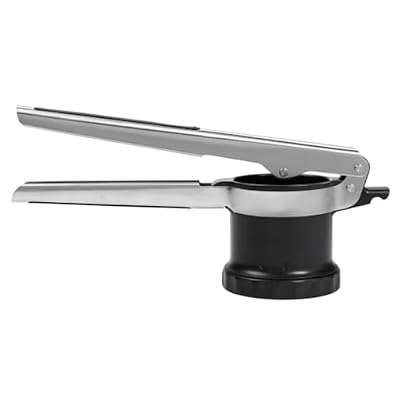
The OXO 3-in-1 is the most versatile ricer you can buy, because one tool covers three textures. A twist dial switches the plate between fine, medium, and coarse settings, so the same ricer makes silky mash, gnocchi dough, and rustic spaetzle without swapping loose discs that get lost in a drawer. The brushed stainless steel body feels solid, the soft grips are comfortable, and a grooved pot rest lets the ricer sit on the rim of your bowl while you refill it.
It is the pick for cooks who want one ricer that does everything. Fine for mash and gnocchi, medium for spaetzle, coarse for a more rustic mash: the dial covers all three, and the tool comes apart for cleaning.
Specs
- Material: brushed stainless steel with soft non-slip grips; Settings: fine, medium, coarse (twist dial); Model number: 1129780; Dimensions: 11.75 x 5.75 x 5 inches; Weight: 1.35 pounds; Dishwasher safe: yes; Best for: mash, gnocchi, and spaetzle in one tool
Final Word
A masher and a ricer are not rivals. They are two answers to the same question, and the right answer depends on the mash you want. A masher is fast, simple, and versatile, and it gives a hearty, homestyle texture. A ricer is slower and more work to clean, but it gives the lightest, smoothest mash you can make at home. If you buy only one, choose the masher for speed and everyday use, or the ricer for the smoothest mash you have ever served.
FAQ
Can I use a potato ricer for foods other than potatoes?
Yes. A ricer works well for cooked carrots, cauliflower, sweet potatoes, and other soft vegetables, and it is a classic tool for gnocchi dough and spaetzle. It also presses baby food from soft cooked fruit and vegetables.
Why does my mashed potato turn gluey?
Gluey mash usually comes from overworking the potatoes. A masher can cause it if you press too long, and a food processor will cause it almost every time. A ricer helps because it presses the potato through holes once, with very little mixing, which keeps the texture light.
Do I need to peel potatoes before using a ricer?
Peeling is the usual advice, because skins can clog the small holes. If you like skins in your mash, a masher is the better tool, since it crushes skins into the mix instead of blocking the holes.
Which tool is better for a large holiday dinner?
A masher is better for a large batch, because it works right in the pot and handles a full load at once. A ricer gives a smoother result but works in small batches, so it takes longer when you are feeding a crowd. Many cooks mash with a masher first, then finish a portion through a ricer for a special touch.
Disclosure: This article contains affiliate links. If you buy through a link on this page, we may earn a commission at no extra cost to you.
Write Your Review
No reviews yet. Be the first to share your experience!