
A wok and a skillet both sit at the center of everyday cooking, yet they behave very differently on the stove. One is built for fast, high-heat tossing over a flame. The other is built for steady, even browning across a flat surface. Choosing the wrong one can leave food steamed when it should be seared, or crowded when it should have room to breathe.
This guide compares the two pans side by side, so you can see exactly where each one shines. You will learn how shape changes heat, which dishes belong in each pan, and how to care for both. Five real products show the range in practice: three woks and two skillets, each with its own strengths.
As an Amazon Associate, this site earns from qualifying purchases made through links in this article. This is the only disclosure in this article.
What a Wok Does Best
A wok is a deep, bowl-shaped pan with high, sloping sides and a small cooking surface at the base. That shape is the whole point. Food tossed in a wok moves up the hot sides, cools slightly, and falls back to the searing heat at the bottom. The motion keeps small pieces of meat and vegetables moving, so they cook fast without burning.
Woks excel at stir-frying, the fast, high-heat method that defines so much of Asian cooking. Thin slices of chicken, beef, or tofu hit a ripping-hot surface, brown in seconds, and keep their bite. Vegetables stay crisp because they spend little time in contact with the pan. Noodles and fried rice benefit too, since the deep bowl holds a large volume while the cook tosses everything together with ease.
A wok also handles deep-frying better than a flat pan. The curved base needs less oil to reach a useful depth, and the high sides contain splatter. Steaming works well too, with a rack or a bamboo steamer set inside the bowl.
The trade-off is control. A wok needs high heat to work as intended, and on a weak electric coil it can feel sluggish. Round-bottom woks need a ring or a gas burner to sit steady, which is why most home cooks choose a flat-bottom wok. Carbon steel and cast iron woks also need seasoning and hand washing, a routine that rewards patience with a naturally slick surface.
What a Skillet Does Best
A skillet, also called a frying pan, is a shallow pan with a wide, flat base and low, flared sides. That flat base is its greatest asset. Food sits in full contact with the heat, which is exactly what searing demands. A steak, a pork chop, or a chicken thigh develops a deep brown crust because the whole surface of the meat touches hot metal at once.
Skillets are the everyday workhorse of the Western kitchen. They fry eggs, brown ground meat, sauté mushrooms, and pan-roast vegetables with ease. The low sides make it simple to flip food with a spatula and to slide a finished omelet onto a plate. Sauces reduce quickly in a skillet because the wide surface lets moisture escape fast.
A skillet also moves easily between stovetop and oven, which opens up dishes like frittatas and pan-roasted chicken. Stainless steel skillets take high heat and build fond, the browned bits that become a pan sauce. Nonstick skillets release delicate foods like fish and eggs with little oil, and they clean up in seconds.
The limit of a skillet is volume. The shallow bowl holds less than a wok, so a big batch of stir-fry crowds the pan, drops the temperature, and steams instead of searing. Tossing is harder too, since food can spill over the low rim. For large, fast-moving dishes, the skillet is the wrong tool.
Shape and Heat Compared
The core difference is geometry. A wok concentrates heat at a small base and creates zones: very hot at the bottom, cooler up the sides. A cook pushes finished food up the sides while raw food sears at the center. A skillet spreads heat evenly across a wide flat base, so every piece cooks at roughly the same temperature. A wok gives stir-fried food a smoky, charred edge while keeping vegetables crisp. A skillet gives a steak an even, edge-to-edge crust. A wok performs best on gas, where flames wrap the curved base, while a skillet is forgiving on any burner type.
The Wok Picks
1. YOSUKATA 13.5-Inch Carbon Steel Wok

This pre-seasoned carbon steel wok is the classic choice for home stir-frying. The 13.5-inch flat bottom sits steady on gas, electric, and induction cooktops, while the deep bowl holds a generous batch of noodles or fried rice. Carbon steel heats fast and responds quickly when the burner is turned down, which gives the cook real control over a fast dish. The wooden handle stays cool enough to grip during tossing.
Specs
- Product: YOSUKATA 13.5-Inch Carbon Steel Wok Pan
- Material: Pre-seasoned black carbon steel
- Diameter: 13.5 inches
- Base: Flat bottom
- Handle: Wooden handle with helper handle
- Compatible cooktops: Gas, electric, induction, open fire
- Care: Hand wash and dry, re-season with oil as needed
2. T-Fal Ultimate Hard Anodized Nonstick Wok 14 Inch
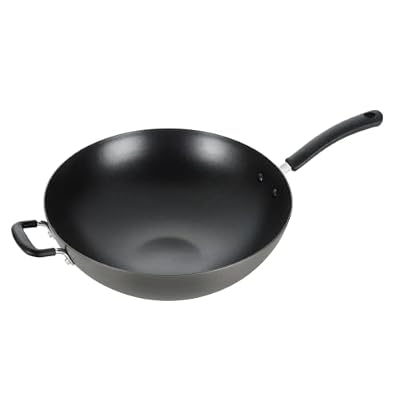
For cooks who want wok shape without seasoning, this hard anodized nonstick wok is the easy path in. The 14-inch bowl is wide enough for family stir-fries, and the titanium-reinforced nonstick surface releases food with little oil. A Thermo-Spot indicator shows when the pan has reached the right temperature, which helps newer cooks avoid adding food to a cold pan. The wok is dishwasher safe and oven safe to 350 degrees Fahrenheit.
Specs
- Product: T-Fal Ultimate Hard Anodized Nonstick Wok 14 Inch
- Material: Hard anodized aluminum with titanium-reinforced nonstick coating
- Diameter: 14 inches
- Base: Flat bottom, even heat base
- Handle: Riveted silicone handle
- Oven safe: To 350 degrees Fahrenheit
- Care: Dishwasher safe
3. Joyce Chen Professional 14-Inch Cast Iron Wok

Cast iron brings serious heat retention to the wok, and this Joyce Chen model is built for cooks who want a deep, lasting sear. The 14-inch flat bottom works on standard home burners, and the pre-seasoned surface is ready to cook with light oiling. The maple handle adds a comfortable grip, and the weight of the iron holds temperature steady when a large batch of cold vegetables hits the pan. It is a wok that rewards a cook who likes to build a deep sear on beef and hearty vegetables.
Specs
- Product: JOYCE CHEN Professional Series 14-Inch Cast Iron Wok with Maple Handle
- Material: Pre-seasoned cast iron
- Diameter: 14 inches
- Base: Flat bottom
- Handle: Maple wood handle
- Model: J23-0001
- Care: Hand wash, dry thoroughly, oil lightly after use
The Skillet Picks
4. All-Clad D3 12-Inch Stainless Steel Fry Pan with Lid

This is the premium stainless steel skillet in the roundup, and it earns its place through build quality. The tri-ply bonded construction sandwiches an aluminum core between two layers of stainless steel, so heat spreads evenly from edge to edge with no hot spots. The 12-inch size handles four chicken breasts or a large frittata, and the included lid turns the pan into a braiser for dishes that need a covered finish. It is oven and broiler safe to 600 degrees Fahrenheit.
Specs
- Product: All-Clad D3 12-Inch Stainless Steel Frying Pan with Lid
- Material: Tri-ply bonded 18/10 stainless steel with aluminum core
- Diameter: 12 inches
- Construction: 3-ply bonded
- Lid: Included stainless steel lid
- Oven safe: To 600 degrees Fahrenheit
- Care: Dishwasher safe, hand washing recommended
5. Calphalon Premier Hard-Anodized Nonstick 12-Inch Fry Pan with Lid

For an everyday nonstick skillet that still feels substantial, this Calphalon Premier pan is a strong match. The hard-anodized aluminum body heats evenly and resists warping, while the three-layer nonstick coating releases eggs, fish, and pancakes with ease. A tempered glass lid lets the cook check on food without lifting it, and the 12-inch size is large enough for family meals. The pan is metal-utensil safe and oven safe to 450 degrees Fahrenheit.
Specs
- Product: Calphalon Premier Hard-Anodized Nonstick 12-Inch Fry Pan with Lid
- Material: Hard-anodized aluminum with 3-layer nonstick coating
- Diameter: 12 inches
- Lid: Tempered glass lid included
- Oven safe: To 450 degrees Fahrenheit
- Handle: Stay-cool stainless steel handle
- Care: Dishwasher safe, hand washing recommended
How to Choose Between a Wok and a Skillet
Begin with the food you cook most often. If stir-fries, fried rice, and noodle dishes show up on your table every week, a wok will change those meals for the better. The high heat and tossing motion are hard to copy in a flat pan. If your week runs on seared chicken, fried eggs, burgers, and pan sauces, a skillet is the pan you will reach for daily.
Think about your stove next. Gas burners favor a wok, since flames wrap around the curved base. Electric and induction cooktops still work with a flat-bottom wok, but the margin is smaller, and a skillet loses nothing on any burner. If your cooktop is a smooth glass surface, a flat-bottom wok or a skillet will both sit steady.
Consider care and upkeep. Carbon steel and cast iron woks need seasoning, hand washing, and drying after each use. Nonstick woks and skillets ask far less, with simple washing and no seasoning routine. Stainless steel skillets sit in the middle: they need no seasoning, but they do need proper preheating and deglazing to keep food from sticking.
Storage and budget round out the decision. A wok and a skillet together cover nearly every stovetop task, and many cooks end up owning both. If the budget allows only one pan, pick the one that matches your most common meals. A household that stir-fries twice a week should buy the wok first. A household that sears meat and fries eggs daily should buy the skillet first.
One more practical note: a wok and a skillet can share the same kitchen without competing. Use the wok for fast, high-heat tossing and large batches. Use the skillet for searing, frying, and sauces. Together they cover more ground than either one alone.
Frequently Asked Questions
Can a wok replace a skillet for everyday cooking?
A wok can handle many skillet tasks, like sautéing vegetables and frying, but it is less effective for searing flat cuts of meat, frying eggs, and making pan sauces. The curved base gives less contact with flat food. For a one-pan kitchen, a skillet is the more flexible choice, while a wok is the better second pan.
Can a skillet replace a wok for stir-frying?
A skillet can stir-fry in a small batch, but it crowds easily and the food steams instead of searing when the pan is full. A wok holds more food, tosses it without spilling, and keeps the heat high at the base. For a full family portion of stir-fry, a wok gives clearly better results.
Which pan is easier to care for?
Nonstick skillets are the easiest to care for, with simple washing and no seasoning. Carbon steel and cast iron woks need hand washing, thorough drying, and occasional seasoning to keep the surface slick. Stainless steel skillets need no seasoning but benefit from proper preheating and a quick deglaze after cooking.
Should I buy a wok or a skillet first?
Buy the pan that matches the meals you cook most often. Choose a wok first if stir-fries, fried rice, and noodle dishes are weekly staples. Choose a skillet first if seared meat, eggs, and pan sauces are daily habits. Many cooks eventually own both, since each pan covers dishes the other handles poorly.
Final Thoughts
A wok and a skillet are not rivals. They are two answers to two different cooking problems. The wok answers the need for speed, high heat, and motion. The skillet answers the need for contact, even browning, and control. The right choice depends on your stove, your meals, and how much care you want to give a pan.
If you cook Asian dishes often, the YOSUKATA carbon steel wok or the Joyce Chen cast iron wok will reward the effort with real wok flavor. If you want an easy path into wok cooking, the T-Fal nonstick wok removes the seasoning routine. For searing and everyday frying, the All-Clad stainless steel skillet is the long-term pick, while the Calphalon nonstick skillet is the friendly daily driver. Pick the pan that fits your cooking, and the meals will follow.
Write Your Review
No reviews yet. Be the first to share your experience!