
An AeroPress and an espresso machine both promise a rich, concentrated cup, yet they get there by opposite routes. The AeroPress is a small manual press that steeps grounds in hot water and pushes the brew through a paper filter. An espresso machine forces hot water through a tightly packed puck of fine grounds at high pressure. That single difference shapes flavour, texture, milk drinks, effort, and the space each brewer takes on a counter.
Disclosure: As an Amazon Associate, this site earns from qualifying purchases made through links in this article.
This guide compares the two methods head to head with five brewers: one AeroPress and four espresso machines, from a compact pump machine to a fully automatic model. The AeroPress side has a single representative because the whole AeroPress range shares one brew method, while the espresso side needs several machines to show how different pump machines can be.
How Each Side Brews
The AeroPress works in two moves. Grounds steep in hot water inside a chamber for a minute or two, then a plunger presses the liquid through a paper filter into a cup. Immersion gives the brewer a forgiving character: grind size, water temperature, and steep time can vary a little without ruining the cup. The paper filter catches fine sediment and much of the oil, so the cup comes out clean and smooth, with low bitterness and a lighter body than espresso.
An espresso machine works by pressure. A pump drives water near 9 bars through a puck of fine grounds in about 25 to 30 seconds. The pressure pulls out oils and dissolved solids fast, which creates crema, the tawny foam on top of a shot, and a syrupy body that no immersion brewer can match. That same pressure makes espresso less forgiving: a grind that is too coarse gives a thin, sour shot, while one that is too fine chokes the flow and turns the cup bitter.
The AeroPress Pick
1. AeroPress Premium Coffee Press

The Premium is the glass and metal version of the classic AeroPress. Its brewing chamber is double-walled borosilicate glass, the filter cap is stainless steel, and the plunger is anodized aluminum. It brews the same way as every other AeroPress: steep, then press. The glass chamber lets a brewer watch the coffee darken as it steeps, and the double wall keeps the outside cool to the touch while hot water sits inside. It holds about 10 ounces of water, enough for one full mug or a concentrated shot-style brew that can be topped up with hot water or steamed milk.
The Premium suits a brewer who wants the AeroPress method in a countertop-worthy form. It is heavier and more fragile than the plastic models, so it belongs on a kitchen counter rather than in a travel bag.
- Specs: Dual-wall borosilicate glass chamber; stainless steel filter cap; anodized aluminum plunger; 10 oz water capacity; paper micro-filters included; scoop and stirrer included
The Espresso Machine Picks
2. De’Longhi ECP3420 15-Bar Pump Espresso Machine

The ECP3420 is the compact pump machine in this lineup. A 15-bar pump drives water through the puck, and a manual steam wand froths milk for lattes and cappuccinos. Its three-in-one filter holder accepts a single shot basket, a double shot basket, or easy-serving espresso pods, which gives a new brewer room to learn without buying extra gear. The water tank holds 37 ounces and lifts out for filling, and a dual-level cup tray fits a small espresso cup or a taller mug.
This machine fits a brewer who wants real pump espresso on a small counter and a modest learning curve. The manual wand means milk texture depends on the hand holding the pitcher, and the machine asks for a fine, even grind.
- Specs: 15-bar pump; 1100 watts; 37 oz removable water tank; manual steam wand; three-in-one filter holder for single, double, and pod shots; dual-level cup tray
3. Ninja Luxe Cafe ES601 3-in-1 Espresso Machine
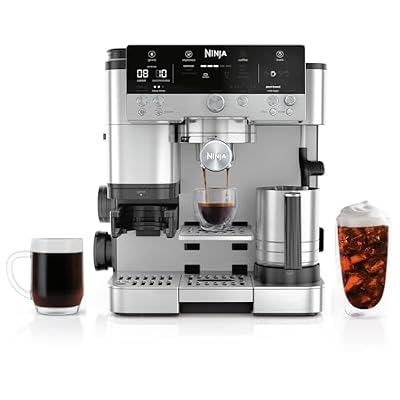
The Ninja ES601 tries to cover the whole morning in one body. It pulls espresso, brews drip coffee, and makes rapid cold brew, with a built-in conical burr grinder that offers 25 settings and a scale that doses grounds by weight. Barista Assist guidance suggests a grind setting for the drink selected, and an assisted tamper levels the puck with a twist. The Dual Froth System steams milk with four presets, including cold foam, and the 70-ounce water tank supports several drinks before a refill.
This machine fits a household where one person wants espresso and another wants a full pot-style mug, or where a brewer wants guidance built into the workflow.
- Specs: 3-in-1 espresso, drip coffee, and rapid cold brew; 40 mm conical burr grinder with 25 settings; built-in scale with weight-based dosing; assisted tamper; Dual Froth System with 4 presets; 70 oz removable water tank; 1650 watts; 12 oz bean hopper
4. Breville Barista Touch BES880 Espresso Machine

The Barista Touch pairs a built-in grinder with a touchscreen that walks a brewer through drink choices. Its ThermoJet heating system reaches brewing temperature in about three seconds, and the 54 mm stainless steel portafilter takes a standard dose. The integrated conical burr grinder offers 30 settings, and the automatic microfoam wand textures milk to a selected temperature and froth level without a manual steam wand. A 67-ounce water tank sits at the back of the machine.
This machine fits a brewer who wants cafe-style milk drinks with as little guesswork as possible. The touchscreen stores favourite drinks, and the auto frother removes the hardest manual skill in home espresso. It is the largest machine in this lineup, so it needs a generous stretch of counter and clearance above for the bean hopper.
- Specs: ThermoJet 3-second heat up; 54 mm stainless steel portafilter; integrated conical burr grinder with 30 settings; touchscreen drink menu; automatic microfoam milk texturing; 67 oz water tank; 1680 watts
5. Philips 3200 Series Fully Automatic Espresso Machine EP3241/54

The Philips 3200 is the fully automatic pick. Whole beans go in the hopper, and the machine grinds, tamps, brews, and froths at the touch of a button. Its ceramic grinder offers 12 settings and stays cooler than a steel burr during long sessions, which protects flavour over repeated drinks. The LatteGo milk system froths milk in a two-part container with no tubes, and the touch display offers five coffee varieties. An AquaClean filter reduces how often the machine needs descaling.
This machine fits a brewer who wants espresso drinks with almost no morning routine. It removes grinding, dosing, tamping, and milk steaming from the daily workflow.
- Specs: Fully automatic bean-to-cup brewing; 15-bar pump; 100 percent ceramic grinder with 12 settings; LatteGo milk system; 5 coffee varieties on touch display; AquaClean filter; 1.8 L water tank
Flavour and Body
The clearest difference sits in the cup. Espresso has a heavy, syrupy body and a layer of crema, with flavours that arrive fast and intense. A well-pulled shot can taste sweet and layered, while a poor one turns sour or bitter in seconds. The AeroPress cup is cleaner and lighter, with a smooth finish and less bitterness, and it shows off the character of the bean in a gentler way. It can make an espresso-style concentrate by using more grounds and less water, but that concentrate has no true crema and a thinner body than a machine shot.
For black coffee, the choice comes down to intensity. A drinker who loves a short, bold cup will lean toward espresso. A drinker who likes a smooth, easy-drinking mug, or who brews with lighter roasts and wants clarity, will often prefer the AeroPress.
Milk Drinks
Milk is where espresso machines pull ahead. Every machine in this lineup froths milk, from the manual wand on the De’Longhi to the automatic systems on the Breville and the Philips. A latte or cappuccino needs steamed milk with fine, glossy foam, and only a steam wand or an automatic frother can make it. An AeroPress can brew a strong concentrate to mix with milk, but the milk itself must come from a separate frother or a microwave and a whisk, and the result lacks the texture of steamed milk.
A household that drinks milky coffee every morning should weigh this heavily. The AeroPress can still serve a flat white style drink with a separate milk frother, yet that adds a second device and a second step.
Effort and Skill
The AeroPress asks for little. Add grounds and hot water, stir, wait, and press. Cleanup takes seconds: pop out the puck, rinse the chamber, and the brewer is ready again. There is no warm-up time and no puck to tamp.
Espresso asks for more. Grind size, dose, tamp pressure, and milk technique all shape the result, and a new brewer should expect a few uneven shots while learning. Machines with built-in guidance, like the Ninja and the Breville, shorten that learning curve by suggesting settings and handling dosing and tamping. Fully automatic machines, like the Philips, remove the learning curve almost entirely, yet they also remove the manual control that some brewers enjoy. Daily cleanup is heavier too: portafilters, drip trays, and milk systems all need rinsing, and the machine needs descaling on a schedule.
Upkeep and Counter Space
The AeroPress is a small device with no power cord and no parts that need descaling. Its only consumable is paper micro-filters, and a metal filter can replace them. It fits in a drawer and travels well, which makes it a strong pick for small kitchens, offices, and trips.
Espresso machines need counter space, a power outlet, and regular care. The De’Longhi is the smallest of the four, while the Breville and the Ninja take a larger footprint. All four need descaling, and the milk systems need cleaning after each use. The Philips AquaClean filter stretches the gap between descaling sessions, and the Ninja stores its accessories in the body. A buyer should measure the counter before choosing, and check the height under wall cabinets, since bean hoppers add several inches.
Which One Should You Choose?
Choose the AeroPress Premium if the morning cup matters more than the ritual around it. It brews a clean, smooth cup with little effort, little cleanup, and almost no counter space, and it suits a drinker who mainly takes coffee black or with a splash of milk.
Choose an espresso machine if milk drinks, crema, and a bold, syrupy shot are the goal. The De’Longhi ECP3420 suits a first pump machine on a small counter. The Ninja ES601 suits a household that wants espresso, drip, and cold brew from one body with built-in guidance. The Breville Barista Touch suits a brewer who wants cafe-style milk drinks with a touchscreen guiding each step. The Philips 3200 suits a brewer who wants espresso drinks at the touch of a button with almost no morning routine.
A useful tiebreaker is the daily drink. Count how many milky drinks the household makes in a week. If the answer is most of them, an espresso machine earns its counter space. If the answer is few or none, the AeroPress covers the need with far less fuss.
FAQ
Can an AeroPress make real espresso?
No, not in the strict sense. True espresso needs about 9 bars of pressure to force water through a fine puck, and a hand press cannot reach that level. An AeroPress can brew a strong, concentrated coffee that works well in milk drinks, but it has no true crema and a lighter body than a machine shot.
Do I need a grinder with an AeroPress?
A grinder helps, yet it is less critical than with espresso. The immersion method tolerates a wider range of grind sizes, so pre-ground coffee made for drip brewing works well. A burr grinder gives more control over flavour and suits a brewer who wants to fine-tune the cup.
Do I need a grinder with an espresso machine?
Yes, for the semi-automatic machines here. The De’Longhi ECP3420 has no built-in grinder, so it needs a separate burr grinder and a fine, even grind. The Ninja, Breville, and Philips models in this guide have grinders built in.
Can an AeroPress make milk drinks like a latte?
It can make the coffee half of a latte by brewing a strong concentrate, but it cannot steam milk. A separate milk frother can warm and foam milk for the drink, though the texture will differ from milk steamed by an espresso machine wand.

Write Your Review
No reviews yet. Be the first to share your experience!