
A crepe pan and a frying pan look like close cousins on the cookware wall, yet they behave very differently on the burner. One is a flat, low-sided specialist built for thin batter. The other is a deep, sloped-sided workhorse built for almost everything else. Pick the wrong one and breakfast turns into a wrestling match: batter pools in the corners, crepes tear at the edges, or eggs slide around a pan that never quite heats the way you want.
This guide compares the two pan styles head to head, then looks at five real pans you can buy today: three crepe pans and two frying pans. By the end, you will know which shape fits your cooking, which material suits your habits, and when one pan can cover both jobs.
At a Glance: Crepe Pan vs Frying Pan
| Feature | Crepe Pan | Frying Pan |
|---|---|---|
| Cooking surface | Almost completely flat | Flat base with sloped sides |
| Side height | Very low, barely a lip | Medium, holds food and oil |
| Best for | Thin crepes, tortillas, pancakes | Eggs, searing, sauteing, frying |
| Batter control | Spreader glides across a flat surface | Batter pools toward the center |
| Turning food | A thin spatula slides under easily | A spatula works, but the sides get in the way for crepes |
| Everyday range | Narrow, breakfast-focused | Wide, from breakfast to dinner |
| Typical size | 9 to 12 inches | 8 to 12 inches |
The table tells the core story. A crepe pan trades depth for flatness. A frying pan trades flatness for depth. Neither is better in every case. The right choice depends on what you cook most often.
What Makes a Crepe Pan Different
A crepe pan is defined by its surface. The cooking area is nearly flat from edge to edge, with a rim so low that a wooden spreader or a thin spatula can sweep across it without catching. That shape exists for one reason: crepe batter must spread into a paper-thin layer in seconds. Any lip, curve, or raised edge traps batter and leaves thick spots.
Crepe pans also tend to run a little lighter than frying pans of the same diameter, which matters when you tilt and swirl batter across the surface. Many have long handles for the same reason. You lift, tilt, and pour in one smooth motion, and a heavy pan fights you at every turn.
The trade-off is clear. A crepe pan cannot hold a pool of oil, a pile of vegetables, or a splashy sauce. It is a specialist, and it knows it.
What Makes a Frying Pan Different
A frying pan is the generalist of the kitchen. Its sloped sides keep oil, juices, and loose food inside the pan while you toss and turn ingredients. The base is wide and flat enough for a good sear, and the sides are high enough to hold a sauce without spilling over the edge.
That depth is exactly what makes a frying pan awkward for crepes. Batter poured into a frying pan gathers in the middle and climbs the sloped sides, so the edges of the crepe cook thicker than the center. You can still make a crepe in a frying pan, but the result rarely matches what a flat crepe pan produces.
A frying pan earns its place through range. Eggs, chicken, fish, vegetables, grilled sandwiches, and pan sauces all belong in a frying pan. If you could own only one pan, this is the one.
The Crepe Pan Side
1. De Buyer MINERAL B Carbon Steel Crepe and Tortilla Pan, 10.25-Inch

The de Buyer MINERAL B is the classic French crepe pan, and it shows in every detail. The carbon steel body is 10.25 inches across with a 9-inch cooking surface, and the sides are so low they almost disappear. Once seasoned, the steel develops a naturally slick surface that releases thin crepes without a nonstick coating. The pan is made in France, and it is free of PFAS, PFOA, and PFOS.
Carbon steel asks for a little care in return. You season it, you dry it after washing, and you keep it away from long soaks. In exchange, you get a pan that heats fast, holds heat well, and lasts for decades. This is the pick for cooks who enjoy traditional tools and do not mind a short learning curve.
Specs
- Diameter: 10.25 inches, 9-inch cooking surface
- Material: Carbon steel, naturally nonstick when seasoned
- Coating: None, PFAS, PFOA, and PFOS free
- Handle: Long steel handle, riveted
- Origin: Made in France
2. Nordic Ware Traditional French Steel Crepe Pan, 10-Inch

The Nordic Ware crepe pan takes a different path to the same goal. Its aluminized steel body spreads heat evenly across the surface, so thin batter sets at the same pace from edge to edge. The nonstick interior and sloped edge let a finished crepe glide from pan to plate, and the long stainless steel handle stays cool while you work.
This pan also doubles as a breakfast pan for omelets, pancakes, and hash browns, which makes it a friendlier choice for cooks who want one pan to cover the whole morning. It is made in the United States by Nordic Ware in Minneapolis, Minnesota, and it carries model number 03460.
Specs
- Diameter: 10 inches
- Material: Aluminized steel with nonstick interior
- Edge: Sloped edge for easy sliding and serving
- Handle: Long stay-cool stainless steel handle
- Model number: 03460
3. Cuisinart Chef’s Classic Nonstick Hard Anodized Crepe Pan, 10-Inch

The Cuisinart 623-24 is the easy-care option of the three. Its hard anodized aluminum body heats evenly and resists warping, while the nonstick interior releases crepes with almost no fat. The pan is light in the hand, which makes the tilt-and-swirl motion simple, and the cool grip handle stays comfortable through a full batch.
This is the best fit for a cook who wants crepes on a weekend morning without seasoning a pan or learning a new technique. It also handles pancakes and tortillas well, so it earns its shelf space beyond crepe day.
Specs
- Diameter: 10 inches
- Material: Hard anodized aluminum
- Interior: Nonstick coating
- Handle: Cool grip handle
- Model number: 623-24
The Frying Pan Side
4. T-Fal Ultimate Hard Anodized Nonstick Fry Pan, 12-Inch
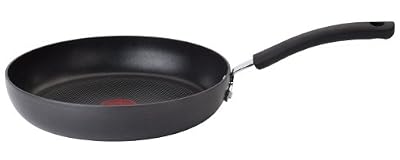
The T-Fal Ultimate fry pan is built for daily cooking. The 12-inch hard anodized body gives you room for a family-sized batch of eggs or a full round of chicken thighs, and the titanium nonstick interior releases food with little oil. The Thermo-Spot heat indicator in the center of the pan turns solid red when the surface reaches the right temperature, which takes guesswork out of preheating.
At 12 inches, this pan covers the widest range of everyday meals. It is oven safe to 400 degrees Fahrenheit and dishwasher safe, so cleanup after dinner is simple. The model number is E76507.
Specs
- Diameter: 12 inches
- Material: Hard anodized aluminum with titanium nonstick interior
- Heat indicator: Thermo-Spot indicator signals when the pan is preheated
- Oven safe: To 400 degrees Fahrenheit
- Care: Dishwasher safe
5. Tramontina Nonstick Tri-Ply Base Fry Pan, 12-Inch

The Tramontina fry pan pairs a tri-ply stainless steel base with a reinforced nonstick coating. The tri-ply base spreads heat across the whole cooking surface, which helps food brown evenly instead of scorching in the middle. The nonstick coating keeps eggs and fish from sticking, and the pan is dishwasher and oven safe.
This pan suits a cook who wants the even heating of a tri-ply base with the easy release of nonstick. It is made in Brazil and comes with a lifetime warranty, which says a lot about how the maker expects it to hold up.
Specs
- Diameter: 12 inches
- Base: Tri-ply stainless steel base for even heating
- Interior: Reinforced nonstick coating
- Care: Dishwasher and oven safe
- Warranty: Lifetime warranty
Key Differences That Decide the Choice
Shape and Sides
The crepe pan wins on flatness. Its surface is almost level with the rim, so batter spreads thin and a spatula slides under food without lifting the edge. The frying pan wins on containment. Its sloped sides hold oil and loose food inside while you cook, which is what you want for everything except crepes.
Heat and Control
Crepe pans heat fast and respond quickly to burner changes, which helps you control browning on thin batter. Carbon steel versions hold heat well once they are hot. Frying pans, especially tri-ply and hard anodized models, spread heat more evenly across a wider base, which helps when you sear meat or cook a large batch at once.
What Each Pan Cooks Best
A crepe pan owns the breakfast table: crepes, tortillas, blini, and thin pancakes. A frying pan owns the rest of the day: fried eggs, seared chicken, sauteed vegetables, pan sauces, and grilled sandwiches. If your cooking leans heavily toward one list, the choice makes itself.
Care and Lifespan
Nonstick crepe pans and frying pans ask for gentle tools and low to medium heat, and their coatings wear out over time. Carbon steel and stainless steel pans last longer but ask for more care: seasoning for carbon steel, and a little patience with sticking for bare stainless steel. Match the material to your habits, not to an ideal you will not keep up.
Which Pan Should You Pick?
Pick a crepe pan if crepes are a regular event in your kitchen. If you make them every weekend, host brunch, or love the ritual of spreading batter with a wooden tool, the flat surface pays for itself in the first batch. The de Buyer suits traditional cooks, the Nordic Ware suits breakfast lovers who want one pan for the whole morning, and the Cuisinart suits anyone who wants the simplest path to a good crepe.
Pick a frying pan if you cook a wide range of meals and want one pan to do most of the work. The T-Fal covers large everyday batches with easy cleanup, while the Tramontina adds the even heating of a tri-ply base. Either one handles eggs, searing, and sauteing with ease.
If you already own a good frying pan and you make crepes more than a few times a year, add a crepe pan. The two pans complement each other, and the crepe pan costs little shelf space. If you own neither and you cook dinner far more often than brunch, buy the frying pan first and add the crepe pan later.
The Bottom Line
A crepe pan and a frying pan are not rivals. They are two shapes built for two jobs, and the best kitchen often holds both. The crepe pan gives you thin, even crepes that a frying pan cannot match. The frying pan gives you range that a crepe pan cannot match. Choose the one that fits the meals you cook most, then add the other when your cooking asks for it.
FAQ
Can I make crepes in a regular frying pan?
Yes, you can make crepes in a frying pan, but the sloped sides make it harder to spread batter thin and even. The edges of the crepe tend to cook thicker than the center. A dedicated crepe pan gives you a flatter surface and a cleaner result.
Is a crepe pan worth buying if I already own a frying pan?
It is worth buying if you make crepes, tortillas, or thin pancakes more than a few times a year. The flat surface and low rim make spreading batter much easier, and the pan also works well for omelets and pancakes.
What size crepe pan should I choose?
A 10-inch crepe pan fits most home burners and suits single crepes for one or two people. A 12-inch pan covers larger crepes and works better when you cook for a family, though it needs a burner wide enough to heat it evenly.
Which material is best for a crepe pan?
Carbon steel is the traditional choice and lasts for decades once seasoned, while nonstick aluminum is the easiest choice and releases crepes with little fat. Pick carbon steel if you enjoy caring for traditional cookware, and pick nonstick if you want the simplest cleanup.
As an Amazon Associate, this site earns from qualifying purchases made through links on this page. This disclosure applies to the product links in this article.
Write Your Review
No reviews yet. Be the first to share your experience!