
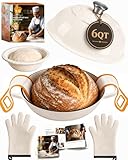
- Top Pick: Enameled Cast Iron Dutch Oven – Umite Chef 5QT Pot with Lid & Cotton Potholders – Heavy-Duty Cookware for Bread Baking, Braising, Stews, Roasting(Cream White)
- Best Value: Overmont Enameled Cast Iron Dutch Oven – 5.5QT Pot with Wide Handles Lid Cookbook & Cotton Potholders – Heavy-Duty Pre-Seasoned Cookware Oven Safe to 500°F for Braising, Stews, Roasting, Sourdough Baking
- Premium Choice: Umite Chef 5QT Enameled Cast Iron Dutch Oven Pot with Lid, Heavy-Duty Cookware for Bread Baking, Braising, Stews, Roasting, Wedding Registry Ideas & Gifts (Pink)
A Dutch oven is often the first “serious” piece of cookware a home cook buys, and for good reason: this one heavy pot can sear, braise, simmer soup, deep-fry, and bake crusty artisan bread, replacing half a dozen specialized tools. But walking into the category as a beginner is confusing. Enameled or bare cast iron? Five quarts or seven? Do you need to spend $350 on a French icon, or will a $35 pot do everything you need? The answer is more encouraging than most beginners expect.
This buying guide demystifies the Dutch oven for newcomers, explaining what actually matters, size, material, lid design, and oven safety, and showing that excellent affordable options make this the rare kitchen upgrade that does not require a big budget. By the end you will know exactly which pot to buy and why. Let us walk through it.
As an Amazon Associate we earn from qualifying purchases at no extra cost to you.




⚡ Save on Your Next PC — Amazon Prime
Prime members get fast free shipping on the systems above, plus early access to Prime Day & Black Friday PC deals. New members get a 30-day free trial.
Watch: Buying Guide: The Ultimate Dutch Oven for Beginners — Video Review
Enameled vs. Bare Cast Iron
For beginners, enameled cast iron is almost always the right choice. The enamel coating means no seasoning, no rust worries, and easy cleanup, and it handles acidic foods like tomato sauce and wine braises that would strip a bare cast iron pot’s seasoning. Bare cast iron is cheaper and beloved for campfire cooking, but the maintenance learning curve makes enameled the friendlier, more versatile starting point for everyday kitchen use.
Choosing the Right Size
- 5 to 5.5 quarts: The sweet spot for most households, big enough for a whole chicken, a batch of chili, or a standard sourdough loaf, yet manageable in weight. This is the size to buy if you buy only one.
- 6 to 6.4 quarts: Better for larger families or batch cooking, offering more room for big roasts and double soup batches at a modest increase in weight.
- Under 4 quarts: Handy as a second pot for sides and small jobs, but too small to be a primary Dutch oven for a family.
Lid Design and Oven Safety
A heavy, well-fitting lid is what makes a Dutch oven special: it traps moisture and circulates it back onto the food, keeping braises succulent and creating the steamy environment that gives bread its crackly crust. Check the oven-safe temperature rating too, quality enameled pots handle 500 degrees Fahrenheit, which matters for bread baking and oven braising. Wide, sturdy handles that you can grip with oven mitts are a practical must, since a full Dutch oven is heavy.
You Do Not Need to Overspend
The single most reassuring fact for beginners is that a modestly priced enameled Dutch oven performs nearly identically to premium brands for everyday cooking. Pots in the $30 to $50 range from brands like Umite Chef, Overmont, and Nuovva offer 500-degree oven safety, heavy lids, and vibrant enamel finishes at a fraction of the cost of the famous French names. Pair one with a good beginner cookbook and you have a complete braising and bread-baking setup for well under the price of a single designer pot.
Tips
- Use wooden or silicone utensils: Metal tools can chip the enamel over time; gentle utensils keep the surface pristine.
- Preheat gently: Start on low to medium heat; enamel does not like sudden extreme temperature swings from a cold start.
- Avoid empty high heat: Never heat an empty enameled Dutch oven on high, which can crack the coating; add oil or liquid first.
- Buy a matching cookbook: A beginner Dutch oven cookbook shortcuts the learning curve on braises, soups, and no-knead bread.
Frequently Asked Questions
What size Dutch oven should a beginner buy?
A 5 to 5.5-quart enameled Dutch oven is the ideal all-rounder for most households. It handles a whole chicken, big batches of soup or chili, and a standard round of sourdough, while staying light enough to lift comfortably when full.
Is an expensive Dutch oven worth it?
For beginners, usually not. Affordable enameled pots in the $30-$50 range cook nearly identically to premium brands for everyday braising and baking. The pricier options add prestige, refined finishes, and longer warranties, but performance in the kitchen is remarkably close.
Can I bake bread in a Dutch oven?
Yes, and it is one of the best uses. The heavy lid traps steam to create a crackly, bakery-style crust on no-knead and sourdough loaves. Just confirm your pot is rated oven-safe to around 500 degrees Fahrenheit, as most quality enameled models are.
How do I care for an enameled Dutch oven?
Hand-wash it with warm soapy water, avoid metal utensils that can chip the enamel, and never heat it empty on high. It requires no seasoning and resists rust, which is exactly why enameled cast iron is the low-maintenance choice for beginners.
Conclusion
The ultimate beginner Dutch oven is a 5 to 5.5-quart enameled cast iron pot with a heavy lid and 500-degree oven safety, and the best news is that you can get all of that for $30 to $50 without sacrificing real performance. Choose enameled for easy maintenance, pick the size that fits your household, treat the enamel gently, and add a beginner cookbook to unlock its full range. One good Dutch oven will handle braises, soups, frying, and bread for years, making it the smartest single cookware purchase a new cook can make.
Write Your Review
No reviews yet. Be the first to share your experience!