
A mandoline slicer produces paper-thin, perfectly even slices that a knife simply can’t match, transforming potatoes into restaurant-quality gratin chips and cucumbers into translucent salad ribbons in seconds. But that same razor-sharp blade earns the mandoline a reputation as one of the most dangerous tools in the kitchen. Used carelessly, it can slice fingertips as easily as vegetables, which is exactly why so many people buy one and then leave it in a drawer.
- Watch: How to Use a Mandoline Slicer Safely and Effectively — Video Review
- Understanding Your Mandoline and Its Settings
- The Golden Rule: Always Use the Hand Guard
- Proper Slicing Technique
- Getting the Best Results
- Cleaning and Storing Safely
- Tips for Safe Mandoline Use
- Frequently Asked Questions
- Conclusion
- Related Articles
- Related Guides
The truth is that a mandoline is completely safe when you respect a few simple rules. This guide walks you through setup, the correct technique, essential safety habits, and cleaning, so you can get flawless slices without ever risking a cut.
As an Amazon Associate we earn from qualifying purchases at no extra cost to you.


⚡ Save on Your Next PC — Amazon Prime
Prime members get fast free shipping on the systems above, plus early access to Prime Day & Black Friday PC deals. New members get a 30-day free trial.
Watch: How to Use a Mandoline Slicer Safely and Effectively — Video Review
Understanding Your Mandoline and Its Settings
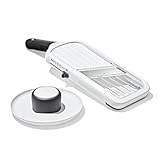
Before your first slice, get familiar with the adjustments. Most mandolines, like the Mueller Pro-Series with 12 blade options or the Gramercy with 12 slice settings, let you change thickness with a dial or swap interchangeable blades for julienne, waffle, and crinkle cuts. Set your desired thickness on a stable, flat surface, and confirm the blade is locked in place. Compact handheld models such as the Fullstar or OXO Good Grips handheld slicer are easier for beginners because you slice directly over a bowl with more control.
The Golden Rule: Always Use the Hand Guard
This is non-negotiable. Every quality mandoline includes a hand guard or food holder that grips the vegetable and keeps your fingers well above the blade. Use it from the first slice, not just the last few inches. The temptation is to freehand while the piece is large, but that’s exactly when a slip happens. If your mandoline didn’t come with a guard, buy a cut-resistant glove, brands like OXO include thoughtful safety features precisely because the risk is real.
Proper Slicing Technique
Position the mandoline at a slight angle over a cutting board or bowl for stability. Place the vegetable flat against the guard and push it down the runway in smooth, even strokes, letting the blade do the work rather than forcing it. Keep a steady rhythm and consistent pressure for uniform slices. Slice only until the piece becomes too small for the guard to hold safely, then set that stub aside for another use rather than risking a freehand pass.
Getting the Best Results
- Chill firm vegetables like potatoes briefly for cleaner, crisper slices.
- Choose produce that’s roughly the width of the runway for even, waste-free cutting.
- Start with a thicker setting and work thinner as you gain confidence.
- Work over a bowl to catch slices and keep your counter clear.
Cleaning and Storing Safely
The blade stays sharp for years, which means it’s just as dangerous during cleanup. Never wipe the blade with a bare hand or a loose sponge. Rinse under running water with the blade angled away from you, using a brush to clear stuck bits, and check whether your model’s frame is dishwasher safe. Store the mandoline with the blade retracted or covered, and never toss it loose into a drawer where a reaching hand could meet the edge.
Tips for Safe Mandoline Use
- Never slice without the hand guard or a cut-resistant glove, no exceptions.
- Place a damp towel under the mandoline to stop it from sliding mid-slice.
- Retract or cover the blade the moment you finish, before cleaning.
- Keep the tool out of reach of children and store it separately from other utensils.
Frequently Asked Questions
Do I really need the hand guard every time?
Yes, always. Most mandoline injuries happen when people freehand the larger portion of a vegetable. Use the guard from the very first stroke and set aside any stub too small to hold safely.
What thickness should I use for different dishes?
Use a thin setting (around 1 to 2 mm) for chips and gratins, medium for salads and slaws, and thicker for roasting. Adjustable models let you dial in the exact cut for each recipe.
Can I put my mandoline in the dishwasher?
Many frames are dishwasher safe, but check your model. Even so, hand-washing the blade carefully preserves its edge and reduces the risk of reaching into a dishwasher rack near an exposed blade.
Are handheld mandolines safer than full-size ones?
Handheld models like the Fullstar and OXO offer more control and slice directly over a bowl, which many beginners find safer. Full-size mandolines handle larger volumes and offer more blade options.
Conclusion
A mandoline is a fast track to professional-looking slices, and it’s perfectly safe once you commit to one habit: always use the hand guard. Learn your settings, slice with smooth even strokes, and treat the blade with respect during cleanup and storage. Do that, and your mandoline will become one of the most rewarding tools in your kitchen instead of the scariest.









Write Your Review
No reviews yet. Be the first to share your experience!