
- Top Pick: Ninja Professional Plus Food Processor, 1000PW, 9-Cup, Grey, BN601
- Best Value: Hamilton Beach 3 Cup Electric Vegetable Chopper & Mini Food Processor
- Premium Choice: Kitchen in the box Food Processors,Small Meat Grinder & Food Chopper Electric Vegetable Chopper with 2 Bowls (8 Cup+8 Cup)& 2 Bi-Level Blades for Meat/fish/Vegetable/Baby Food,Black
Disclosure: As an Amazon Associate we earn from qualifying purchases. We may receive a small commission when you buy through links on this page, at no extra cost to you. We only recommend products we genuinely believe offer value to home cooks.
As an Amazon Associate we earn from qualifying purchases at no extra cost to you.


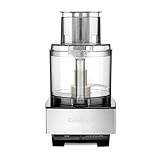


A good food processor is one of those appliances that quietly earns its counter space. Once you have one, the jobs that used to mean ten minutes of knife work become a few pulses: chopping onions, shredding cheese, slicing potatoes, kneading pizza dough, or whirling together a smooth hummus. The challenge is that processors vary wildly in bowl size, motor strength, and the quality of their discs and blades. This guide walks through five food processors that suit different kitchens and budgets, then explains exactly what to weigh before you buy.
| Rank | Product | Best For | Buy |
|---|---|---|---|
| 1 | Breville Sous Chef 16 Pro (BFP800XL) | Serious cooks who want one machine for everything | View on Amazon |
| 2 | Cuisinart Custom 14 (DFP-14BCNY) | Big-batch all-rounder on a sensible budget | View on Amazon |
| 3 | KitchenAid 13-Cup (KFP1318) | Easy storage and one-click assembly | View on Amazon |
| 4 | Ninja Professional Plus (BN601) | Compact kitchens and tight budgets | View on Amazon |
| 5 | Cuisinart 14-Cup (DFP-14BKSY) | Same workhorse in a black stainless finish | View on Amazon |
🛒 Best Price Today on Amazon
Prime members get fast, free shipping on everything above, plus member-only deals. New members get a 30-day free trial — cancel anytime.
Top Picks
1. Breville Sous Chef 16 Pro (BFP800XL)
The Sous Chef is the closest thing to a do-everything processor. Its high-torque direct-drive motor powers through dense bread dough and hard vegetables without bogging down, and the 16-cup bowl handles family-sized batches. The variable slicing dial is the standout: it adjusts blade thickness across a wide range, so you can shave paper-thin cucumbers or cut thick potato slabs from the same disc. It is large and a real investment, but for cooks who process food daily, it pays off.
2. Cuisinart Custom 14 (DFP-14BCNY)
This is the model that has earned a place on countless “best value” lists for good reason. The 14-cup bowl, simple on/off/pulse paddle, and 720-watt motor cover the overwhelming majority of home tasks, from pureeing soup to grating a block of cheese. It lacks the variable slicing of the Breville, but it is dependable, easy to clean, and built to last for years.
3. KitchenAid 13-Cup (KFP1318)
KitchenAid’s processor wins points for thoughtful design. The blades and discs nest into an included storage caddy, the bowl twists on with a single click instead of fiddly locking tabs, and the externally adjustable slicing disc means you do not have to open the lid to change thickness. It chops, shreds, and emulsifies cleanly, making it a strong pick for anyone who values tidy storage.
4. Ninja Professional Plus (BN601)
If counter space or budget is tight, the Ninja delivers a lot for the money. Its 1000-peak-watt motor and 9-cup bowl handle chopping, dough, and purees through simple Auto-iQ preset programs. It is not as refined as the premium models for fine slicing, but for everyday salsa, pesto, and dough it is hard to beat at this price.
5. Cuisinart 14-Cup (DFP-14BKSY)
Mechanically this is the Custom 14 dressed in a black stainless finish. You get the same generous bowl, the same proven motor, and the same straightforward controls, so the choice between it and the brushed version comes down to which look fits your kitchen.
What to Look For in a Food Processor
Three things matter most. First, bowl capacity: an 11- to 14-cup bowl suits most households, while 16 cups is better if you cook in bulk or knead dough often. Smaller 7- to 9-cup models are fine for dips and single batches but feel cramped for big jobs. Second, motor strength: dough and hard root vegetables demand torque, so look for a robust direct-drive motor if you bake. Third, blades and discs: a standard kit includes an S-blade, a shredding disc, and a slicing disc. An adjustable slicing disc adds real flexibility, and a dough blade is worth having if you make pizza or bread.
How to Choose Based on How You Cook
Match the machine to your habits rather than the spec sheet. Bakers who knead dough should prioritize a powerful motor and a dough blade. Cooks who prep large quantities of vegetables benefit from a wide feed chute that fits whole produce without pre-cutting. If you mostly make dips, sauces, and the occasional chop, a mid-size 9- to 11-cup model keeps cleanup quick. And if storage is your pain point, the KitchenAid’s nesting caddy or a compact Ninja will save you from a cabinet full of loose discs.
Care and Cleaning
Most bowls, lids, and blades are top-rack dishwasher safe, but the motor base should only be wiped down. Handle the S-blade and discs by their plastic hubs rather than the edges, dry them fully before storage, and run a quick pulse of warm soapy water to loosen sticky doughs before a full wash. Treated well, a quality processor will outlast most other small appliances in your kitchen.
Frequently Asked Questions
Can a food processor replace a blender?
Not entirely. Processors excel at chopping, slicing, shredding, and dough, but blenders make smoother purees and handle liquids better. For smoothies, a dedicated blender still wins.
What size food processor do I need?
An 11- to 14-cup bowl suits most home cooks. Go larger only if you cook in big batches or knead dough regularly; choose smaller if you mostly make dips and single servings.
Can I knead bread dough in a food processor?
Yes, if the model has a strong motor and ideally a dough blade. The Breville and Cuisinart picks here handle dough well; lighter machines may struggle with stiff loaves.
Are food processor parts dishwasher safe?
Bowls, lids, blades, and discs are usually top-rack dishwasher safe. The motor base is not, so wipe it clean by hand and never submerge it.
Is a food processor worth it for one or two people?
It can be, especially if you cook from scratch. A compact model handles dips, chopping, and small batches without taking up much room or money.
Related Reading
- Best Blenders for Smoothies
- Best Immersion Blenders
- KitchenAid Blender and Attachment Guide
- Best Portable Personal Blenders
- Best Pastry Blenders for Flaky Doughs
- Guide to Energy-Efficient Kitchen Appliances
- How to Organize a Small Kitchen




Write Your Review
No reviews yet. Be the first to share your experience!