
Disclosure: As an Amazon Associate we earn from qualifying purchases. We may receive a small commission when you buy through links on this page, at no extra cost to you. We only recommend products we genuinely believe offer value to home cooks.
As an Amazon Associate we earn from qualifying purchases at no extra cost to you.


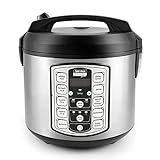
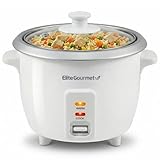

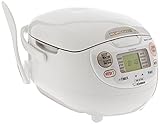
A dedicated rice cooker takes the guesswork out of one of the most-cooked staples in the world. Instead of watching a pot and hoping the timing works out, you measure, press a button, and walk away while the machine handles temperature and timing for you. The best models go further, using sensors to adjust the cook in real time so white, brown, and specialty rices all come out fluffy. Below are five rice cookers spanning premium Japanese engineering to affordable everyday workhorses, plus a guide to choosing the right one.
| Rank | Product | Best For | Buy |
|---|---|---|---|
| 1 | Zojirushi Neuro Fuzzy NS-ZCC10 | Best all-around fuzzy-logic cooker | View on Amazon |
| 2 | Tiger JKT-D18U (Induction Heating) | Large households wanting premium results | View on Amazon |
| 3 | Cuckoo CR-0675F Micom | Great rice for less money | View on Amazon |
| 4 | Aroma ARC-954SBD | Budget pick that also steams and slow-cooks | View on Amazon |
| 5 | Zojirushi NS-ZCC18 (10-cup) | Same Neuro Fuzzy logic, bigger capacity | View on Amazon |
🛒 Best Price Today on Amazon
Prime members get fast, free shipping on everything above, plus member-only deals. New members get a 30-day free trial — cancel anytime.
Top Picks
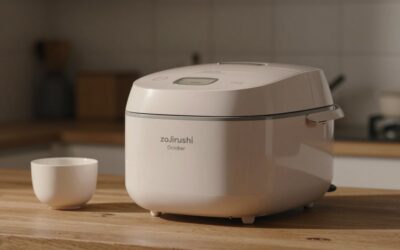
1. Zojirushi Neuro Fuzzy NS-ZCC10
The Neuro Fuzzy is the model that keeps winning head-to-head tests. Its fuzzy-logic chip makes fine adjustments to heat and timing throughout the cook, which is why it turns out consistently fluffy white, brown, sushi, and porridge rice. The 5.5-cup capacity suits most families, and the keep-warm function holds rice at serving temperature for hours without drying it out.
2. Tiger JKT-D18U (Induction Heating)
Tiger’s induction-heating cooker heats the entire inner pot rather than just the base, producing exceptionally even grains. The 10-cup capacity and multiple menu settings, including a fast white-rice mode, make it a strong choice for bigger households or anyone who entertains. It costs more, but the quality of the cooked rice rivals the best on the market.
3. Cuckoo CR-0675F Micom
Cuckoo is a trusted Korean brand, and this Micom (microcomputer) model brings fuzzy-logic cooking at a friendlier price. The 6-cup uncooked capacity, nonstick inner pot, and preset menus for white, brown, and mixed rice make it a smart middle ground for cooks who want great results without paying flagship prices.
4. Aroma ARC-954SBD
The Aroma is the value pick that does more than rice. Beyond white and brown rice settings, it doubles as a steamer and a slow cooker, with a Sauté-then-Simmer function and a long delay timer. It will not match the texture finesse of the Zojirushi or Tiger, but for a low price it cooks reliable rice and earns its keep as a multitasker.
5. Zojirushi NS-ZCC18 (10-cup)
This is the larger sibling of our top pick, using the same Neuro Fuzzy logic in a 10-cup body. If you regularly cook for a crowd or like to batch-cook rice for the week, the extra capacity is worth it while keeping the same excellent cooking performance.
Micom vs Induction Heating: What’s the Difference?
Basic rice cookers use a simple on/off thermostat. Micom (microcomputer) models add fuzzy logic, letting the cooker adjust temperature and timing based on conditions inside the pot, which is why they handle brown and specialty rice so much better. Induction heating (IH) models go a step further by heating the entire inner pot through electromagnetic induction, giving the most even, precise cook. As a rule, Micom is the sweet spot for most homes, while IH is for cooks who want the absolute best texture and will pay for it.
How to Choose the Right Capacity
Rice cooker sizes are usually listed in uncooked cups, and rice roughly doubles when cooked. A 3-cup model suits singles or couples, a 5.5-cup model fits most families, and a 10-cup model is right for large households or batch cooking. Buying too large is not harmful, but very small batches in a big cooker can cook slightly less evenly, so size to your typical meal.
Getting the Best Results
Rinse white rice until the water runs mostly clear to remove excess surface starch and prevent gumminess. Use the cup that came with the cooker, since it may not equal a standard US cup, and fill water to the matching line inside the pot. Let cooked rice rest with the lid closed for ten minutes before fluffing, which lets moisture distribute evenly for the best texture.
Beyond Plain White Rice
Modern rice cookers do far more than steam a single grain. Most include settings for brown rice, mixed and seasoned rice, sushi rice, and porridge, and many can steam vegetables or dumplings in a basket above the rice while it cooks. Some, like the Aroma pick here, double as slow cookers and can simmer oatmeal overnight on a timer. Treating your cooker as a small multicooker rather than a single-purpose appliance is the fastest way to justify its space on the counter. Experiment with the specialty cycles, and keep notes on the water ratios that work best for your favorite grains, since fuzzy-logic models reward a little fine-tuning with consistently excellent results.
Frequently Asked Questions
Do I need to rinse rice before cooking?
For white rice, yes. Rinsing removes surface starch that causes stickiness and clumping. Brown rice benefits from a quick rinse too, though it is less critical.
Can a rice cooker make brown rice?
Most fuzzy-logic and induction models have a dedicated brown-rice setting that adjusts soaking and cook time. Basic on/off cookers struggle with brown rice texture.
Why is my rice mushy or hard?
Usually a water-ratio problem. Use the cooker’s included measuring cup and matching water line, and rinse white rice first. Too much water makes rice mushy; too little leaves it firm.
Is the keep-warm function safe to leave on?
Yes, keep-warm holds rice at a safe serving temperature, often for several hours. Quality cookers keep rice from drying out, though flavor is best within the first few hours.
Are rice cooker pots nonstick?
Most inner pots have a nonstick coating for easy cleaning. Use a soft utensil and avoid metal scrubbers to keep the coating intact and long-lasting.






Write Your Review
No reviews yet. Be the first to share your experience!