
Disclosure: As an Amazon Associate we earn from qualifying purchases. We may receive a small commission when you buy through links on this page, at no extra cost to you. We only recommend products we genuinely believe offer value to home cooks.
As an Amazon Associate we earn from qualifying purchases at no extra cost to you.


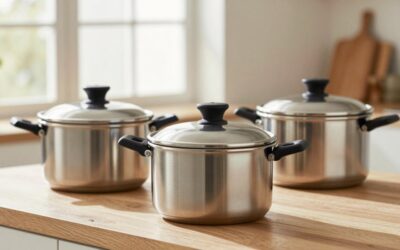
A reliable stock pot is the foundation of soups, stews, stocks, pasta, and big-batch cooking. The right pot heats evenly, resists scorching during long simmers, and is sized to feed your household. Its tall, narrow profile limits evaporation, which is exactly what you want when you are reducing a stock over several hours and trying to concentrate flavor without losing all your liquid. A flimsy pot with a thin base, by contrast, will develop hot spots that scorch the bottom layer of a soup long before the rest is done.
Here are five stock pots worth considering, from premium fully clad models to budget-friendly large-capacity options, followed by a buying guide covering size, material, and construction so you can pick the pot that fits your cooking and your kitchen.
| Rank | Product | Best For | Buy |
|---|---|---|---|
| 1 | Tramontina Tri-Ply Clad 8-Quart Stock Pot | Even heat for stocks and pasta | View on Amazon |
| 2 | Cuisinart MultiClad Pro 12-Quart Stock Pot | Large-batch soups and stews | View on Amazon |
| 3 | Tramontina Gourmet 12-Quart Stock Pot | Affordable big capacity | View on Amazon |
| 4 | All-Clad D3 8-Quart Stockpot | Premium fully clad construction | View on Amazon |
| 5 | Tramontina Tri-Ply Clad 12-Quart Stock Pot | Induction-ready big batches | View on Amazon |
🛒 Best Price Today on Amazon
Prime members get fast, free shipping on everything above, plus member-only deals. New members get a 30-day free trial — cancel anytime.
Top Picks
1. Tramontina Tri-Ply Clad 8-Quart Stock Pot
This 8-quart pot uses an aluminum core clad in stainless steel for even, scorch-resistant heating, which matters during long stock simmers. It is induction-ready and oven-safe, and the 8-quart size comfortably feeds 8 to 12 people. Check it on Amazon
2. Cuisinart MultiClad Pro 12-Quart Stock Pot
For canning, large stocks, or cooking for a crowd, the 12-quart MultiClad Pro offers tri-ply construction and a tight-fitting lid. The riveted cool-grip handles make a full pot easier to manage. Check it on Amazon
3. Tramontina Gourmet 12-Quart Stock Pot
If you want big capacity without the tri-ply price, this Gourmet 12-quart pot is a budget-friendly choice for boiling pasta, blanching, and steaming corn or crawfish. Check it on Amazon
4. All-Clad D3 8-Quart Stockpot
All-Clad’s D3 stockpot is fully bonded tri-ply from base to rim, so heat climbs the walls evenly and stocks simmer without hot spots. It is oven-safe to high temperatures, induction-compatible, and built to last a lifetime. Check it on Amazon
5. Tramontina Tri-Ply Clad 12-Quart Stock Pot
When you need serious capacity with even heating, this 12-quart tri-ply pot pairs a magnetic induction-ready base with a stainless interior. It is ideal for large stocks, pasta for a crowd, and seafood boils. Check it on Amazon
What Size Stock Pot Do You Need?
For most households, an 8-quart pot is the everyday workhorse, big enough for a family batch of soup or a pound of pasta with room to spare. If you regularly make large stocks, can preserves, or cook for gatherings, a 12 to 16-quart pot earns its storage space. Remember that a fully loaded large pot is heavy, so consider how easily you can lift and pour it.
Material and Construction
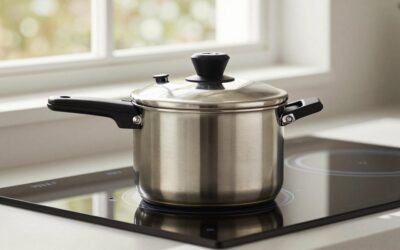
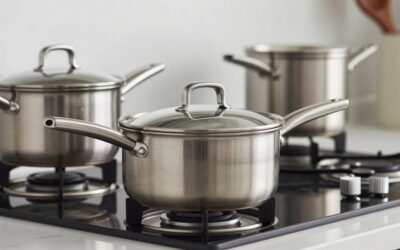
Stainless steel with an aluminum or tri-ply base is the most versatile choice: it resists reactivity with acidic ingredients and distributes heat evenly to prevent scorching during long simmers. A thick, encapsulated or fully clad base is the single most important feature, since a thin bottom will scorch a stock before it ever finishes. Look for a snug lid and sturdy riveted handles.
Who Should Buy Which
Casual cooks who make occasional soup are well served by an affordable 8-quart pot. Serious home cooks and entertainers benefit from tri-ply construction for better browning and even heat. If you also need everyday pots and pans, a set like our best pots and pans cookware sets may be the smarter buy.
Getting the Most From Your Stock Pot
A stock pot is more versatile than its name suggests. Beyond stocks and soups, it is the right tool for boiling pasta, blanching vegetables, steaming corn or shellfish with a basket insert, deep-frying in small batches, and even small-scale canning. When making stock, start with cold water so the proteins and impurities rise slowly to the surface where you can skim them, producing a clearer, cleaner-tasting result. Keep the heat at a bare simmer rather than a rolling boil, which keeps the stock from turning cloudy and emulsifying the fat. To prevent boil-overs when cooking pasta or starchy foods, leave several inches of headroom and add a small amount of oil or simply lower the heat the moment the pot threatens to climb. After use, a stainless stock pot cleans up easily, and most are dishwasher safe, though hand washing preserves the finish over the long haul.
Frequently Asked Questions
What is the difference between a stock pot and a Dutch oven?
A stock pot is tall, lightweight, and built for boiling and simmering large volumes of liquid. A Dutch oven is heavier, often enameled cast iron, and excels at braising and baking. See our best Dutch ovens for braising and baking for that style.
Can I use a stock pot on an induction cooktop?
Only if it has a magnetic stainless base. Most tri-ply stainless stock pots are induction-ready; check the label to be sure.
What size stock pot is best for making stock?
An 8 to 12-quart pot is ideal for home stock-making, giving bones and vegetables room to be fully submerged while leaving headroom to prevent boil-overs.
Are stainless steel stock pots dishwasher safe?
Most are, though hand washing preserves the finish and is gentler on the pot over time.
Why does my stock pot scorch on the bottom?
A thin base or too-high heat is usually the cause. Use a pot with a thick clad base and keep stocks at a gentle simmer rather than a rolling boil.
Can one stock pot do double duty for canning?
An 8-quart or larger stainless stock pot works for small-batch water-bath canning if it is tall enough to cover jars by an inch of water and you add a rack to keep jars off the bottom. For frequent canning, a dedicated canner with a fitted rack is more convenient, but a big stock pot is a fine starting point.
Keep exploring our cookware coverage: the best stainless steel cookware sets, the best cookware sets for the home cook, and the nonstick vs. stainless steel comparison. Beginners may also like our guide for the home cook.
Write Your Review
No reviews yet. Be the first to share your experience!