
Disclosure: As an Amazon Associate we earn from qualifying purchases. We may receive a small commission when you buy through links on this page, at no extra cost to you. We only recommend products we genuinely believe offer value to home cooks.
As an Amazon Associate we earn from qualifying purchases at no extra cost to you.

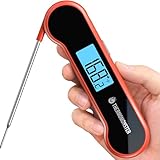


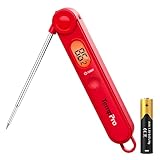

An instant-read meat thermometer is the single cheapest way to stop overcooking dinner. Instead of guessing, you get an accurate internal temperature in a few seconds, which means juicy chicken, perfectly pink steak, and safely cooked pork every time. The best models are fast, accurate, and easy to read. Here are five instant-read thermometers worth buying, followed by a guide to the specs that actually matter and the temperatures to cook to.
| Rank | Product | Best For | Buy |
|---|---|---|---|
| 1 | ThermoPro TP19 Waterproof Instant-Read Thermometer | Fast, accurate value | View on Amazon |
| 2 | Lavatools Javelin PRO Classic | Pro-grade speed and display | View on Amazon |
| 3 | Lavatools Javelin PRO Duo | Auto-rotating backlit screen | View on Amazon |
| 4 | Lavatools Javelin (Compact Foldable) | Pocket-size everyday use | View on Amazon |
| 5 | Lavatools Javelin PRO (Indigo) | Large display readability | View on Amazon |
🛒 Best Price Today on Amazon
Prime members get fast, free shipping on everything above, plus member-only deals. New members get a 30-day free trial — cancel anytime.
Top Picks
ThermoPro TP19 Waterproof Instant-Read Thermometer
The ThermoPro TP19 is the value champion: a sensitive thermocouple delivers very fast readings, the display is backlit and ambidextrous, and the waterproof body rinses clean. For most home cooks this is all the thermometer they will ever need.
Lavatools Javelin PRO Classic
The Javelin PRO Classic is a step up for people who cook often, with a roughly two-second read, an auto-rotating backlit display, and NSF certification. It feels like a professional tool and reads reliably across grilling, frying, and baking.
Lavatools Javelin PRO Duo
The Javelin PRO Duo adds a large auto-rotating backlit display and a stable-hold feature that locks in the reading, which is handy when you are leaning over a grill. It is a polished pick for serious cooks and pitmasters.
Lavatools Javelin (Compact Foldable)
The standard compact Javelin folds down to pocket size with a 2.75-inch probe and a roughly three-second read. It is the grab-and-go option for everyday checks on chicken, burgers, and bread.
Lavatools Javelin PRO (Indigo)
The indigo Javelin PRO offers the same fast, accurate performance with an easy-to-read display. If readability is your priority, the larger backlit screen makes temperature checks effortless even in low light.
What to Look For in an Instant-Read Thermometer
Prioritize speed and accuracy. The best instant-read models settle on a temperature in two to three seconds, which keeps you from holding the grill lid open and losing heat. Accuracy within about a degree means you can trust the number for food safety. Beyond that, look for a backlit, easy-to-read display (auto-rotating is a bonus for either hand), a thin probe tip that leaves a smaller hole and reads faster, and water resistance so you can rinse it clean after touching raw meat. A foldaway probe and auto-on/off save the battery and your fingers.
How to Use It Correctly
Placement is everything. Insert the probe into the thickest part of the meat, away from bone, fat, and gristle, since those read differently than the muscle you are cooking. For thin cuts, insert from the side to reach the center. Check in a couple of spots to confirm the whole piece is done. Remember that meat carries over and keeps rising several degrees while it rests, so pull steaks and roasts a few degrees before your target. Calibrate the thermometer occasionally in an ice-water bath, which should read about 32 degrees Fahrenheit.
Safe Internal Temperatures to Know
A thermometer only helps if you know the targets. As general USDA guidance, poultry should reach 165 degrees Fahrenheit; ground meats like burgers reach 160; pork, beef, lamb, and veal steaks, chops, and roasts are safe at 145 followed by a three-minute rest. Many cooks pull steaks earlier for medium-rare and accept the personal-preference trade-off, but poultry and ground meat should always hit their full safe temperature. Keep a magnet or card with these numbers near the stove until they become second nature.
Beyond Meat: Other Uses for an Instant-Read
An instant-read thermometer earns its place in the drawer far beyond the grill. It is invaluable for baking bread, where a lean loaf is done around 200 to 210 degrees Fahrenheit internally and an enriched dough a touch lower, taking the guesswork out of underbaked centers. It checks the temperature of frying oil so you can hold the sweet spot for crisp, non-greasy results, and it confirms that custards and candy hit their precise stages. You can even use it to verify that your refrigerator is holding a safe temperature or that reheated leftovers have reached a safe 165 degrees throughout. Because it reads so quickly, it becomes a habit rather than a chore, and that habit is what separates consistently great cooking from hopeful guessing. A model with a thin probe and a fast, accurate sensor, like the picks above, handles all of these jobs with the same quick poke, which is why a good instant-read is one of the highest-value tools you can own for the money.
Frequently Asked Questions
What is the difference between instant-read and leave-in thermometers?
An instant-read is spot-checked: you insert it, get a fast reading, and remove it. A leave-in probe stays in the food in the oven or grill and monitors temperature continuously. Many cooks own both, but an instant-read is the more versatile first purchase.
How accurate are instant-read thermometers?
Good models are accurate to within about a degree. You can verify accuracy with an ice-water bath, which should read roughly 32 degrees Fahrenheit, and some thermometers allow recalibration if they drift.
Where do I insert the probe?
Into the thickest part of the meat, avoiding bone, fat, and gristle. For thin cuts, insert from the side toward the center, and check more than one spot on large pieces.
What temperature should chicken reach?
Poultry should reach an internal temperature of 165 degrees Fahrenheit for safety. Ground meats should hit 160, and whole cuts of pork, beef, and lamb are safe at 145 with a short rest.
Can I leave an instant-read thermometer in the oven?
No. Instant-read thermometers are designed for quick spot checks and their electronics are not built to sit in oven heat. Use a dedicated leave-in probe thermometer for continuous monitoring.
How do I clean and store it?
Wipe the probe with hot soapy water or a sanitizing wipe after each use, especially after touching raw meat, and avoid submerging the body unless it is rated waterproof. Fold the probe away or cap it, store it somewhere dry, and remove the battery if you will not use it for a long stretch to prevent corrosion.


Write Your Review
No reviews yet. Be the first to share your experience!