
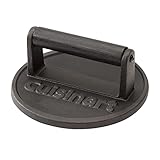
- Top Pick: Cuisinart Smash Burger Press, Cast Iron, 6.5" Round Burger Smasher
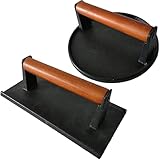
- Best Value: Firsgrill Burger Press 7.08" Round & 8.3”X4.3”Rectangle Heavy-Duty Cast Iron Smash Meat Steak with Wood Handle for Blackstone Camp Chef Pitboss Weber Treager Griddle (Round & Rectangle w Flat Bottom)
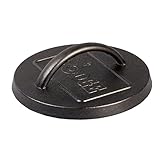
- Premium Choice: Lodge Pre-Seasoned Cast Iron Round Griddle Press, 8 Inches
Disclosure: As an Amazon Associate we earn from qualifying purchases. We may receive a small commission when you buy through links on this page, at no extra cost to you. We only recommend products we genuinely believe offer value to home cooks.
As an Amazon Associate we earn from qualifying purchases at no extra cost to you.


The best cast iron skillet for smash burgers is one that gets blazing hot, holds that heat when a cold patty hits the surface, and gives you the crispy, lacy crust that makes a smash burger great. This guide explains what to look for, recommends proven skillets and a press, and shows how to get restaurant-quality results at home.
| Rank | Product | Best For | Buy |
|---|---|---|---|
| 1 | Lodge 12-Inch Cast Iron Skillet | The all-around smash burger workhorse | View on Amazon |
| 2 | Lodge 12-Inch Skillet with Silicone Holder | Safer handling at high heat | View on Amazon |
| 3 | Lodge 10.25-Inch Cast Iron Skillet | Smaller batches and tighter stoves | View on Amazon |
| 4 | Lodge Square Cast Iron Grill Pan | Sear marks and fat drainage | View on Amazon |
| 5 | Lodge Cast Iron Burger Press | Getting that thin, crispy edge | View on Amazon |
🛒 Best Price Today on Amazon
Prime members get fast, free shipping on everything above, plus member-only deals. New members get a 30-day free trial — cancel anytime.
Top Picks
1. Lodge 12-Inch Cast Iron Skillet
The 12-inch Lodge is the classic smash burger surface: large enough for two or three patties, thick enough to retain heat, and pre-seasoned out of the box. It is affordable, durable, and works on any stovetop, grill, or campfire.
2. Lodge 12-Inch Skillet with Silicone Holder
The same workhorse skillet bundled with a silicone handle holder, a smart safety upgrade since cast iron handles get screaming hot when you crank the heat for smashing.
3. Lodge 10.25-Inch Cast Iron Skillet
The 10.25-inch is ideal for smaller stoves and one-or-two-burger batches. It heats fast and stores easily while still delivering a great sear.
4. Lodge Square Cast Iron Grill Pan
If you like defined sear marks and want fat to drain away from the patty, the ridged square grill pan is a fun alternative. It is not the traditional flat-top smash surface, but it crisps edges nicely.
5. Lodge Cast Iron Burger Press
A heavy press is the secret to a true smash burger. This cast-iron press applies even pressure so the patty spreads thin and develops that signature crispy edge against the hot skillet.
What Makes a Skillet Great for Smash Burgers
Three things matter most: heat retention, surface size, and seasoning. Cast iron excels at heat retention, which is critical because a smash burger relies on the pan staying hot when you press a cold ball of beef onto it. A flat, smooth surface gives maximum contact for that crust, and a well-seasoned pan releases the patty cleanly. Thickness helps too, since a heavier pan recovers heat faster between patties.
How to Smash a Burger Properly
Get the skillet very hot, place a loose ball of beef on the surface, and press it thin within the first 30 seconds using a sturdy press with parchment between the press and the beef. Do not press again after that, salt generously, and flip once a deep crust forms. The Maillard browning on that crust is what makes the technique worth the smoke. Good ventilation helps, since smash burgers are a high-heat affair.
Cast Iron vs Carbon Steel vs Griddle
Cast iron is the traditional smash burger surface, but it is worth knowing the alternatives. Carbon steel heats faster and is lighter, which some cooks prefer, though it retains slightly less heat than thick cast iron when a cold patty hits. A flat-top griddle gives the most room for batch cooking and is what many diners use, but it is a bigger commitment in space and cost. For most home cooks, a heavy cast iron skillet hits the sweet spot: excellent heat retention, a naturally nonstick seasoned surface, and a price that is hard to argue with. It also doubles for searing steak, frying eggs, and baking cornbread, so it earns its place in the cabinet.
Caring for Your Smash Burger Skillet
Cast iron lasts generations with simple care. Clean it without stripping the seasoning using our guide on how to clean a cast iron skillet without ruining it, and re-season when needed following how to season a cast iron skillet the right way. A quick wipe, a thin oil coat, and proper storage keep the surface slick. If you want a versatile pan for more than burgers, see our roundups of the best cast iron skillets and frying pans and best cast iron skillets for searing steak.
Common Smash Burger Mistakes
A few errors separate a great smash burger from a mediocre one. The most common is not getting the pan hot enough, which leaves you with a steamed gray patty instead of a deeply browned crust. Another is pressing the patty more than once; you smash it firmly in the first 30 seconds and then leave it alone so the crust can form. Using lean beef also disappoints, since the fat is what creates flavor and that lacy crisp edge, so reach for an 80/20 blend. Finally, do not crowd the skillet. Give each patty room so the surface stays hot and the edges crisp rather than steam against one another.
Frequently Asked Questions
What size skillet is best for smash burgers?
A 10.25 to 12-inch skillet works well. The 12-inch fits more patties, while the smaller size heats faster for one or two.
Do I need a burger press?
A sturdy press makes a real difference. It spreads the patty thin and even, which is the whole point of a smash burger.
Can I use enameled cast iron for smash burgers?
Bare cast iron is better here because it tolerates the very high heat and develops a natural nonstick crust. Enamel can be damaged by extreme heat.
Why does my burger stick to the skillet?
Usually the pan is not hot enough or the seasoning is thin. Preheat well and keep the seasoning maintained.
How hot should the skillet be?
Very hot. You want the surface to sizzle aggressively the instant the beef hits it to build that crust.
For more cast-iron picks, browse our guide to the Lodge cast iron skillet review.
Write Your Review
No reviews yet. Be the first to share your experience!