
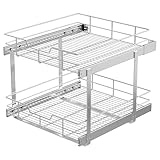
- Top Pick: OCG 2 Tier Pull Out Cabinet Organizer (14" W x 21" D), Pull Out Drawers for Kitchen Cabinets, Pull Out Shelves for Base Cabinet Organization in Kitchen Bathroom Pantry, Chrome Finish
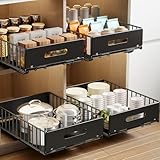
- Best Value: QUYUWU 2-Tier Kitchen Cabinet Pull Out Shelf and Drawer Organizer Slide Out Pantry Storaqe Basket in Multiple Sizes (14" W x 21" D)
- Premium Choice: 2 Tier Pull Out Cabinet Organizer 21" W X 22" D, Chromed, Full Slide Out
Deep lower cabinets are the ultimate double-edged sword of kitchen design. On paper, they offer massive storage potential; in reality, they are dark, inaccessible caverns where plastic lids, heavy cast iron skillets, and expired pantry goods go to be forgotten. Getting down on your hands and knees with a flashlight just to retrieve a baking sheet is a daily frustration you do not have to live with.
- Decide These 3 Things First
- 1. Sizing and Clearance: The Golden Rules of Cabinet Measurement
- 2. Weight Capacity and Construction Quality
- 3. Slide Mechanisms: Ball Bearings, Extension, and Soft-Close
- 4. Material Choices: Metal Wire vs. Solid Wood
- 5. Price Tiers: What Do You Get for Your Money?
- Spec Checklist
- Red Flags
- FAQ
If you are planning a kitchen or bathroom upgrade in 2026, retrofitting your existing spaces with slide-out organizers is one of the highest-return, lowest-cost DIY projects you can undertake. However, learning how to choose pull out shelves for lower cabinets involves navigating a sea of identical-looking metal baskets and wood drawers online. Many homeowners make the costly mistake of ordering shelves based purely on the external width of their cabinet box, only to find the drawers cannot roll out past the cabinet door hinges. Others buy cheap, adhesive-backed plastic trays that buckle under the weight of heavy Dutch ovens.
As an Amazon Associate we earn from qualifying purchases at no extra cost to you. Product prices and availability are accurate as of the date shown and are subject to change.


To prevent these headaches, this guide breaks down the structural, mechanical, and spatial realities of slide-out shelf selection, ensuring you buy the perfect fit the first time.
Decide These 3 Things First
Before you get out your tape measure or browse online catalogs, you must make three fundamental decisions about how your organizers will function and how they will be anchored to your cabinetry.
- Mounting Location (Bottom-Mount vs. Side-Mount): Bottom-mount organizers screw directly into the floor of your cabinet or onto an existing sturdy shelf. They are incredibly stable and the easiest to install for DIYers. Side-mount organizers attach to the vertical inner walls of the cabinet. While side-mounts maximize vertical space, they require highly precise cabinet wall spacing and are less forgiving of non-standard cabinet widths.
- Tier Configuration (Single-Tier vs. Multi-Tier): A single-tier shelf is ideal for tall items like blenders, stand mixers, and tall stockpots. Multi-tier units (such as two-tier stacked baskets) double your usable surface area but require more vertical clearance, making them perfect for canned goods, shallow pans, cleaning supplies, or food storage containers.
- Installation Method (Screw-In vs. Adhesive): Heavy-duty storage requires steel screws driven into solid wood or MDF. However, if you are renting or working in a light-duty space like a bathroom vanity, tool-free “peel-and-stick” adhesive runners offer a drill-free alternative that can be set up in under ten minutes.
1. Sizing and Clearance: The Golden Rules of Cabinet Measurement
The single most common reason pull-out shelves are returned is incorrect measurement. To find the correct shelf size, you must measure the *clear opening* of your cabinet, not the overall cabinet width.
First, open the cabinet door fully. Measure the narrowest point of the opening. This is usually the space between the face frame edges, or the distance from the cabinet frame to the edge of the open door hinge. If your cabinet door does not open past 90 degrees, the door itself or the protruding hinge might block a slide-out tray. Subtract at least 1/2 inch to 1 inch from your narrowest measurement to establish your maximum slide-out shelf width.
Second, measure the interior depth of your cabinet from the front face frame to the back wall. Standard kitchen base cabinets have an interior depth of roughly 23 to 24 inches. Organizers typically come in standard depths of 16.5 inches, 21 inches, or 22 inches. You must choose a shelf depth that is at least 1 inch shorter than your cabinet’s interior depth to allow the cabinet door to close completely.
For example, if your cabinet interior is 23 inches deep and your door opening width is 15 inches (accounting for hinges), a standard 14-inch wide by 21-inch deep pull-out shelf (such as the mid-range chrome models) will fit perfectly, leaving comfortable clearance on all sides.
2. Weight Capacity and Construction Quality
A pull-out shelf is only as good as the weight it can safely support when fully extended. When a drawer is pulled out of the cabinet, gravity puts immense leverage on the mounting brackets and glides.
For heavy kitchen items like cast iron pans, stand mixers, or stacks of ceramic plates, look for organizers rated for at least 50 to 100 pounds. Achieving this weight capacity requires heavy-gauge carbon steel wire (typically 4mm to 6mm in diameter) or solid 5/8-inch wood drawer boxes. Wire baskets should feature commercial-grade chrome plating or powder-coated finishes to resist rust from moisture and spilled liquids.
If you are storing lightweight items like spices, toilet paper, or plastic food containers, a lighter-duty shelf rated for 15 to 30 pounds is sufficient. These lighter units often use thinner metal frames or adhesive mounting strips, which are much easier to install but will sag or fail if loaded with heavy canned goods.
3. Slide Mechanisms: Ball Bearings, Extension, and Soft-Close
The slide hardware is the engine of your pull-out shelf. Cheap plastic rollers will squeak, bind, and warp over time. For smooth, reliable performance, insist on steel ball-bearing drawer slides.
Pay close attention to the extension type of the glides:
- Three-Quarter (3/4) Extension: These slides leave the back 25% of the drawer inside the cabinet. While budget-friendly, they still require you to reach into the dark cabinet to grab items at the very back.
- Full-Extension: These glides allow the entire drawer to roll completely out past the cabinet face frame. This gives you 100% unobstructed, top-down access to every single item stored in the drawer.
Additionally, premium slides feature soft-close dampers. This hydraulic mechanism catches the drawer as you push it closed, gently gliding it back into the cabinet without slamming. This prevents glass jars and heavy pots from rattling around and shifting inside the basket.
4. Material Choices: Metal Wire vs. Solid Wood
The choice between metal wire baskets and solid wood drawers comes down to aesthetics, visibility, and cleaning preferences.
Metal wire baskets (often chrome-plated or black-coated steel) are exceptional for pantries and lower cabinets because they allow light to filter through. You can easily see what is stored in the lower tiers from a standing position. They are also incredibly easy to wipe down and do not warp if a bottle of olive oil or dish soap leaks. However, small items or thin spice bottles can tip over on wire grates unless you install plastic shelf liners.
Solid wood or Baltic birch drawers offer a high-end, custom-built appearance. They feature solid bottoms, meaning nothing will slip through or tip over. High-quality wood shelves utilize dovetail joinery, which locks the corners of the drawer box together for maximum structural integrity. The downside is that solid wood is susceptible to water damage if installed under a leaky kitchen or bathroom sink, and it blocks light, making the lower levels of a deep cabinet darker.
5. Price Tiers: What Do You Get for Your Money?
The market for pull-out cabinet organizers is broad, ranging from inexpensive quick-fixes to premium custom-sized wooden drawers. Understanding these price ranges helps you budget for a full kitchen overhaul.
- Budget ($20 – $50 per unit): In this tier, you will find smaller, single-tier organizers, plastic storage drawers, and peel-and-stick adhesive models (like a basic 12-inch wide black carbon steel organizer). These are excellent for renters, light-duty bathroom storage, or organizing lightweight pantry items. They typically have lower weight capacities (15 to 30 pounds) and three-quarter extension slides.
- Mid-Range ($50 – $100 per unit): This is the sweet spot for durable kitchen organization. Here you will find heavy-duty chrome-plated steel double-tier organizers (such as standard 14″ W x 21″ D units). These feature robust ball-bearing glides, weight capacities of 50 to 80 pounds, and full-extension capabilities. They require screwing into the cabinet base but offer years of sag-free service.
- Premium ($100 – $250+ per unit): Premium options include solid wood drawers with dovetail joints, extra-wide industrial steel double-tier organizers (such as 21″ W x 22″ D heavy-duty chrome setups), and organizers featuring advanced soft-close undermount glides. These units are built to handle up to 100 pounds or more and look like they were custom-installed by a professional cabinet maker.
Spec Checklist
Use this quick reference table to compare specifications across the three major market tiers before purchasing your hardware.
| Specification | Budget Tier ($20 – $50) | Mid-Range Tier ($50 – $100) | Premium Tier ($100 – $250+) |
|---|---|---|---|
| Primary Materials | Thin wire, plastic, or lightweight carbon steel | Thick chrome-plated steel wire or engineered wood | Baltic birch solid wood, heavy-gauge steel, soft-close glides |
| Weight Capacity | 15 to 30 lbs | 40 to 80 lbs | 80 to 100+ lbs |
| Slide Extension | 3/4 Extension or friction glides | Full-Extension ball-bearing glides | Full-Extension ball-bearing with soft-close dampers |
| Typical Dimensions | Width: 11″ – 12″ Depth: 16.5″ |
Width: 14″ – 18″ Depth: 21″ |
Width: 20″ – 21″+ Depth: 22″ |
| Installation Method | Peel-and-stick adhesive or basic wood screws | 4-screw bottom-mount template system | Heavy-duty floor/side mount brackets with alignment templates |
Red Flags
When shopping for pull-out shelves, look out for these warning signs of poor quality or misleading product descriptions:
- Vague Weight Ratings: Avoid products that claim to be “heavy-duty” but do not list a specific, tested weight capacity in pounds. A quality manufacturer will proudly state if their shelf holds 50, 75, or 100 pounds.
- Plastic Mounting Brackets: The brackets that connect the metal slides to your cabinet floor bear all the leverage of an extended drawer. If these brackets are made of plastic rather than stamped steel, they will crack under heavy loads.
- No Mention of Hinge Clearance: High-quality organizers will explicitly state the minimum cabinet opening width required, accounting for standard door hinges. If a seller lists a 14-inch drawer but fails to mention that you need a 15-inch opening to clear a cabinet hinge, look elsewhere.
- Thinstrap Wire Welds: For wire baskets, look closely at the product photos. The vertical wire support bars should be welded cleanly to a thick top and bottom frame. If the wire looks thin, flimsy, or unevenly welded, the basket will bend when loaded with heavy cans.
FAQ
How do I measure my cabinet opening if there are hinges in the way?
Always measure your cabinet’s width at its narrowest point. Fully open your cabinet door and measure from the innermost edge of the protruding hinge to the opposite side of the face frame. If your cabinet has double doors with a center post (mullion), measure from the center post to the hinge edge of the open door. This “clear opening” width is the absolute maximum width your pull-out shelf can be.
Can I install pull-out shelves in a renter-friendly way?
Yes. You can use adhesive-mounted pull-out organizers. These units use high-strength, double-sided acrylic adhesive strips (often called peel-and-stick) to mount the slide tracks directly to your cabinet floor. While they are incredibly easy to install and leave no screw holes when removed with a hair dryer, they are only suitable for lightweight items (under 30 pounds) and should not be loaded with heavy cast-iron cookware.
What is the weight capacity of standard pull-out cabinet organizers?
Standard mid-range steel wire organizers (such as 14″ W x 21″ D configurations) typically support between 50 and 80 pounds when mounted with screws into solid wood cabinet bases. Premium wood or heavy-duty industrial steel shelves can support 100 pounds or more, whereas lightweight adhesive-only units are generally limited to 15 to 30 pounds.
Should I choose a single-tier or a two-tier pull-out shelf?
This depends on what you plan to store. If you are organizing tall appliances like food processors, stand mixers, or tall trash cans, a single-tier bottom-mount shelf is best because it preserves your vertical clearance. If you are organizing smaller items like canned food, spices, cleaning sprays, or shallow pots and pans, a two-tier organizer doubles your storage space by utilizing the unused vertical space in the top half of your lower cabinet.
Ready to decide? Our #1 pick for 2026 is the Primary Materials.
Live price & availability on Amazon.



Write Your Review
No reviews yet. Be the first to share your experience!