
A multicooker can simplify weeknight dinners by combining several cooking methods in one countertop appliance. Whether you need pressure cooking for beans and stews, slow cooking for tender meats, or sautéing for one-pot meals, choosing the right model depends on capacity, cooking functions, inner-pot materials, and how your household prepares food.
Quick answer: For most people in 2026, the best multicooker is the Multicooker — our #1 rated choice. See the full ranked comparison, alternatives and buying advice below.
Quick Verdict: Which Multicooker Is Best?
The Instant Pot Pro 6-Quart is our best overall choice for households that want pressure cooking, slow cooking, sautéing, steaming, rice preparation, and additional functions in a single appliance. Its stainless steel cooking pot and customizable programs offer flexibility without requiring a separate appliance for every task.
For everyday family cooking, the Instant Pot Duo Plus 6-Quart offers a more straightforward alternative. The Ninja Foodi PossibleCooker PRO is particularly appealing for large-batch slow cooking, although it does not pressure cook.
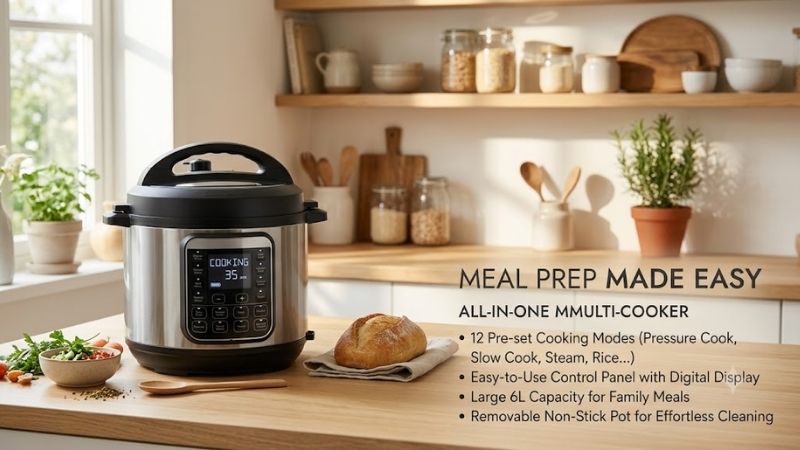
Our Top 7 Multicooker Picks
-
Best Overall: Instant Pot Pro 6-Quart
-
Best for Everyday Families: Instant Pot Duo Plus 6-Quart
-
Best for Large-Batch Cooking: Ninja Foodi PossibleCooker PRO 8.5-Quart
-
Best Premium Pressure Multicooker: Breville Fast Slow Pro
-
Best Smart Multicooker: Instant Pot Pro Plus 6-Quart
-
Best for Large Pressure-Cooked Meals: Instant Pot Pro 8-Quart
-
Best for Smaller Slow-Cooked Meals: Ninja PossibleCooker 6.5-Quart
These recommendations emphasize cooking capabilities, design, capacity, and practical household suitability rather than unverified performance rankings.
Quick Comparison Table
| Multicooker | Best For | Capacity | Key Features | Main Trade-Off |
|---|---|---|---|---|
| Instant Pot Pro | Overall versatility | 6 qt | 10 cooking functions, stainless steel pot | Learning curve for multiple settings |
| Instant Pot Duo Plus | Everyday family meals | 6 qt | 9 cooking functions, easy steam release | No dedicated air frying |
| Ninja Foodi PossibleCooker PRO | Large-batch slow cooking | 8.5 qt | Slow cook, sear, steam, oven-safe removable pot | No pressure cooking |
| Breville Fast Slow Pro | Premium pressure cooking | 6 qt | Automatic steam release, pressure control | Higher-cost category |
| Instant Pot Pro Plus | Connected cooking | 6 qt | Wi-Fi, guided recipes, quiet steam release | App features may be unnecessary |
| Instant Pot Pro | Large pressure-cooked batches | 8 qt | 10 cooking functions, customizable programs | Larger footprint |
| Ninja PossibleCooker | Smaller slow-cooked meals | 6.5 qt | 10 functions, sauté and slow cook | No pressure cooking |
How We Selected These Multicookers
The most important distinction in this category is that not every multicooker is a pressure cooker. Some models combine pressure cooking with slow cooking and sautéing. Others focus on slow cooking, braising, steaming, and stovetop-style preparation without using pressure.
We evaluated the products using manufacturer-documented features and practical kitchen considerations:
-
Cooking versatility: Whether the appliance offers functions that meaningfully support different recipes.
-
Capacity: Whether the cooking vessel suits small households, families, or batch cooking.
-
Inner-pot construction: Stainless steel versus coated cooking surfaces, including their cleaning and handling requirements.
-
Controls and usability: Clear displays, adjustable programs, steam-release systems, and convenient operation.
-
Maintenance: Removable components, dishwasher guidance, sealing rings, and cleanup requirements.
-
Safety: Pressure-locking mechanisms, steam release, temperature limits, and manufacturer instructions.
-
Kitchen compatibility: Countertop footprint, electrical requirements, storage space, and oven compatibility where applicable.
These are research-based editorial recommendations, not results from firsthand cooking tests. Manufacturer specifications describe intended capabilities but do not establish that one appliance cooks every recipe faster or more evenly than another.
Detailed Reviews: 7 Best Multicookers
1. Instant Pot Pro 6-Quart — Best Overall Multicooker
Best For: Families and home cooks who want a versatile pressure multicooker for everyday meals.
Why We Picked It: The Instant Pot Pro 6-Quart combines 10 cooking functions with a stainless steel inner pot, customizable programs, and a clear display. Its combination of pressure cooking, slow cooking, sautéing, steaming, and additional settings makes it a practical choice for households preparing varied recipes.
Key Specifications:
-
Capacity: 6 quarts
-
Cooking functions: 10-in-1
-
Presets: 28 customizable programs and 5 favorites
-
Inner pot: Stainless steel
-
Functions: Pressure cook, slow cook, sauté, steam, sous vide, rice, yogurt, bake, sterilize, and keep warm
-
Display: LCD control panel
Features & Benefits
The Instant Pot Pro is particularly useful for meals requiring more than one cooking stage. You can sauté onions and brown meat in the inner pot before adding broth and switching to pressure cooking.
The stainless steel pot avoids the need for a nonstick coating and can tolerate the routine use of appropriate cooking utensils. Its handles also make transferring the removable pot more convenient, provided you use suitable protection when it is hot.
The customizable programs help households repeat familiar recipes without resetting every cooking parameter.
Performance & Practical Use
Pressure cooking is well suited to dried beans, soups, stews, and tougher cuts of meat. The appliance also provides slow cooking for recipes that benefit from extended cooking at lower temperatures.
Pressure cooking can reduce the active cooking stage compared with conventional simmering, but the complete meal time must also include preheating, pressurization, and pressure release.
For recipes with thick sauces, adequate thin liquid and thorough deglazing are important to reduce the risk of overheating warnings.
What Makes It Different: The Pro combines advanced controls with a stainless steel cooking vessel and multiple cooking methods, making it a balanced option for frequent use.
Pros:
-
Ten cooking functions in one appliance
-
Stainless steel inner pot
-
Customizable programs for repeat recipes
Cons:
-
More settings to learn than a basic slow cooker
-
Pressure cooking requires attention to liquid amounts and release methods
Buy If: You regularly prepare soups, rice, beans, stews, and family dinners and want one appliance to handle several cooking methods.
Skip If: You mainly want air frying or prefer a simple slow cooker without pressure functions.
2. Instant Pot Duo Plus 6-Quart — Best for Everyday Families
Best For: Households looking for a practical multicooker with straightforward controls and essential cooking functions.
Why We Picked It: The Instant Pot Duo Plus offers a strong combination of everyday cooking modes, an easy-release steam switch, and a stainless steel inner pot. The 6-quart V3 version is particularly relevant to families preparing meals for several people.
Key Specifications:
-
Capacity: 6 quarts
-
Cooking functions: 9-in-1
-
Power: 1,000 watts
-
Electrical rating: 120V, 60Hz
-
Inner pot: 18/8 stainless steel with a tri-ply bottom
-
Programs: 15 customizable smart programs
-
Accessories: Steam rack and two sealing rings
Features & Benefits
The Duo Plus supports pressure cooking, slow cooking, sautéing, steaming, sous vide, rice preparation, yogurt making, sterilizing, and keeping food warm.
Its anti-spin inner pot is designed to stay more stable during stirring and sautéing. This can be helpful when preparing chili, browning ground beef, or cooking vegetables before adding liquid.
The easy-release steam switch also makes pressure release more convenient than designs requiring direct manipulation of a hot valve.
Performance & Practical Use
The 6-quart capacity provides flexibility for everyday dinners, batch cooking, and meal preparation. A household might prepare shredded chicken, lentil soup, or a rice-based dish without requiring several separate pots.
Its pressure programs are particularly useful for recipes with long conventional simmering times. However, delicate vegetables and seafood require careful timing because they can overcook under pressure.
What Makes It Different: Compared with the Pro, the Duo Plus emphasizes everyday functionality without as many advanced customization features.
Pros:
-
Nine practical cooking functions
-
Stainless steel inner pot
-
Easy-release steam control
Cons:
-
No dedicated air-frying function
-
Less extensive program customization than the Pro
Buy If: You want a capable pressure multicooker for routine family meals without prioritizing premium controls.
Skip If: You need integrated air frying or extensive smart connectivity.
3. Ninja Foodi PossibleCooker PRO 8.5-Quart — Best for Large-Batch Cooking
Best For: Large households, entertaining, potluck meals, and cooks who frequently prepare substantial portions.
Why We Picked It: The Ninja Foodi PossibleCooker PRO MC1001 focuses on slow cooking, searing, steaming, and oven finishing. Its 8.5-quart vessel makes it especially useful for preparing larger recipes.
Key Specifications:
-
Capacity: 8.5 quarts
-
Cooking functions: 8-in-1
-
Power: 1,200 watts
-
Heating system: Triple Fusion Heat
-
Removable pot: Oven-safe up to 500°F
-
Dimensions: Approximately 18 × 12.64 × 10.59 inches
-
Pressure cooking: Not supported
Features & Benefits
One of the PossibleCooker PRO’s most useful features is the ability to sear and sauté ingredients directly in the cooking pot.
For a beef stew, you can brown the meat, soften aromatics, add liquid, and switch to slow cooking without transferring everything between appliances.
The removable cooking pot is also oven-safe up to the manufacturer’s stated limit, allowing certain dishes to receive a browned or crisped finish in a conventional oven. This rating applies to the specified removable pot, not the electrical base or every accessory.
Performance & Practical Use
The large capacity is useful for chili, pulled pork, soups, braised meats, and meals intended for gatherings.
Ninja advertises faster cooking for certain recipes using its Triple Fusion Heat system. That claim should not be interpreted as a universal time reduction for every slow-cooked dish.
The appliance does not pressure cook, so recipes requiring high-pressure cooking need a different multicooker.
What Makes It Different: Its large cooking vessel, searing function, and oven-compatible removable pot make it more like a versatile electric braising appliance than a conventional pressure multicooker.
Pros:
-
Generous 8.5-quart capacity
-
Sear and sauté in the cooking pot
-
Removable pot supports oven finishing
Cons:
-
No pressure-cooking function
-
Large capacity requires substantial storage space
Buy If: You prepare large slow-cooked meals, casseroles, and dishes for gatherings.
Skip If: You primarily want fast pressure cooking for beans, grains, and tougher meats.
4. Breville Fast Slow Pro — Best Premium Pressure Multicooker
Best For: Experienced home cooks who value adjustable pressure settings, controlled steam release, and detailed cooking feedback.
Why We Picked It: The Breville Fast Slow Pro BPR700 combines pressure cooking and slow cooking with dual sensors, an LCD display, and automatic steam-release options.
Key Specifications:
-
Capacity: 6 quarts, with a lower maximum working fill
-
Power: 1,100 watts
-
Electrical rating: 110–120V
-
Pressure settings: 11 presets plus custom adjustment
-
Pressure levels: Eight levels, approximately 1.5–12 psi
-
Inner bowl: Ceramic-coated
-
Steam release: Automatic quick, pulse, and natural options
-
Dimensions: Approximately 12 × 12 × 13 inches
Features & Benefits
The Fast Slow Pro uses sensors at the top and bottom to monitor cooking conditions. Its display provides information about pressure, temperature, and cooking progress.
Automatic steam release is an important convenience feature. Instead of manually operating the release mechanism for every recipe, users can select supported release methods.
The removable cooking bowl has a ceramic-based nonstick coating, which can make cleanup easier when preparing sticky or sauce-heavy foods.
Performance & Practical Use
This model is particularly relevant to cooks who want greater control over pressure and cooking stages.
It can prepare pressure-cooked stews, braised meats, stocks, and slow-cooked dishes. The sauté and sear functions also support browning ingredients before cooking them in liquid.
Its coated bowl requires appropriate utensils and cleaning methods to protect the cooking surface.
What Makes It Different: The Fast Slow Pro emphasizes adjustable cooking controls and automatic pressure release rather than maximizing the number of advertised functions.
Pros:
-
Multiple adjustable pressure levels
-
Automatic steam-release options
-
Detailed LCD cooking feedback
Cons:
-
Premium appliance positioning
-
Coated inner bowl requires more careful utensil selection
Buy If: You frequently pressure cook and want additional control over cooking settings and steam release.
Skip If: You mainly use basic pressure presets and prefer an uncoated stainless steel inner pot.
5. Instant Pot Pro Plus 6-Quart — Best Smart Multicooker
Best For: Technology-oriented home cooks who want connected cooking guidance and app-assisted operation.
Why We Picked It: The Instant Pot Pro Plus combines conventional multicooker functions with Wi-Fi connectivity, guided recipes, and a quieter steam-release system.
Key Specifications:
-
Capacity: 6 quarts
-
Cooking functions: 10-in-1
-
Power: 1,200 watts
-
Electrical rating: 120V, 60Hz
-
Connectivity: Wi-Fi
-
Cooking pot: Stainless steel with aluminum-core base
-
Steam release: WhisperQuiet system
-
App integration: Instant Connect
Features & Benefits
The Pro Plus provides access to guided recipes through its companion app, helping users follow cooking stages and select suitable programs.
Its NutriBoost function introduces movement during supported cooking programs to help mix ingredients, which can be useful for certain soups, rice dishes, and risottos.
The WhisperQuiet steam-release system is designed to reduce the noise associated with releasing pressure.
Performance & Practical Use
The Pro Plus is well suited to households that want a combination of traditional pressure cooking and guided preparation.
Its stainless steel cooking vessel supports sautéing and browning, while the pressure programs can shorten cooking stages for many soups, beans, and stews.
App features can be helpful, but they also introduce dependence on compatible devices, connectivity, and continued software support. Remote cooking controls should never replace appropriate supervision and safe appliance operation.
What Makes It Different: Its connectivity and guided cooking features distinguish it from conventional multicookers with only onboard controls.
Pros:
-
Wi-Fi connectivity and guided recipes
-
Stainless steel inner pot
-
Quieter steam-release design
Cons:
-
Connected features may be unnecessary for experienced cooks
-
Software compatibility is an additional ownership consideration
Buy If: You enjoy app-guided recipes and want a connected pressure multicooker.
Skip If: You prefer a straightforward appliance without connected features.
6. Instant Pot Pro 8-Quart — Best for Large Pressure-Cooked Meals
Best For: Larger families and meal-prep enthusiasts who need more pressure-cooking capacity.
Why We Picked It: The Instant Pot Pro 8-Quart provides the cooking functions of the Pro family in a larger vessel. This makes it useful for households preparing generous portions of soup, chili, beans, and braised meats.
Key Specifications:
-
Capacity: 8 quarts
-
Cooking functions: 10-in-1
-
Programs: 28 customizable programs and 5 favorites
-
Inner pot: Stainless steel
-
Display: LCD
-
Functions: Pressure cook, slow cook, sauté, steam, sous vide, rice, yogurt, bake, sterilize, and keep warm
Features & Benefits
The main benefit of the 8-quart version is additional capacity.
For households that cook large batches, the larger vessel provides more flexibility when preparing meals for several days or cooking substantial cuts of meat.
It also retains the Pro family’s customizable controls and stainless steel cooking vessel.
Performance & Practical Use
The 8-quart model is appropriate for large quantities of broth-based soup, chili, and other pressure-cooked meals.
However, its larger capacity does not mean the pot can be filled to the rim. Pressure-cooking fill limits are lower, particularly for ingredients that expand or foam, such as beans and grains.
Large batches can also take longer to reach pressure and release pressure, so total cooking time may differ from smaller recipes.
What Makes It Different: It offers the same general cooking versatility as the 6-quart Pro with additional space for batch cooking.
Pros:
-
Larger capacity for family meals
-
Stainless steel inner pot
-
Multiple customizable cooking programs
Cons:
-
Requires more counter and storage space
-
Less practical for very small recipes
Buy If: You regularly prepare large pressure-cooked meals or cook in batches.
Skip If: You usually prepare food for one or two people and want a smaller appliance.
7. Ninja PossibleCooker 6.5-Quart — Best for Smaller Slow-Cooked Meals
Best For: Households that want a versatile slow-cooking multicooker without pressure cooking.
Why We Picked It: The Ninja PossibleCooker MC1101 offers a smaller alternative to the 8.5-quart PossibleCooker PRO, with multiple cooking functions and an emphasis on everyday one-pot preparation.
Key Specifications:
-
Capacity: 6.5 quarts
-
Cooking functions: 10-in-1
-
Model: MC1101
-
Functions include: Slow cook, sear/sauté, steam, and bake
-
Pressure cooking: Not supported
-
Design: Electric countertop multicooker
Features & Benefits
The 6.5-quart PossibleCooker is useful for people who enjoy slow-cooked recipes but also want to sauté ingredients and use additional cooking modes.
Its smaller capacity may be easier to accommodate than the larger 8.5-quart PRO when preparing routine household meals.
The ability to combine multiple cooking stages in one vessel can also reduce transfers between cookware.
Performance & Practical Use
This appliance is particularly relevant to chili, soups, shredded meat, and braised dishes.
It is a practical alternative to a traditional slow cooker when users want more flexibility for browning and steaming.
However, it does not offer high-pressure cooking. Dried beans and other ingredients requiring extended cooking must be prepared using suitable nonpressure methods.
What Makes It Different: It offers slow-cooker-centered versatility in a smaller format than the PossibleCooker PRO.
Pros:
-
Ten cooking functions
-
Practical 6.5-quart capacity
-
Supports sautéing and slow cooking
Cons:
-
No pressure cooking
-
Less capacity than the 8.5-quart PRO
Buy If: You want an everyday multicooker centered on slow cooking, sautéing, and one-pot meals.
Skip If: Fast pressure cooking is an essential feature.
Multicooker Buying Guide: How to Choose the Right Model
Pressure Cooking vs. Slow Cooking
Pressure cooking and slow cooking serve different purposes.
A pressure multicooker uses a sealed vessel to raise cooking pressure and temperature. This can shorten cooking times for dried beans, tough meats, and other foods that traditionally require extended simmering.
A slow cooker uses lower cooking temperatures over longer periods. It is well suited to stews, braised meats, and recipes intended to cook gradually.
Some multicookers support both methods, while others offer only slow cooking and related functions.
If speed is your main priority, choose a pressure multicooker. If you mainly prepare slow-cooked meals and large braises, a nonpressure multicooker may be sufficient.
Choosing the Right Capacity
Capacity affects portion sizes, counter space, and how easily you can prepare different recipes.
| Capacity | Typical Household Suitability | Common Uses |
|---|---|---|
| 3–4 quarts | Individuals and couples | Small soups, rice, side dishes |
| 5–6 quarts | Small to medium households | Everyday dinners, beans, stews |
| 7–8 quarts | Larger families and batch cooking | Large soups, roasts, meal prep |
| 8.5 quarts and above | Entertaining and large batches | Party chili, pulled pork, large braises |
These are general guidelines rather than guaranteed serving counts.
Remember that pressure cookers have maximum fill restrictions. Foods that foam or expand often require lower fill levels than ordinary liquids or meats.
Stainless Steel vs. Nonstick Inner Pots
The cooking vessel influences cleaning, browning, and maintenance.
Stainless steel inner pots are durable and suitable for sautéing and deglazing. They do not rely on a nonstick coating, but foods can stick when temperature and oil levels are not managed carefully.
Nonstick-coated inner pots can simplify cleanup, particularly for sticky ingredients. However, coatings require compatible utensils, appropriate cleaning methods, and inspection for wear.
Neither material guarantees superior results for every recipe. Choose according to your cooking habits and maintenance preferences.
Cooking Functions You Will Actually Use
A multicooker with more advertised functions is not automatically more useful.
For many households, the most valuable settings are pressure cook, slow cook, sauté, steam, rice, and keep warm.
Other functions, such as yogurt preparation, sous vide, baking, and air frying, may be useful for specific cooking routines.
Before purchasing, consider whether the additional functions replace appliances you already own or simply add settings you are unlikely to use.
Pressure Release and Safety Features
Pressure-release design is an important consideration.
Common methods include natural pressure release, quick release, and controlled or pulsed release on certain models.
Natural release allows pressure to decrease gradually. Quick release vents steam more rapidly, while pulsed systems release steam in stages.
The appropriate method depends on the recipe and manufacturer instructions. Foamy, starchy, or thick foods can create additional risks during rapid release.
Never force open a pressure cooker while it remains pressurized, and keep hands and face away from steam outlets.
Countertop Space and Storage
Multicookers can occupy substantial space, particularly models with large vessels or attached lids.
Before purchasing, measure the available counter area and the vertical clearance needed to open the lid safely.
Avoid operating a multicooker directly beneath cabinetry where escaping steam could cause damage. Follow the manufacturer’s clearance requirements.
A smaller appliance that fits your kitchen may be more practical than a larger model offering functions you rarely use.
Ease of Cleaning
A removable cooking pot is a major convenience, but the pot is not the only component requiring cleaning.
Pressure multicookers may include sealing rings, steam-release valves, condensation collectors, and removable lid components.
These parts should be cleaned and inspected according to the manufacturer’s instructions.
Check which components are dishwasher-safe rather than assuming the entire appliance can be washed together. Electrical bases must never be immersed in water.
Electrical Compatibility
Multicookers sold for the United States commonly operate on 120V household electricity.
Always verify the electrical rating of the exact model before purchasing, particularly when considering imported appliances.
Use the appliance with an appropriate outlet and follow the manufacturer’s guidance regarding extension cords, power strips, and circuit requirements.
Common Multicooker Mistakes to Avoid
Overfilling a Pressure Cooker
Overfilling can interfere with proper pressure regulation and steam release.
Always respect the marked maximum fill line. Foods such as beans, grains, and oatmeal can expand or foam during cooking and may require additional headspace.
Forgetting to Add Enough Liquid
Pressure cooking generally requires sufficient thin liquid to generate steam.
Thick tomato sauces, dairy-heavy mixtures, and concentrated sauces may not provide enough freely circulating liquid for certain pressure-cooking programs.
Follow the recipe and appliance requirements, and deglaze the bottom after sautéing.
Expecting Every Function to Perform Like a Dedicated Appliance
A multicooker offers versatility, but each cooking mode has limitations.
Slow-cooking performance may differ from a dedicated slow cooker, and a bake function does not necessarily reproduce the results of a conventional oven.
Choose a multicooker based on the functions you use most rather than assuming every mode will match specialized equipment.
Using the Wrong Pressure-Release Method
Some recipes require natural pressure release to finish cooking or prevent foamy liquid from escaping.
Others benefit from quicker pressure release to avoid overcooking delicate ingredients.
Follow the manufacturer’s instructions and use a recipe developed for the appliance’s pressure-cooking characteristics.
Neglecting Seals and Valves
Pressure-cooker sealing rings and valves require regular inspection.
Food residue, damaged seals, or incorrectly installed components can interfere with proper operation.
Replace worn parts with compatible components approved for the exact appliance model.
Frequently Asked Questions
What is the difference between a multicooker and an Instant Pot?
A multicooker is a general category of appliance that combines multiple cooking functions. Instant Pot is a brand that manufactures several types of multicookers, including electric pressure cookers.
Not every multicooker uses pressure, and not every multicooker offers the same cooking modes.
Is a multicooker worth buying?
A multicooker can be worthwhile if you regularly prepare meals that benefit from pressure cooking, slow cooking, sautéing, or steaming.
It is particularly useful when one appliance can replace several tools you would otherwise need to purchase, store, and clean.
However, households that rarely cook these types of meals may not benefit from the additional functions.
Can you cook rice in a multicooker?
Yes. Many multicookers include dedicated rice programs or suitable pressure and nonpressure cooking settings.
Cooking methods and water ratios vary according to the appliance, rice variety, and recipe.
Use the manufacturer’s instructions rather than assuming conventional stovetop ratios will always produce the same results.
Can you put frozen meat in a multicooker?
Some pressure multicookers can cook certain frozen meats when using an appropriate validated recipe and sufficient cooking time.
Frozen meat is more problematic for slow cooking because it can remain too long at temperatures that allow bacterial growth.
For slow-cooked recipes, thaw meat safely before cooking unless the manufacturer provides specific food-safe instructions supporting another method.
Always verify the finished food temperature with a food thermometer.
Can a multicooker replace an air fryer?
Only if the specific multicooker includes an appropriate air-frying function or compatible air-frying accessory approved by the manufacturer.
Pressure cooking and slow cooking do not create the same dry, circulating hot-air environment used by an air fryer.
The multicookers in this roundup should not be assumed to offer air frying unless that capability is explicitly documented.
How long should a multicooker last?
A multicooker’s useful life depends on build quality, frequency of use, maintenance, and the availability of replacement parts.
Sealing rings, valves, coated cooking vessels, and other components may require inspection or replacement during ownership.
Regular cleaning and following the manufacturer’s operating instructions can help maintain reliable performance.
Final Verdict: Which Multicooker Should You Buy?
The Instant Pot Pro 6-Quart is the best overall choice for households seeking a versatile pressure multicooker with customizable controls, a stainless steel inner pot, and useful everyday cooking functions.
The Instant Pot Duo Plus 6-Quart is a strong alternative for families who prefer straightforward operation, while the Breville Fast Slow Pro is better suited to cooks who value adjustable pressure and automatic steam release.
For large slow-cooked meals, the Ninja Foodi PossibleCooker PRO 8.5-Quart offers generous capacity and useful searing and oven-finishing capabilities. Buyers who want app-assisted cooking should consider the Instant Pot Pro Plus 6-Quart.
Ultimately, the best multicooker is not necessarily the one with the most programs. It is the appliance whose cooking methods, capacity, inner-pot construction, and maintenance requirements fit the meals you prepare most often.
Ready to decide? Our #1 pick for 2026 is the Multicooker.
Live price & availability on Amazon.





Write Your Review
No reviews yet. Be the first to share your experience!