
Disclosure: As an Amazon Associate we earn from qualifying purchases. We may receive a small commission when you buy through links on this page, at no extra cost to you. We only recommend products we genuinely believe offer value to home cooks.
As an Amazon Associate we earn from qualifying purchases at no extra cost to you.
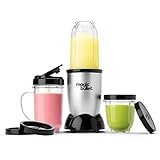


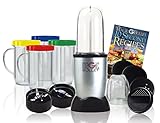
If you are weighing a NutriBullet vs a Magic Bullet, you are really comparing two members of the same family. NutriBullet sits a tier above the original Magic Bullet in motor power and cup size, while the Magic Bullet stays smaller, cheaper, and lighter on counter space. This guide breaks down where each one wins so you can pick the right personal blender for the jobs you actually do most.
| Rank | Product | Best For | Buy |
|---|---|---|---|
| 1 | NutriBullet Pro 900 | Daily green smoothies and tougher produce | View on Amazon |
| 2 | NutriBullet 600 | First-time single-serve blending on a budget | View on Amazon |
| 3 | Magic Bullet 11-Piece Set | Small jobs, dips, and dressings | View on Amazon |
| 4 | Magic Bullet Mini | Tiny kitchens and single portions | View on Amazon |
| 5 | Magic Bullet Combo Blender | Mixing pitcher and personal cup in one | View on Amazon |
🛒 Best Price Today on Amazon
Prime members get fast, free shipping on everything above, plus member-only deals. New members get a 30-day free trial — cancel anytime.
Top Picks
1. NutriBullet Pro 900
The Pro 900 is the workhorse of the personal-blender world, with a stronger motor than the entry NutriBullet and a larger cup. It chews through frozen fruit, leafy greens, and nut butters far more confidently than any Magic Bullet, which makes it the smarter buy if smoothies are a daily habit.
2. NutriBullet 600
The original 600-watt NutriBullet is the value sweet spot. It is noticeably more capable than a Magic Bullet for soft fruit and protein shakes, yet costs little more. Pick it if you want NutriBullet performance without paying for the Pro.
3. Magic Bullet 11-Piece Set
The classic Magic Bullet set is built for light, quick tasks: salsa, dressings, chopped herbs, and a single soft smoothie. It is compact and inexpensive, but it can stall on ice and dense greens, so set expectations accordingly.
4. Magic Bullet Mini
The Mini is the most space-saving option here. For a studio kitchen or a desk drawer at work, it handles single servings and baby food well, though it is not the tool for batch blending.
5. Magic Bullet Combo Blender
This combo pairs a larger pitcher with a personal to-go cup, bridging the gap between a bullet-style blender and a full countertop unit. It is a flexible choice if you sometimes blend for a family and sometimes for one.
NutriBullet vs Magic Bullet: Key Differences
The headline difference is power. NutriBullet models start around 600 watts and climb to 900 and beyond, while the standard Magic Bullet runs about 250 watts. More wattage means smoother results with frozen fruit, fibrous greens, ice, and nuts. The second difference is cup capacity: NutriBullet cups are larger, so you can make a full smoothie in one pass instead of two. Magic Bullet cups are smaller, which is great for portion control but limiting for batch jobs.
Both lines use a similar press-and-twist operation with a screw-on cross blade, and both are dishwasher friendly for the cups. Neither is designed for hot soup or long run times, so think of them as fast personal blenders rather than do-everything countertop machines.
How to Choose Between Them
Match the machine to your most frequent task. If you make green smoothies with frozen fruit several times a week, choose a NutriBullet Pro 900 for the extra muscle. If you mostly whip up dips, dressings, and the occasional soft smoothie, a Magic Bullet saves money and counter space. Storage matters too: measure your cabinet height and counter depth before buying, since the Pro and combo units stand taller. If you want a full-size machine instead, see our roundup of Ninja blenders compared and our look at Vitamix blenders reviewed and compared.
Who Each One Is For
The NutriBullet suits gym-goers, busy parents, and anyone who blends tough ingredients daily. The Magic Bullet suits minimalists, dorm and office users, and light cooks who value a tiny footprint over raw power. If you are still deciding on your wider kitchen kit, our guides to the best immersion blenders and best electric stand mixers for home bakers can help round out your setup.
Performance in Real-World Use
In everyday use, the difference shows up most clearly with three ingredients: ice, leafy greens, and frozen berries with seeds. A NutriBullet Pro 900 turns a handful of spinach and frozen mango into a uniform drink in well under a minute, while a standard Magic Bullet tends to leave flecks of unblended greens and needs a stop-and-shake to finish the job. For protein shakes made with powder and milk, both machines do fine, so if that is your main use you can comfortably save money with the smaller unit. The takeaway is simple: the harder and colder your ingredients, the more the NutriBullet’s extra wattage earns its keep.
Noise and run time also differ. Both blenders are loud in short bursts, but the higher-powered NutriBullet finishes faster, which means less total noise per smoothie. Neither line is built for continuous running, so use short pulses and give the motor a rest between batches to protect the unit over the long haul.
Value and Long-Term Cost
The Magic Bullet wins on upfront price and is the cheaper way to get into personal blending. Over time, though, a more powerful blender can be the better value if it saves you from upgrading later, since heavy daily use can wear out an underpowered motor faster. Consider how often you blend and how tough your ingredients are before deciding. Replacement cups and blades are available for both lines, which extends their useful life and keeps either one out of a landfill for years.
Frequently Asked Questions
Is a NutriBullet just a bigger Magic Bullet?
Essentially yes. They share a design language, but the NutriBullet has a stronger motor and larger cups, so it handles frozen and fibrous ingredients more smoothly.
Can a Magic Bullet crush ice?
It can handle a few small cubes in a hurry, but it is not built for heavy ice crushing. For frequent frozen drinks, step up to a NutriBullet.
Are the cups interchangeable between the two lines?
No. The blade bases and cup threads differ between NutriBullet and Magic Bullet, so cups are not cross-compatible.
Which is easier to clean?
Both are simple. Rinse the cup and blade right after use, and the cups are top-rack dishwasher safe on most models.
Do I need the Pro version?
Only if you blend tough ingredients often. For soft fruit and protein powder, the standard NutriBullet 600 is plenty.
For more blending comparisons, browse our guide to best blenders for smoothies.

Write Your Review
No reviews yet. Be the first to share your experience!