
The best hardwood for a cutting board is hard maple for most kitchens, with black walnut as the gentler-on-knives alternative and cherry as the good-looking middle ground. Maple is dense, fine-grained and neutral; walnut is a little softer and darker; cherry sits between them and darkens beautifully with age. For a first board, a 1.5 inch edge-grain maple board in the 16 x 12 inch range is the safest buy.
- Top Picks at a Glance
- Comparison Table
- 1. CONSDAN Hard Maple 16 x 12 Board: Best overall hardwood board
- 2. Fyctio Hard Maple Board: Best value maple with a groove
- 3. CONSDAN Solid Cherry 16 x 12 Board: Best budget cherry
- 4. John Boos R-Board Cherry 20 x 15: Best premium large cherry board
- 5. Sonder Los Angeles Winsome Maple Board: Best maple with a prep corner
- 6. BABILONIA Walnut End-Grain Board (17 x 13 x 1): Best walnut end-grain option
- 7. WoodForChef Classic Cherry 16 x 12 x 1.5: Best reversible cherry for carving
- Also Consider
- How We Chose
- Buying Guide
- Common Mistakes to Avoid
- Frequently Asked Questions
- Which One Should You Buy?
- Sources
This guide explains how the common cutting board hardwoods differ, then matches each to a real board you can buy. We did not personally use these products; the specs come from the product listings and maker descriptions, and anything a listing does not state is marked as not listed. We also keep to one rule: hardwood does not mean unsafe or high-maintenance by default, but every wood board needs hand washing and occasional oil.
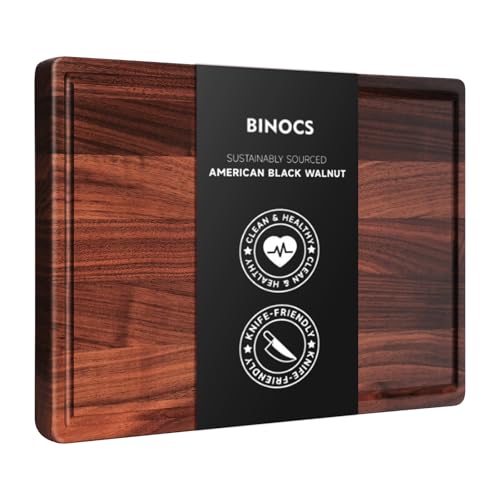
Walnut Wooden Cutting Boards for Kitchen, Solid Wood Cutting Board Set - Charcuterie & Chopping Butcher Block for Meat - Kitchen Gadgets Gift (Walnut 17in*12in)
Included for 'Best Hardwood for a Cutting Board: Maple, Cherry or Walnut' because the listing specifies Solid Wood Cutting Board Set and Charcuterie & Chopping Butcher Block for Meat, details this guide uses to compare options.
View on Amazon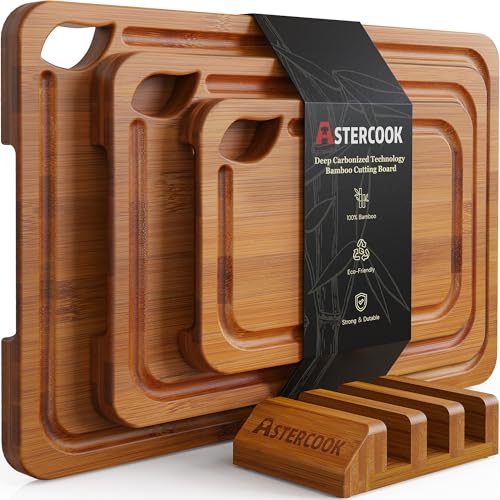
Astercook Deep-Carbonized Bamboo Cutting Boards for Kitchen with Wood Storage Stand, Reversible Charcuterie & Chopping Boards with Juice Grooves and Easy-Grip Handles, Fathers Day Gift for Men
Included for 'Best Hardwood for a Cutting Board: Maple, Cherry or Walnut' because the listing specifies Fathers Day Gift for Men, details this guide uses to compare options.
View on Amazon
3 Pack Teak Cutting Boards for Kitchen Wood Wooden Cutting Boards Non Toxic | Natural Teak, Non Slip, High Rank, Serving Board, Charcuterie Board, Wooden Chopping Board, Large Big Small, Best Kitchen
Included for 'Best Hardwood for a Cutting Board: Maple, Cherry or Walnut' because the listing specifies Natural Teak and Non Slip, details this guide uses to compare options.
View on Amazon
THETCHRY Walnut Cutting Boards for Kitchen Solid Wood End Grain 17"×13"×1" | Large Chopping Board Double Sided with Handle, Hardwood Charcuterie Butcher Block for Meal Prep & Serving with Gift Box
Included for 'Best Hardwood for a Cutting Board: Maple, Cherry or Walnut' because the listing specifies Large Chopping Board Double Sided with Handle, details this guide uses to compare options.
View on AmazonSeven main picks cover maple, cherry and walnut in edge-grain and end-grain styles, and four more are listed for specific situations such as a lower budget or a different size.
Top Picks at a Glance
- Best Overall: CONSDAN Hard Maple 16 x 12 x 1.5 in: USA-grown edge-grain maple with a hidden inner handle
- Best Value: Fyctio Hard Maple: edge grain with a juice groove and built-in handles
- Best Budget Cherry: CONSDAN Solid Cherry 16 x 12 x 1.5 in: cherry at the same size and format as the maple pick
- Best Premium Cherry: John Boos R-Board Cherry 20 x 15 x 1.5 in, 10 lb: reversible, finger grips, made in the USA
- Best Maple With Features: Sonder Los Angeles Winsome Maple 17 x 13 x 1.5 in: juice groove and sorting compartment
- Best Walnut End Grain: BABILONIA Walnut End Grain 17 x 13 x 1 in: end-grain look at a moderate tier
- Best Reversible Cherry: WoodForChef Classic Cherry 16 x 12 x 1.5 in: reversible block with groove and side handles
Comparison Table
| Product | Best for | Key specs | Watch for | Price tier |
|---|---|---|---|---|
| CONSDAN Maple 16 x 12 | Everyday prep | 16 x 12 x 1.5 in; USA-grown hard maple; edge grain; food-grade oil prefinish | Inner handle slot is small | Mid-range |
| Fyctio Hard Maple | Value-minded cooks | Edge grain; juice groove; built-in handles; non-toxic per listing | Size and thickness not in the title | Mid-range |
| CONSDAN Cherry 16 x 12 | Warm color, same format | 16 x 12 x 1.5 in; solid cherry; edge grain; invisible inner handle | Cherry is softer than maple | Mid-range |
| John Boos R-Board Cherry | Large reversible board | 20 x 15 x 1.5 in; 10 lb; edge grain; finger grips; made in USA | Large; hand wash only | Premium |
| Sonder Winsome Maple | Prep with a staging corner | 17 x 13 x 1.5 in; edge grain; juice groove; sorting compartment | Compartment reduces flat space | Mid-range to Premium |
| BABILONIA Walnut End Grain | End-grain look, dark wood | 17 x 13 x 1 in; end grain; oil included | Only 1 in thick | Mid-range |
| WoodForChef Cherry | Reversible carving and prep | 16 x 12 x 1.5 in; reversible; groove; side handles; North American hardwood | Groove on one side only | Mid-range |
1. CONSDAN Hard Maple 16 x 12 Board: Best overall hardwood board
- Size: 16 x 12 inches, 1.5 inches thick (a 1 inch version and a 20 x 15 inch version are also listed)
- Wood: USA-grown hard maple, edge grain
- Invisible inner handle
- Prefinished with food-grade oil
- Weight: not listed
Best for: First-time wood board buyers and anyone who wants the classic cutting board wood without surprises.
Skip if: You want a deep juice groove or a board larger than 16 x 12 inches (consider the 20 x 15 inch version).
Hard maple is the benchmark for cutting boards. It is dense and tight-grained, so it resists deep knife scars and does not absorb much liquid at the surface. It has a pale, almost neutral color and little smell, which is why butchers and bakers have used it for generations. Edge-grain construction, with long strips glued side by side, keeps cost sensible and the board flat.
The 1.5 inch thickness is the sweet spot for a home board: rigid enough not to flex, light enough to carry. The 16 x 12 inch footprint handles a head of lettuce and a few carrots comfortably. The inner handle is an unusual touch: it is a hidden grip cut into the side so the board stays clean and flat for chopping, but it is shallow, so wet hands may find it less convenient than a cut-out hole.
Because it arrives prefinished with food-grade oil, you can use it right away, but plan to re-oil when the surface looks pale. Hand wash and dry on edge, and never soak. The brand also sells the same style in cherry, which makes it easy to match a set.
Pros
- Classic, durable species
- Edge grain keeps price reasonable
- Prefinished
- Several sizes available
Cons
- No juice groove listed
- Inner handle is shallow
- Weight not listed
2. Fyctio Hard Maple Board: Best value maple with a groove
- Wood: hard maple, edge grain
- Juice groove
- Built-in handles
- Described as non-toxic, gift box
- Exact size and thickness: not listed in the title
Best for: Cooks who carve roasts or slice juicy fruit and want a groove on a maple board without a premium price.
Skip if: You need precise dimensions before buying, since the title does not state them.
Fyctio gives you the same species as the premium maple boards with a juice groove and built-in handles, which are usually extras. The groove catches liquid from melon, tomatoes or roast meat so it does not run across the counter. Handles make it easier to lift a loaded board to the table.
The trade-off is information. The listing title does not list size or thickness, so read the product page before ordering. As a rule of thumb, look for at least 1 inch of thickness; below that, hardwood boards flex and are more likely to warp over time.
Edge-grain maple like this will show cut marks more than end grain, but it is easier to sand and re-oil. If you want a board that does carving duty and general prep, this is a sensible entry point.
Pros
- Maple at a modest tier
- Juice groove
- Handles
- Easy to maintain
Cons
- Dimensions not in the title
- Brand is less established
- Groove reduces usable flat area
3. CONSDAN Solid Cherry 16 x 12 Board: Best budget cherry
- Size: 16 x 12 inches, 1.5 inches thick (1 inch and 20 x 15 inch options listed)
- Wood: solid cherry, USA-grown hardwood, edge grain
- Invisible inner handle
- Prefinished with food-grade oil
Best for: Anyone who likes a warmer, reddish board and wants the same format as the maple pick.
Skip if: You want the hardest possible surface for heavy cleaver work.
Cherry is a medium-hard wood that is friendlier to knife edges than maple and ages gracefully. Fresh cherry is pale pinkish; with light and time it deepens to a rich reddish brown. That patina is the main reason people choose it for boards that live on the counter.
It is slightly softer than hard maple, so it will show knife marks sooner. For most home cooks that is cosmetic; light sanding and re-oiling refreshes the surface. The format matches the maple board exactly, so you can pair a maple board for savory prep with a cherry one for fruit and bread.
As with all solid wood boards, avoid the dishwasher and standing water. Keep it dry on edge so air reaches both faces.
Pros
- Warm color that deepens
- Same size and finish as the maple version
- Edge grain, solid piece
Cons
- Softer than maple
- Shows marks sooner
- Weight not listed
4. John Boos R-Board Cherry 20 x 15: Best premium large cherry board
- Size: 20 x 15 x 1.5 inches
- Wood: cherry, edge grain
- Weight: 10 lb
- Reversible with finger grips
- Made in the USA
Best for: Cooks who need a large, reversible board from a long-established maker.
Skip if: You have a small counter or want a juice groove.
John Boos is the name most people associate with traditional butcher blocks. The R-Board series is the practical, thinner line: 1.5 inches thick, flat, reversible and finished for kitchen use. The 20 x 15 inch size gives plenty of room for multiple ingredients.
At 10 pounds the board is stable without being impractical. Finger grips are cut into the sides so you can lift it, and because it is reversible you can rotate wear between two faces. Cherry here gives you a warmer alternative to the maple many Boos buyers choose.
Care is the usual: wipe or wash by hand, dry upright and condition with food-grade mineral oil or board cream. Do not run it through the dishwasher.
Pros
- Large reversible surface
- US-made
- Stable 10 lb weight
- Established brand
Cons
- No juice groove
- Premium tier
- Takes counter space
5. Sonder Los Angeles Winsome Maple Board: Best maple with a prep corner
- Size: 17 x 13 x 1.5 inches
- Wood: maple, edge grain
- Juice groove
- Sorting compartment
- Made in the USA, gift box included
Best for: People who like to stage chopped ingredients and want a groove for carving too.
Skip if: You prefer a plain flat board.
The Winsome is the maple sibling of Sonder’s walnut Alfred board. It adds a sorting compartment, which is a recessed area for holding diced onion, peeled garlic or scraps while you keep chopping. The juice groove runs around the edge.
Maple is the right wood for this design because its pale color shows the cut ingredients clearly, and its density keeps the compartment edges crisp. At 17 x 13 inches it is a standard home size.
As with any carved board, the groove and compartment trade some flat area for features. If you chop mostly large vegetables, pick a flat board; if you cook for two to four people and plate from the board, the features pay off.
Pros
- Made in the USA
- Pale maple shows ingredients
- Groove and sorting area
Cons
- Less flat space
- Needs hand washing
- Compartment is harder to oil
6. BABILONIA Walnut End-Grain Board (17 x 13 x 1): Best walnut end-grain option
- Size: 17 x 13 x 1 inches
- Wood: walnut, end grain
- Described as professional, non-toxic hardwood
- Oil included
- Weight: not listed
Best for: Walnut fans who want an end-grain look and feel at a moderate tier.
Skip if: You want a thick board; this one is 1 inch.
Black walnut is the softest of the three woods here, which is a benefit for knife edges and a drawback for scratches. End-grain construction improves the feel: the knife slides between fibers, and cut marks close up. Together they make a board that many cooks find quiet and gentle under a knife.
At 1 inch thick, though, it is on the thin side for end grain, which is more demanding than edge grain because of seasonal wood movement. Keep it oiled and out of heat, and avoid soaking.
The listing includes oil, a helpful starter. If you want more mass, the same brand lists thicker, smaller or larger boards.
Pros
- Walnut end grain
- Oil included
- Good size
Cons
- Only 1 inch thick
- Needs regular oiling
- Weight not listed
7. WoodForChef Classic Cherry 16 x 12 x 1.5: Best reversible cherry for carving
- Size: 16 x 12 x 1.5 inches
- Wood: North American cherry hardwood
- Reversible butcher block
- Groove and side handles
- Described for chopping, carving and serving
Best for: Households that want one cherry board for everything from prep to serving the roast.
Skip if: You want a very large board.
WoodForChef’s cherry board is reversible, with a groove on one face and a flat face on the other. That two-sided design is practical: use the flat side for chopping and flip to the groove side for meat or fruit.
Cherry’s slightly softer surface pairs well with this style, while the 1.5 inch thickness provides stability. Side handles make it easy to lift, and North American hardwood is stated in the listing.
If you can only own one cherry board, this reversible format gives the most flexibility; if you would rather have a larger board, the Boos is the step up.
Pros
- Reversible with groove
- Side handles
- Good thickness
Cons
- Groove only on one side
- 16 x 12 is mid-size
- Weight not listed
Also Consider
Cuisinart 17 Inch Maple Wood Cutting Board
A 17 inch maple board from a household brand; the listing gives few details, so confirm thickness before buying.
CONSDAN Hard Maple 20 x 15 x 1 inch
The large version of the top pick; thinner at 1 inch, so best for light to moderate prep.
Empune Cherry Board 16.5 x 11.8 x 1.4 inch
A cherry board with a handle, juice groove and a well. Check the listing for the finish.
THETCHRY Maple End-Grain Set
A set of FSC-certified maple end-grain boards, 1 inch thick, with built-in handles and non-slip feet; best when you want multiple sizes.
How We Chose
This guide is research-based. We compared product listings, maker descriptions and independent explainers on wood hardness and grain such as the Wood Database and the Janka hardness scale. We did not personally use these products, and we do not quote ratings, review counts or prices.
We focused on three North American hardwoods that are widely used for cutting boards, limited each brand to a reasonable number of picks, and weighted hardness, grain direction, thickness and care. Unknown specs are marked not listed.
Buying Guide
Maple: the default hardwood
Hard maple (sugar maple) is dense, fine-grained and light in color. Its Janka hardness is around 1,450 lbf, which is hard enough to resist deep knife scars but not so hard that it is a knife-edge problem for typical home steel. It is the benchmark for butcher blocks.
Walnut: gentler on edges, shows marks
Black walnut has a Janka hardness around 1,010 lbf. It is softer than maple, which many cooks prefer for knife feel. It is darker, so flour and salt show, and it dents more readily.
Cherry: warm color, medium hardness
American black cherry sits near 950 lbf. It is easy on knives and its color deepens with exposure to light. Expect slightly more visible cuts than on maple.
Grain and thickness
Edge grain is the practical choice for most home cooks: sturdy, affordable and easy to resurface. End grain is gentler on edges and hides marks but needs more oil. For either, look for at least 1.25 inches of thickness if you can; 1 inch is the minimum for a main board.
What to avoid in a hardwood board
Be wary of boards that do not name the species, mix glues of unknown type, or lack any care instructions. Prefer food-safe finishes such as mineral oil, beeswax or plant oils, and wash by hand.
Raw meat on wood is acceptable if you wash with hot soapy water and dry the board well; if that is not realistic for you, keep a separate plastic board for raw meat.
Matching wood to how you cook
If you chop vegetables daily and sharpen your own knives, maple edge grain is a durable default and cherry is a pleasant second board for fruit, bread and cheese. If you own thin Japanese-style knives with hard steel, a softer wood such as walnut or cherry, ideally end grain, can feel less harsh on a fine edge. If you carve roasts regularly, prioritize a groove and a board of at least 16 x 12 inches. If you cook in a small apartment, a compact 12 x 9 inch board in any of these woods is better than a large board that lives in a cupboard and never gets used.
Sizing in practice
Measure your counter depth, then subtract about 3 inches so you can reach the back of the board and clear the wall. A 12 inch deep board suits a 24 inch counter. A 15 inch deep board needs room beside the sink for washing. Boards of 20 inches or more are happiest when they stay on the counter permanently, so decide whether you are willing to give up that space.
Weight also matters. A 1.5 inch thick maple board at 16 x 12 inches is typically manageable at a few pounds. Large reversible blocks around 10 pounds are stable but tiring to move. If you have wrist or grip issues, favor handles or finger grips, and avoid very heavy end-grain blocks.
Finish and food safety
Most reputable boards ship with a food-grade oil or wax finish. Mineral oil is the most common refresh product because it does not go rancid. Plant oils such as walnut or tung can work but may bother people with nut allergies, so check the label if that applies to your household. Never use cooking oils like olive oil to maintain a board, because they can turn rancid over time.
Common Mistakes to Avoid
- Choosing by color alone without checking thickness.
- Assuming harder is always better; very hard woods can be tougher on edges.
- Skipping oil after the first few uses.
- Soaking the board in the sink.
- Buying an end-grain board and treating it like plastic.
- Using olive or vegetable oil to season a board, which can turn rancid.
- Buying a board before measuring counter depth and sink clearance.
Frequently Asked Questions
What is the best hardwood for a cutting board?
Hard maple is the best all-round choice. Walnut and cherry are good alternatives if you want a softer feel or a different look.
Is walnut or maple better for a cutting board?
Maple is harder and more neutral; walnut is softer and gentler on knife edges but shows marks and dark color. Both work well.
Is cherry a good cutting board wood?
Yes. It is a medium-hard wood that is easy on knives and develops a warm color over time.
What hardwoods should not be used for cutting boards?
Avoid open-pored woods such as oak for wet prep, and any toxic or irritating woods. Stick to closed-grain hardwoods like maple, walnut and cherry.
Is edge grain or end grain better?
End grain is gentler on knives and hides marks but needs more care. Edge grain is sturdier per dollar and easier to maintain.
How do I care for a hardwood cutting board?
Wash by hand with mild soap, dry on edge and oil with food-grade mineral oil or board cream when it looks dry.
How thick should a hardwood cutting board be?
Choose at least 1.25 inches for main use, and 1.5 inches for heavier chopping.
Which One Should You Buy?
If you want the single safest choice, pick the CONSDAN Hard Maple 16 x 12. If you value a warm look, choose the CONSDAN Cherry, or the Boos R-Board Cherry for a bigger reversible slab. If you cook for a crowd or carve often, add the Fyctio or WoodForChef for the groove.
Walnut end-grain fans will be happiest with the BABILONIA, as long as they keep it oiled.
Sources
- Manufacturer product pages and listing details for CONSDAN, Fyctio, John Boos, Sonder Los Angeles, BABILONIA and WoodForChef
- The Wood Database (Janka hardness data)
- USDA Forest Products Laboratory wood handbook
- USDA food safety guidance on cutting boards
Last updated: October 2026





Write Your Review
No reviews yet. Be the first to share your experience!