
The best contact paper for kitchen countertops is a thick, waterproof PVC-vinyl film with a repositionable adhesive, a matte or lightly textured surface, and a roll wide enough to cover the counter with as few seams as possible.
- Quick picks by countertop situation
- Waterproof vinyl versus peel-and-stick laminate
- Specifications that matter more than the pattern
- Match the film to the countertop material
- How much contact paper do you need?
- Installation method that improves durability
- Heat, water, and cleaning: ownership realities
- When removable contact paper is the right choice
- Bottom line
For most kitchens, choose waterproof vinyl rather than thin decorative paper: it tolerates splashes, wipes clean, and is less likely to tear around sink cutouts. Peel-and-stick laminate-style film is the better choice when you want a harder, more furniture-like finish, while a removable film is preferable for a rental or a short-term makeover. No contact paper should be treated as a cutting surface or as a substitute for a heatproof counter protector.

practicalWs Glossy Marble Contact Paper White Peel and Stick for Countertop
Included for 'Best Contact Paper for Kitchen Countertops' as a relevant option in this category; details come from the product listing.
View on Amazon
MelunMer White Wallpaper Marble Contact Paper for Countertops 15.7”×118”
Included for 'Best Contact Paper for Kitchen Countertops' as a relevant option in this category; details come from the product listing.
View on Amazon
VEELIKE 15.7''x118'' Beige Gold Liquid Marble Contact Paper for Countertops Peel and Stick Waterproof Granite Countertop Paper Self Adhesive Marble Wallpaper Vinyl Roll for Kitchen Bathroom Table Wall
Included for 'Best Contact Paper for Kitchen Countertops' as a relevant option in this category; details come from the product listing.
View on Amazon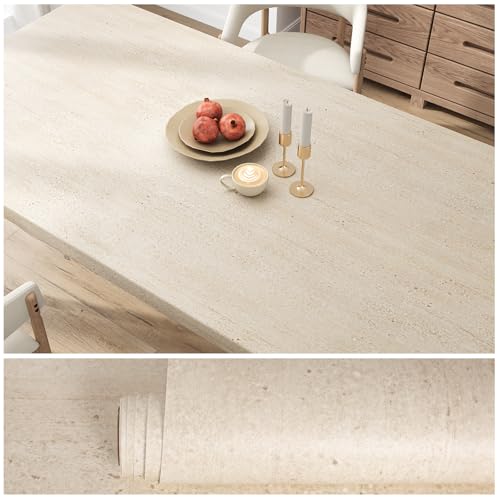
VEELIKE Matte Cream Beige Granite Contact Paper for Countertops Waterproof Peel and Stick Countertops 15.7''x118'' Thick Marble Wallpaper Self Adhesive Counter Top Vinyl Wrap for Kitchen Bathroom Desk
Included for 'Best Contact Paper for Kitchen Countertops' as a relevant option in this category; details come from the product listing.
View on AmazonQuick picks by countertop situation
| Situation | Best type | Look for | Expected trade-off |
|---|---|---|---|
| Rental kitchen | Removable waterproof vinyl | Repositionable adhesive, clean-removal claim, 24–26 in width | May lift sooner around sinks and rounded edges |
| Busy family kitchen | Thick textured PVC vinyl | At least 0.20 mm film thickness, matte finish, wipe-clean surface | More difficult to wrap neatly around corners |
| Temporary upgrade before selling | Peel-and-stick laminate-style film | Hard, low-sheen finish and stone or wood pattern | Adhesive can be less forgiving during installation |
| Small vanity or breakfast counter | Budget vinyl contact paper | 12–18 in roll width and a light pattern | More seams if used on a standard-depth counter |
| Uneven or heavily damaged counter | Usually no contact paper | Repair loose laminate and fill deep dents first | Film will not hide movement, grease, or deep texture |
Waterproof vinyl versus peel-and-stick laminate
Waterproof vinyl: the practical all-rounder
Waterproof vinyl contact paper is generally a thin PVC film with a pressure-sensitive adhesive. It is flexible, easy to wipe, and available in marble, granite, solid colors, wood, and tile patterns. Products sold under names such as Con-Tact, Duck Brand, and d-c-fix may include different grades, so compare the actual dimensions, finish, adhesive instructions, and thickness rather than relying on the brand name alone.
Vinyl is the safer option for counters near a sink because it can handle ordinary water exposure when the edges and seams are sealed well. A lightly textured or matte film also disguises small bubbles and everyday fingerprints better than a glossy finish.
Peel-and-stick laminate-style film: harder-looking, less forgiving
“Laminate” contact paper usually means a thicker decorative film or a surface designed to imitate laminate. It can produce a more convincing stone or wood appearance and may resist light scuffing better than very thin vinyl. However, it still is not the same as a factory-laminated countertop: the decorative layer is thin, the adhesive is vulnerable at exposed edges, and a hot pan can permanently distort it.
Choose this style for a relatively flat, sound counter when appearance matters more than easy removal. Buy extra material because thick films are harder to stretch around corners without wrinkles.
Specifications that matter more than the pattern
| Specification | Useful range for countertops | Why it matters |
|---|---|---|
| Film thickness | About 0.15–0.30 mm | Thicker film usually tears less easily and hides minor surface variation, but it costs more and is harder to form around corners. |
| Roll width | 18–26 in for most counters | A 24–26 in roll can cover a typical 25 in deep counter with a small front overhang; narrow rolls create seams. |
| Roll length | 6–20 ft for common projects | Longer rolls reduce joins on a straight run, but excess material is wasted if the layout is not planned. |
| Temperature tolerance | Often around 140–180°F for decorative films; verify the label | This is not enough for a pan or kettle base. Temperature ratings vary and should not be assumed from “waterproof.” |
| Adhesive behavior | Repositionable, permanent, or removable | Repositionable adhesive helps beginners; removable adhesive is the priority for rental counters. |
Thickness figures are not always printed on consumer packaging. If they are unavailable, use construction clues: a film with a cloth-like backing, a firm feel, and a scored grid is typically easier to handle than an extremely thin, floppy sheet. Do not confuse backing-paper thickness with the thickness of the decorative film.
Match the film to the countertop material
- Existing laminate: Usually the easiest surface. Clean away grease, repair lifted edges, and lightly smooth damaged spots before applying film.
- Sealed wood: Possible if the surface is smooth and fully cured. Do not apply over fresh oil, wax, or an actively shedding finish.
- Tile: Contact paper can bridge very shallow grout lines, but the pattern may telegraph through. Deep grout and sharp tile edges cause early lifting.
- Stone or engineered quartz: Adhesion may be inconsistent if the counter has a polished, sealed, or recently treated surface. Test an inconspicuous area first and check whether removal could affect the sealer.
- Concrete or textured solid surface: Usually a poor candidate without filling and sanding. Every ridge can become an air channel or stress point.
- Unsealed or damp material: Avoid covering it. Trapped moisture can weaken adhesion and create an unpleasant, difficult-to-inspect gap.
How much contact paper do you need?
Measure each straight section separately. For a simple rectangular counter, calculate the length needed as:
total roll length = counter length + front-edge drop + at least 2 in of trimming allowance
For example, a 72 in long counter that is 25 in deep needs a 26 in wide roll to cover the top and front edge in one piece. If the front edge is 1.5 in high, add 1.5 in to the width, plus about 1 in for trimming. A 24 in wide roll would therefore be too narrow for a seamless top-and-front wrap; use a wider roll or plan a separate front strip.
For length, a 72 in run needs 6 ft before allowances. Add 10–15% for trimming, mistakes, and corner relief, giving a target of approximately 6.6–7 ft. If the counter includes a sink cutout, backsplash return, or several corners, 15–25% extra is more realistic.
Installation method that improves durability
- Remove obstacles. Take off outlet covers, soap dispensers, loose backsplash trim, and anything that prevents the film from lying flat.
- Degrease thoroughly. Use a cleaner suitable for the existing surface, then rinse if required and let the counter dry completely. Adhesive fails first where cooking oil remains.
- Repair the substrate. Reattach loose laminate and fill deep chips. Contact paper follows the shape beneath it; it does not provide structural repair.
- Make a paper template. For an L-shaped counter or sink area, a template identifies seams before you waste film.
- Apply gradually. Peel back 2–4 in of backing at a time and press with a felt squeegee or clean plastic card. Work from the center outward to push air toward an open edge.
- Use gentle warmth only if permitted. A low setting from a hair dryer can help form vinyl around a rounded edge. Too much heat stretches the pattern and can soften the adhesive.
- Seal vulnerable edges. Trim with a sharp blade, then use a very small bead of appropriate clear edge sealant only where the product and countertop manufacturer allow it. Avoid sealing in dampness.
- Leave it undisturbed. Give the adhesive the full curing time on the label before placing appliances or wiping aggressively.
Heat, water, and cleaning: ownership realities
The first areas to wear are normally the sink rim, front corners, seams, and places where small appliances slide repeatedly. Waterproof describes resistance to water on the surface; it does not mean the adhesive can withstand water sitting beneath an unsealed edge.
Use trivets under pans, air fryers, toaster ovens, and electric kettles. A kettle can release heat and steam in one concentrated area, while a pan base can exceed the film’s rating by a wide margin. Never cut directly on the film. Use a board, and lift appliances instead of dragging them.
Clean with a soft cloth, warm water, and a small amount of mild dish soap. Avoid abrasive powders, rough scouring pads, strong solvents, and prolonged contact with bleach. Wipe spills near seams promptly. If a corner starts lifting, clean and dry the area before deciding whether a compatible edge adhesive can repair it; pressing dirt back under the film usually makes the problem permanent.
When removable contact paper is the right choice
Renters should prioritize a documented removable adhesive over maximum thickness. Before covering the whole counter, apply a 4–6 in test piece in a hidden location and leave it for several days. Remove it slowly at a low angle, stopping if it pulls finish, leaves adhesive, or changes the surface sheen. A removable claim is not a guarantee for every countertop sealer or age of finish.
For a homeowner seeking several years of service, a thicker permanent or semi-permanent vinyl may be more economical than repeatedly replacing a thin removable film. For a rental, short-term staging, or a seasonal color change, easier removal usually matters more than a perfectly rigid finish.
Bottom line
Choose thick waterproof vinyl with a repositionable adhesive for most kitchen countertops, a wide roll for fewer seams, and a matte texture for forgiving everyday use. Select laminate-style film when the counter is smooth and you want a harder decorative appearance. For rentals, put removability and a test patch ahead of thickness. Whatever the material, careful preparation, edge protection, and strict heat avoidance will affect the result more than the marble or wood pattern on the front of the package.




Write Your Review
No reviews yet. Be the first to share your experience!