
A cast iron skillet can deliver deep browning, steady heat, and years of service, but the right pan depends on weight, cooking area, and how much maintenance you want. This guide compares seven genuine options across everyday, lightweight, premium, and enameled designs, then explains how to choose, season, and care for your pan.
Best cast iron skillet choices for everyday cooking
The best everyday cast iron pans balance heat retention, practical dimensions, and manageable weight. Some prioritize affordability and traditional construction, while others reduce weight or improve handling. These options are suitable for people who want reliable cookware for steaks, breakfast, vegetables, and oven-baked dishes.
Lodge 10.25-Inch Cast Iron Skillet – Best overall value
The Lodge 10.25-Inch Seasoned Cast Iron Skillet is an excellent starting point for home cooks who want dependable performance without a premium price. Its traditional construction, factory-seasoned surface, and broad cooking compatibility make it useful for everything from pan-seared steaks to cornbread and everyday breakfast recipes.
The classic Lodge skillet weighs approximately 5.66 pounds and provides an 8-inch flat bottom. Its 10.25-inch nominal size offers enough room for two moderate portions of meat, several eggs, or a small batch of sautéed vegetables.
One of its greatest strengths is thermal stability. Once the pan is thoroughly heated, it can maintain a relatively steady cooking temperature when ingredients are added.
This is particularly useful when searing steak. Cold meat absorbs energy from the cooking surface, causing the pan temperature to decline. The substantial iron body helps limit rapid temperature changes, although proper preheating remains essential.
The Lodge skillet arrives seasoned with vegetable oil, so buyers do not need to begin with bare metal. However, the factory seasoning should be treated as a foundation rather than a guarantee of effortless food release.
During the first several cooking sessions, ingredients such as potatoes, chicken thighs, and vegetables are generally more forgiving than delicate eggs. Regular cooking with suitable fats can gradually improve the surface.
Another advantage is compatibility. The skillet works on gas, electric, ceramic, and induction cooking surfaces. It can also be used in the oven, on a grill, or over a campfire when handled appropriately.
Its main limitation is weight. A 5.66-pound pan becomes substantially heavier when filled with food, making one-handed lifting inconvenient for some users.
The traditional short handle can also become extremely hot during cooking. A properly rated oven mitt or handle cover is important.
Cleaning requires more attention than stainless steel. After washing, the pan must be dried thoroughly, and occasional oiling helps preserve seasoning.
Advantages: Affordable construction, reliable heat retention, factory seasoning, broad heat-source compatibility, and long-term durability.
Limitations: Heavy for its size, hot handle, somewhat textured cooking surface, and ongoing seasoning maintenance.
Best for: Beginners and experienced cooks who want one dependable skillet for daily meals without spending heavily on premium cookware.
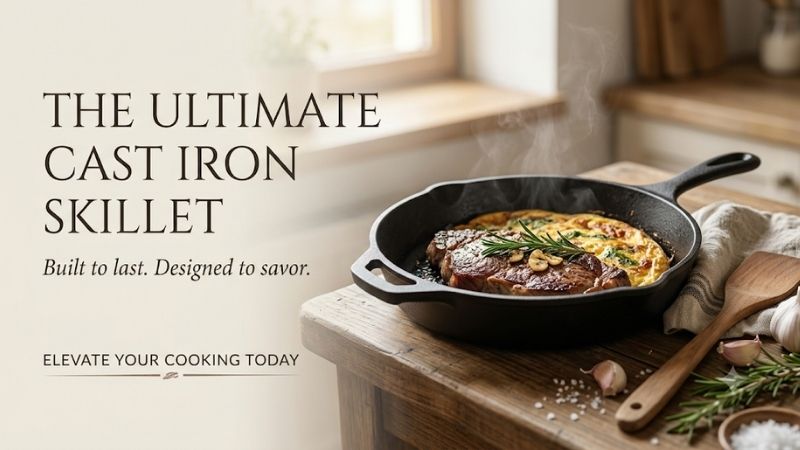
Victoria 12-Inch Skillet – Best for family-sized meals
The Victoria 12-Inch Cast Iron Skillet is designed for home cooks who need more room for larger portions and substantial one-pan dishes. Its deeper cooking vessel, curved handle, dual pouring spouts, and factory seasoning make it especially practical for families preparing chicken, vegetables, baked meals, and weekend breakfasts.
This Colombian-made skillet weighs approximately 6.7 pounds, providing a generous cooking area while remaining competitive with other full-size traditional cast iron pans.
The 12-inch diameter is useful when preparing several chicken thighs or pork chops. A larger surface allows the ingredients to spread out instead of remaining tightly packed.
Crowding food is a common cause of weak browning. When several pieces release moisture into a confined area, steam develops and prevents the surface from reaching ideal searing conditions.
With a larger pan, moisture can evaporate more effectively, improving the likelihood of a properly browned exterior.
Victoria also emphasizes a deeper vessel. This makes the skillet useful for recipes involving vegetables, sauces, or combinations of ingredients that might spill from a shallower pan.
For example, a family-sized skillet dinner containing browned chicken, mushrooms, and potatoes benefits from additional capacity.
The curved handle is designed to support a controlled grip. However, the pan remains heavy, and users should not assume the handle stays cool during prolonged cooking.
Dual pouring spouts are another practical detail. They help direct excess grease or cooking liquid when transferring it to another container.
The pan is pre-seasoned with flaxseed oil, allowing immediate use after appropriate initial cleaning.
Like other seasoned cast iron cookware, it benefits from regular cooking and careful drying.
Its greatest limitation is the substantial size. A 12-inch skillet requires suitable burner coverage and enough storage space.
On a small electric burner, the center may become significantly hotter than the edges. Gradual preheating helps distribute heat more effectively.
Advantages: Generous capacity, deeper walls, factory seasoning, comfortable handle design, and useful pouring spouts.
Limitations: Considerable weight, larger storage requirements, and potential uneven heating on undersized burners.
Best for: Families of three to five who regularly prepare larger portions, skillet dinners, and oven-baked meals.
Lodge Blacklock 10.25-Inch – Best lightweight traditional option
The Lodge Blacklock 10.25-Inch Lightweight Skillet offers a different approach to everyday cast iron cooking. Its thinner construction, approximately 4.61-pound weight, triple-seasoned surface, and extended handle make it appealing to cooks who appreciate traditional cast iron performance but dislike the weight of conventional models.
Compared with the classic Lodge skillet of the same nominal diameter, the Blacklock weighs roughly one pound less.
That difference becomes noticeable when moving the pan between the stovetop and oven or emptying cooked food into a serving dish.
The reduced weight can also improve comfort for people who prepare breakfast or smaller meals frequently.
Lodge uses a triple-seasoning process intended to provide a well-developed starting surface.
However, triple seasoning does not eliminate the need for proper preheating, cooking fat, or regular maintenance.
The Blacklock’s extended, raised handle is designed to remain cooler for longer than a conventional short cast iron handle.
This is useful for routine stovetop cooking, although the handle can still become hot. Oven mitts remain essential during prolonged heating and oven use.
The skillet is suitable for a variety of recipes, including pan-seared fish, chicken, vegetables, and baked cornbread.
Its lighter construction introduces a trade-off.
A lighter pan generally has less thermal mass than a heavier skillet with otherwise similar dimensions. This can influence how quickly the cooking surface changes temperature when cold ingredients are added.
However, lower weight may improve heating responsiveness and day-to-day handling.
For many home cooks, the difference in comfort matters more than maximizing thermal mass.
The Blacklock is also more expensive than the classic Lodge model, so buyers should decide whether reduced weight and refined handling justify the premium.
Advantages: Lighter construction, triple seasoning, improved handle design, wide stove compatibility, and traditional cast iron versatility.
Limitations: More expensive than standard Lodge cookware, still requires seasoning care, and retains less thermal mass than some heavier alternatives.
Best for: Everyday cooks who want familiar cast iron performance with improved maneuverability.
Field Company No. 8 – Best lightweight premium skillet
The Field Company No. 8 Cast Iron Skillet combines a polished cooking surface with a thinner, balanced construction. Its approximately 4.5-pound weight, 10.25-inch top diameter, and 8.75-inch cooking area make it especially appealing to home cooks who want premium cast iron that is comfortable enough for frequent use.
The Field No. 8 is inspired by vintage American cast iron cookware, which often featured smoother interiors and relatively manageable weights.
Its machined cooking surface feels noticeably different from the rougher texture found on many conventional modern skillets.
A smoother surface can simplify cleaning because food residue has fewer deep irregularities in which to accumulate.
However, surface smoothness should not be confused with guaranteed nonstick performance.
Seasoning quality, cooking temperature, and appropriate amounts of fat remain important.
The No. 8 is particularly suitable for preparing eggs, pancakes, vegetables, and smaller portions of meat.
Its 8.75-inch cooking area provides more room than the flat base of some similarly sized traditional skillets.
That usable surface matters when cooking food that needs direct contact with the pan.
The Field skillet also has thinner walls than many conventional cast iron models, reducing weight without abandoning the basic thermal characteristics of the material.
For cooks who frequently transfer a pan between burners, the reduced weight improves everyday convenience.
However, its construction requires sensible temperature management. Like other cast iron cookware, it should be warmed gradually rather than exposed immediately to extreme burner settings.
The manufacturer recommends gentle preheating before cooking.
The No. 8 arrives pre-seasoned, allowing users to begin cooking while developing the surface through regular use.
Its main disadvantage is price. It costs substantially more than basic Lodge or Victoria cookware.
For occasional cooking, that expense may not deliver a proportionate improvement in food quality.
For daily users, however, the combination of weight, smoothness, and handling may justify the investment.
Advantages: Lightweight construction, polished interior, useful cooking area, pre-seasoned surface, and comfortable daily handling.
Limitations: Premium pricing, ongoing seasoning requirements, and less capacity than larger family-sized pans.
Best for: Frequent home cooks who prioritize refined construction and comfortable handling over the lowest purchase price.
Premium cast iron cookware for serious home cooks
Premium cast iron skillets often introduce refined cooking surfaces, distinctive handles, specialized pouring designs, or alternative finishes. These improvements may justify higher prices for frequent users, but they do not automatically create better meals. The following options are most valuable when their particular design features match the cook’s needs.
Stargazer 10.5-Inch Skillet – Best for smooth cooking and pouring
The Stargazer 10.5-Inch Cast Iron Skillet combines a machined-smooth cooking surface with a distinctive flared rim and extended handle. Its approximately 5.2-pound weight and 8.1-inch cooking surface make it suitable for people who want traditional cast iron durability with thoughtful handling and pouring features.
One defining feature is the flared rim.
Unlike traditional skillets that rely on two dedicated pouring spouts, the Stargazer design allows liquid to be poured from different areas around the edge.
This can be useful when draining cooking grease or transferring sauces.
For example, after browning ground beef, the cook can tilt the skillet and direct excess liquid into an appropriate heat-safe container.
The design reduces the need to align the pan with a specific pouring notch.
Another notable feature is the extended handle, which is intended to reduce heat transfer toward the gripping area during stovetop cooking.
However, the handle should not be considered permanently cool.
Extended cooking and oven use can still make it dangerously hot.
The smooth cooking surface is also a major attraction.
A well-maintained surface can become increasingly easy to clean as seasoning develops.
The company offers seasoned and bare versions, allowing buyers to decide whether they want a factory-prepared surface or prefer to establish seasoning themselves.
Beginners will generally find the seasoned version more convenient.
The 10.5-inch diameter suits one or two people particularly well. It has enough room for a pair of burger patties, a moderate omelet, or a small skillet cornbread.
However, households regularly cooking four large portions may find its 8.1-inch flat cooking area restrictive.
Its premium price is another consideration.
The Stargazer is most appealing to users who appreciate the combination of smooth construction, distinctive pouring geometry, and traditional seasoning.
Advantages: Smooth cooking surface, flared pouring rim, extended handle, pre-seasoned or bare options, and premium manufacturing.
Limitations: Premium cost, moderate cooking area, and ongoing maintenance requirements.
Best for: Enthusiasts who want a refined traditional skillet with convenient pouring and everyday versatility.
Smithey No. 10 – Best for polished heirloom construction
The Smithey No. 10 Cast Iron Skillet is a premium American-made pan designed around traditional craftsmanship and long-term durability. Its satin-smooth polished interior, substantial construction, dual pouring spouts, and helper handle make it attractive to cooks who value refined cookware and classic presentation.
The No. 10 has a 10-inch top diameter and approximately 9-inch cooking surface, providing enough room for ordinary daily meals.
Its roughly 6.7-pound weight makes it substantially heavier than lightweight competitors such as the Field No. 8.
That extra mass is useful when cooking recipes that benefit from a stable, thoroughly heated pan.
For example, a thick steak can benefit from a cooking surface that does not lose temperature too rapidly after the meat is added.
However, the pan must still be preheated sufficiently.
A heavy skillet that is not fully heated may perform less effectively than a lighter pan used correctly.
Smithey’s polished interior is one of its distinguishing characteristics.
The surface provides a smooth cooking area and can be easier to wipe clean than heavily textured cast iron.
Nevertheless, polished iron still requires appropriate seasoning.
The manufacturer pre-seasons the pan with grapeseed oil, providing an initial protective layer.
As cooking continues, the seasoning may darken and develop variations in color.
These changes are normal and do not necessarily indicate poor maintenance.
The skillet includes a helper handle, which is particularly useful given its substantial weight.
Two-handed lifting can improve control when transferring a loaded skillet into the oven.
The pan also features pouring spouts on both sides for handling grease or other cooking liquids.
Its main drawback is cost.
The polished finish and premium construction are valuable to enthusiasts, but they are not essential for producing well-seared meat or properly baked cornbread.
Advantages: Satin-smooth interior, substantial construction, helper handle, dual pouring spouts, and long-term durability.
Limitations: Heavy weight, high price, and continued seasoning responsibilities.
Best for: Dedicated home cooks who appreciate premium craftsmanship and want cookware intended for prolonged use.
Le Creuset Signature Skillet – Best enameled alternative
The Le Creuset Signature Enameled Cast Iron Skillet offers a different ownership experience from traditional bare cast iron. Its black satin enamel interior eliminates the need for conventional seasoning, making it appealing to buyers who want strong heat retention without the same cleaning and rust-prevention responsibilities.
The 10.25-inch Signature Skillet combines an enameled exterior with a black enamel cooking surface.
Unlike raw cast iron, enamel forms a protective layer over the metal.
This means users do not need to create or maintain a polymerized seasoning coating.
The distinction is especially useful for people who frequently cook acidic ingredients.
Tomato sauces, lemon-based preparations, and wine reductions can gradually weaken the seasoning on bare iron.
An intact enameled surface does not have the same dependence on seasoning, making it more convenient for these recipes.
The black satin interior is designed to accommodate browning and searing.
However, users should not assume it behaves exactly like a synthetic nonstick coating.
Food may still adhere when the pan is improperly heated or insufficiently lubricated.
The skillet is rated for oven use up to 500°F, providing versatility for recipes that begin on the stovetop and finish in the oven.
Its helper handle improves control when lifting the pan.
Pouring spouts on both sides also make transferring cooking liquids easier.
The enameled finish introduces different maintenance requirements.
Although the manufacturer lists dishwasher compatibility, handwashing is recommended for preserving the finish.
Users should also avoid careless impacts that could chip the enamel.
Unlike bare cast iron, damaged enamel generally cannot be restored through ordinary reseasoning.
The premium price is another limitation.
However, buyers who strongly dislike seasoning maintenance may consider the easier cleaning routine worth the additional expense.
Advantages: No traditional seasoning required, suitable for acidic foods, premium enamel finish, helper handle, and oven compatibility.
Limitations: High purchase price, enamel can chip if mishandled, and the cooking surface is not equivalent to synthetic nonstick.
Best for: Home cooks who want cast iron heat retention with easier maintenance and greater flexibility for acidic recipes.
How to choose a cast iron skillet for your kitchen
Choosing the right skillet involves more than comparing brand names or surface finishes. Size, weight, construction, stove compatibility, and maintenance requirements influence how often a pan will actually be used. A carefully selected skillet should fit normal cooking habits without becoming unnecessarily cumbersome or expensive.
Choose the right skillet size for your household
Skillet diameter directly affects cooking capacity, but the advertised measurement can be misleading. The top rim is often wider than the flat cooking surface, which determines how many ingredients can make direct contact with the metal. Buyers should evaluate usable cooking area alongside household size and burner dimensions.
An 8-inch skillet is often suitable for a single serving, a couple of eggs, or small side dishes.
Its compact size can be convenient for people living alone.
However, it may become crowded when preparing larger portions.
A 10-inch or 10.25-inch skillet provides a useful balance between capacity and handling.
It can accommodate many everyday meals for one or two people without requiring excessive storage space.
For families of three or four, a 12-inch pan may be more practical.
The additional cooking area makes it easier to brown several pieces of meat without crowding.
However, larger cast iron cookware can become heavy.
A 12-inch skillet filled with chicken and vegetables may be difficult to move safely with one hand.
Burner size is another important consideration.
A large pan placed over a small burner may develop a hotter center and cooler outer edges.
Gradual preheating can help, but proper burner compatibility remains important.
When choosing a first skillet, consider the meals prepared most frequently rather than buying the largest available diameter.
Understand weight, thickness, and heat retention
Cast iron is valued for its ability to retain heat, but not every skillet has identical heating characteristics. Thicker, heavier pans generally provide more thermal mass, while lightweight designs improve handling and may respond differently to temperature adjustments. The best option depends on the balance between cooking performance and comfort.
A heavy skillet can be useful for searing meat because its stored heat helps limit temperature loss when cold food enters the pan.
However, thermal mass should not be confused with rapid heating.
Cast iron is relatively slow to distribute heat across the surface compared with highly conductive materials such as aluminum.
This means a heavy skillet may require several minutes of gradual preheating.
Turning the burner to maximum immediately does not guarantee even heating.
It may produce a very hot center while the outer areas remain cooler.
Lightweight cast iron designs reduce handling fatigue.
They can be particularly practical for people who cook breakfast daily or frequently transfer food from the pan.
However, a lighter skillet generally stores less heat than a substantially heavier model of similar dimensions.
Neither characteristic is universally superior.
Choose heavier construction for recipes where thermal stability is especially useful.
Choose lighter construction when maneuverability and frequent handling matter more.
Compare raw cast iron with enameled construction
Traditional and enameled cast iron share the same basic metal foundation, but their cooking surfaces require different treatment. Raw cast iron develops seasoning through repeated cooking, while enameled products use a protective coating. Understanding these differences helps buyers select cookware that fits their ingredients and maintenance preferences.
Raw cast iron is usually less expensive and can be restored when ordinary seasoning becomes damaged.
Its cooking surface gradually develops through repeated exposure to suitable oils and heat.
This makes it attractive to people who enjoy traditional cookware maintenance.
However, raw iron is vulnerable to rust when stored wet.
Extended acidic cooking can also weaken seasoning.
Enameled cast iron does not require traditional seasoning.
It can therefore be more convenient for cooking tomatoes, citrus-based dishes, and sauces containing wine.
However, enamel introduces its own limitations.
It can chip or crack after severe impacts or unsuitable temperature changes.
A damaged enamel surface cannot be repaired through conventional seasoning.
Enamel also does not automatically create a nonstick pan.
Both types require appropriate temperature management and cooking fat.
For buyers seeking maximum affordability and restorability, traditional cast iron is often the stronger choice.
For people who prioritize easier maintenance and acidic cooking, enameled construction may be more suitable.
Check stove compatibility and oven requirements
Most traditional cast iron skillets can be used on several heat sources, but compatibility does not eliminate the need for careful handling. Induction burners, glass cooktops, gas ranges, ovens, and outdoor grills each create different operating conditions. Buyers should verify product instructions before using a skillet in unfamiliar environments.
Traditional cast iron generally works on gas, electric, and induction cooking surfaces.
Its magnetic properties make it suitable for induction heating.
However, weight and surface texture require care on glass cooktops.
Do not slide heavy cookware across a glass surface when it could scratch or damage the cooktop.
Lift the skillet when repositioning it.
Induction systems can heat cookware rapidly, so gradual preheating is advisable.
For oven cooking, verify the manufacturer’s stated temperature limits.
Bare cast iron may tolerate substantial heat, but accessory handles, lids, and enamel finishes can introduce restrictions.
A skillet with a silicone handle cover may require the cover to be removed before oven use.
The entire pan, including its handle, will become hot in the oven.
Use appropriately rated mitts and prepare a stable landing surface before removing it.
For outdoor cooking, avoid sudden temperature changes and follow the manufacturer’s recommendations.
Proper compatibility involves both the cookware and the cooking environment.
Cooking techniques that improve cast iron performance
A quality skillet can produce disappointing results when used incorrectly. Cast iron responds differently from lightweight nonstick cookware, particularly during preheating and temperature changes. Learning how to manage heat, moisture, seasoning, and food contact can dramatically improve everyday cooking without requiring expensive additional equipment.
Preheat gradually for more consistent browning
Cast iron retains heat well but distributes it relatively slowly. This means a skillet can develop hot spots when exposed immediately to a powerful burner. Gradual preheating allows temperature differences to decrease before food is added, improving consistency when searing meat, sautéing vegetables, or preparing breakfast.
Begin with a low or medium burner setting.
Allow the skillet several minutes to warm gradually.
The exact time depends on pan thickness, burner power, and the cooking method.
A heavy skillet may require longer preheating than a lighter model.
Avoid assuming that maximum heat is necessary for every cast iron recipe.
Excessive temperatures can burn cooking oil and damage seasoning.
For searing steak, warm the pan thoroughly before adding an appropriate cooking fat.
Pat the meat dry to reduce surface moisture.
Place the steak in the skillet without immediately moving it.
Allow the surface to develop a browned crust before turning.
For eggs, use a more moderate temperature and sufficient fat.
The ideal heat setting depends on the food, not simply the cookware material.
Consistent preheating is one of the most effective ways to improve results with cast iron.
Build seasoning without creating sticky residue
Seasoning is a protective layer formed when heated cooking oils polymerize on the iron surface. It helps limit rust and can improve food release. However, applying too much oil or using inappropriate heating methods may create a sticky, uneven coating rather than a durable surface.
Most modern traditional cast iron skillets arrive pre-seasoned.
This allows users to begin cooking after following the manufacturer’s initial care instructions.
Seasoning continues to develop through regular use.
Cooking foods that contain appropriate fats can contribute to this process.
When additional seasoning is needed, clean and dry the pan thoroughly.
Apply a very thin layer of suitable cooking oil.
Wipe away excess oil until the surface appears almost dry.
A thick layer can form sticky patches during heating.
Follow the manufacturer’s temperature and timing recommendations for oven seasoning.
Adequate kitchen ventilation is important because the process may create smoke.
Allow the cookware to cool safely before handling.
A newly seasoned skillet may show brown, bronze, or black areas.
Uneven coloration does not necessarily indicate a problem.
The goal is a stable protective surface rather than an immediately perfect appearance.
For ordinary maintenance, frequent cooking and proper drying are often more valuable than repeated complete reseasoning.
Cook eggs, steak, and vegetables with better control
Different ingredients require different temperature strategies, even when using the same skillet. Steak benefits from a thoroughly heated surface, while eggs generally need more moderate temperatures and careful lubrication. Vegetables require enough space for moisture to evaporate rather than collecting beneath the food.
For eggs, begin with a well-maintained skillet and moderate heat.
Add butter or another suitable cooking fat before introducing the eggs.
If the pan is excessively hot, the proteins may adhere or brown too quickly.
A stable, gently heated surface is often easier to manage.
For steak, dry the meat before cooking.
Surface moisture delays browning because energy must first evaporate the water.
Avoid overcrowding the skillet with several large pieces.
For vegetables, work in batches when necessary.
Mushrooms, for example, release substantial moisture.
A crowded pan can cause them to steam instead of developing a browned exterior.
Stir only as frequently as needed.
Allowing ingredients to remain in contact with the cooking surface can improve browning.
For recipes involving acidic sauces, consider switching to stainless steel or enameled cookware.
The most effective technique is to match heat, fat, and cooking time to the particular ingredient.
Use cast iron for oven baking and one-pan meals
Cast iron skillets are especially useful for recipes that move between stovetop and oven. Their substantial construction supports baking, roasting, and skillet-based meals, provided the model is suitable for the intended temperatures. This versatility allows one piece of cookware to perform tasks often assigned to several separate pans.
Cornbread is a classic example.
Preheating the skillet before adding batter can help develop a crisp exterior.
However, the pan must be handled carefully because it may be extremely hot.
Skillet cookies and baked desserts also benefit from the sturdy cooking vessel.
For savory meals, the pan can be used to brown meat before adding vegetables and transferring everything to the oven.
A chicken-and-potato dinner is one practical example.
Begin by browning the chicken, add appropriately prepared vegetables, and finish cooking in the oven.
Use a food thermometer to confirm that meat reaches a safe internal temperature.
Avoid assuming that a browned exterior guarantees safe doneness.
The skillet’s handle remains hot after oven cooking.
Place an oven mitt over it or use another clear reminder to prevent accidental contact.
A well-chosen cast iron pan can simplify cooking and reduce the need for additional baking dishes.
Cleaning, maintenance, and common mistakes
Traditional cast iron requires a small amount of consistent maintenance, but caring for it does not need to become complicated. Most problems arise from prolonged moisture exposure, improper seasoning, or unsuitable temperature changes. Understanding these issues helps owners preserve the cooking surface and avoid unnecessary replacement.
Wash cast iron correctly after everyday cooking
Proper cleaning removes food residue while preserving the seasoning layer. Contrary to a common misconception, a small amount of ordinary modern dish soap is generally compatible with well-established cast iron seasoning. The more important concerns are prolonged soaking, incomplete drying, and aggressive cleaning when unnecessary.
Allow the pan to cool enough for safe handling.
Rinse it with warm water and remove ordinary residue using a suitable sponge or brush.
A small amount of mild dish soap can be used when needed.
For stuck-on food, a pan scraper may help loosen deposits without excessive force.
Avoid prolonged soaking.
Water left in contact with exposed iron can encourage rust.
Do not place traditional seasoned cast iron in a dishwasher.
Dishwasher detergents and extended moisture exposure can damage seasoning and promote corrosion.
After washing, dry the pan thoroughly.
Some users briefly warm it over low heat to remove remaining moisture.
If recommended by the manufacturer, apply a very thin protective oil film before storing.
The pan should not feel greasy or sticky.
Routine cleaning should be simple enough to perform after every meal.
Prevent rust and restore a neglected skillet
Rust develops when exposed iron remains in contact with moisture and oxygen. Small rusty areas do not necessarily mean the cookware is permanently damaged. Many traditional cast iron pans can be restored through appropriate cleaning and reseasoning, although the method depends on the severity of corrosion.
Begin by assessing the affected area.
Light surface rust may be removed with an appropriate scrubber and warm soapy water.
More substantial corrosion may require additional restoration steps.
Follow the manufacturer’s guidance rather than using unnecessarily aggressive methods.
After removing rust, wash the skillet and dry it completely.
Apply a very thin layer of suitable oil.
If the seasoning has been significantly removed, perform the recommended reseasoning process.
Avoid leaving the restored pan wet.
Store it in a dry location with adequate air circulation.
When stacking cookware, consider using a suitable protector to reduce scratching and moisture accumulation.
If the skillet has severe structural damage or deep cracking, replacement may be necessary.
Traditional cast iron is durable, but it is not indestructible.
Preventing corrosion through regular cleaning and drying is easier than restoring a heavily neglected pan.
Avoid thermal shock and damaged cooking surfaces
Sudden temperature changes can place stress on cookware. Cast iron is durable under normal cooking conditions, but careless heating or rapid cooling can contribute to cracking or other damage. Proper temperature management is important for both traditional and enameled designs, especially during high-temperature recipes.
Avoid placing a cold skillet directly onto an extremely powerful burner at maximum output.
Gradually increase the heat when possible.
Likewise, avoid pouring cold water into a very hot empty pan.
Rapid cooling can create substantial temperature differences across the metal.
Enameled cookware requires particular attention because the coating may respond differently from the underlying iron.
Follow the manufacturer’s instructions regarding preheating, oven temperature, and cleaning.
Do not strike the skillet against hard surfaces.
Traditional cast iron can crack after severe impacts, even when its seasoning remains intact.
Enameled products may chip if dropped or struck by unsuitable utensils.
When a pan shows significant cracking or compromised enamel that exposes unsafe edges, discontinue normal use and seek manufacturer guidance.
A good maintenance routine protects both performance and long-term durability.
Know when premium cast iron is worth the investment
Premium cookware may offer smoother surfaces, reduced weight, refined handles, or distinctive construction. These improvements can make daily cooking more enjoyable, but they do not automatically create better food. Buyers should evaluate how often they cook and whether the additional features solve genuine problems.
A classic Lodge skillet provides excellent value for someone learning cast iron cooking.
It offers the essential characteristics of the material without requiring a large initial investment.
A Victoria 12-inch skillet may be more practical for families that need additional capacity.
For people who find conventional cast iron uncomfortably heavy, Lodge Blacklock or Field Company models provide lighter alternatives.
Stargazer appeals to users who appreciate a smooth cooking surface and specialized pouring design.
Smithey offers substantial polished construction for buyers who value traditional craftsmanship.
Le Creuset is different because its enamel reduces seasoning maintenance and accommodates acidic recipes more conveniently.
The best purchase should reflect actual cooking habits.
Someone who uses cast iron once per month may gain little benefit from a premium model.
A daily user may appreciate improved handling and easier cleaning over many years.
Regardless of price, correct preheating, appropriate cooking fat, and regular maintenance have a major effect on performance.
Conclusion
The best cast iron skillet depends on your budget, cooking style, and maintenance preferences. Lodge’s classic 10.25-inch model offers excellent everyday value, while Victoria provides more room for family meals. Blacklock and Field Company suit cooks who prefer lighter pans, Stargazer and Smithey emphasize premium construction, and Le Creuset offers an enameled alternative without traditional seasoning. Choose a size that fits your burner, prioritize comfortable handling, and maintain the surface properly for years of reliable cooking.
Write Your Review
No reviews yet. Be the first to share your experience!