
A carbon steel skillet combines a durable metal cooking surface with the responsive handling many home cooks appreciate for eggs, vegetables, and seared meat. Unlike conventional coated nonstick cookware, most carbon steel pans develop their cooking surface through seasoning. This roundup compares seven options and explains the trade-offs between traditional, pre-seasoned, and specialty designs.
Best carbon steel skillet options for everyday cooking
Carbon steel cookware differs in thickness, handle construction, factory treatment, and the amount of preparation required before the first meal. Some pans arrive with a developing seasoning layer, while others need complete initial seasoning. These choices offer different balances of convenience, weight, heat response, and long-term maintenance.
Made In Seasoned Carbon Steel Frying Pan – Best overall versatility
The Made In Seasoned Carbon Steel Frying Pan is a practical choice for home cooks who want the durability of traditional carbon steel with less initial preparation. Its pre-seasoned surface, wide cooking area, and familiar frying-pan shape make it suitable for searing proteins, cooking vegetables, and preparing everyday breakfasts.
The 10-inch model provides a useful balance between capacity and maneuverability.
It is large enough for many individual and two-person meals while remaining easier to handle than a substantial 12-inch skillet.
The pre-seasoned surface offers a starting layer of protection, although it does not eliminate the need for proper cooking technique.
Unlike a conventional synthetic nonstick coating, carbon steel seasoning develops through heated cooking oils bonding to the metal surface.
With regular use and appropriate maintenance, the surface can become smoother and more forgiving when cooking eggs or other delicate foods.
However, a newly pre-seasoned skillet may not release every ingredient effortlessly.
Users should still preheat gradually and use appropriate amounts of cooking fat.
The Made In pan is particularly appealing for stovetop-to-oven recipes when the specific model’s temperature limits are respected.
A practical example is searing a thick pork chop before finishing it in the oven.
The skillet can support browning without requiring a coated nonstick surface that limits high-temperature use.
However, carbon steel is reactive. Extended cooking with acidic tomato or vinegar-based sauces can weaken the seasoning.
Buyers should therefore consider keeping stainless steel cookware for strongly acidic recipes.
The pan also requires thorough drying after cleaning to reduce rust risk.
Advantages: Pre-seasoned surface, versatile cooking shape, responsive heating, and suitability for a range of high-temperature techniques.
Limitations: Requires ongoing seasoning care, can react with acidic foods, and is not completely nonstick from the first use.
Best for: Home cooks seeking a versatile daily carbon steel pan with reduced initial preparation.
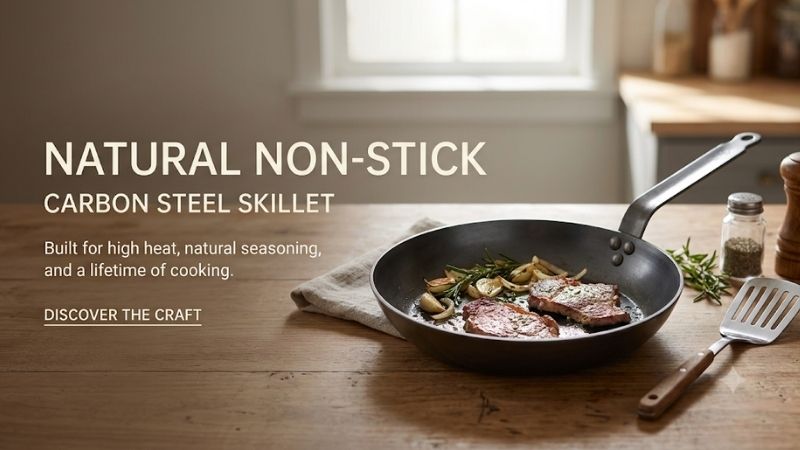
OXO Obsidian Carbon Steel Frying Pan – Best affordable beginner option
The OXO Obsidian Carbon Steel Frying Pan is designed to make carbon steel more approachable for home cooks who are accustomed to conventional nonstick skillets. Its pre-seasoned cooking surface and removable silicone handle sleeve provide useful convenience features without requiring buyers to begin with a completely untreated pan.
The pre-seasoned finish allows users to start cooking without performing the full initial seasoning process associated with some traditional French carbon steel pans.
This can be especially appealing to beginners who want to experiment with carbon steel but feel uncertain about heating oil until it polymerizes.
The silicone handle sleeve improves gripping comfort during ordinary stovetop cooking.
However, users must remove the sleeve when required by the manufacturer’s oven-use instructions.
This is important because accessories can have lower temperature limits than the metal pan itself.
The Obsidian is suitable for eggs, vegetables, and everyday searing once the user develops proper temperature control.
For example, cooking an omelet can be straightforward when the pan is moderately preheated and coated with a suitable amount of butter or oil.
The seasoning may still evolve over time, and occasional sticking should not automatically be interpreted as a defect.
One limitation is that the skillet requires prompt drying after washing.
The surface is also unsuitable for prolonged acidic simmering because the seasoning can be affected.
Although its price is more accessible than many premium alternatives, buyers should treat it as durable traditional cookware rather than maintenance-free nonstick equipment.
Advantages: Pre-seasoned construction, approachable price positioning, removable handle sleeve, and useful everyday versatility.
Limitations: Seasoning requires maintenance, silicone sleeve needs appropriate handling, and acidic dishes are less suitable.
Best for: Beginners who want an accessible first carbon steel pan with practical handling features.
de Buyer Mineral B Pro Fry Pan – Best traditional premium option
The de Buyer Mineral B Pro Fry Pan is a substantial French carbon steel skillet designed for cooks who appreciate traditional materials and long-term durability. Its steel cooking surface, protective beeswax finish, and cast stainless steel handle distinguish it from lighter pre-seasoned alternatives aimed at casual use.
The Mineral B Pro arrives with a protective coating intended to limit oxidation during storage.
Before normal cooking, users should follow the manufacturer’s instructions for removing any required protective residue and developing the initial seasoning.
The thick carbon steel body provides substantial cooking mass.
That can be useful for searing steaks, especially when the pan is adequately preheated and the burner provides sufficient energy.
However, thicker construction also means greater weight.
A large Mineral B Pro can be less convenient for tossing vegetables or moving the pan repeatedly with one hand.
Its cast stainless steel handle is an important distinction from the standard Mineral B line.
The Pro design is better suited to users who want a traditional pan capable of stovetop-to-oven techniques without the same handle-finish restrictions associated with some standard models.
Nevertheless, buyers should confirm the exact oven guidance for their selected size.
The seasoned surface gradually improves with appropriate use, but it does not become completely maintenance-free.
Acidic sauces can strip seasoning, and water left on the pan may cause rust.
For dedicated home cooks, these responsibilities may be acceptable trade-offs for durable construction and traditional cooking performance.
Advantages: Thick carbon steel body, stainless steel handle, traditional construction, and strong searing suitability.
Limitations: Heavy weight, initial seasoning required, and regular maintenance.
Best for: Enthusiasts who want a traditional French carbon steel skillet for long-term use.
Matfer Bourgeat Black Steel Frying Pan – Best professional-style design
The Matfer Bourgeat Black Steel Frying Pan is a traditional French carbon steel option associated with professional kitchen use. Its straightforward metal construction and welded handle create a relatively uncluttered cooking interior, making it appealing to cooks who prefer durable equipment without decorative features.
One notable advantage is the absence of interior rivet heads in welded-handle configurations.
A smooth cooking surface makes it easier to move a spatula around the pan and removes small corners where food residue might accumulate.
This is useful when preparing omelets, sautéing vegetables, or cleaning the pan after searing.
However, the skillet generally requires an initial preparation process before normal cooking.
Buyers should follow the specific product instructions rather than assuming it is ready to use immediately.
The pan’s seasoning develops through repeated exposure to heated cooking oils.
With practice, the surface can provide good food release for eggs and other everyday ingredients.
The welded handle contributes to a professional appearance but can become hot during cooking.
A suitable towel or oven mitt may be necessary, depending on the cooking method.
Larger sizes can also be substantial, so weight should be considered alongside cooking capacity.
For example, a large skillet is useful for searing multiple pieces of meat but may be inconvenient when repeatedly flipping individual omelets.
The Matfer design is most appealing to cooks who accept the seasoning process as part of long-term ownership.
Advantages: Professional-style construction, smooth rivet-free interior, durable metal surface, and broad cooking versatility.
Limitations: Requires preparation and seasoning, can feel heavy, and has a potentially hot metal handle.
Best for: Experienced cooks who value simple professional-style equipment and traditional seasoning.
Best alternative carbon steel skillet designs
Not every buyer wants a heavy traditional pan that requires a complete initial seasoning routine. Pre-seasoned and specially treated designs can reduce some of the learning curve, while thinner options may feel more comfortable during everyday cooking. The following skillets are worth considering for specific budgets and preferences.
Merten & Storck Pre-Seasoned Carbon Steel Frying Pan – Best budget workhorse
The Merten & Storck Pre-Seasoned Carbon Steel Frying Pan emphasizes accessible pricing and a cooking surface prepared for initial use. It is designed for people who want to experience traditional carbon steel performance without paying for premium manufacturing details or completing a lengthy seasoning process before the first meal.
The pan’s factory seasoning provides a starting surface that can become more established through repeated cooking.
However, pre-seasoning should not be confused with a permanent nonstick coating.
Users still need appropriate heat control and cooking fat, particularly when preparing eggs or delicate fish.
For a basic breakfast, begin by warming the skillet over medium or lower heat.
Add butter or oil once the pan is ready, then introduce the food without overheating the surface.
Excessive heat can cause eggs to stick, even when the seasoning looks dark and well developed.
The Merten & Storck is also useful for sautéing vegetables and searing smaller portions of meat.
Its relatively accessible price makes it a reasonable choice for learning how carbon steel behaves.
However, buyers should not assume it will offer the same refinement, thickness, or weight distribution as more expensive French pans.
The handle can become hot, and the pan requires appropriate protection when moved.
Cleaning should be prompt, followed by complete drying.
A light protective oil film may be useful when storing the skillet, especially in humid conditions.
Advantages: Accessible price, pre-seasoned starting surface, uncomplicated construction, and good learning potential.
Limitations: Requires ongoing care, ordinary seasoning learning curve, and basic finishing.
Best for: Budget-conscious home cooks experimenting with carbon steel for the first time.
Mauviel M’Steel Frying Pan – Best responsive traditional choice
The Mauviel M’Steel Frying Pan is a traditional carbon steel skillet designed for cooks who appreciate responsive heating and a straightforward cooking surface. Its French-made construction and familiar sloped sides make it suitable for eggs, crêpes, vegetables, and a wide range of stovetop recipes.
The M’Steel design encourages cooks to develop a deliberate heating and seasoning routine.
Unlike a conventional coated nonstick pan, the surface becomes more useful as a stable seasoning layer develops.
This process requires initial preparation, including removal of the manufacturer’s protective coating according to the supplied instructions.
Once properly prepared, the skillet can handle a variety of everyday cooking tasks.
For example, a well-seasoned pan is useful for making crêpes because the sloped sides facilitate lifting and turning.
It can also brown meat effectively when preheated appropriately.
The pan’s heat response helps users adjust cooking intensity, although the exact behavior depends on thickness and stove power.
Buyers should evaluate the weight of the selected diameter.
An 11-inch pan may offer an appealing middle ground between a compact breakfast skillet and a large family-sized model.
However, the metal handle can become hot, and users should not assume it remains safe to touch during prolonged cooking.
The M’Steel also requires careful drying and protection from moisture.
Acidic sauces are better prepared in stainless steel or other nonreactive cookware.
Advantages: Traditional French construction, versatile shape, responsive cooking behavior, and long-term durability.
Limitations: Initial preparation required, seasoning maintenance, and limited suitability for prolonged acidic dishes.
Best for: Cooks who enjoy traditional seasoning and frequently prepare eggs, crêpes, or sautéed foods.
Misen Carbon Nonstick Frying Pan – Best low-maintenance alternative
The Misen Carbon Nonstick Frying Pan is a specialty carbon steel design that uses surface treatment to address some of the maintenance concerns associated with traditional cookware. It is particularly appealing to buyers who want metal-pan durability but prefer an easier introduction to cooking delicate foods.
The model uses a nitrided carbon steel surface rather than relying on an ordinary applied nonstick coating.
Nitriding changes the surface characteristics of the metal, potentially improving corrosion resistance and durability.
However, it should not be interpreted as a guarantee that food will never stick.
Cooking temperature and oil remain important.
The pan is useful for everyday eggs, vegetables, and searing when operated according to the manufacturer’s guidance.
Its design can appeal to cooks who are hesitant about the seasoning responsibilities associated with conventional untreated carbon steel.
Nevertheless, buyers should distinguish this product from the brand’s other carbon steel offerings.
The surface treatment, care recommendations, and cooking behavior may differ.
A nitrided pan also does not eliminate the need for cleaning and drying after use.
The higher price may be difficult to justify for someone comfortable maintaining a traditional seasoned skillet.
For buyers who prioritize convenience, however, the surface treatment can be an attractive feature.
Advantages: Specialty treated surface, improved corrosion-resistance potential, versatile daily cooking, and beginner-friendly positioning.
Limitations: Higher cost, still requires heat control, and differs from conventional season-it-yourself carbon steel.
Best for: Home cooks seeking a modern alternative to traditional carbon steel maintenance.
How to choose and maintain carbon steel cookware
The performance of carbon steel depends heavily on how the pan is heated, seasoned, cleaned, and stored. Even a premium skillet can produce frustrating results when used incorrectly. Understanding these fundamentals helps buyers choose an appropriate model and enjoy the benefits of a durable cooking surface.
Choose carbon steel thickness and diameter for your stove
Carbon steel skillets vary in thickness and weight, which affects how they respond to heat and how comfortably they handle. Thinner pans may feel more agile, while thicker versions provide greater cooking mass. Buyers should match the skillet to their burner, typical portions, and whether they frequently lift or toss ingredients.
A 10-inch skillet is often convenient for eggs, single portions, and smaller meals.
An 11-inch model provides additional flexibility without becoming as cumbersome as a larger family-sized pan.
A 12-inch skillet offers more space for searing several pieces of meat, but its flat cooking surface must be evaluated separately from the rim diameter.
Thickness also matters.
A substantial carbon steel pan generally changes temperature more slowly than a lighter version of similar construction.
This can be helpful during searing, although it increases the weight that the user must handle.
A thinner pan may respond more quickly to burner adjustments.
However, careless heating can produce uneven temperatures or distortion.
Induction users should be especially cautious with rapid high-power heating.
Gradual preheating helps reduce unnecessary thermal stress.
Choose a diameter that matches the cooktop and the usual number of servings.
A well-sized medium skillet can be more practical than a large pan that never heats evenly on the available burner.
Understand seasoning and realistic nonstick performance
Seasoning is a thin layer formed when suitable cooking oils are heated and bond to the metal surface. It helps protect carbon steel from oxidation and can improve food release over time. However, seasoning does not make every skillet behave identically to a new synthetic nonstick pan.
Begin by following the manufacturer’s initial preparation instructions.
Some pans arrive pre-seasoned, while others have protective wax or oil that must be removed.
For an unseasoned skillet, apply a very thin layer of suitable oil before the prescribed heating process.
Excess oil can create sticky patches rather than a smooth protective layer.
The surface may change color as seasoning develops.
Uneven coloration is common and does not necessarily indicate a problem.
During daily cooking, use appropriate heat and cooking fat.
Avoid overheating the pan before adding delicate ingredients.
If food sticks, consider whether the issue is temperature, insufficient oil, or immature seasoning.
Do not respond automatically by applying several thick layers of oil.
Seasoning develops most effectively through consistent use and proper cleaning.
Strongly acidic ingredients can weaken the protective layer.
For tomato sauces or vinegar reductions, stainless steel may be a better choice.
Clean and store the skillet to prevent rust
Carbon steel needs more attention to moisture than stainless steel cookware. Water left on the surface can encourage rust, while aggressive cleaning or prolonged acidic cooking can weaken seasoning. A simple maintenance routine keeps the skillet ready for use and reduces the need for repeated restoration.
Allow the skillet to cool sufficiently for safe handling after cooking.
Remove food residue with warm water and a suitable sponge or brush.
A small amount of mild dish soap is generally compatible with established seasoning, although product-specific instructions should take priority.
Avoid leaving the pan soaking for long periods.
After washing, dry every surface thoroughly.
Briefly warming the pan on a low burner can help remove residual moisture when done carefully.
Apply a very thin film of suitable oil if the manufacturer recommends it, especially before longer storage.
Wipe away excess oil to avoid sticky buildup.
Store the skillet in a dry location.
If stacking it with other cookware, use a suitable protector to reduce scratches and prevent trapped moisture.
Minor rust does not necessarily mean the skillet is permanently damaged.
Appropriate cleaning and reseasoning may restore the surface.
However, deep damage or structural distortion requires more careful evaluation.
Consistent maintenance is easier than repeatedly stripping and rebuilding neglected seasoning.
Conclusion
The best carbon steel skillet depends on seasoning preferences, cooking style, and desired weight. Made In offers versatile pre-seasoned performance, while OXO Obsidian and Merten & Storck are approachable beginner options. de Buyer, Matfer, and Mauviel appeal to cooks who prefer traditional French construction, and Misen provides a specialty treated alternative. Choose the size that fits your burner, build seasoning gradually, and keep the pan clean and dry for dependable long-term use.
Write Your Review
No reviews yet. Be the first to share your experience!