
A braiser pan offers a wide cooking surface for browning meat and a fitted lid for finishing food gently with a little liquid. Yet differences in enamel, base diameter, depth, and weight can change how practical a model feels. This roundup compares seven options and explains which pans suit weeknight meals, family portions, and tighter budgets.
Best braiser pan options for traditional home cooking
Traditional braisers have broad bases, relatively shallow sides, and lids that help maintain a moist cooking environment. Enameled cast iron is especially common because it combines substantial heat retention with a nonreactive cooking surface. These options serve different budgets and household sizes while preserving the essential braising technique.
Le Creuset Signature Braiser – Best overall premium choice
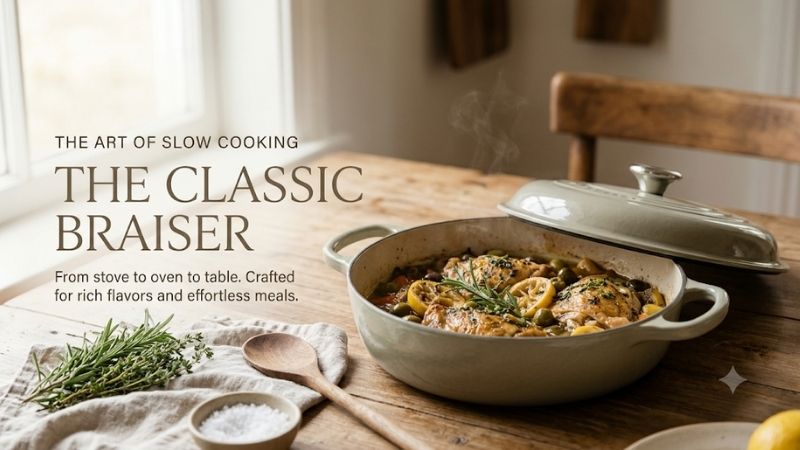
The Le Creuset Signature Braiser is a premium enameled cast iron vessel designed for browning meat and slowly finishing dishes with controlled moisture. Its 3.5-quart version provides a practical balance of cooking area and capacity, while the domed lid helps maintain the environment needed for tender braised dishes.
The wide cooking base is the principal advantage over a tall Dutch oven. It allows chicken thighs or pieces of short rib to lie in a relatively open layer during the initial searing stage.
Direct contact with the hot surface encourages browning and the development of flavorful residue. Once the meat has developed color, aromatics and cooking liquid can be added before the lid is placed on the pan.
The domed lid helps capture and redistribute condensation. This is useful during gentle cooking because it limits excessive moisture loss.
Le Creuset’s enameled interior eliminates the need for traditional cast iron seasoning. It also makes the vessel suitable for tomato-based sauces, wine reductions, and other ordinary acidic ingredients.
The manufacturer rates the Signature Braiser for oven use up to 500°F, providing considerable flexibility for stove-to-oven recipes.
Wide loop handles are another practical feature. They offer space for oven mitts and allow controlled two-handed lifting.
Nevertheless, the vessel becomes heavy when filled with food, and the handles can become hot.
The 3.5-quart capacity is suitable for many meals serving approximately three or four people. Larger households may prefer a different size.
Its greatest disadvantage is cost. The Le Creuset Braiser is considerably more expensive than many alternatives with similar basic cooking capabilities.
For occasional use, that premium may be difficult to justify. For frequent cooks who appreciate refined finishing and long-term service, it can be a worthwhile investment.
Advantages: Wide cooking base, moisture-retaining lid, durable enamel, induction compatibility, attractive finishing, and versatile oven use.
Limitations: Premium price, substantial weight, and greater storage requirements than a conventional frying pan.
Best for: Home cooks wanting premium multipurpose cookware for braised meats, vegetables, and oven-finished dishes.
Staub Cast Iron Braiser with Glass Lid – Best for monitoring food
The Staub 3.5-Quart Cast Iron Braiser with Glass Lid combines a broad enameled cooking base with a transparent lid. This design is particularly useful for cooks who want to observe simmering without repeatedly uncovering the pan, while the textured black enamel supports everyday browning and gentle braising.
One advantage of the glass lid is visibility. When preparing chicken, vegetables, or a sauce that reduces gradually, the cook can observe bubbling and condensation without lifting the cover.
This may help reduce unnecessary interruptions during the braising process.
However, a transparent lid does not eliminate the need to check liquid levels or the internal temperature of food when appropriate.
The black matte enamel interior offers a different cooking experience from the light-colored enamel found in many competing braisers.
It is designed to support browning without requiring traditional seasoning.
However, the dark interior makes subtle changes in fond color less immediately visible than they would be against a pale surface.
The broad base provides room for several pieces of meat to develop color before liquid is added.
Its sloped sides also allow food to be turned with a spatula or spoon.
The 3.5-quart capacity suits regular household meals, though very large portions may need to be browned in batches.
Staub cast iron retains heat effectively, but it should be warmed gradually to avoid excessively hot areas.
The glass lid introduces an additional limitation. It can break if dropped and may have different temperature restrictions from a solid cast iron lid.
Buyers should verify the exact lid rating for their selected configuration before using the braiser under a broiler or in a very hot oven.
Advantages: Transparent lid, black enameled interior, substantial heat retention, broad cooking area, and no seasoning requirement.
Limitations: Breakable glass lid, significant weight, premium cost, and less visibility of fond coloration.
Best for: Cooks who want premium enameled cast iron with a lid that allows visual monitoring.
Lodge Essential Enamel 3.6-Quart Braiser – Best value for family meals
The Lodge Essential Enamel 3.6-Quart Braiser is an accessible alternative to luxury enameled cast iron cookware. It combines a wide, shallow cooking vessel with a matching cast iron lid, making it suitable for chicken thighs, vegetable braises, casseroles, and other recipes requiring both browning and moisture retention.
The 3.6-quart capacity falls within a useful range for everyday household cooking.
It provides enough volume for a substantial braised dish without occupying the same storage space as a large Dutch oven.
The wide cooking base makes it easier to arrange ingredients in a single layer.
For example, four chicken thighs may fit more comfortably than they would inside a narrow saucepan of similar capacity.
However, actual fit depends on the size of the meat and the available flat cooking area.
The enameled surface is suitable for acidic ingredients and does not require seasoning.
That makes it convenient for tomato-based braises and recipes finished with wine or citrus.
Lodge rates the braiser for oven use up to 500°F, and it is compatible with induction and other common household heat sources.
Its solid cast iron lid provides a durable cover and supports moisture retention during slow cooking.
The principal limitation is weight. The manufacturer lists the complete vessel at approximately 14.6 pounds, making it a substantial piece of cookware.
A filled braiser therefore requires careful two-handed handling.
The lid alone also occupies considerable storage space.
For buyers seeking good capacity and enameled construction at a relatively accessible price, the Lodge is a compelling option.
Its value comes from straightforward cooking functionality rather than elaborate premium details.
Advantages: Practical capacity, enamel coating, solid cast iron lid, induction compatibility, and accessible pricing.
Limitations: Very substantial weight, bulky storage, and less refined finishing than some premium competitors.
Best for: Families seeking a reasonably priced traditional enameled cast iron braiser.
Tramontina Bestow 4-Quart Braiser – Best for generous portions
The Tramontina Bestow 4-Quart Enameled Cast Iron Braiser is designed for households that need additional cooking space without moving to a very large Dutch oven. Its wide, shallow profile and covered construction suit searing, braising, roasting, and other meals that benefit from both direct heat and controlled moisture.
A four-quart capacity provides useful flexibility for several servings of meat and vegetables.
Compared with a smaller 3.5-quart braiser, the extra space may make it easier to add side ingredients without creating excessive crowding.
For example, a recipe containing braised chicken, onions, mushrooms, and potatoes can occupy considerable volume once all the ingredients are combined.
A larger braiser provides additional headroom for stirring and adjusting the sauce.
However, capacity alone does not reveal the exact size of the flat cooking base.
Buyers should compare the manufacturer’s interior dimensions when determining how many pieces of meat can be browned simultaneously.
Tramontina uses porcelain enamel over cast iron, eliminating the need for conventional seasoning.
The material is suitable for many recipes containing tomato, wine, or other acidic ingredients.
The Bestow collection also emphasizes coordinated cookware styling, making the braiser suitable for serving food directly at the table when handled safely.
Nevertheless, enamel must be protected from impacts and abrasive utensils.
Tramontina’s care guidance should determine appropriate cleaning methods and oven temperature limits.
Its relatively large cooking vessel can become heavy, especially when filled with food and liquid.
The two loop handles are useful for lifting, but both hands should be used with properly rated mitts.
This model is best suited to households that consistently need the additional cooking area.
Advantages: Generous four-quart capacity, enameled cast iron construction, broad base, covered versatility, and family-oriented design.
Limitations: Substantial weight, larger cabinet footprint, and enamel care requirements.
Best for: Families preparing substantial braised meals and one-pot dinners.
Alternative braisers for specific recipes and budgets
Not every household needs a premium 3.5-quart enameled cast iron pan. Some cooks benefit from a smaller vessel, a larger multipurpose design, or an affordable option with a practical lid. These choices offer different combinations of capacity, price, and convenience without requiring a completely different cooking method.
Caraway Enameled Cast Iron Braiser – Best coordinated modern design
The Caraway Enameled Cast Iron Braiser combines traditional heat-retaining cookware with the modern styling associated with the brand’s coordinated kitchen collections. It is an attractive option for buyers who value a wide cooking surface, covered preparation, and an enameled interior that does not need conventional seasoning.
The main attraction is its combination of practical braising geometry and a visually coordinated finish.
A broad cooking surface allows ingredients to be browned before a modest quantity of stock, wine, or another suitable liquid is introduced.
Once covered, the food cooks gently as moisture circulates inside the vessel.
This is a useful arrangement for chicken, vegetables, and relatively shallow meat braises.
The enameled cooking surface also makes the pan suitable for many acidic sauces.
Unlike bare cast iron, it does not require a maintained oil seasoning layer.
However, enamel should not be treated like a conventional synthetic nonstick coating.
Food may adhere during searing, especially when the pan is overheated or the ingredients are moved before browning develops.
The vessel’s wide shape can make it useful as a serving dish, reducing the need for an additional platter.
However, it also occupies a substantial amount of cabinet space.
Buyers should examine exact dimensions, weight, and oven limits for the available configuration.
The Caraway design may be worthwhile for people building a matching cookware collection, but coordinated colors do not improve browning or moisture retention by themselves.
Practical cooking area and ease of handling should remain the primary purchase criteria.
Advantages: Modern styling, enameled cooking surface, multipurpose shape, and convenient stove-to-table presentation.
Limitations: Premium positioning, enamel care, and substantial storage requirements.
Best for: Buyers who value coordinated kitchen design alongside traditional braising performance.
Babish 3-Quart Enameled Cast Iron Braiser – Best smaller budget option
The Babish 3-Quart Enameled Cast Iron Braiser offers a smaller covered vessel for preparing braised chicken, vegetables, and everyday one-pan meals. Its enameled construction and relatively compact capacity make it appealing to buyers who want to try traditional braising without committing to a large premium pan.
A three-quart braiser can be appropriate for one or two people who regularly prepare smaller meals.
It requires less storage space than a large family-sized model and may be easier to fit inside a compact oven.
However, the wide cooking shape still matters more than total volume when preparing meat.
For example, two chicken thighs should have enough space to brown without being pressed tightly together.
Additional pieces may require batch cooking.
The enamel surface removes the seasoning responsibilities associated with traditional raw cast iron.
This makes everyday cleanup more approachable for beginners.
The matching lid helps retain moisture during gentle oven or stovetop cooking.
Some versions feature a self-basting lid design intended to encourage condensation to return to the food.
However, buyers should not assume that lid geometry alone guarantees tender results.
Cooking temperature, liquid quantity, and appropriate time remain essential.
The main disadvantage is limited capacity.
A household that regularly serves four or five people may outgrow the three-quart size quickly.
Budget-oriented cookware can also vary in finish details, so inspect the product specifications and warranty before buying.
Advantages: Compact capacity, accessible pricing, enamel coating, and useful covered cooking design.
Limitations: Limited family capacity and fewer premium finishing details.
Best for: Couples and beginners who want an affordable introduction to enameled braising cookware.
Staub Chistera Saute Pan – Best for moisture circulation
The Staub Chistera Saute Pan is an enameled cast iron braising vessel designed around a distinctive lid. Its interior features curved Chistera elements intended to distribute condensation back across the food, making it appealing to cooks who regularly prepare slow-braised meat and vegetables.
Staub offers the Chistera design in different capacities, including versions around 2.4 and 3.7 liters.
This allows buyers to choose a smaller or more family-oriented cooking vessel.
The wide base supports the initial browning stage.
After searing chicken, short ribs, or vegetables, a modest amount of cooking liquid can be added.
The covered vessel then creates a moist environment for gentle cooking.
The distinctive lid is designed to redirect condensation throughout the interior rather than allowing most moisture to collect in only a few areas.
However, the effect should not be interpreted as a substitute for monitoring liquid levels.
A braise can still become dry if the heat is excessive or the cooking time is too long.
The enameled cast iron body provides substantial heat retention and does not require seasoning.
Its black interior may make subtle browning changes more difficult to see, but it is suitable for developing fond when used properly.
The principal trade-offs are weight, cost, and storage.
The lid is substantial and may require more clearance than a simple frying-pan cover.
Choose the Chistera when the braising process is central to the cooking routine rather than an occasional technique.
Advantages: Distinctive condensation lid, broad cooking surface, enameled cast iron, multiple sizes, and strong moisture retention.
Limitations: Premium cost, heavy lid, and significant storage requirements.
Best for: Enthusiasts who frequently prepare slow-braised dishes and value specialized lid design.
How to choose the right braiser pan for your kitchen
The most suitable braiser depends on the number of servings, preferred recipes, heat source, and willingness to handle heavy cookware. A larger pan is not automatically better, and premium enamel does not eliminate the need for careful cooking. Understanding these factors helps buyers identify useful features rather than paying primarily for appearance.
Choose the right braiser pan size and cooking depth
Braiser capacity matters, but the flat cooking surface is often more important during the initial searing stage. A wide base allows ingredients to brown in a single layer, while relatively shallow walls support evaporation and easy access. Buyers should compare both diameter and depth before purchasing.
A three-quart braiser can be suitable for couples and smaller meals.
A 3.5- or 3.6-quart model offers a practical balance for many households.
Four-quart and larger braisers provide more room for family servings, vegetables, and sauces.
However, a braiser should not be evaluated like a soup pot.
Its shallow, broad shape is specifically intended to expose food to direct heat during searing.
For example, chicken thighs need enough contact with the base to develop a browned surface.
If the pieces overlap, they release moisture into the cooking area and may begin steaming.
An oversized braiser can also be inconvenient.
Its broad base may extend beyond the effective heating area of a small burner.
This can create uneven temperature zones and reduce browning consistency.
Consider whether the cookware fits inside the oven with both handles included.
A shallow braiser may fit under lower oven racks more easily than a tall Dutch oven, but its width can still create problems.
Choose a model that accommodates the most common meals without overwhelming the stove or storage space.
Compare enameled cast iron with stainless steel alternatives
Enameled cast iron is traditional for braising, but stainless steel sauté pans can perform many of the same tasks. The materials differ in weight, heating response, and maintenance. Understanding these distinctions helps buyers decide whether a dedicated cast iron braiser offers meaningful advantages over cookware they already own.
Enameled cast iron retains heat well once thoroughly heated.
Its substantial mass can help maintain cooking temperature when meat is added.
However, it also changes temperature slowly, making rapid burner adjustments less immediately noticeable.
Stainless steel sauté pans often use aluminum cores to improve heat distribution and responsiveness.
They can be lighter than cast iron braisers of comparable capacity.
Stainless steel is also suitable for acidic sauces without requiring seasoning.
For cooking short ribs or chicken in the oven, either material can work when the pan has an appropriate lid and oven rating.
Cast iron may provide a more traditional stove-to-table presentation.
Stainless steel can be easier to lift and may tolerate a broader range of cleaning methods.
Neither material guarantees more tender meat.
Braising success depends on cooking temperature, liquid quantity, time, and the characteristics of the ingredients.
If the household already owns a deep stainless steel sauté pan, a dedicated braiser may be unnecessary.
A cast iron braiser becomes worthwhile when its broad base, heat retention, and presentation improve frequently prepared recipes.
Learn proper searing and gentle braising techniques
Braising combines dry heat during the initial browning stage with moist heat during the finishing stage. The technique is effective for many cuts of meat and hearty vegetables, but it requires more than placing ingredients beneath a lid. Proper searing, liquid management, and temperature control determine the finished texture.
Begin by patting meat dry.
Excess moisture delays browning because the cooking surface must evaporate water before a crust can develop.
Preheat the braiser gradually over moderate heat.
Add a suitable amount of cooking fat and arrange the ingredients without crowding.
Allow the food to develop color before turning.
After searing, remove the meat if necessary and cook aromatics in the remaining fat.
Deglaze the cooking surface with stock, wine, or another recipe-appropriate liquid.
Return the food and add enough liquid for the intended braising method.
The ingredients do not always need to be completely submerged.
A relatively shallow liquid level allows the exposed surfaces to interact with the moist cooking environment.
Cover the vessel and cook gently.
Excessively vigorous boiling can toughen certain proteins or cause unwanted moisture loss.
The ideal time depends on the cut and recipe.
A thermometer may help with food safety, but tenderness also depends on collagen breakdown and cooking duration.
The braiser supports the process; careful technique produces the result.
Maintain enamel and protect long-term cooking performance
Enameled cast iron eliminates conventional seasoning, but the protective coating still requires thoughtful handling. Abrasive cleaning, severe impacts, and sudden temperature changes can damage the surface. A consistent care routine helps preserve the vessel and reduces the risk of replacing expensive cookware prematurely.
Allow the braiser to cool sufficiently before washing.
Avoid immersing an extremely hot vessel in cold water.
Use warm water, mild dish soap, and a soft sponge for ordinary cleaning.
Stubborn deposits may require soaking or a manufacturer-approved method.
Avoid aggressive metal scraping that could damage the enamel.
Some models are technically dishwasher-safe, but handwashing is commonly recommended to preserve appearance.
Inspect the lid rim and handles for residue.
Store the braiser where it cannot be knocked against other heavy cookware.
A suitable protector can prevent direct contact between the lid and enamel when stacked.
Do not assume that enamel is equivalent to a synthetic nonstick coating.
Food may adhere during searing, particularly when the surface is insufficiently heated or the meat is moved prematurely.
For long-term value, choose cookware that fits the household’s actual cooking routine and remains manageable to lift.
A carefully maintained midrange braiser can provide excellent results without requiring luxury pricing.
Conclusion
The best braiser pan is one that offers sufficient searing space, a secure lid, comfortable handles, and a capacity suited to everyday meals. Le Creuset provides premium versatility, Staub offers distinctive enamel and lid designs, while Lodge and Tramontina deliver practical family-oriented options. Caraway emphasizes coordinated styling, and Babish offers a smaller entry point. Choose based on usable cooking area and maintenance preferences, then rely on proper browning and gentle heat for successful braising.



Write Your Review
No reviews yet. Be the first to share your experience!