
An enameled Dutch oven is useful for tender braises, soups, crusty bread, and one-pot meals, yet not every model performs or handles the same way. Capacity, cooking-surface shape, enamel finish, and lid fit matter more than color alone. These six real cookware options serve different budgets, meal sizes, and cooking styles.
Best enameled Dutch oven choices for everyday cooking
Enameled cast iron combines the heat retention of traditional iron cookware with a protective glass-like surface that requires no seasoning. It performs particularly well in recipes involving browning followed by slow cooking. These first three models offer distinct approaches to interior finish, lid construction, and overall value.
Le Creuset Signature Round 5.5-Quart Dutch Oven – Best overall
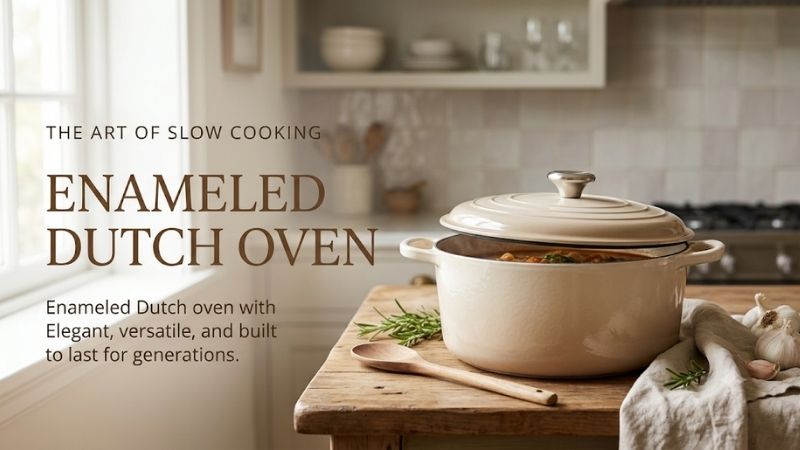
The Le Creuset Signature Round 5.5-Quart Dutch Oven is a versatile premium choice for cooks who regularly prepare braised meat, soups, stews, and oven-baked bread. Its enameled cast iron body retains heat effectively, while the light-colored interior helps users monitor browning and ingredient development.
One of its defining characteristics is its balanced 5.5-quart capacity. This size offers enough room for a family meal without becoming as difficult to manage as the largest Dutch ovens.
The round shape also sits naturally over most standard burners, allowing heat to spread across the cooking base.
For a beef stew, the pot can be used to brown portions of meat before vegetables, stock, and seasonings are added. Once covered, the meal can finish slowly in the oven.
The light interior makes it easier to observe caramelization and identify when browned cooking residues need to be loosened with liquid.
Its fitted lid helps retain moisture, which is useful for long braises and dishes that should not reduce too quickly.
The manufacturer rates this model for oven temperatures up to 500°F, supporting a wide range of roasting and baking applications.
However, enamel should not be mistaken for a conventional nonstick coating. Ingredients can still adhere during browning, and the surface requires appropriate temperature management.
The main drawback is cost. For households preparing Dutch oven meals only occasionally, less expensive enameled cast iron can deliver many of the same essential cooking functions.
Advantages: Durable construction, light interior for browning control, versatile size, and excellent heat retention.
Limitations: Premium price, substantial weight, and careful enamel maintenance requirements.
Best for: Enthusiastic home cooks seeking a versatile premium Dutch oven for frequent use.
Staub Round 5.5-Quart Cocotte – Best for slow braising
The Staub Round 5.5-Quart Cocotte is designed for cooks who prioritize moisture retention and steady low-temperature cooking. Its enameled cast iron construction, textured black interior, and tightly fitting lid with condensation features make it especially suitable for braises, stews, and slow-cooked meat dishes.
Staub’s interior finish differs noticeably from the light enamel found in many competing Dutch ovens.
The black matte enamel provides a durable cooking surface that is particularly appealing for browning meat. However, it can be harder to judge the color of developing fond against the dark background.
The lid includes raised features that encourage condensed moisture to return to the food below.
This design is useful for dishes such as braised short ribs or chicken thighs, where retaining moisture supports tender results during extended cooking.
The 5.5-quart capacity accommodates many family meals while remaining manageable on a standard stovetop.
Staub’s cast iron body also maintains a relatively stable temperature once heated. This can be helpful during long, gentle simmering, although adjusting heat downward may take longer than with lighter cookware.
Its manufacturer-rated oven limit reaches 500°F.
Despite its premium construction, the pot still requires sensible handling. Metal utensils may damage the enamel finish, and sudden temperature changes should be avoided.
Advantages: Strong heat retention, moisture-management lid, durable black enamel interior, and induction compatibility.
Limitations: Heavy construction, premium pricing, and reduced visual contrast when monitoring browning.
Best for: Cooks who frequently prepare slow-braised meats, stews, and moisture-sensitive dishes.
Lodge Essential Enamel 6-Quart Dutch Oven – Best value
The Lodge Essential Enamel 6-Quart Dutch Oven is a practical alternative for households seeking the benefits of enameled cast iron at a more accessible price. Its cast iron body, porcelain enamel finish, and generous capacity support common recipes such as chicken stew, bread, chili, and family-sized soups.
This model offers a useful balance between cooking volume and everyday functionality.
At 6 quarts, it provides additional room compared with smaller Dutch ovens without approaching the size of oversized specialty cookware.
The enamel surface allows acidic ingredients such as tomatoes to be used without the seasoning concerns associated with bare cast iron.
This makes the pot convenient for preparing tomato-based braises, pasta sauces, and vegetable soups.
Its fitted lid supports covered cooking, while the stainless steel knob and loop handles help with maneuvering.
Lodge specifies compatibility with induction and other conventional stovetops, along with oven use up to 500°F.
The weight deserves careful consideration. The 6-quart model weighs more than 13 pounds empty, and a substantial meal increases the total considerably.
Another limitation is that enamel can chip if the pot is dropped, struck against hard objects, or exposed to inappropriate thermal stress.
This model also should not be confused with Lodge’s seasoned bare cast iron Dutch ovens, which have different care requirements and outdoor cooking capabilities.
Advantages: Accessible price, generous capacity, easy-to-clean enamel, and broad stovetop compatibility.
Limitations: Heavy construction and enamel that requires protection from impact and thermal shock.
Best for: Families wanting an affordable enameled cast iron Dutch oven for regular home cooking.
Other enameled Dutch oven options for different meals
Round Dutch ovens work well for soups and stews, but larger or elongated meals can benefit from different shapes. Budget, storage space, cooking volume, and serving presentation also influence the purchase. These additional models demonstrate how oval designs, alternative enamel finishes, and practical construction can meet different household needs.
Tramontina Bestow 7-Quart Oval Dutch Oven – Best for larger roasts
The Tramontina Bestow 7-Quart Oval Dutch Oven provides additional length and capacity for meals that may not fit comfortably inside a conventional round vessel. Its enameled cast iron construction, fitted lid, and elongated interior make it especially useful for whole poultry, larger roasts, and generous portions of braised meat.
The main advantage is its oval shape.
A whole chicken or elongated roast can often fit more naturally inside an oval Dutch oven without requiring unnecessary empty space around the sides.
This shape is particularly useful when the recipe includes vegetables arranged around the protein.
For example, a large chicken can be surrounded with potatoes, carrots, and onions before being roasted or braised.
The cast iron body retains heat during cooking, while the enamel finish removes the need for routine seasoning.
Tramontina’s Bestow collection also emphasizes moisture retention through lid construction designed to return condensation to the contents.
However, an oval Dutch oven may not receive uniform direct heating when placed on a small round stovetop burner.
For recipes involving substantial stovetop browning, the cook may need to reposition ingredients or work in batches.
The larger capacity also creates handling challenges. A full 7-quart pot can be particularly heavy during oven transfers.
Advantages: Spacious oval interior, suitable for larger proteins, enamel convenience, and attractive serving presentation.
Limitations: Bulky storage requirements, considerable weight, and less efficient fit on some round burners.
Best for: Families preparing whole chickens, large roasts, and substantial holiday meals.
Cuisinart Chef’s Classic 5-Quart Round Casserole – Best midrange alternative
The Cuisinart Chef’s Classic 5-Quart Round Covered Casserole offers enameled cast iron construction in a practical size for routine family cooking. Its porcelain enamel interior and exterior support braising, simmering, and oven cooking without requiring the maintenance associated with seasoned bare iron.
Although marketed as a covered casserole, this model performs many of the same functions as a traditional Dutch oven.
Its 5-quart capacity accommodates soups, vegetables, moderate meat portions, and smaller roasts.
The enameled interior is particularly useful for dishes containing tomatoes, vinegar, or other acidic ingredients.
These foods can interact with poorly maintained bare cast iron seasoning, while intact enamel creates a protective barrier.
The cast iron construction retains heat after the pot reaches cooking temperature, helping support gentle simmering.
Its handles allow the pot to be moved between stovetop, oven, and serving area when appropriate heat protection is used.
One consideration is that Cuisinart’s enamel interior is not a substitute for nonstick cookware. Thick sauces can still scorch when excessive heat is applied.
The pot also weighs substantially more than a stainless steel vessel of comparable capacity.
For buyers seeking the traditional Dutch oven experience without choosing one of the highest-priced premium brands, the Chef’s Classic is a reasonable option.
Advantages: Practical capacity, enamel-coated interior, versatile cooking applications, and midrange positioning.
Limitations: Heavy construction and fewer premium design refinements than luxury alternatives.
Best for: Home cooks wanting an approachable enameled cast iron pot for everyday meals.
Great Jones The Dutchess 6.75-Quart – Best for versatile oval cooking
The Great Jones Dutchess 6.75-Quart Dutch Oven combines an elongated cooking surface with a distinctive enameled cast iron design. Its generous capacity and oval shape allow it to accommodate whole poultry, bread, vegetable dishes, and larger family meals while transitioning from cooking vessel to serving centerpiece.
The Dutchess is particularly useful when the shape of the food matters.
A whole chicken, elongated roast, or large portion of vegetables can be arranged without forcing the ingredients into a narrow round space.
Its 6.75-quart capacity also provides room for sauces and cooking liquid.
For example, a cook preparing braised chicken with potatoes can begin with stovetop browning, add aromatics and stock, then transfer the covered dish to the oven.
The enamel finish requires no seasoning and allows acidic ingredients to be cooked without damaging a protective oil layer.
Great Jones uses an interior enamel color that differs from the bright cream finish of some competing brands.
The pot is compatible with induction cooktops and has a manufacturer-listed oven limit of 500°F.
Its large footprint and weight are important trade-offs. It may be difficult to fit inside narrow cabinets or compact ovens.
The oval base also requires attention when cooking on smaller burners.
Advantages: Generous capacity, practical oval shape, enamel protection, and oven-to-table design.
Limitations: Large footprint, heavy construction, and reduced burner coverage on compact stovetops.
Best for: Home cooks who want one attractive Dutch oven for large roasts and family meals.
How to choose an enameled Dutch oven for your kitchen
Selecting the right Dutch oven requires balancing cooking volume, base geometry, enamel durability, and handling weight. These details directly influence browning, moisture retention, storage, and cleaning. A premium brand can be worthwhile, but the best purchase is ultimately the vessel that fits your cooking habits and physical kitchen space.
What size works best for everyday cooking and entertaining?
Dutch oven capacity should reflect both the number of servings and the physical size of the ingredients being cooked. Liquid volume alone is not enough because large cuts of meat, whole poultry, and vegetables require usable interior space. An oversized pot also becomes difficult to store and handle.
A 3- to 4-quart Dutch oven is appropriate for smaller households, side dishes, and modest meals.
A 5- to 5.5-quart model provides greater flexibility for family dinners, bread baking, and everyday braises.
A 6- to 7-quart Dutch oven becomes useful when cooking for larger households or preparing food in batches.
For substantial gatherings, capacities exceeding 7 quarts may be appropriate, although weight becomes increasingly important.
The usable cooking area should be considered separately from the advertised capacity.
A tall, narrow pot may contain a generous amount of liquid while providing limited space for browning meat.
Choose a size that can accommodate your largest frequent recipe while leaving room for stirring, bubbling, and safe handling.
How do light and dark enamel interiors compare?
Enameled cast iron cookware is available with different interior colors and textures. Light enamel makes it easier to observe browning and cooking residues, while dark matte enamel can be appealing for frequent searing. Both require temperature management and should be protected from unnecessary impact.
Light-colored enamel provides visual contrast when onions begin to caramelize or meat develops browned residues.
This helps cooks decide when to reduce the heat or add liquid for deglazing.
Dark enamel can make cooking marks less visually obvious, although it may also be harder to judge whether ingredients are becoming excessively browned.
Neither surface should be treated as conventional nonstick cookware.
Proper preheating, a suitable amount of cooking fat, and patient cooking techniques remain important.
Avoid heating an empty enameled Dutch oven aggressively over high heat.
Cast iron retains heat and responds relatively slowly to burner changes, so moderate temperatures are often sufficient.
Use wooden or silicone utensils when possible, especially when scraping around the sides and bottom.
How to protect enamel from chipping and thermal shock
Enameled cast iron is durable when handled appropriately, but its glass-like finish can be damaged by impacts, abrupt temperature changes, or inappropriate utensils. Protecting the enamel is essential because deep chips or cracks on the cooking surface may make the vessel unsuitable for continued food preparation.
Allow the pot to cool before washing it.
Do not place a very hot Dutch oven under cold running water or directly onto a cold, wet surface.
Use stable, heat-resistant trivets when removing cookware from the oven.
Avoid striking the enamel with hard utensils or stacking heavy cookware directly inside the pot.
For stubborn food residue, soak the cooled vessel with warm water and mild detergent rather than scraping aggressively.
Discoloration does not always indicate damage. Light-colored enamel can develop stains after repeated cooking with strongly colored foods.
However, visible chips, cracks, or flaking on the cooking surface should be treated more seriously.
Inspect the lid rim and cooking interior periodically, particularly after accidental drops.
Proper care allows an enameled Dutch oven to remain a dependable part of the kitchen for many years.
Conclusion
The best enameled Dutch oven combines adequate capacity, dependable heat retention, manageable weight, and an interior finish suited to your cooking style. Le Creuset Signature offers versatile premium performance, Staub excels at slow braising, and Lodge provides an affordable everyday alternative. Tramontina Bestow and Great Jones are useful for larger oval-shaped meals, while Cuisinart Chef’s Classic offers practical midrange value. For most households, a round 5.5- to 6-quart Dutch oven provides a strong balance between daily versatility and storage convenience.


Write Your Review
No reviews yet. Be the first to share your experience!