
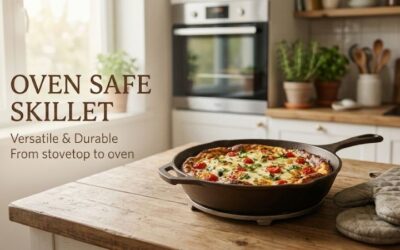
An oven safe skillet for easy storage can simplify cooking without taking over your kitchen cabinets. The right pan moves between stovetop and oven, fits your available storage space, and handles everyday meals reliably. This guide explains which materials, handles, dimensions, and safety features matter before you buy.
- Quick answer: What makes an oven safe skillet easy to store?
- Why oven-safe skillets are useful in smaller kitchens
- Choosing the right skillet material
- Understanding oven safety before purchasing
- How to select a skillet for limited storage space
- Features worth paying attention to
- Common mistakes when buying and using compact skillets
- Frequently Asked Questions
- Conclusion
Quick answer: What makes an oven safe skillet easy to store?
A practical oven-safe skillet combines reliable heat resistance with a shape that fits your kitchen when cooking is finished. Removable handles, compact helper handles, nesting-compatible bodies, and sensible diameters can all reduce storage problems. However, the skillet must still provide sufficient cooking surface, safe handling, and a manufacturer-confirmed oven temperature rating.
For most small kitchens, the best starting point is a 10-inch skillet with a removable handle or a compact stainless steel design. A 12-inch skillet offers more cooking room but needs a wider cabinet, oven shelf, and storage drawer.
The ideal choice depends on three important questions: how often you finish meals in the oven, how much cabinet space is available, and whether you prefer nonstick convenience or an uncoated cooking surface.
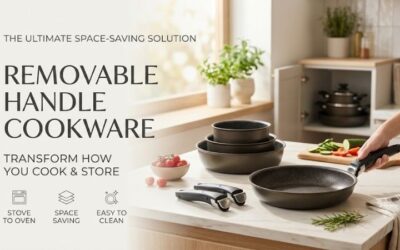
A detachable-handle skillet is particularly appealing when storage space is limited. Removing the handle reduces its overall length and makes stacking easier. However, the mechanism must securely attach to the exact cookware model, and the handle generally needs to be removed before oven use.
A short-handled stainless steel or cast iron skillet is another practical alternative. These pans avoid mechanical handle connections but may require more storage space or careful protection when stacked.
Why oven-safe skillets are useful in smaller kitchens
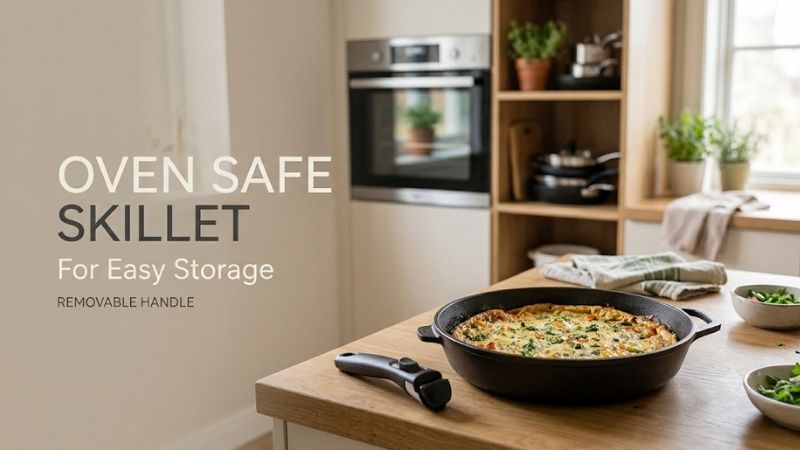
An oven-safe skillet performs jobs that might otherwise require a separate frying pan, roasting dish, and serving vessel. You can brown ingredients on the stove, finish them in the oven, and sometimes serve the finished meal directly from the same pan. This versatility matters when counter space, storage capacity, and cleaning time are limited.
Cooking on the stovetop and finishing in the oven
A skillet that works on both a burner and inside an oven is useful for chicken thighs, thick pork chops, frittatas, roasted vegetables, and baked pasta dishes. The advantage comes from keeping ingredients in one vessel while changing the cooking environment to suit the recipe.
For example, chicken can develop surface browning on the stovetop before finishing in a controlled oven environment. The initial cooking stage develops flavor, while oven heating can reduce the need to keep adjusting food over direct burner heat.
The skillet must have an oven rating suitable for the intended temperature. A pan rated to 350°F should not be used for a recipe requiring a 450°F oven.
Lids, handles, silicone components, and coatings may have different limits from the metal body. When specifications differ, follow the lowest applicable temperature limit for the components entering the oven.
This cooking method also reduces transfers between hot pans and baking dishes. Fewer transfers can mean less cleanup and fewer opportunities to spill hot ingredients.
Reducing the number of cookware pieces you need
An adaptable skillet may replace several specialized cooking vessels for everyday recipes. A medium-size frying pan can handle eggs, vegetables, chicken, shallow braises, and certain oven-baked dishes, provided its depth and construction suit each cooking method.
However, an oven-safe skillet does not automatically replace a stockpot, saucepan, deep Dutch oven, or dedicated baking sheet.
A shallow skillet cannot safely hold the same liquid volume as a deep pot, and a small frying surface may crowd food when cooking for multiple people.
The useful approach is to identify overlapping cooking tasks rather than expecting one pan to perform every kitchen function.
For a household preparing mostly simple meals, one versatile skillet and one saucepan may cover many daily requirements. Larger households or people who cook several dishes simultaneously will probably benefit from additional cookware.
Reducing unnecessary pieces also makes cabinet organization easier because fewer items need separate storage spaces.
Making cabinet and drawer organization easier
Traditional skillets often occupy more horizontal space than their cooking surfaces suggest because fixed handles extend beyond the pan body. A compact skillet addresses that problem through handle design, body shape, or a storage system that allows multiple pans to nest.
Removing a long handle can make a substantial difference in a narrow cabinet. It also allows a pan to sit more naturally inside a deep drawer without forcing the handle diagonally across other utensils.
Nevertheless, stacking requires attention to the cooking surface. Bare metal pans can develop cosmetic scratches, while coated cookware may suffer functional damage when rough surfaces rub against each other.
Use appropriate pan protectors or soft cloth separators when necessary.
Avoid placing heavy cookware on top of delicate nonstick surfaces. The objective is to save space without shortening the useful life of the cookware.
Choosing the right skillet material
Material determines how a skillet responds to heat, how easily it can be maintained, and whether its cooking surface is appropriate for particular recipes. Stainless steel, cast iron, carbon steel, and coated aluminum can all work in the oven when the exact model is approved. Their storage requirements and maintenance responsibilities differ considerably.
Stainless steel for versatile everyday cooking
Stainless steel is a strong candidate for buyers who want an oven-safe skillet with a durable cooking surface. Unlike conventional nonstick coatings, an uncoated stainless steel interior does not depend on a release layer that gradually wears during ordinary use.
Many stainless steel skillets use an aluminum or copper-containing core or base to improve heat distribution. The construction matters because stainless steel alone conducts heat less effectively than aluminum.
Fully clad designs distribute conductive layers through the body, while impact-bonded designs concentrate those layers in the base. Either arrangement can be useful, depending on the cooking task and the actual product construction.
Stainless steel is suitable for browning meat, cooking vegetables, developing pan sauces, and preparing acidic foods.
The main disadvantage is that food can stick when preheating, oil quantity, or cooking technique is unsuitable.
For convenient storage, look for stainless steel cookware with short handles, nesting-friendly profiles, or removable handles specifically designed for the pan.
Do not assume that every stainless steel skillet has the same oven limit. Silicone grips, plastic handle components, and glass lids may restrict the usable temperature.
Cast iron for heat retention and oven finishing
Cast iron skillets are useful for cooks who regularly prepare dishes requiring strong heat retention and substantial oven time. Their thick construction stores considerable thermal energy, making them well suited to certain searing, baking, and roasting applications.
A cast iron skillet can also be useful for cornbread, skillet cookies, roasted potatoes, and other recipes where the pan remains part of the baking process.
Most traditional cast iron skillets have relatively short integrated handles compared with many long-handled frying pans. This can simplify cabinet storage, especially when the pan does not have a bulky auxiliary grip.
The primary disadvantage is weight. Even a moderately sized cast iron skillet can be difficult to lift when filled with hot food.
Seasoned cast iron also needs suitable maintenance. Although brief contact with acidic ingredients is not necessarily damaging, extended acidic cooking can affect the seasoning layer.
Dry the skillet thoroughly after washing and maintain its seasoned surface according to the manufacturer’s instructions.
Buyers prioritizing easy lifting, minimal weight, or effortless stacking may prefer another material.
Carbon steel for a lighter traditional cooking option
Carbon steel offers a useful alternative to cast iron for buyers who appreciate an uncoated metal surface but want different handling characteristics. Many carbon steel skillets are thinner and lighter than similarly sized traditional cast iron pans, although actual weight varies by model.
Like cast iron, conventional carbon steel generally develops a seasoned cooking surface through use and maintenance.
It can handle high-temperature cooking when the manufacturer approves the intended heat level. This makes it attractive for sautéing vegetables, cooking proteins, and preparing oven-finished meals.
The challenge for storage is often the handle. Some carbon steel skillets have long fixed handles that make them less convenient in narrow drawers or cabinets.
A compact handle can solve that issue, but it should not compromise the ability to lift the pan securely.
Another consideration is seasoning maintenance. Carbon steel requires thorough drying and appropriate care to minimize corrosion.
For buyers who prefer dishwasher cleaning and minimal surface maintenance, stainless steel is generally easier to manage.
Nonstick aluminum for convenient cleaning
Nonstick aluminum skillets appeal to households that prioritize easy food release, relatively low weight, and simple everyday cooking. Aluminum conducts heat effectively, while the coating reduces food adhesion when used according to its care instructions.
These pans are particularly useful for eggs, pancakes, delicate fish, and dishes where easy release matters more than intense browning.
However, nonstick cookware requires closer attention to temperature limits. The aluminum body may tolerate more heat than its coating, handle, or other components.
A detachable handle does not automatically make a nonstick skillet suitable for high-temperature roasting or broiling.
Different nonstick systems also have different compositions. Ceramic nonstick and PTFE-based nonstick should not be treated as identical materials simply because both help food release.
Manufacturers may publish different cooking recommendations for each.
Avoid overheating empty coated skillets, especially on powerful burners. Follow the manufacturer’s maximum oven temperature and utensil restrictions.
For compact storage, choose a model with a protected stacking system rather than placing cookware directly against the coating.
Understanding oven safety before purchasing
Oven-safe cookware must withstand the temperature and conditions specified by its manufacturer. A metal body alone is not enough to establish compatibility because handle materials, coatings, lids, seals, and removable fittings can introduce additional restrictions. Check the exact model rather than relying on broad claims about the skillet’s material or brand.
Why maximum oven temperature matters
Oven temperature ratings help buyers understand the operating conditions a skillet is designed to tolerate. A pan approved for moderate baking may be suitable for frittatas and casseroles but unsuitable for high-temperature roasting or broiling.
The important distinction is between the skillet’s approved limit and the temperature required by your recipes.
A rating of 400°F provides different cooking flexibility from a rating of 500°F. Neither figure should be assumed without documentation for the particular model.
Consider the cookware’s most restrictive component.
For example, a stainless steel skillet with an all-metal handle may have a relatively high oven rating, while an otherwise similar skillet with a silicone grip may have a lower rating.
Glass lids also frequently have separate temperature limits.
Buyers should look for a product manual that distinguishes between the skillet body, attached handle, removable handle, and lid.
If the documentation is unclear, ask the manufacturer rather than experimenting with high heat.
Why removable handles require special attention
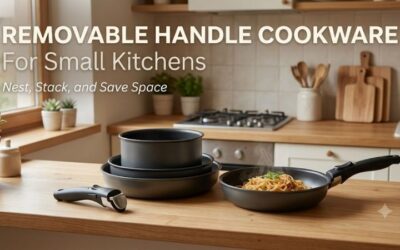
A removable handle can transform a long frying pan into a compact vessel that occupies substantially less storage space. However, that convenience introduces an additional mechanical connection that must remain secure while the cookware is being carried.
A well-designed locking mechanism should attach positively to the intended pan and release only through the manufacturer’s specified action.
Before lifting a filled skillet, confirm the handle is fully engaged. Never press release buttons while carrying hot cookware.
Most detachable handles are designed to be removed before the pan enters the oven. Leaving them attached may expose plastic, springs, or other internal components to temperatures beyond their operating limits.
Handle compatibility is another important consideration. Two cookware brands may use superficially similar mechanisms that are not interchangeable.
Replacement handles should therefore be purchased specifically for the appropriate cookware series.
If a handle becomes loose, cracked, heat-damaged, or difficult to lock, stop using it until the problem is resolved.
Why broiler safety is different from oven safety
A skillet approved for oven use is not necessarily suitable under a broiler. Conventional oven baking surrounds food with controlled heated air, while broiling exposes the cookware and its components to intense radiant heat from a nearby heating element.
This difference can be important for nonstick coatings, silicone components, wooden handles, and decorative finishes.
Even when a skillet has a high published oven rating, its manufacturer may prohibit broiler use.
For dishes requiring a browned cheese topping or intense finishing heat, check whether broiler compatibility is explicitly stated.
If the pan is not approved, transfer the food to suitable broiler-safe bakeware instead.
The small inconvenience of using another vessel is preferable to damaging cookware or creating a burn or fire hazard.
Do not assume removing a detachable handle makes every remaining part broiler-safe.
How to select a skillet for limited storage space
Storage efficiency depends on the actual dimensions of the skillet and the organization of the kitchen. A 10-inch pan may sound compact, but its handle, rim shape, and sidewall height determine how it fits inside a drawer or cabinet. Measure the available space before selecting a model, especially when several pans must be stored together.
Choosing between 8-inch, 10-inch, and 12-inch skillets
An 8-inch skillet is convenient for smaller portions, such as one or two eggs, a single serving of vegetables, or a small piece of fish. Its relatively small body is easy to fit into compact cupboards.
However, the usable cooking surface is smaller than the nominal diameter because the sidewalls often slope inward.
A 10-inch skillet is a practical compromise for many households. It provides additional cooking room while remaining manageable for everyday storage.
A 12-inch skillet is more appropriate for larger portions or recipes where spreading ingredients into a single layer improves browning.
The larger pan requires more cabinet width, cooking-zone space, and oven clearance.
Size should reflect the meals you prepare most frequently rather than the largest possible meal you might occasionally cook.
For a household of one or two people, a 10-inch skillet is often the most adaptable starting point.
Stackable cookware and protective storage
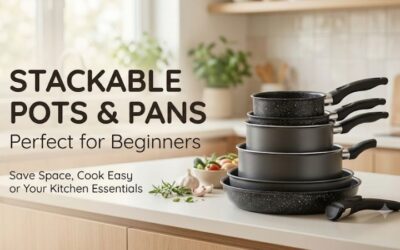
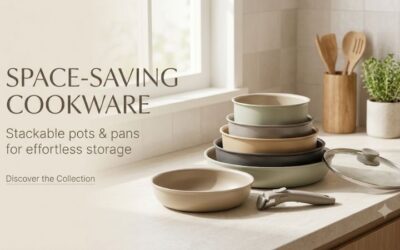
Stackable cookware can reduce the cabinet space needed for several frying pans, saucepans, or shallow cooking vessels. The most convenient systems use compatible body shapes so the pans nest without unstable leaning or excessive pressure on their cooking surfaces.
Some sets use protective pads, flat lids, or specifically designed rim profiles to make stacking more practical.
A cookware set that stacks neatly as advertised may still be inconvenient if you frequently need the bottom pan.
Consider how often each piece is used and whether accessing one skillet requires moving several others.
Stacking also creates opportunities for scratches when rough bases touch nonstick coatings.
Use protective dividers when recommended, especially with coated cookware.
Keep heavy cast iron separate from lighter coated pans whenever practical.
The best storage solution is not necessarily the smallest stack. It is the arrangement that protects the cookware while allowing frequently used pieces to be removed safely.
Measuring cabinets, drawers, and oven clearance
Before purchasing a skillet, measure the inside width, depth, and height of the space where it will be stored. Account for cabinet hinges, drawer runners, shelf supports, and any organizer that reduces usable clearance.
A pan’s nominal diameter does not include the full length of its fixed handle.
For removable-handle cookware, compare the vessel dimensions with the overall dimensions when the handle is attached.
If several pans will be nested, check the combined stack height rather than assuming their individual depths will simply disappear inside one another.
It is also useful to measure oven clearance.
A wide skillet with high sidewalls may fit on a stovetop but become awkward inside a compact countertop oven.
Leave adequate space around cookware according to the oven manufacturer’s instructions.
These measurements are particularly important in studio apartments, RVs, and kitchens with narrow pull-out drawers.
Features worth paying attention to
A skillet should be evaluated as cooking equipment first and a storage solution second. Compact dimensions are useful only when the pan provides appropriate heat control, sufficient capacity, and safe handling. Features such as sturdy construction, compatible lids, reliable handles, and practical cleaning requirements often determine whether the cookware remains useful over time.
Cooking surface and base construction
The base affects the way heat enters the skillet and how efficiently that heat spreads across the cooking surface. Thin pans may respond quickly to changes in burner power but can also develop more pronounced hot spots under certain conditions.
A thicker aluminum base or fully clad construction can improve heat distribution, although the results depend on the pan’s design and the burner being used.
For induction cooking, the skillet needs a compatible magnetic layer or base.
Aluminum cookware without an induction-compatible base will not operate correctly on a conventional induction burner.
A flat cooking base also matters for smooth-top electric cooktops because uneven contact can reduce the effectiveness of heat transfer.
Before purchasing, check whether the exact skillet is compatible with your cooking surface.
Do not assume every pan in a cookware collection supports induction simply because another model from the same brand does.
Weight, balance, and lifting comfort
Weight affects everyday usability, especially when transferring a skillet containing hot food between the stovetop and oven. A pan that feels manageable while empty may become considerably harder to lift when filled with ingredients.
Traditional cast iron provides substantial thermal mass but can be challenging for people who prefer lightweight cookware.
Aluminum-based skillets are often lighter, although construction and size affect the actual weight.
Handle balance is particularly important with removable systems. A secure attachment must also provide sufficient leverage for controlling the loaded pan.
A small skillet does not necessarily need a helper handle, but larger pans may benefit from an additional gripping point.
When using oven mitts, confirm that the handle shape provides enough room for a safe grip.
Choose a skillet that can be moved comfortably without relying on unstable wrist positioning or excessive lifting force.
Cleaning effort and long-term maintenance
The easiest skillet to store is not always the easiest to maintain. Material selection influences washing requirements, drying time, surface protection, and how the pan should be stacked after cleaning.
Uncoated stainless steel generally tolerates a wider range of cleaning methods than delicate nonstick coatings, although manufacturer instructions still apply.
Nonstick pans may clean quickly but often benefit from gentle hand washing and nonabrasive utensils.
Carbon steel and traditional cast iron require prompt drying and appropriate seasoning maintenance.
Detachable handles may contain mechanical components that should not be submerged or placed in a dishwasher.
Always follow the manufacturer’s cleaning instructions for the handle separately from the cookware body.
Dry cookware completely before stacking it.
For coated pans, protective dividers can prevent hard bases from damaging the cooking surface during storage.
Common mistakes when buying and using compact skillets
Storage-focused buyers sometimes overlook cooking capacity, component compatibility, or the condition of removable parts. These oversights can turn a seemingly convenient purchase into an awkward or unsafe cooking experience. A suitable skillet should fit the kitchen while supporting the actual recipes and handling conditions expected during regular use.
Buying the smallest pan without considering meals
A small skillet looks attractive when cabinet space is limited, but insufficient cooking area creates practical problems. Food crowded into a pan may release moisture faster than it evaporates, making browning more difficult.
Cooking multiple batches can also increase preparation time and require additional cleaning.
For someone who regularly prepares dinner for two, an 8-inch pan may be too restrictive for many main dishes.
Likewise, a 12-inch skillet can be unnecessarily bulky if it is mainly used for breakfast for one person.
Match the pan’s flat cooking surface and depth to your typical portions.
Consider whether you make one-pan meals, shallow sauces, oven-finished proteins, or mostly quick sautés.
Buying for real use patterns usually leads to better value than choosing cookware based solely on compact dimensions.
Assuming every removable-handle pan is oven-safe
The ability to detach a handle does not establish an oven temperature rating. Cookware may still contain temperature-sensitive coatings, rim materials, or accessories.
Some manufacturers specify that the pan body can enter the oven only after removing both the handle and lid.
Others publish separate limits for different cookware collections.
Never rely on a retailer’s generic description when the exact product documentation provides more specific restrictions.
Check the stated temperature limit for the skillet body and confirm whether convection oven, conventional oven, or broiler use is allowed.
Avoid placing storage lids or plastic accessories in an oven.
Those items are designed for different purposes and may deform or become damaged under cooking temperatures.
Clear documentation is more valuable than an attractive claim about versatility.
Stacking cookware without protecting the surfaces
Compact cookware is frequently advertised as stackable, but stacking does not eliminate the need for careful handling. Contact between hard metal bases and coated interiors can damage the cooking surface over time.
When nesting pans, place protective pads between surfaces if the manufacturer recommends them.
Do not force a larger skillet into a smaller one or press down on a stack to make it fit.
That can damage rims, coatings, and removable-handle attachment points.
Keep cookware dry to reduce the risk of moisture-related discoloration or corrosion.
If cabinet space allows, store the most frequently used skillet at the top.
This makes daily cooking easier and reduces unnecessary handling of the remaining pans.
Frequently Asked Questions
Choosing a compact oven-safe skillet involves more than selecting the right diameter. Buyers often need clarification about removable handles, oven temperature restrictions, induction compatibility, dishwasher cleaning, and whether stacking affects cookware durability. The following answers address concerns that commonly influence a long-term purchase decision.
Can I put a skillet with a removable handle in the oven?
Many removable-handle cookware systems are specifically designed to allow oven use after the handle is detached. However, compatibility depends on the exact pan and the manufacturer’s instructions.
The handle itself should generally remain outside the oven unless the documentation explicitly states otherwise.
Check the maximum temperature permitted for the pan body, and remove incompatible storage lids or accessories before heating.
Do not assume that a detachable handle eliminates every restriction associated with nonstick coatings or other materials.
What skillet size is best for a small kitchen?
A 10-inch skillet is a useful starting point for many compact kitchens because it balances cooking surface with storage convenience. It can handle numerous everyday recipes without requiring as much space as a larger frying pan.
An 8-inch pan is useful for smaller portions, while a 12-inch model provides more room for family meals.
The best choice depends on typical portion sizes, the shape of the pan, and available cabinet dimensions.
Measure the full cookware body and handle arrangement before purchasing.
Are stainless steel skillets better than nonstick for oven use?
Uncoated stainless steel can be a more flexible choice for some oven-finishing recipes because it does not rely on a conventional nonstick coating. However, that does not mean every stainless steel skillet is suitable for every oven temperature.
Handle construction and manufacturer restrictions still determine the actual rating.
Nonstick cookware offers easier food release for delicate recipes and may be more convenient for everyday cleaning.
Choose according to the cooking methods you use most, rather than assuming one material is universally superior.
Can I stack oven-safe skillets without damaging them?
Skillets can often be stacked when their shapes are compatible, but surface protection is important. Nonstick interiors may be damaged by contact with rough metal bases or other hard objects.
Use suitable protective pads between pans when needed.
Avoid unstable stacks and excessive weight on delicate cookware.
For cast iron and carbon steel, make sure the pieces are thoroughly dry before storing them.
A well-organized cabinet should protect cookware and make frequently used pieces easy to access.
Can an oven-safe skillet be used on an induction cooktop?
Oven compatibility and induction compatibility are separate features. A skillet may be safe inside an oven yet fail to work on an induction burner if its base does not contain appropriate magnetic material.
Many stainless steel and cast iron skillets work with induction, but not every stainless steel alloy or cookware design is compatible.
Aluminum-based skillets usually require an induction-compatible base.
Check the exact product specifications before purchasing, particularly when selecting detachable-handle cookware with multiple variants.
Conclusion
An oven safe skillet for easy storage should combine useful cooking capacity, documented oven compatibility, and a design that fits naturally into your kitchen. For many apartment households, a 10-inch removable-handle skillet is a practical option, while compact stainless steel provides a durable alternative without additional locking mechanisms. Prioritize verified temperature limits, secure handling, protected stacking, and the meals you actually prepare over marketing claims about space savings.


Write Your Review
No reviews yet. Be the first to share your experience!