
An oven safe skillet lets you sear food on the stovetop and finish cooking it in the oven without transferring ingredients to another dish. The best options combine reliable construction, appropriate heat limits, comfortable handles, and practical cooking surfaces. This guide compares six real skillets for roasting, baking, searing, and everyday meals.
- Quick verdict: Which oven safe skillet is best?
- Quick comparison table
- How we selected these oven safe skillets
- Detailed oven safe skillet recommendations
- Buying guide: How to choose an oven safe skillet
- Best recipes to prepare in an oven safe skillet
- Common mistakes when using oven safe cookware
- How to clean and maintain different skillet materials
- Frequently Asked Questions
- Conclusion
Quick verdict: Which oven safe skillet is best?
The best oven safe skillet depends on the cooking methods you use most often, your preferred surface material, and the temperatures required by your recipes. Uncoated stainless steel is particularly useful for searing and pan sauces, cast iron retains heat for baking and roasting, while ceramic nonstick can simplify delicate dishes and cleanup when used within its care limits.
| Best for | Recommended skillet | Main advantage |
|---|---|---|
| Best overall | All-Clad D3 Stainless 10-Inch Fry Pan | Versatile tri-ply stainless steel |
| Best value cast iron | Lodge 10.25-Inch Cast Iron Skillet | Durable and versatile construction |
| Best premium stainless steel | Made In 10-Inch Stainless Clad Frying Pan | Five-ply construction and high oven rating |
| Best enameled cast iron | Le Creuset Signature 10.25-Inch Skillet | No traditional seasoning required |
| Best ceramic nonstick | GreenPan Valencia Pro 10-Inch Frypan | Convenient food release |
| Best practical stainless alternative | Tramontina Triverge 10-Inch Fry Pan | Tri-ply construction and easier cleaning |
For most households wanting one versatile skillet, the All-Clad D3 is a strong choice. Lodge is especially appealing for traditional skillet baking, while GreenPan suits cooks who regularly prepare softer, more delicate foods.
Quick comparison table
Oven temperature is only one aspect of skillet performance. The pan must also work on your stovetop, hold enough food for your usual portions, and remain manageable when lifted with oven mitts. These six products offer different cooking surfaces and maintenance requirements, making the comparison more useful than selecting the model with the highest advertised heat rating.
| Skillet | Material | Manufacturer oven rating | Induction | Maintenance |
|---|---|---|---|---|
| All-Clad D3 10-Inch | Tri-ply stainless steel | 600°F | Yes | Hand wash |
| Lodge 10.25-Inch | Seasoned cast iron | Oven-safe; no numeric limit claimed here | Yes | Wash, dry, oil |
| Made In 10-Inch Stainless Clad | Five-ply stainless steel | 800°F | Yes | Stainless steel care |
| Le Creuset Signature 10.25-Inch | Enameled cast iron | 500°F | Yes | No seasoning required |
| GreenPan Valencia Pro 10-Inch | Ceramic nonstick aluminum | 600°F | Yes | Gentle coating care |
| Tramontina Triverge 10-Inch | Tri-ply stainless steel | 500°F | Yes | Dishwasher-safe |
Temperature ratings refer to the specific uncovered skillet models listed. Lids, silicone accessories, and other components may have different limits.
How we selected these oven safe skillets
A useful oven-safe skillet must perform reliably in two cooking environments: direct stovetop heat and the surrounding heat of an oven. We prioritized identifiable products with manufacturer-supported heat limits or explicit oven compatibility, practical 10-inch-class dimensions, distinct surface constructions, and meaningful differences in cleaning and everyday usability.
The selections also represent different approaches to cooking.
Stainless steel supports browning and developing flavorful pan residues. Cast iron offers substantial heat retention and a seasoned surface. Enameled cast iron avoids traditional seasoning requirements, while ceramic nonstick provides a coated cooking option.
We considered handle configuration, induction compatibility, construction, and maintenance rather than assuming expensive cookware always performs better.
These recommendations are based on product specifications and established cooking principles. They are not presented as results from firsthand temperature measurements, controlled cooking tests, or long-term durability experiments.
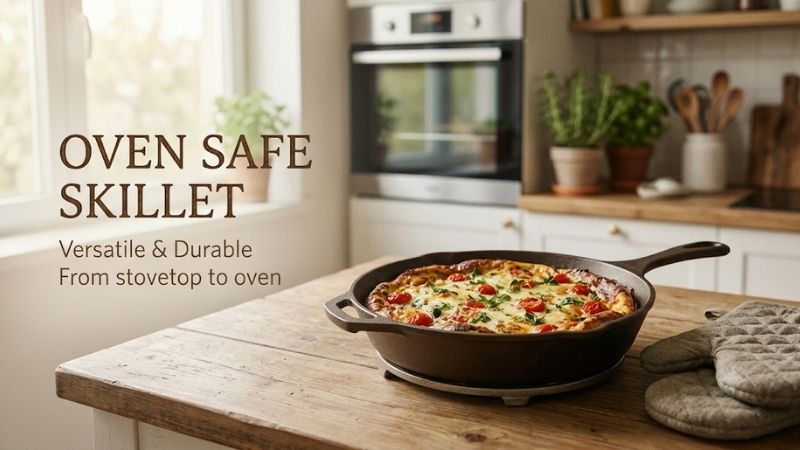
Detailed oven safe skillet recommendations
The following six skillets serve different priorities, ranging from affordable traditional cookware to premium multilayer stainless steel. Each can be useful for stovetop-to-oven recipes, but material and construction affect cooking technique, surface care, and handling. A successful purchase should match your usual dishes rather than simply provide an impressive temperature rating.
All-Clad D3 Stainless 10-Inch Fry Pan — Best overall
The All-Clad D3 Stainless 10-Inch Fry Pan uses fully bonded tri-ply construction with an aluminum core between stainless steel layers. Its flared cooking profile, riveted handle, and manufacturer-listed 600°F oven and broiler compatibility make it particularly versatile for recipes that begin with stovetop browning and finish with oven heat.
Best for: Home cooks who regularly sear meat, roast vegetables, and prepare pan sauces.
Why we picked it: The skillet combines an uncoated cooking surface, broad stovetop compatibility, and a substantial oven-temperature rating.
Key specifications
-
Diameter: 10 inches.
-
Model: 4110.
-
Construction: Fully bonded tri-ply stainless steel.
-
Aluminum core.
-
Induction compatible.
-
Oven and broiler safe up to 600°F.
-
Listed weight: approximately 3 pounds.
-
Hand wash only.
Features and practical performance
The aluminum core extends through the bonded cooking vessel, helping distribute heat across the skillet.
Its stainless steel interior supports searing, sautéing, and developing browned cooking residues.
The flared edges make it easier to transfer food or pour sauces.
During stovetop-to-oven cooking, the pan can brown chicken before moving into the oven to finish.
Afterward, the same skillet can be used to prepare a sauce from the collected drippings.
This versatility is particularly helpful when minimizing the number of dishes used.
Differentiators
Unlike traditional cast iron, the D3 does not require seasoning.
Unlike ceramic nonstick cookware, it does not depend on a manufactured nonstick coating for food release.
However, delicate ingredients may stick if preheating and cooking fat are not managed correctly.
Pros
-
Excellent versatility across cooking techniques.
-
High manufacturer-listed oven and broiler rating.
-
Works on induction and conventional stovetops.
-
Durable uncoated cooking surface.
Cons
-
Food-release technique requires practice.
-
Hand washing is required by the manufacturer.
-
Premium purchase category.
Buy if: You want one versatile skillet for searing, roasting, and making sauces.
Skip if: Your main priority is effortless egg release or minimal cleaning effort.
Lodge 10.25-Inch Cast Iron Skillet — Best value cast iron
The Lodge 10.25-Inch Cast Iron Skillet, model L8SK3, is a traditional American-made skillet with a factory-seasoned cooking surface, side pouring spouts, and an assist handle. Its cast iron body can be used on stovetops, in ovens, on grills, and over suitable campfire cooking setups, making it especially versatile for hearty skillet dishes.
Best for: Cornbread, skillet pizza, roasted vegetables, steaks, and traditional one-pan cooking.
Why we picked it: It provides durable, oven-compatible cookware without a premium multilayer construction.
Key specifications
-
Diameter: 10.25 inches.
-
Model: L8SK3.
-
Material: Seasoned cast iron.
-
Weight: approximately 5.66 pounds.
-
Overall length: approximately 16.12 inches.
-
Flat bottom width: approximately 8 inches.
-
Induction compatible.
-
Oven, grill, and campfire compatible.
-
Factory seasoned with vegetable oil.
Features and practical performance
Cast iron retains substantial heat after preheating.
This is useful for searing meat, baking cornbread, and preparing dishes that benefit from a hot cooking surface.
The skillet also provides a relatively deep cooking profile compared with many conventional frying pans.
That can be useful for skillet desserts and recipes containing several ingredients.
Its assist handle offers an additional gripping point when the pan is full.
However, a hot cast iron skillet should be handled with appropriate protective mitts.
Differentiators
Unlike stainless steel, traditional cast iron develops a seasoned cooking surface that can improve food release through appropriate use and maintenance.
Unlike enameled cast iron, Lodge’s traditional skillet requires seasoning care and thorough drying.
Its greatest advantage is long-term maintainability rather than lightweight handling.
Pros
-
Durable traditional construction.
-
Versatile across several heat sources.
-
Suitable for baking and roasting.
-
No conventional manufactured nonstick coating.
Cons
-
Heavy.
-
Requires drying and seasoning maintenance.
-
Less responsive to rapid reductions in burner heat.
Buy if: You regularly prepare cornbread, skillet meals, and roasted foods.
Skip if: You need lightweight cookware or dishwasher cleaning.
Made In 10-Inch Stainless Clad Frying Pan — Best premium stainless steel
The Made In 10-Inch Stainless Clad Frying Pan uses five-ply bonded construction incorporating stainless steel and aluminum-based layers. Its manufacturer-listed 800°F oven rating and induction compatibility make it a distinctive option for buyers who want a stainless steel skillet that supports a wide variety of oven and stovetop techniques.
Best for: Experienced cooks who value multilayer stainless steel construction.
Why we picked it: Its high documented oven rating and versatile cooking surface distinguish it from many ordinary skillets.
Key specifications
-
Diameter: 10 inches.
-
Five-ply stainless clad construction.
-
Stainless steel cooking surface.
-
Aluminum-based conductive layers.
-
Induction compatible.
-
Manufacturer-listed oven-safe temperature: 800°F.
Features and practical performance
The five-ply construction is intended to distribute heat through the cooking vessel.
The stainless steel interior supports browning, sautéing, and deglazing.
For example, a cook can sear a thick pork chop on the stovetop before transferring the skillet to the oven for additional cooking.
The same surface can then be used to prepare a sauce from the browned residue.
Its high oven rating provides substantial temperature flexibility.
However, that does not mean every recipe should be cooked near the maximum temperature.
Most ordinary skillet meals require much lower oven settings.
Differentiators
The Made In skillet combines five-ply construction with a documented oven rating higher than those of several other products in this comparison.
That may matter to cooks using techniques involving elevated oven temperatures.
Nevertheless, five-ply construction does not automatically produce better results than high-quality tri-ply cookware.
Pros
-
High oven-temperature rating.
-
Induction compatibility.
-
Uncoated stainless steel cooking surface.
-
Useful for searing and sauces.
Cons
-
Premium price positioning.
-
Stainless steel food release requires technique.
-
High oven rating may provide little advantage for ordinary recipes.
Buy if: You want premium stainless steel cookware for varied cooking techniques.
Skip if: You prepare mostly simple breakfasts and rarely transfer pans to the oven.
Le Creuset Signature 10.25-Inch Skillet — Best enameled cast iron
The Le Creuset Signature 10.25-Inch Skillet uses enameled cast iron with a black satin enamel cooking interior. It combines the heat-retention characteristics of cast iron with a finished surface that does not require traditional seasoning. Its 500°F oven rating makes it suitable for many baked skillet meals and roasted dishes.
Best for: Home cooks who appreciate cast iron but prefer enamel over traditional seasoning.
Why we picked it: It offers a distinctive combination of oven versatility, serving presentation, and reduced seasoning maintenance.
Key specifications
-
Diameter: 10.25 inches.
-
Construction: Enameled cast iron.
-
Black satin enamel interior.
-
Oven safe up to 500°F.
-
Compatible with induction and other common stovetops.
-
Dishwasher-safe according to the manufacturer.
-
Hand washing recommended to preserve the finish.
-
Integrated helper handle and pouring spouts.
Features and practical performance
The cast iron body stores heat effectively, making it useful for skillet cornbread, roasted vegetables, and oven-finished meats.
The black enamel interior does not require conventional seasoning.
Its pouring spouts can help remove excess liquid or cooking fat.
The helper handle provides another lifting point.
Because the skillet is suitable for attractive stovetop-to-table presentation, it may also reduce the need for a separate serving dish.
However, the pan remains heavy, and enamel needs appropriate handling to prevent damage.
Differentiators
The principal difference from Lodge is the enamel-coated surface.
The user does not need to maintain traditional cast iron seasoning.
However, enamel is not equivalent to a slippery manufactured nonstick surface.
Sticking can still occur, particularly when cooking delicate foods without correct heating technique.
Pros
-
No traditional seasoning required.
-
Suitable for oven and induction use.
-
Useful for baking and serving.
-
Helper handle supports lifting.
Cons
-
Heavy.
-
Premium purchase category.
-
Enamel requires protection from impact and thermal shock.
Buy if: You want cast iron cooking with less seasoning maintenance.
Skip if: You prefer lightweight cookware or traditional bare cast iron.
GreenPan Valencia Pro 10-Inch Frypan — Best ceramic nonstick
The GreenPan Valencia Pro 10-Inch Frypan uses hard-anodized aluminum construction with a ceramic nonstick interior, an induction-compatible base, and a stainless steel handle. The manufacturer lists the uncovered skillet as oven safe up to 600°F, making it relevant to cooks who want convenient food release for stovetop-to-oven recipes.
Best for: Frittatas, egg dishes, vegetables, and other recipes where food release is important.
Why we picked it: It provides a ceramic nonstick alternative without sacrificing induction compatibility.
Key specifications
-
Diameter: 10 inches.
-
Product SKU: CC002678-001.
-
Hard-anodized aluminum body.
-
Ceramic nonstick interior.
-
Induction-compatible base.
-
Oven safe up to 600°F.
-
Listed weight: approximately 2.31 pounds.
-
Dishwasher-safe according to the manufacturer.
-
Hand washing recommended.
Features and practical performance
The ceramic nonstick surface can reduce the difficulty of releasing delicate foods.
This makes the skillet attractive for certain baked egg dishes and recipes that might stick to stainless steel.
The aluminum body is lighter than many cast iron alternatives.
Its induction-compatible base supports use across several stove types.
However, the coating can lose food-release performance over time, especially when exposed to inappropriate heating or cleaning.
The manufacturer recommends silicone utensils even though the pan is described as metal-utensil safe.
Differentiators
Unlike Lodge or Le Creuset, the GreenPan skillet does not rely on a heavy cast iron body.
Unlike All-Clad D3, it has a manufactured ceramic nonstick interior.
That convenience comes with different long-term maintenance considerations.
Pros
-
Relatively lightweight.
-
Convenient food release.
-
Induction compatible.
-
Substantial documented oven rating.
Cons
-
Coating may deteriorate with use.
-
Requires gentle cleaning practices.
-
Less appropriate for aggressive high-heat searing than uncoated metal cookware.
Buy if: You frequently prepare delicate stovetop-to-oven dishes.
Skip if: You want a cooking surface without a manufactured coating.
Tramontina Triverge 10-Inch Tri-Ply Clad Fry Pan — Best stainless steel alternative
The Tramontina Triverge 10-Inch Tri-Ply Clad Stainless Steel Fry Pan uses an 18/10 stainless steel interior, an aluminum core, and stainless steel exterior construction. It supports induction and other common cooktops and is manufacturer-listed as oven safe up to 500°F, making it a practical alternative to more expensive premium stainless steel skillets.
Best for: Everyday home cooks wanting versatile stainless steel construction.
Why we picked it: It combines a familiar tri-ply design with useful oven and stovetop compatibility.
Key specifications
-
Diameter: 10 inches.
-
Tri-ply clad stainless steel construction.
-
Aluminum core.
-
18/10 stainless steel interior.
-
Cast stainless steel handle.
-
Compatible with induction, gas, electric, and ceramic glass cooktops.
-
Oven safe up to 500°F.
-
Dishwasher-safe according to the manufacturer.
Features and practical performance
The aluminum core supports heat distribution across the bonded cooking vessel.
The stainless steel cooking surface is useful for browning meat and preparing pan sauces.
A 10-inch diameter offers practical capacity for ordinary household portions.
The cookware can move from the stovetop into the oven for recipes requiring additional heat.
Its dishwasher compatibility may appeal to buyers who prefer simpler cleaning.
However, stainless steel still requires correct preheating and cooking fat when preparing delicate ingredients.
Differentiators
This skillet offers the general versatility of tri-ply stainless steel with a 500°F oven rating.
Its practical appeal lies in construction and functionality rather than the highest possible temperature rating.
Pros
-
Induction-compatible.
-
Durable uncoated cooking surface.
-
Dishwasher-safe.
-
Suitable for stovetop-to-oven recipes.
Cons
-
Food can stick without proper technique.
-
Lower oven-temperature rating than some premium stainless options.
-
Steel handle becomes hot in the oven.
Buy if: You want versatile stainless steel cookware with practical cleaning requirements.
Skip if: You mainly cook delicate eggs and prefer a nonstick surface.
Buying guide: How to choose an oven safe skillet
Selecting an oven safe skillet requires evaluating its complete construction rather than relying only on a material label. A pan can have a durable metal body but an incompatible handle, lid, or accessory. The most useful skillet combines the temperature rating needed for your recipes with appropriate size, surface behavior, and safe handling.
Understand oven-safe temperature ratings
An oven-safe rating identifies the manufacturer’s stated temperature limit for a particular cookware product or configuration. It does not mean that every component attached to or placed inside the skillet can tolerate the same temperature. Handles, coatings, lids, and accessories can introduce lower limits that must be respected.
The All-Clad D3 and GreenPan Valencia Pro skillets in this comparison are rated up to 600°F.
Le Creuset and Tramontina Triverge are rated up to 500°F.
Made In lists an 800°F rating for its stainless clad frying pan.
Lodge identifies its traditional cast iron skillet as oven-compatible without a specific numeric rating being asserted in this guide.
Choose cookware whose documented limits comfortably cover your recipes.
Do not use maximum temperature ratings as a substitute for following cooking instructions.
Choose between stainless steel and cast iron
Stainless steel and cast iron support many of the same recipes, but their heat response, weight, and maintenance differ. Stainless steel is useful for developing browned residues and preparing sauces, while cast iron retains substantial heat and can work particularly well for skillet baking and oven roasting.
An All-Clad D3 or Tramontina Triverge skillet can move between browning and sauce preparation without traditional seasoning.
A Lodge skillet is attractive for cornbread, skillet pizza, and roasting.
Le Creuset offers a cast iron alternative with an enamel surface.
The most suitable material depends on whether you value heat retention, responsive burner control, maintenance simplicity, or weight.
Consider ceramic nonstick for delicate recipes
Ceramic nonstick cookware can provide convenient food release, making it appealing for egg-based dishes, soft foods, and recipes that might adhere to uncoated metal. However, the coating has different long-term durability characteristics from stainless steel, traditional cast iron, and seasoned carbon steel.
A GreenPan Valencia Pro skillet can be useful for frittatas.
Its lighter body also makes it easier to handle than many cast iron pans.
However, high oven compatibility does not justify routine overheating.
Follow manufacturer instructions for utensils, temperature, and cleaning.
If aggressive searing is a major priority, uncoated stainless steel or cast iron may be more suitable.
Check handle materials and length
Skillet handles affect both oven compatibility and safe handling. Metal handles are common on oven-safe cookware, but some pans use silicone-covered grips, plastic fittings, or removable accessories that have lower temperature limits than the cooking vessel itself.
A long stainless steel handle can become extremely hot inside the oven.
Cast iron handles also retain substantial heat.
Use suitable oven mitts or dry, heat-resistant protection.
Consider whether a helper handle is available on heavier pans.
Measure the skillet’s overall length because a 10-inch pan may require considerably more oven space once the handle is included.
Choose the right skillet size
Diameter influences cooking capacity, food thickness, heat distribution, and oven clearance. A small skillet works for individual portions, while a larger pan provides room for multiple servings. However, the advertised diameter often reflects the rim rather than the flat interior cooking area.
An 8-inch skillet can be useful for individual baked eggs or small desserts.
A 10-inch skillet provides a practical balance for general cooking.
A 12-inch skillet offers more space for family portions.
For baking, the chosen size can influence recipe depth and cooking time.
Do not substitute a larger pan without considering how the food will spread.
Always ensure the skillet fits comfortably in the oven.
Best recipes to prepare in an oven safe skillet
Stovetop-to-oven cookware is particularly valuable for recipes that benefit from two types of heat. The stovetop can create browning or begin cooking a mixture, while the oven provides surrounding heat to finish the interior. The following dishes illustrate when a versatile skillet offers a meaningful advantage over transferring food between separate vessels.
Oven-finished chicken breasts and thighs
Chicken can benefit from initial stovetop browning followed by oven cooking, particularly when using a skillet that develops a flavorful browned surface. Stainless steel and cast iron are useful for this approach, although the appropriate temperature and timing depend on the thickness, cut, and whether the chicken contains bones.
Begin by drying and seasoning the chicken appropriately.
Heat the skillet according to its material and the recipe.
Brown the exterior without overcrowding the surface.
Transfer the skillet to the preheated oven when directed.
Use a food thermometer to verify that poultry reaches a safe internal temperature of 165°F.
Do not rely exclusively on exterior color or the amount of time spent in the oven.
Skillet cornbread
Skillet cornbread is particularly associated with cast iron because a preheated iron pan provides a hot surface that can help develop a browned crust. However, stainless steel skillets may also be used when the recipe is designed for their dimensions and cooking characteristics.
Lodge’s 10.25-inch skillet is well suited to this style of cooking.
The skillet should be prepared according to the recipe.
Use suitable cooking fat.
Pour the batter carefully into the approved cooking vessel.
Remember that the handle and cooking surface become extremely hot.
Allow the cornbread to rest as directed before serving.
Frittatas and baked eggs
A frittata can begin on the stovetop before finishing in the oven, making an oven-safe skillet particularly convenient. The process allows vegetables and other ingredients to be cooked before the egg mixture is added, while oven heat helps set the upper portion without constant stirring.
A ceramic nonstick skillet may simplify removal.
Stainless steel can also work with appropriate surface preparation.
Choose the correct diameter for the egg quantity.
Prepare fillings in advance.
Avoid assuming the dish is done simply because the edges appear set.
Cook eggs to an appropriate degree of doneness and follow relevant food-safety guidance.
Skillet pizza
A skillet pizza uses the pan as both a cooking vessel and a baking surface. Cast iron is particularly useful because it retains heat, while some stainless steel skillets may also support this preparation when the recipe is suitable.
Choose a pan whose dimensions match the intended dough quantity.
Prepare the surface appropriately.
Avoid exceeding the oven rating.
Use suitable utensils to transfer the finished pizza.
For heavily topped pizzas, ensure ingredients requiring separate cooking are handled safely.
A skillet designed for ordinary frying can serve as a compact alternative to a dedicated pizza pan.
Skillet cookies and desserts
Skillet cookies and certain baked desserts can be prepared in suitable oven-safe frying pans. The skillet’s diameter and material influence how the batter spreads and how the edges brown, so using the size specified by the recipe is important.
Cast iron is popular for skillet cookies.
Enameled cast iron also works for recipes suited to its surface.
Stainless steel requires careful preparation to reduce sticking.
Use an appropriate baking temperature.
Allow the dessert to cool sufficiently before serving.
Avoid placing a very hot skillet directly onto an unprotected table.
Common mistakes when using oven safe cookware
Even a skillet with a high temperature rating can be damaged or used unsafely when its accessories are overlooked, the oven is too small, or the handle is touched without protection. These errors are preventable when cooks distinguish between the pan’s construction and the requirements of the complete cooking process.
Assuming every skillet handle is oven-safe
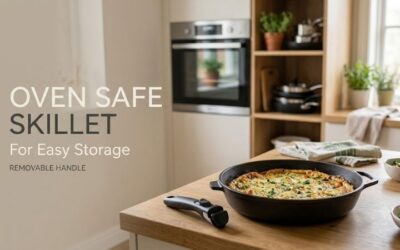
A pan made from metal may still include plastic, silicone, or other components that restrict oven use. Some products have detachable handles or coatings that should not be exposed to elevated oven temperatures.
Check the exact model before placing it in the oven.
Do not rely on appearance alone.
Remove accessories only when the manufacturer instructs you to do so.
Never improvise with incompatible handle replacements.
Forgetting that the handle remains hot
A skillet removed from the oven may look identical to a pan that has been sitting at room temperature.
Its handle can remain dangerously hot for a considerable period.
Use appropriate protective mitts.
Place the skillet on a heat-safe surface.
Keep children away from the handle.
A visible reminder, such as a dry oven mitt placed over the handle after cooking, can be helpful when it can be done safely and away from active heat.
Overheating nonstick coatings
Coated skillets should not be subjected to temperatures beyond their manufacturer instructions. Even when a product has a substantial oven rating, routine overheating may reduce coating performance or damage the cookware.
Use the temperature required by the recipe.
Avoid prolonged empty heating.
Never assume that higher heat always produces better browning.
For aggressive searing, consider an uncoated skillet.
Choosing an oversized skillet
A large skillet may fit on the stovetop but become difficult to maneuver inside the oven because of its long handle and overall dimensions.
Measure oven width and depth.
Check handle clearance.
Avoid placing the pan against oven walls or heating elements.
Ensure the oven door closes correctly.
Ignoring thermal shock
Rapid temperature changes can stress cookware materials and finishes. This concern is particularly relevant to enameled surfaces and certain multilayer products when improper handling creates extreme changes in temperature.
Do not place a very hot skillet directly into cold water.
Allow it to cool appropriately.
Follow the manufacturer’s cleaning guidance.
Inspect cookware if substantial warping or surface damage occurs.
How to clean and maintain different skillet materials
Oven cooking can leave browned fats, proteins, sugars, and other residues on a skillet. The correct cleaning approach depends on whether the cooking surface is stainless steel, traditional seasoned cast iron, enamel, or ceramic nonstick. Treating every material identically can damage finishes or create unnecessary maintenance work.
Stainless steel cleaning and care
Stainless steel can develop browned residue during searing and oven roasting. These deposits are often removable with appropriate soaking or manufacturer-approved cleaning methods, and they do not automatically indicate cookware failure.
Allow the skillet to cool.
Use suitable detergent and warm water.
Clean with an appropriate sponge or pad.
For persistent residue, follow the manufacturer’s guidance for stainless steel cleaning products.
Dry the skillet before storage.
Avoid unnecessary thermal shock.
Traditional cast iron care
Traditional cast iron requires maintenance to preserve its seasoned cooking surface and prevent rust. Lodge recommends hand washing, drying thoroughly, and applying oil as appropriate.
Remove food residue.
Wash with suitable methods.
Dry the skillet promptly.
Apply a thin layer of oil when needed.
Store in a dry location.
If the surface develops rust or seasoning damage, follow manufacturer instructions for restoration.
Enameled cast iron maintenance
Enameled cast iron does not require traditional bare-iron seasoning, but its protective finish should be maintained carefully. Improper impact or rapid temperature changes can damage enamel.
Allow the cookware to cool before cleaning.
Use suitable nonabrasive tools.
Avoid striking the enamel with heavy utensils.
Do not assume the enamel is immune to scratching or chipping.
Although some enameled skillets are dishwasher-safe, hand washing can help preserve their appearance.
Ceramic nonstick maintenance
Ceramic nonstick coatings benefit from gentle cleaning, suitable utensils, and controlled temperatures. Food-release performance can decline through ordinary wear, especially when the cookware is frequently overheated or scrubbed aggressively.
Allow the pan to cool.
Wash with gentle detergent.
Use a soft sponge.
Avoid inappropriate abrasive cleaning products.
Store the skillet where its cooking surface will not be scratched by other pans.
Frequently Asked Questions
Buyers often ask whether ordinary frying pans can go in the oven, which materials tolerate high temperatures, and whether expensive cookware is necessary. The answers depend on the exact model and its components, not simply whether the pan is labeled stainless steel, cast iron, or nonstick.
How do I know if my skillet is oven-safe?
Check the manufacturer’s product specifications, manual, or permanent cookware markings. Look for a stated oven rating and any restrictions concerning handles, lids, coatings, or broiler use.
Do not assume oven compatibility from appearance alone.
Can a nonstick skillet go in the oven?
Some nonstick skillets can, including certain ceramic-coated models. However, temperature limits and restrictions vary significantly.
Confirm the specific model’s rating.
Avoid overheating empty coated cookware.
Is cast iron better than stainless steel for oven cooking?
Cast iron retains heat and is useful for skillet baking, while stainless steel provides versatility for searing and pan sauces.
Neither material is universally superior.
Choose according to the recipe and handling requirements.
Can I put a skillet under the broiler?
Only when the manufacturer explicitly permits broiler use. Some cookware is oven-safe but not approved for exposure to a broiler’s concentrated radiant heat.
Also check handle and accessory restrictions.
Is a 10-inch skillet large enough for family meals?
A 10-inch skillet is useful for many everyday recipes, but the actual capacity depends on food quantity and the shape of the cooking surface.
Larger families may prefer a 12-inch skillet for certain dishes.
Avoid overcrowding during browning.
Can an oven safe skillet be used on induction?
Only if it has a suitable magnetic base. The six specific skillets reviewed here are manufacturer-listed as compatible with induction, but oven safety alone does not establish induction compatibility for cookware in general.
Always verify the exact model.
Conclusion
The best oven safe skillet should support your everyday recipes, fit your oven, and remain manageable when filled with hot food. The All-Clad D3 Stainless 10-Inch Fry Pan provides broad versatility for searing and sauces, while the Lodge 10.25-Inch Cast Iron Skillet is an excellent traditional option for baking and roasting. Made In offers premium five-ply stainless steel, Le Creuset provides enameled cast iron without traditional seasoning, GreenPan emphasizes ceramic nonstick convenience, and Tramontina delivers a practical tri-ply stainless steel alternative. Prioritize manufacturer-confirmed heat limits, appropriate material, secure handling, and realistic maintenance rather than selecting a skillet based only on its maximum oven temperature.


Write Your Review
No reviews yet. Be the first to share your experience!