
Choosing a nonstick frying pan should be about more than how easily an egg slides onto a plate. The right model must fit your burner, respond predictably to moderate heat, and tolerate the meals you actually cook. This guide compares six distinct pans and explains when premium construction is worth paying for.
Best nonstick frying pan choices for simple daily meals
Everyday nonstick cookware should handle delicate ingredients without demanding constant attention. A dependable pan needs a stable base, predictable temperature response, comfortable handling, and a coating that releases food with minimal fat. These first three options address different priorities, from affordability to premium construction.
Tramontina Professional Nonstick Fry Pan – Best budget-friendly choice
The Tramontina Professional Nonstick Fry Pan is a practical option for home cooks who want a straightforward cooking surface without paying for premium branding. Its heavy-gauge aluminum construction is designed to distribute heat efficiently, while its reinforced nonstick interior makes everyday meals less demanding.
Unlike many inexpensive cookware sets, the Professional series concentrates on the essential characteristics of a functional frying pan. Aluminum responds relatively quickly when the burner is adjusted, which helps when preparing eggs, pancakes, or vegetables that become overcooked if exposed to excessive heat.
The broad cooking surface is especially useful for ingredients that need direct contact with the pan. A 10-inch version can accommodate a modest breakfast or a couple of portions of vegetables, while larger versions offer additional space for family meals.
Its nonstick surface also reduces the amount of scrubbing required after cooking foods such as scrambled eggs or melted cheese. However, it is not intended to replace stainless steel cookware for aggressive high-temperature searing.
The main limitation is stovetop compatibility. The traditional aluminum Professional model is not a suitable choice for induction burners unless a specific induction-compatible version is offered.
Advantages: Accessible pricing, responsive aluminum construction, convenient cleanup, and practical everyday sizes.
Limitations: Not suitable for conventional induction cooking, and its coating still requires careful temperature control.
Best for: Budget-conscious households using gas or conventional electric stovetops.
All-Clad HA1 Expert Hard Anodized – Best overall balance
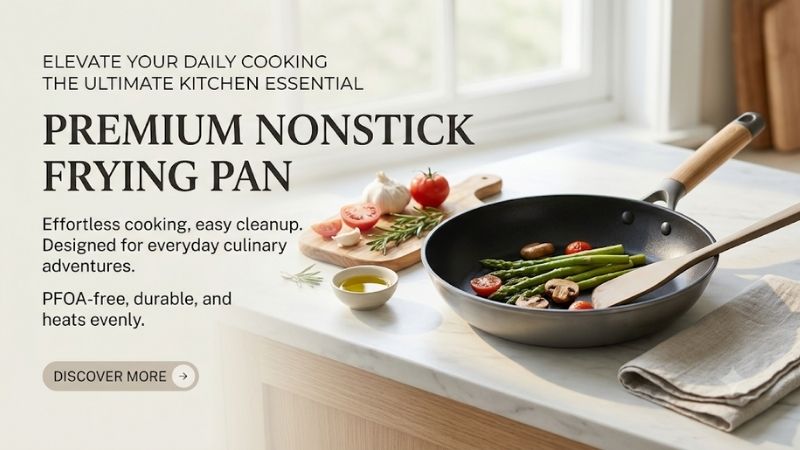
The All-Clad HA1 Expert Hard Anodized Fry Pan appeals to cooks who want a more substantial feel without abandoning the convenience of conventional nonstick cookware. Its hard-anodized aluminum body and stainless steel base provide a useful combination of responsive heating, structural stability, and broad stovetop compatibility.
The HA1 Expert uses a PTFE-based nonstick cooking surface rather than a ceramic alternative. That distinction matters because conventional nonstick coatings often provide particularly forgiving food release for eggs, tender fish, and other ingredients that are prone to sticking.
Its bonded stainless steel base makes it compatible with induction, which is an advantage over many lower-priced aluminum pans. The same construction also provides additional rigidity, although the pan can feel heavier than very basic restaurant-style cookware.
The stainless steel handle is securely attached and provides a stable grip for moving food between burners. Its shape may feel less comfortable to users who prefer thick, cushioned handles, so grip preference matters.
A further advantage is versatility. The HA1 Expert can move into the oven within its specified temperature limits, allowing you to begin a dish on the stovetop and finish it with gentle oven heat. This does not mean the coating should be exposed to unnecessary high temperatures.
Advantages: Induction compatibility, sturdy construction, reliable food release, and oven versatility.
Limitations: More expensive than basic aluminum alternatives, with a coating that remains vulnerable to overheating and abrasive tools.
Best for: Home cooks who want one dependable nonstick pan for frequent use across different stovetops.
GreenPan Valencia Pro Ceramic Nonstick – Best ceramic alternative
The GreenPan Valencia Pro Ceramic Nonstick Frypan is designed for cooks who prefer a ceramic cooking surface instead of traditional PTFE-based nonstick. Its hard-anodized body, reinforced ceramic coating, and induction-compatible base make it a flexible choice for eggs, fish, vegetables, and other foods prepared over moderate heat.
One distinctive feature of the Valencia Pro collection is its combination of a ceramic interior and a reinforced aluminum body. Aluminum distributes heat relatively efficiently, while the induction base makes the cookware usable on gas, electric, and induction cooking surfaces.
The ceramic coating is manufactured without intentionally added PFAS, which may be an important purchasing consideration for households specifically avoiding that material category.
However, ceramic nonstick performance should not be confused with permanent food release. Even a high-quality ceramic coating can become less slippery as cooking residues accumulate or the surface experiences repeated thermal stress.
The Valencia Pro works particularly well when cooking temperatures are controlled rather than maximized. A small quantity of oil or butter helps distribute heat and encourages consistent browning.
The manufacturer permits relatively high oven temperatures for the cookware, but those ratings should not determine everyday stovetop technique. Lower cooking temperatures are generally better for preserving the coating.
Advantages: Ceramic nonstick surface, induction-ready construction, versatile sizing, and easy routine cleanup.
Limitations: Ceramic food-release performance may decline over time, especially with high heat or cooking-spray buildup.
Best for: Households prioritizing a ceramic nonstick alternative for regular low-to-medium-temperature cooking.
Other nonstick frying pan designs worth considering
Not every household needs the same cooking surface. Some people value an exceptionally spacious interior, while others prefer stainless-clad construction or a premium ceramic finish. The following pans illustrate how different engineering choices influence cooking behavior, handling, durability, and the value offered at higher price points.
OXO Ceramic Professional Non-Stick – Best for usable cooking space
The OXO Ceramic Professional Non-Stick Frypan is worth considering when the amount of usable cooking space matters as much as the nominal diameter. Its carefully shaped interior provides a generous cooking area, while its hard-anodized body and ceramic coating help simplify preparation of ingredients that might otherwise stick.
A common frustration with frying pans is that their sloping walls reduce the flat cooking surface. Two pans marketed as 10-inch models may provide noticeably different amounts of space for food, particularly when one has a wider flat base.
OXO addresses this concern through its pan geometry. That makes the Ceramic Professional useful for cooks preparing several pancakes, multiple fish portions, or vegetables that benefit from being spread out rather than piled together.
Its induction-compatible base also broadens its usefulness across modern kitchens. The ceramic coating allows delicate food to release with less oil than would typically be needed in an uncoated stainless steel pan.
Still, extra surface area does not automatically produce better results. Overcrowding can occur even in a generously designed skillet, and excessive moisture will prevent vegetables or proteins from browning efficiently.
The price places this model above entry-level cookware, so its value depends on whether the larger usable interior and construction details solve an everyday problem.
Advantages: Spacious cooking surface, ceramic coating, induction compatibility, and sturdy hard-anodized construction.
Limitations: Higher purchase cost than basic nonstick cookware, with the usual limitations of ceramic coating longevity.
Best for: Cooks who want more practical cooking area without moving to an oversized frying pan.
Made In CeramiClad 2.0 – Best premium ceramic construction
The Made In CeramiClad 2.0 Non Stick Frying Pan is an option for cooks who want ceramic food release combined with the construction approach of stainless-clad cookware. Rather than relying on a basic lightweight aluminum body, the design uses layered metal construction to support more controlled heating and everyday versatility.
Multi-ply construction creates a different cooking experience from that of many inexpensive aluminum nonstick pans. A layered body can distribute heat across the cooking surface while offering a substantial feel and more deliberate temperature response.
This can be helpful when cooking delicate proteins that need steady heating rather than sudden temperature spikes. For example, a salmon fillet can develop gentle surface color while the ceramic interior reduces the likelihood of its skin sticking during removal.
The stainless handle and refined finish also suit cooks who regularly transfer cookware between the stovetop and oven, subject to the manufacturer’s specific temperature instructions.
CeramiClad 2.0 should nevertheless be treated as coated cookware. Premium construction does not make its ceramic surface immune to abrasion, overheating, or gradual deterioration.
Another consideration is value. When the main task is frying two eggs each morning, a considerably cheaper pan may perform the essential job adequately. The premium becomes easier to justify when balanced construction and finish are important to the buyer.
Advantages: Layered construction, ceramic coating, refined handling, and broad kitchen versatility.
Limitations: Premium pricing, extra weight compared with basic aluminum, and finite coating life.
Best for: Enthusiastic home cooks who prefer premium ceramic cookware and are willing to maintain it carefully.
ZWILLING Clad CFX Ceramic Nonstick – Best stainless-clad ceramic option
The ZWILLING Clad CFX Ceramic Nonstick Frying Pan combines a stainless steel exterior with a ceramic nonstick cooking surface. This configuration suits buyers who appreciate the look and structural qualities of stainless cookware but want an easier-release interior for foods such as omelets, seafood, and delicate vegetables.
Unlike a bare stainless steel skillet, the Clad CFX does not require the same degree of preheating and oil management to prevent delicate ingredients from sticking.
Its layered construction is intended to distribute heat across the cooking surface, while the magnetic stainless steel exterior allows use on induction cooktops.
The ceramic interior is particularly convenient for dishes involving small amounts of oil or butter. However, temperature management remains important, and cooking at unnecessarily high heat will not improve results with many delicate foods.
The pan is also a useful compromise for households that already own stainless steel cookware but occasionally struggle with eggs or tender fish.
It should not be viewed as a complete replacement for uncoated stainless steel. For high-heat steak searing, pan sauces that depend on a strong fond, and demanding scraping tasks, uncoated cookware remains more appropriate.
Advantages: Stainless-clad body, induction compatibility, ceramic food release, and versatile everyday performance.
Limitations: Higher cost than entry-level nonstick pans and a coating that requires maintenance.
Best for: Home cooks who want the appearance and construction of stainless cookware with ceramic nonstick convenience.
How to choose a nonstick frying pan for your kitchen
The best purchase depends on the meals you cook, the stove you own, and the amount of storage space available. A premium coating cannot compensate for an oversized pan on a small burner or a poorly designed handle. Evaluate diameter, material, compatibility, and expected replacement costs before choosing any specific model.
Which size works best for different households?
Diameter affects far more than the appearance of a frying pan. It determines how many ingredients can contact the cooking surface, how efficiently the burner heats the base, and whether the pan fits comfortably inside your cabinets. A larger pan offers more flexibility, but only when the stovetop and storage space can accommodate it.
An 8-inch pan is appropriate for one or two eggs, small portions, or quick reheating. It is easy to wash and store, but its limited flat surface makes it inefficient for cooking multiple servings.
A 10-inch pan represents the most versatile starting point for many households. It handles everyday breakfasts, vegetables, and modest portions of protein without becoming awkward on a standard burner.
A 12-inch pan becomes useful when cooking larger portions or ingredients that need extra spacing. However, a smaller burner may heat the center more strongly than the outer edges, reducing the benefit of the extra diameter.
Consider the actual flat-base measurement rather than relying only on the diameter stated on the packaging.
How do ceramic and conventional nonstick coatings compare?
Ceramic and PTFE-based coatings can both make cooking and cleaning easier, but they have different practical characteristics. Conventional PTFE nonstick is often particularly effective for releasing delicate foods, while ceramic alternatives appeal to buyers who want coatings manufactured without intentionally added PFAS.
Traditional PTFE nonstick is well suited to eggs, pancakes, and fish cooked over low or moderate heat. It should not be preheated empty over high heat, and users should follow the manufacturer’s temperature limits.
Ceramic coatings may provide excellent initial food release, but performance can decline as the surface ages or accumulates residues. A coating advertised as scratch-resistant is still best protected with silicone or wooden utensils.
Neither material eliminates the need for proper cooking technique. A small amount of fat, controlled heating, and careful washing help maintain consistent results.
For households frequently cooking steaks or aggressively searing meat, pairing a nonstick skillet with an uncoated stainless steel or cast iron pan is often more effective than expecting one coated pan to handle every task.
When should a nonstick frying pan be replaced?
A worn cooking surface can turn an otherwise useful pan into an inconvenient and difficult-to-clean tool. The decision to replace it should consider visible coating damage, persistent food sticking, surface deformation, and how the pan behaves under normal cooking conditions rather than relying on a fixed replacement schedule.
Loss of food release is one practical warning sign. If eggs repeatedly stick despite moderate heat, a clean surface, and a small amount of cooking fat, the coating may have deteriorated.
Deep scratches, peeling, or flaking are stronger reasons to retire the pan. A warped base that no longer sits securely on the burner can also interfere with even heating and safe cooking.
Routine care can delay these problems. Allow the cookware to cool before washing, use nonabrasive sponges, avoid overheating, and separate stacked pans with protective liners.
Importantly, a manufacturer’s dishwasher-safe claim does not necessarily mean machine washing is the gentlest long-term choice. Hand washing generally reduces unnecessary wear.
Conclusion
The best nonstick frying pan is the one that matches your everyday cooking habits rather than the most expensive model available. All-Clad HA1 Expert offers a balanced option for frequent cooking, Tramontina Professional provides practical value, and GreenPan Valencia Pro suits buyers seeking ceramic nonstick. OXO, Made In, and ZWILLING provide alternatives for shoppers prioritizing cooking space, construction, or finish. For most households, a well-made 10-inch pan used over controlled heat is a sensible starting point.
Write Your Review
No reviews yet. Be the first to share your experience!