
A good stainless steel saucepan handles delicate sauces, daily rice, reheated soup, and boiled vegetables without relying on a disposable coating. Differences in cladding, dimensions, pouring rims, and handle design can affect results far more than a polished finish. Compare six solid choices and learn what to prioritize.
Best stainless steel saucepan options for everyday meals
A saucepan is one of the most frequently used pieces of kitchen equipment because it handles tasks that do not require the broad cooking area of a frying pan. A well-constructed model should distribute heat effectively, control evaporation, and remain comfortable to lift and pour. These options offer different levels of construction quality and everyday versatility.
All-Clad D3 Stainless 3-Quart Saucepan – Best overall choice
The All-Clad D3 Stainless 3-Quart Saucepan combines fully bonded tri-ply construction with a versatile capacity for everyday cooking. Its stainless steel interior, aluminum core, and durable exterior provide an effective foundation for heating sauces, cooking grains, simmering soup, and preparing ingredients that require controlled temperatures.
One of the D3’s most important characteristics is its fully clad construction. Unlike cookware with a heat-conductive disc attached only to the bottom, the bonded metal layers extend through the sidewalls.
This helps distribute heat more consistently throughout the vessel, which is useful when preparing sauces that require frequent stirring or steady simmering.
The 3-quart capacity is particularly practical. It provides enough room for rice, vegetables, soup, and small batches of pasta without becoming unnecessarily large.
A tightly fitting stainless steel lid helps retain moisture when cooking grains or simmering covered dishes.
The saucepan also features a flared pouring edge, which improves control when transferring liquids into bowls or serving containers.
Its stainless steel interior is durable and does not depend on a coating that gradually wears away. Metal utensils can generally be used without damaging the cooking surface.
However, stainless steel is not naturally nonstick. Milk, thick sauces, and starchy ingredients may adhere when heated excessively or left unstirred.
The D3 is an appealing option for cooks willing to invest in reliable construction and learn appropriate temperature control.
Advantages: Fully clad tri-ply construction, useful 3-quart capacity, durable stainless steel interior, and precise pouring design.
Limitations: Premium pricing and greater cleaning effort than coated alternatives.
Best for: Households seeking a long-lasting saucepan for a wide range of cooking tasks.
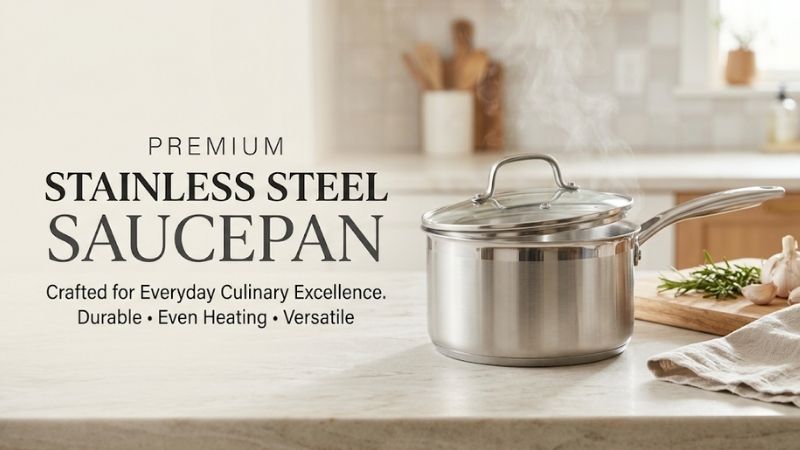
Made In Stainless Clad 2-Quart Saucepan – Best premium compact option
The Made In Stainless Clad 2-Quart Saucepan provides premium construction in a relatively compact vessel. Its five-ply body combines different metal layers to support even heating and controlled temperature response, making it particularly useful for sauces, oatmeal, small portions of vegetables, and everyday reheating.
Its 2-quart capacity is well suited to households that frequently prepare smaller quantities of food.
For example, it can handle a modest batch of tomato sauce, warm soup for two people, or prepare grains without requiring a much larger pot.
The five-ply construction is an important distinction. The layered metal body distributes heat through the base and sidewalls, helping reduce concentrated heating that may cause delicate sauces to scorch.
Its stainless steel interior is uncoated, so it tolerates repeated stirring with appropriate utensils and does not require the same replacement cycle as conventional nonstick cookware.
The saucepan also features a rolled pouring rim, which can reduce dripping when transferring sauces or liquids.
A hollow stainless steel handle is designed to limit heat transfer during normal stovetop cooking, although heat protection may still be necessary.
The main drawback is value relative to cooking volume. Buyers who only heat canned soup occasionally may find a less expensive saucepan sufficient.
The premium construction becomes more attractive for cooks who frequently prepare reductions, sauces, and temperature-sensitive recipes.
Advantages: Five-ply construction, compact size, precise pouring, and durable cooking surface.
Limitations: Higher cost than basic saucepans and limited capacity for larger meals.
Best for: Home cooks who prioritize premium performance in a small everyday saucepan.
Tramontina Signature Tri-Ply Clad Covered Sauce Pan – Best value
The Tramontina Signature Tri-Ply Clad Stainless Steel Covered Sauce Pan offers an attractive balance of construction quality and affordability. Its bonded stainless steel and aluminum layers support consistent heating, while the included lid and straightforward design make it suitable for common tasks such as boiling, simmering, reheating, and preparing grains.
The Signature collection demonstrates why fully clad construction does not have to be restricted to the most expensive cookware.
Its aluminum core helps conduct heat across the cooking surface, while stainless steel provides a durable and relatively low-maintenance interior.
This is particularly useful for everyday dishes that require moderate heating over several minutes.
For instance, a cook preparing oatmeal can gradually increase the temperature, stir the mixture, and reduce the heat as the grains absorb liquid.
A fully clad saucepan also offers useful responsiveness when making sauces. Reducing burner power can help control excessive bubbling before the mixture becomes too thick.
The included lid expands its usefulness for cooking rice, steaming small portions of vegetables, and maintaining gentle simmering conditions.
The pan’s polished stainless steel finish may develop discoloration or water spots over time, although these cosmetic changes do not necessarily affect performance.
As with other stainless steel cookware, proper stirring and temperature control are necessary when working with milk, sugar, or thick mixtures.
Advantages: Fully clad construction, practical lid, induction compatibility, and approachable value.
Limitations: Requires attention when cooking sticky ingredients, and cosmetic discoloration may occur.
Best for: Budget-conscious households wanting durable stainless steel construction for daily use.
Other stainless steel saucepan choices worth considering
Different kitchens require different saucepan characteristics. Some cooks prioritize affordable fully clad construction, others need a larger capacity, and enthusiasts may value premium finishes or specialized handle designs. These three models provide additional alternatives for buyers evaluating performance, convenience, and long-term ownership costs.
Cuisinart MultiClad Pro 2-Quart Saucepan – Best affordable fully clad option
The Cuisinart MultiClad Pro 2-Quart Saucepan combines tri-ply construction with a compact capacity suited to everyday cooking. Its aluminum-core body distributes heat through the cooking surface, while the stainless steel interior supports boiling, simmering, and preparing sauces without requiring a nonstick coating.
A particularly useful characteristic is the combination of small capacity and fully clad construction.
Many inexpensive saucepans use only a conductive disc at the bottom. The MultiClad Pro takes a different approach by extending its layered construction through the vessel.
This helps distribute heat more consistently when cooking thick liquids or ingredients that contact the sidewalls during stirring.
The 2-quart size is convenient for preparing smaller quantities of rice, warming milk, and reheating soup.
The stainless steel lid provides moisture retention for covered cooking, while the sealed pouring rim is designed to support cleaner transfers.
Its riveted handle provides a stable grip and allows the saucepan to be moved with control.
The model is also compatible with induction cooktops, making it suitable for households using modern electric cooking equipment.
The primary limitation is size. Although 2 quarts works well for smaller servings, it may be insufficient for larger families or recipes requiring substantial stirring room.
Advantages: Fully clad tri-ply construction, compact size, induction compatibility, and competitive pricing.
Limitations: Limited cooking volume and less premium finishing than higher-priced alternatives.
Best for: Small households seeking fully clad stainless steel performance at a reasonable cost.
ZWILLING Spirit 3-Ply 3-Quart Saucepan – Best for family versatility
The ZWILLING Spirit 3-Ply 3-Quart Saucepan is designed for cooks who want a versatile stainless steel vessel with comfortable handling and consistent heating. Its aluminum-core tri-ply construction provides dependable temperature distribution, while its capacity makes it useful for everyday meals involving grains, sauces, vegetables, and soups.
The 3-quart size occupies a practical middle ground between a compact saucepan and a larger cooking pot.
It can prepare several servings of rice, reheat soup, or simmer pasta sauce without requiring cookware intended for much larger quantities.
The fully clad construction distributes heat across the vessel rather than depending entirely on the bottom cooking surface.
This becomes useful when heating ingredients that require frequent stirring, such as oatmeal, creamy soups, or thick tomato-based mixtures.
One distinguishing feature is the V-shaped handle design. Its shape is intended to provide a secure grip while reducing unnecessary heat transfer during normal stovetop cooking.
The flared rim also supports controlled pouring, especially when transferring hot liquids.
The stainless steel interior is suitable for long-term use because it does not rely on a conventional nonstick coating.
However, thicker mixtures still require attention. A well-designed saucepan can reduce uneven heating, but it cannot prevent scorching when food is left unattended over excessive heat.
Advantages: Fully clad construction, versatile capacity, comfortable handle, and induction compatibility.
Limitations: Larger storage footprint than compact saucepans and the usual cleaning requirements of stainless steel.
Best for: Families and home cooks who want one multipurpose saucepan for frequent use.
Demeyere Industry 5 2.25-Quart Saucepan – Best premium alternative
The Demeyere Industry 5 2.25-Quart Saucepan is a premium option for cooks who place particular importance on construction, temperature response, and long-term durability. Its five-ply stainless steel design provides a substantial cooking vessel suitable for delicate sauces, controlled simmering, and regular kitchen use.
The five-ply construction is designed to combine heat-conductive layers with durable stainless steel surfaces.
This approach is particularly beneficial for recipes requiring predictable temperature management. When preparing a cream sauce, for example, the cook needs steady heating without excessive localized temperature spikes.
The 2.25-quart capacity is also a useful compromise. It provides more working room than a small 1-quart saucepan without becoming as bulky as a large stockpot.
That additional space can help when whisking a sauce or heating ingredients that expand during cooking.
The stainless steel interior is durable and does not require the same protective treatment as coated cookware.
Another advantage is its suitability for repeated everyday use. A high-quality uncoated saucepan can remain functional for many years when maintained appropriately.
However, premium construction is not necessary for every kitchen. A cook who primarily boils water or reheats small portions may see little practical benefit compared with a midrange tri-ply alternative.
The Industry 5 is better suited to buyers who value refined construction and frequently prepare recipes involving controlled heat.
Advantages: Premium five-ply construction, useful intermediate capacity, durable interior, and controlled heating.
Limitations: High purchase price and more weight than basic lightweight cookware.
Best for: Experienced home cooks seeking premium stainless steel cookware for regular sauce preparation.
How to choose a stainless steel saucepan for your kitchen
A saucepan’s usefulness depends on its proportions, construction, and suitability for your most frequently prepared recipes. The number of metal layers matters, but capacity, handle balance, lid design, and cleaning requirements can be equally important. Evaluating these factors helps distinguish meaningful improvements from features that only increase the price.
What saucepan capacity works best for different households?
Saucepan capacity determines how much liquid and food the vessel can hold, but choosing the correct size also requires accounting for stirring space and evaporation. A pan that appears sufficient when empty may become inconvenient once rice expands, soup begins bubbling, or ingredients require frequent whisking.
A 1- to 1.5-quart saucepan is useful for melting butter, warming small quantities of sauce, or reheating a single portion.
A 2-quart model is a versatile choice for one- or two-person households. It handles modest quantities of grains, oatmeal, vegetables, and soup without occupying excessive cabinet space.
A 3-quart saucepan provides more flexibility for families. It can accommodate larger portions and leaves additional room for stirring.
A 4-quart model begins to overlap with the role of a smaller stockpot. This capacity is useful for substantial batches of sauce or soup but may be unnecessarily large for daily individual meals.
When choosing, consider the saucepan’s diameter and height. A tall, narrow design reduces evaporation but can be more difficult to whisk thoroughly.
A slightly wider saucepan encourages faster reduction and provides easier access to the contents.
The most versatile size is the one that accommodates your typical recipe without requiring the pan to be filled close to the rim.
Why does fully clad construction matter?
Fully clad cookware contains bonded metal layers that extend from the base through the sidewalls, while disc-bottom cookware concentrates its conductive material beneath the cooking surface. Both designs can be functional, but their differences become more noticeable when preparing thick sauces, reducing liquids, or cooking ingredients that require consistent heating.
Stainless steel is durable and resistant to corrosion, but it is not as thermally conductive as aluminum or copper.
Manufacturers therefore combine stainless steel with more conductive materials to improve heat distribution.
Tri-ply construction commonly uses an aluminum core between stainless steel layers. This provides a practical balance of responsiveness, durability, and cost.
Five-ply cookware contains additional layers, although the number of layers alone does not guarantee superior performance. The thickness, metal composition, and overall construction also matter.
Fully clad saucepans can distribute heat through their sidewalls, which may help when preparing sauces that frequently contact those surfaces.
However, a well-made disc-bottom saucepan can still perform effectively for boiling water, cooking grains, and reheating soup.
For cooks who frequently prepare delicate sauces, investing in good fully clad construction may be worthwhile.
For simpler cooking tasks, a less expensive design can be sufficient.
How should stainless steel saucepans be cleaned and maintained?
Stainless steel cookware is generally durable, but its polished appearance and cooking performance still benefit from appropriate care. Mineral deposits, overheated food, and oil residues can accumulate over time, making cleaning more difficult. A consistent maintenance routine helps preserve the surface without unnecessary abrasion or harsh treatment.
Allow the saucepan to cool before washing it. Sudden temperature changes can place unnecessary stress on the metal layers, particularly when the pan is very hot.
For ordinary cleaning, warm water, mild dish soap, and a soft sponge are usually sufficient.
If food has adhered to the bottom, add warm water and allow the residue to soften. Gentle heating with water can help loosen stubborn deposits before scrubbing.
A dedicated stainless steel cleaner may be useful for discoloration or persistent mineral marks when used according to its instructions.
Avoid using excessively abrasive materials that can scratch polished finishes.
White mineral spots often result from dissolved minerals in water. Thorough drying after washing can help reduce their appearance.
Rainbow-colored discoloration may occur after heating and does not necessarily mean the cookware is damaged.
Finally, inspect the handle and lid periodically. Secure connections, a flat base, and undamaged rims are important for continued safe use.
Conclusion
The best stainless steel saucepan should match your usual cooking volume while providing dependable heat control and comfortable handling. All-Clad D3 offers versatile tri-ply construction, Made In provides a premium compact option, and Tramontina delivers practical value. Cuisinart and ZWILLING are strong alternatives for everyday cooking, while Demeyere Industry 5 suits buyers prioritizing refined construction. For most households, a fully clad 2- or 3-quart saucepan is a sensible starting point, offering enough capacity for sauces, grains, soups, and routine meal preparation.
Write Your Review
No reviews yet. Be the first to share your experience!