
A halved lemon, a glass of fresh orange juice, a vinaigrette that needs one tablespoon of lime juice: every kitchen runs into citrus sooner or later. The tool you reach for decides how much juice you get, how long the job takes, and how much washing up follows.
Both tools make fresh juice, yet they suit different cooks. A reamer costs little, stores in a drawer, and handles a lemon or two with ease. A juicer takes more space and more money, but it turns a bag of oranges into a pitcher of juice without tiring your hands. This guide compares the two approaches and walks through five specific models, so you can pick the right one for the way you cook.
What Is a Citrus Reamer
A citrus reamer is the simplest juicing tool in the kitchen: a cone with ridges, mounted on a handle or set over a small bowl. You cut the fruit in half, press the cut side onto the cone, and twist. The ridges tear the flesh, juice runs down the cone, and a strainer or slotted rim keeps seeds and large pieces of pulp out of the bowl.
Reamers come in wood, plastic, and stainless steel. Wooden reamers grip the fruit well, but they need hand washing and an occasional oiling to keep the wood from drying out. Plastic reamers are light and cheap, and most go in the dishwasher. Stainless steel reamers resist acid corrosion and usually survive the dishwasher too.
The strength of a reamer is control. You decide how hard to press and how many twists to give, so you can stop before the bitter white pith gives up its flavor. The weakness is volume. Juicing six oranges by hand takes time and effort. For a single lemon in a dressing, a reamer is hard to beat. For a weekend batch of orange juice, it is slow work.
What Is a Juicer
A juicer does the pressing or spinning for you. Manual juicers use a lever and a heavy frame to press the fruit against a cone, giving you the power of a reamer without the wrist work. Electric citrus juicers use a motor to spin a reamer cone; you press the fruit down, the cone turns, and juice flows into a pitcher or a spout. Many electric models add pulp control, so you can choose how much pulp lands in the glass, and a spout that flips up to stop drips between glasses.
Electric juicers also come in a wider family that handles more than citrus. Centrifugal and cold-press juicers take whole apples, carrots, and leafy greens, but they are bigger, louder, and harder to clean. For this comparison, the juicer side means electric citrus juicers: machines built for oranges, lemons, limes, and grapefruit, with a spinning cone and a pitcher.
The strength of an electric juicer is speed and consistency. It extracts more juice from each fruit with less effort, and it keeps the pace when you work through a whole bag. The weakness is size and cleanup. A juicer lives on the counter or takes a shelf, and it has several parts to wash after each use.
The Reamer Side: Two Picks
1. Etinslant Stainless Steel Manual Citrus Juicer
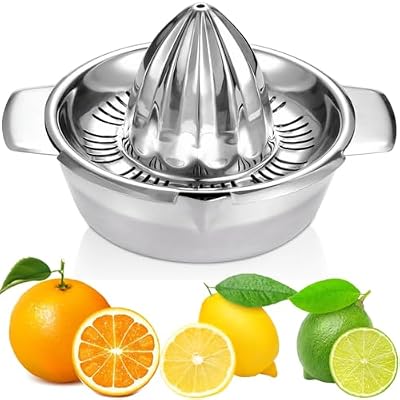
The Etinslant manual juicer pairs a ridged stainless steel cone with a slotted strainer bowl, so the tool reams, strains, and collects in one piece. The cone has eleven teeth that bite into the flesh, and the bowl holds about ten ounces with two pouring spouts.
Specs
- Material: food-grade 304 (18/8) stainless steel
- Bowl capacity: 10 oz, with two pour spouts
- Cone: 11-tooth reamer, 2.36 inches tall
- Strainer: slotted sieve that catches seeds and pulp
- Care: dishwasher safe, hand wash also fine
This is the reamer to pick when you want a durable, all-in-one hand tool. The stainless steel body resists acid and rust, the strainer keeps seeds out of the juice, and the bowl measures enough for a small batch of lemonade or a marinade.
2. Rosle Stainless Steel Citrus Juicer

The Rosle citrus juicer is the premium end of the reamer family. It is made from 18/10 stainless steel with a polished finish, and it weighs about 13.4 ounces, which gives it the feel of a small piece of cookware rather than a throwaway gadget. A silicone head on the cone helps grip the fruit and keeps it from spinning while you twist.
Specs
- Material: 18/10 stainless steel with silicone head
- Model: 12785
- Weight: about 13.4 oz
- Design: hand reamer with ridged cone
- Care: dishwasher safe
Pick the Rosle when you want a reamer that lasts for years and looks good enough to leave on the counter. The weight works in your favor: the tool stays put while you twist, and the silicone head keeps the fruit from slipping.
The Juicer Side: Three Picks
3. BLACK+DECKER 32oz Electric Citrus Juicer CJ625

The BLACK+DECKER CJ625 is a straightforward electric citrus juicer built around a 32-ounce pitcher. You press the fruit onto the cone, the motor turns it, and the juice collects in the pitcher below. Two self-reversing cones handle small limes and large grapefruit, and an adjustable pulp control lets you pick how much pulp reaches the pitcher.
Specs
- Model: CJ625
- Pitcher capacity: 32 oz
- Cones: two self-reversing cones for small and large fruit
- Pulp control: adjustable
- Operation: pressure activated, no buttons to press
- Care: dishwasher-safe parts
Pick the CJ625 when you want the simplest route to a pitcher of orange juice. It handles a whole bag of oranges without fuss, and the pitcher means you juice once and pour several glasses. It is the right choice for a household that drinks fresh juice most mornings.
4. Cuisinart Pulp Control Citrus Juicer CCJ-500P1

The Cuisinart CCJ-500P1 is the pulp-control pick among electric citrus juicers. Its auto-reversing universal reamer spins in both directions to pull more juice from each half, and three pulp settings let you choose low, medium, or high pulp.
Specs
- Model: CCJ-500P1
- Reamer: auto-reversing universal cone
- Pulp control: three settings, low, medium, and high
- Feature: Final-Spin for extra extraction
- Spout: extra-long snap-up spout
- Warranty: 3-year limited warranty
Pick the Cuisinart when pulp matters in your house. One person may want smooth juice while another likes pulp, and the three settings settle that argument without a second machine. The auto-reversing cone also means less pressing and less repositioning of the fruit, so a batch goes faster.
5. Elite Gourmet ETS623 Electric Citrus Juicer

The Elite Gourmet ETS623 is a compact electric citrus juicer with a 24-ounce capacity and a 40-watt motor. It is smaller than the BLACK+DECKER and the Cuisinart, so it fits a small kitchen without claiming a permanent spot on the counter.
Specs
- Model: ETS623
- Motor: 40 watts
- Capacity: 24 oz
- Material: BPA-free parts
- Pulp control: adjustable
- Spout: easy pour spout
Pick the Elite Gourmet when counter space is tight and you juice in moderate amounts. It makes two or three glasses at a time, stores easily, and costs less than a full-size machine.
Reamer vs Juicer: Side by Side
| Factor | Citrus Reamer | Electric Juicer |
|---|---|---|
| Effort | Hand twisting, some wrist work | Motor does the work, press and hold |
| Speed | Slow, one fruit at a time | Fast, handles a bag of fruit |
| Yield per fruit | Good with firm pressing | Higher, cone spins and reverses |
| Batch size | Best for 1 to 3 fruits | Best for 4 or more fruits |
| Cleanup | Rinse or dishwasher, one piece | Several parts to wash |
| Storage | Drawer | Countertop or shelf |
| Noise | Silent | Motor hum |
| Pulp control | Your hands decide | Adjustable settings on many models |
The table makes the trade clear. A reamer wins on simplicity, silence, and storage. A juicer wins on speed, yield, and batch size. Neither tool is wrong; the right one depends on how much juice you make and how often.
How to Choose
Three things matter most before you buy.
First, the amount you juice at once. One lemon for a dressing or two limes for a cocktail calls for a reamer, and the Etinslant or the Rosle will serve you well. A pitcher of orange juice for the family calls for an electric juicer. The BLACK+DECKER CJ625 suits a full pitcher, the Elite Gourmet ETS623 suits two or three glasses, and the Cuisinart CCJ-500P1 suits a household that argues about pulp.
Second, where the tool will live. A reamer slides into a drawer and costs nothing in counter space. An electric juicer needs a home on the counter or a shelf, and you will use it more if the home is easy to reach. If your kitchen is small and your counter is crowded, the compact Elite Gourmet or a hand reamer will see more use than a large machine buried in a cabinet.
Third, how you feel about cleanup. A reamer rinses clean in seconds. An electric juicer has a cone, a strainer, a pitcher, and a lid to wash. If you juice daily, the juicer cleanup becomes routine. If you juice once a week, the reamer may feel like less work overall, even if the juicing itself takes longer.
A useful middle path is to own both: a reamer in the drawer for quick squeezes and an electric juicer on the counter for weekend batches. Each one covers the job the other handles poorly.
Care and Storage Tips
Wash a wooden reamer by hand and let it dry fully before putting it away, and rub it with food-safe oil now and then to keep the wood from cracking. Stainless steel and plastic reamers can go in the dishwasher, but a quick rinse right after use keeps dried pulp from sticking in the ridges.
For an electric juicer, rinse the cone and strainer as soon as you finish, before the pulp dries. Most parts are dishwasher safe, but the motor base should only be wiped with a damp cloth. Store the cones and pitcher together so no piece goes missing. Roll a lemon or orange firmly on the counter before cutting it; the gentle pressure loosens the juice inside and raises the yield from either tool.
FAQ
Is a citrus reamer enough for daily orange juice?
A reamer can make daily orange juice, but it takes time and hand effort. For one or two glasses it works well. For a full pitcher every morning, an electric juicer saves time and gets more juice from each orange.
Does an electric juicer extract more juice than a reamer?
Yes, in most cases. The spinning cone and the pressure you apply work the flesh more thoroughly than hand twisting, and auto-reversing cones squeeze the fruit from both directions.
Which tool is easier to clean?
A reamer is easier to clean because it is one piece with no motor and no cord. Rinse it or put it in the dishwasher and you are done. An electric juicer has several parts, though most of them are dishwasher safe.
Can a juicer handle limes and grapefruit as well as oranges?
Yes. Electric citrus juicers come with small and large cones, or a universal cone, so they handle limes, lemons, oranges, and grapefruit. A reamer also handles the full range, though a large grapefruit may need a bigger cone or a second pass.
The Bottom Line
A citrus reamer and an electric juicer both make fresh juice, and the better tool is the one that matches your routine. Choose a reamer when you juice small amounts, value a quiet drawer-sized tool, and want the lowest cleanup. The Etinslant gives you a sturdy stainless steel reamer with a built-in bowl and strainer, while the Rosle offers a premium weighted feel for daily use. Choose an electric juicer when you juice in batches and want the motor to do the work. The BLACK+DECKER CJ625 covers a full pitcher, the Cuisinart CCJ-500P1 settles pulp preferences, and the Elite Gourmet ETS623 fits a small kitchen.
As an Amazon Associate, this site earns from qualifying purchases made through links in this article. This disclosure applies to the product links above.

Write Your Review
No reviews yet. Be the first to share your experience!