
Quick answer: Our top pick in 2026 is the Upcycled Shoebox or Gift Box — our #1 rated choice. See the full ranked comparison, alternatives and buying advice below.
The Short Answer
Whether a wooden tea chest is better than plastic storage drawers depends on one specific condition: where you plan to store and display your tea collection. If your tea is destined for a prominent, high-visibility spot on your kitchen countertop, kitchen island, or dining room sideboard, a wooden tea chest is vastly superior due to its aesthetic appeal, light-blocking properties, and tactile durability. However, if your collection is hidden away inside a dark pantry, a deep cabinet, or a pull-out drawer, cheap plastic storage drawers are the more practical, space-efficient, and budget-friendly choice.
What You Actually Get
When choosing between these two storage solutions, you are balancing material integrity, kitchen design, and food preservation. Wooden tea chests and plastic drawers serve the same primary function—organizing tea bags—but they approach the task with completely different design philosophies.
As an Amazon Associate we earn from qualifying purchases at no extra cost to you.


Wooden tea chests are heirloom-style display pieces. High-quality models are typically crafted from sustainable bamboo, acacia, rubberwood, or walnut. For instance, an entry-level option like the Oceanstar TB1323 Bamboo Tea Box (priced around $16.73) offers a classic 12-inch wide, low-profile layout with eight equal compartments, measuring 12.2 x 7.8 x 3.8 inches and weighing 2.4 pounds. It features a polished acrylic window on the lid so you can view your teas while keeping them shielded. On the premium end, options like the SARUFO Acacia Wood Tea Bag Organizer (priced around $39.99) elevate the concept. This unit measures 12.6 x 8.1 x 8.1 inches, weighs 4.4 pounds, and features eight compartments alongside a built-in lower drawer to hold loose sugar packets, honey sticks, and tea spoons. These wooden chests offer solid, heavy construction, brass or steel hinges, and a warm, organic texture that complements modern, rustic, or traditional kitchens.
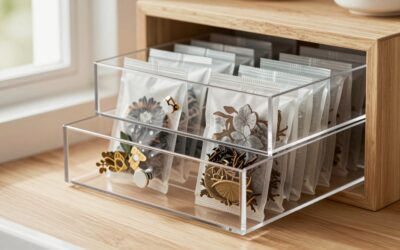
As we look at kitchen design trends heading into 2026, the preference for visible, natural materials on countertops has only grown. Plastic storage drawers, on the other hand, are utility-first products. Typically made of clear, BPA-free acrylic or polystyrene, a standard three-drawer plastic tea tower measures roughly 7 x 7 x 10 inches and weighs about 1.5 pounds. These units cost between $12 and $18. They are designed to stack vertically, maximizing tight pantry spaces. While they offer superb visibility from all angles, they lack the weight, tactile premium feel, and UV-blocking capabilities of their wooden counterparts.
Pros
- Superior Flavor Preservation: Solid wood lids block ambient kitchen light. Exposure to ultraviolet (UV) light degrades the delicate volatile oils in tea leaves, causing them to lose their flavor and aroma over time. Wooden chests keep tea in a cool, dark micro-environment.
- Elevated Hosting Experience: Presenting a handsome, 12-inch acacia or bamboo chest to dinner guests at the end of a meal offers a sophisticated hospitality experience that clear plastic utility drawers cannot replicate.
- Natural Material Profile: High-quality woods like bamboo and acacia are naturally food-safe, odor-neutral, and breathable. Cheap plastics can sometimes off-gas a synthetic, chemical smell that can penetrate paper-wrapped tea bags.
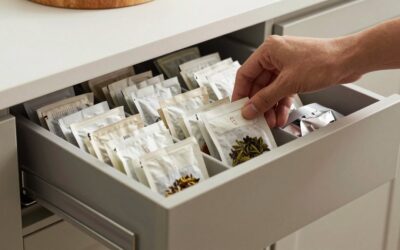
- Vertical Space Efficiency (Plastic): Clear plastic drawers stack easily on top of one another, making them incredibly space-efficient for narrow pantries or small apartment kitchens.
- Moisture and Spill Resistance (Plastic): If a honey jar leaks or water splashes onto a plastic organizer, you can wash it directly in the sink with warm, soapy water without worrying about warping, swelling, or mold.
Cons
- Higher Initial Cost: While a basic plastic drawer unit costs under $15, a high-quality wooden chest runs from $17 up to $40 or more for artisan acacia wood with accessory drawers.
- Fixed Compartment Sizes: Most wooden tea chests feature fixed 3×3-inch internal dividers. Oversized, gourmet tea bags (such as those from premium whole-leaf brands) often do not fit without being folded or bent.
- Susceptibility to Kitchen Grime: Wood is porous. If placed close to a stove, a wooden chest will absorb airborne grease, steam, and cooking odors over time, requiring specialized wood cleaners to maintain its finish.
- Aesthetic Degeneration (Plastic): Clear acrylic plastic drawers scratch incredibly easily, cloud up over time when exposed to sunlight, and show fingerprints and dust instantly.
- Fragility: Acrylic plastic is brittle. If dropped onto a hard kitchen tile floor, a plastic drawer unit is highly likely to crack or shatter, whereas a wooden chest will easily survive the fall with minor scuffing.
Who Should Buy It
You should buy a wooden tea chest if you view tea drinking as a daily ritual and want to display your collection proudly on your countertop or coffee station. It is perfect for those who host guests frequently, appreciate natural home decor, and primarily buy standard-sized, individually wrapped tea bags. If you have the budget to spend $17 to $40 on a dedicated home accessory, the sensory upgrade of opening a heavy wood lid and smelling the dry tea leaves is unmatched.
Who Should Skip It
You should skip the wooden chest and opt for plastic drawers if you have limited kitchen counter space and must store your tea inside a pantry cabinet. It is also the better choice for busy families with young children who need something lightweight and drop-proof, or for tea drinkers who buy bulk, irregular-shaped, or loose tea pouches that require deep, flexible drawer spaces rather than rigid 3-inch wooden cubbies.
Cheaper Alternatives
If neither a premium wooden chest nor a plastic drawer tower fits your kitchen style or budget, there are several highly practical and inexpensive workarounds available.
| Option | Cost | Trade-off |
|---|---|---|
| Upcycled Shoebox or Gift Box | $0 (Free) | Zero aesthetic appeal; cardboard absorbs moisture easily and wears out within a few months of daily use. |
| Wire Basket with Fabric Liner | $8 – $12 | No internal compartments, meaning tea bags get jumbled together; fabric liner requires frequent machine washing. |
| Metal Tea Tins (Set of 4) | $10 – $15 | Excellent light-blocking and airtight seal, but you cannot see your tea varieties at a glance without opening each tin. |
| Repurposed Glass Mason Jars | $3 – $6 | Aesthetic and airtight, but clear glass allows UV light to degrade the tea leaves if left out on a sunny counter. |
FAQ
Does wood protect tea bags better than plastic?
Yes, wood protects tea bags significantly better than clear plastic when it comes to flavor preservation. Sunlight is one of tea’s greatest enemies, as UV rays break down the essential oils that give tea its flavor. A solid wood lid blocks 100% of light, whereas clear plastic drawers expose the tea to constant ambient kitchen lighting.
Can I store loose leaf tea directly inside a wooden tea chest?
No, you should not store loose leaf tea directly in the wooden compartments. Wooden chests are not completely airtight, meaning your loose tea will go stale quickly. Additionally, the porous wood will absorb the oils and scents of the tea, permanently staining the wood and mixing flavors across compartments. Always keep loose tea in sealed, airtight tins or foil pouches.
How do I clean a wooden tea chest without ruining the finish?
To clean a wooden tea chest, simply wipe it down with a slightly damp microfiber cloth. Avoid submerging the chest in water or putting it in the dishwasher, as this will warp the wood and ruin the adhesive. For deep cleaning or to restore the luster of acacia or bamboo, rub a few drops of food-safe mineral oil onto the wood once a year.
Do wooden tea chests attract pests or pantry moths?
Wooden tea chests do not inherently attract pests, but because they are not airtight, they do not offer a complete barrier against pantry moths or ants if those pests are already present in your kitchen. If you live in an area prone to pantry pests, ensure your tea bags are individually sealed in foil or plastic wrappers before placing them in the chest.
Ready to decide? Our #1 pick for 2026 is the Upcycled Shoebox or Gift Box.
Live price & availability on Amazon.


Write Your Review
No reviews yet. Be the first to share your experience!