
Quick answer: Our top pick in 2026 is the Standard 5-Tier Mobile Coffee Cart — our #1 rated choice. See the full ranked comparison, alternatives and buying advice below.
The Short Answer
It depends on your brewing equipment and kitchen layout. A custom coffee bar cart organizer is worth the investment only if you operate a multi-step semi-automatic espresso setup exceeding $1,000 in equipment value, possess an awkward architectural nook, or require dedicated high-wattage power routing. If your routine relies on a standard pod machine or a basic drip maker, spending $250 to $800+ on a custom build is unnecessary when off-the-shelf mobile station carts priced between $60 and $100 provide all the functional storage you need.
What You Actually Get
In 2026, home coffee setups have evolved far beyond a basic drip pot sitting on a kitchen counter. A standard stock cart offers flat shelving and general storage, whereas a custom coffee bar cart organizer is precision-engineered around specific tools, equipment dimensions, and workflow ergonomics. Understanding the functional differences helps clarify what your money actually buys.
As an Amazon Associate we earn from qualifying purchases at no extra cost to you.
Custom organizers are tailored to the exact physical footprints and power needs of specialty coffee gear. High-end semi-automatic espresso machines frequently weigh between 35 and 65 pounds and draw 1,500 to 1,800 watts during peak heating cycles. Precision burr grinders add another 10 to 25 pounds and draw 250 to 400 watts. Custom builds account for these specs by featuring heavy-duty hardwood or reinforced steel frames rated for total static loads of 150 to 250 pounds, paired with integrated 15-amp power strips, concealed cord channels, and heat-resistant silicone resting zones.
Furthermore, custom units incorporate dedicated storage modules that match standardized barista tool sizes:
- Precision Tool Cutouts: Custom-milled slots designed for 51mm, 54mm, or 58mm portafilters, calibrated tampers, distribution tools, and puck screens.
- Integrated Knock Boxes: Flush-mounted, removable stainless steel trash bins set directly into the countertop surface for instant espresso puck disposal.
- Ergonomic Counter Heights: Station heights set specifically between 35 and 38 inches to reduce wrist and back strain during daily tamping and steaming.
- Targeted Footprints: Frame dimensions customized down to the half-inch (e.g., 28.5 inches wide by 18 inches deep) to fit precisely into tight alcoves or beneath low-hanging cabinetry.
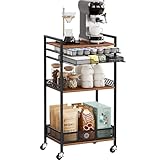
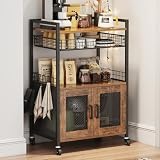
By comparison, budget off-the-shelf options—such as a 5-tier tall coffee cart around $60 or a 3-tier rolling bar cabinet with wire drawers near $100—offer non-specialized storage. They utilize thin particleboard or lightweight wire frames with per-shelf weight capacities usually capped at 20 to 30 pounds. While excellent for holding syrup bottles, mugs, and lightweight appliances, they lack the structural rigidity, cable management, and dedicated tool cutouts that an advanced home barista setup demands.
Pros
- Streamlined Daily Workflow: Having precise cutouts for your portafilters, tampers, and scales eliminates counter clutter, speeding up your morning routine and protecting sensitive electronic scales from spills.
- Safe High-Wattage Power Integration: Custom designs embed surge-protected, 15-amp power strips directly into the cart frame, preventing cord tangles and ensuring high-draw 1800W boiler systems operate safely without overheating standard extension cords.
- Heavy-Duty Structural Support: Custom solid wood (such as oak or walnut) or welded steel structures prevent shelf sag and eliminate machine wobble while locking down 40+ pound espresso machines during portafilter engagement.
- Maximized Spatial Efficiency: Custom sizing allows you to reclaim unused kitchen alcoves, pantries, or dining room corners with a station built to your exact wall-to-wall clearance.
- Integrated Liquid & Waste Management: Direct-cut knock boxes and recessed drip trays catch stray grounds and liquid overflow, keeping your floors clean and protecting surrounding furniture.
Cons
- Substantial Upfront Cost: Custom builds range from $250 for modular custom inserts to over $800 for fully fabricated solid-wood rolling carts, compared to $60 to $100 for functional off-the-shelf models.
- Low Gear Flexibility: Cutouts tailored to a specific machine or portafilter size (such as a 54mm group head) may become obsolete if you upgrade to commercial 58mm equipment in the future.
- Extended Lead Times: Custom furniture fabrication and custom woodworking usually require 3 to 6 weeks for delivery, whereas mass-market carts ship within days.
- Limited Resale Value: Highly personalized dimensions and hyper-specific tool cutouts appeal to a narrow buyer pool, making resale difficult if you redecorate or move.
Who Should Buy It
A custom coffee bar cart organizer is ideal for serious coffee enthusiasts who have invested $1,000 to $3,000+ into dual-boiler espresso machines, commercial-grade grinders, and precision accessories. If you brew daily using a multi-step workflow involving tamping, weighing, distribution, and milk steaming, the ergonomic layout and dedicated cutouts save time and keep fragile equipment safe. It is equally valuable for homeowners with awkward floor plans—such as a tight 27-inch kitchen nook or low-hanging wall sconces—where standard stock furniture simply will not fit correctly.
Who Should Skip It
You should skip a custom organizer if your primary coffee maker is a Keurig, Nespresso, single-touch superautomatic, or a traditional 12-cup drip brewer. These appliances do not require specialized tamping stations, heavy load distribution, or custom knock-box cutouts. Renters who relocate frequently should also avoid custom builds, as specific dimensions may not fit future apartments. Finally, budget-conscious buyers can easily achieve great organization by pairing a sturdy $60 to $100 stock cart with aftermarket silicone mats and drawer dividers for a fraction of the price.
Cheaper Alternatives
If you want to organize your coffee station without paying for full custom furniture fabrication, several off-the-shelf and hybrid options offer great functionality at a lower cost:
| Option | Cost | Trade-off |
|---|---|---|
| Standard 5-Tier Mobile Coffee Cart | $55 – $70 | Limited weight capacity per shelf (~20–25 lbs); open shelves leave cords exposed; no custom tool cutouts. |
| 3-Tier Bar Cabinet with Wire Drawer & Hooks | $90 – $110 | Fixed dimensions (typically 35–36″ H x 22–32″ W); generic storage drawers instead of precision portafilter slots. |
| Stock Utility Cart + Silicone Tamping Mat & Organizer Insert | $80 – $130 | Requires manual setup; inserts take up top surface space rather than sitting flush within the tabletop. |
| DIY Customization (Upgrading a Stock $100 Cart) | $110 – $160 | Demands tools and labor to drill cord holes, install power strips, or drop in flush knock-box inserts manually. |
FAQ
How much does a custom coffee bar cart organizer typically cost?
A fully custom-built coffee cart made from solid hardwoods or welded steel frames typically costs between $400 and $900, depending on materials and integrated features. If you purchase custom organizer inserts (like custom-milled wooden tamper blocks or drop-in knock boxes) to add to an existing cart, expect to spend between $60 and $180 for the inserts alone.
Can a standard $60 to $100 cart hold a heavy semi-automatic espresso machine?
It depends on the machine’s weight and the cart’s construction. Standard budget carts using thin metal tubing or light particleboard generally support 20 to 30 pounds per shelf. Mid-range rolling cabinets ($90 to $120) with reinforced metal frames and thicker top boards can usually support 50 to 80 pounds on the top surface, which is sufficient for most home espresso machines. Always verify the manufacturer’s top-shelf weight rating before placing heavy equipment on standard carts.
How do I safely handle high-wattage coffee appliances on a cart?
Espresso machines with active steam boilers can draw up to 1,800 watts, while grinders add another 250 to 400 watts. To safely power a cart station, use a heavy-duty power strip rated for at least 15 amps / 1,800 watts with built-in surge protection. Mount the power strip securely to the interior or rear of the cart frame, and ensure the cart’s main power cord is plugged directly into a grounded 120V kitchen wall outlet—never daisy-chain lightweight household extension cords.
Will a custom organizer still work if I upgrade my espresso machine later?
It depends on how specialized the cutouts are. If your custom cart features generic flat surfaces with modular silicone organizers or adjustable drawer slots, it will easily accommodate upgraded gear. However, if the cart top features precision-milled cutouts specifically sized for 54mm portafilters or exact machine feet, upgrading to a larger commercial 58mm system will require replacing the top insert panel or re-milling the cutouts.
Ready to decide? Our #1 pick for 2026 is the Standard 5-Tier Mobile Coffee Cart.
Live price & availability on Amazon.



Write Your Review
No reviews yet. Be the first to share your experience!