
Quick answer: Our top pick in 2026 is the PTFE (Teflon) Adhesive Sliders — our #1 rated choice. See the full ranked comparison, alternatives and buying advice below.
The Short Answer
If you find yourself daily wrestling with a heavy espresso machine or scraping your expensive kitchen countertops just to refill a water tank, then yes, a slide out coffee machine tray is absolutely worth buying. However, this purchase comes with one critical condition: you must have at least 1.5 to 2 inches of vertical clearance remaining between the top of your coffee maker and the bottom of your upper cabinets.
Because these trays elevate your machine by 0.75 to 1.25 inches, they can accidentally lock a tall machine under a low cabinet permanently if you do not measure beforehand. Looking at kitchen design and organization trends heading into 2026, homeowners are prioritizing ergonomic efficiency and countertop preservation over cluttered gadgetry. A sliding tray perfectly fits this ethos, solving a frustrating daily friction point for less than $30.
As an Amazon Associate we earn from qualifying purchases at no extra cost to you.


What You Actually Get
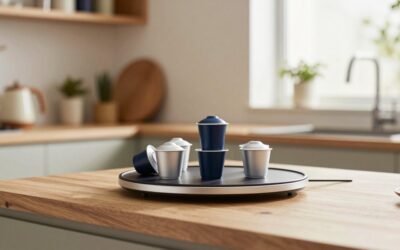
When you purchase an appliance slider, you are buying a low-profile platform designed to sit discreetly beneath your coffee maker. Most models on the market fall into a modest price range of $15 to $35. For example, entry-level wood options like a 360-degree rolling tray cost around $19.99, while premium, eco-friendly options like the ANBOXIT Bamboo Appliance Slider retail for approximately $27.99.
These trays typically measure between 10 to 12 inches in width and 12 to 16 inches in depth, matching the footprints of popular machines like the Keurig K-Elite, Nespresso Vertuo, or Breville Barista Express. They feature a remarkably low vertical profile, usually adding only 0.8 to 1.2 inches of height to your machine.
Underneath the surface, the mechanics vary. You will typically find one of three systems:
- One-directional wheels: These roll strictly forward and backward, which is ideal for standard under-cabinet setups.
- 360-degree ball bearings: These allow you to spin the machine to access rear water reservoirs or side-mounted power switches.
- Spring-loaded braking systems: These trays remain firmly locked in place until you press a front lever, which deploys the wheels for safe movement.
Most quality wood and bamboo trays are engineered to support substantial weight, with load capacities rated between 30 and 50 pounds. This is more than enough to handle a premium 25-pound espresso machine filled to capacity with water and coffee beans.
Pros
- Protects Expensive Countertops: Dragging a heavy appliance with rubber feet across quartz, granite, or marble can leave dark scuff marks or strip away protective sealants over time. A rolling tray ensures only smooth, non-marring wheels touch your stone surface.
- Ergonomic Relief: Pulling a 15-to-30-pound machine forward while bent over a counter can strain your wrists and lower back. A rolling tray reduces the physical effort required to a gentle, one-finger glide.
- Easy Access for Top-Loading Machines: If your coffee maker requires you to pour water or dump coffee beans into the top of the unit, a sliding tray allows you to effortlessly pull the machine out from under the cabinet overhang, fill it up, and slide it back without spilling.
- Spill Containment: Many wood and bamboo trays feature a slight outer lip or a water-resistant finish. This acts as a secondary barrier, catching minor drips, coffee grinds, and water splashes before they pool on your countertop.
- Aesthetic Integration: Modern bamboo and stained wood trays look like high-end cutting boards or decorative risers, elevating the visual appeal of your coffee station rather than looking like cheap plastic utility gear.
Cons
- Consumes Vertical Clearance: The most significant drawback is the added height. If your cabinet clearance is exactly 18 inches and your coffee maker is 17.5 inches tall, adding a 1-inch tray will make it impossible to slide the machine back under the cabinet.
- Instability During Tamping: If you use a manual espresso machine, pressing down with 20 to 30 pounds of tamping force can cause trays without locking brakes to roll backward or slide unexpectedly, ruining your shot preparation.
- Susceptibility to Water Damage: While bamboo and treated wood are water-resistant, they are not completely waterproof. Constant exposure to standing water or wet coffee grinds can warp, mold, or discolor the tray if it is not wiped down regularly.
- Slight Footprint Extension: Because of the wheels, levers, or handles, a sliding tray often extends 1 to 1.5 inches deeper than the coffee maker itself, which can crowd tight countertops.
Who Should Buy It
You should absolutely buy a slide out coffee machine tray if you own a top-loading coffee maker (such as a Keurig, a drip machine with a top lid, or a bean-to-cup espresso machine with a top hopper) and your kitchen features standard 18-inch upper cabinet clearance. It is also an essential purchase for anyone dealing with joint pain, arthritis, or limited upper-body strength, as it turns a heavy, awkward daily chore into an effortless motion.
Additionally, if you have invested thousands of dollars in premium, easily scratched countertops like soapstone, marble, or custom wood butcher block, spending $20 to $30 on a protective rolling tray is a highly cost-effective insurance policy.
Who Should Skip It
You should skip this accessory if you have an open kitchen layout with no upper cabinets above your coffee station, as there is no obstacle to slide your machine out from. You should also pass if your coffee maker is entirely front-loading—meaning the water reservoir slides out from the front and the filter basket swings out to the side. In this case, your machine never needs to move, making a sliding tray completely redundant.
Finally, if your machine is already scraping the bottom of your cabinets with less than an inch of room to spare, do not buy a tray, as it will prevent your machine from fitting in its designated home altogether.
Cheaper Alternatives
If you want the functionality of an appliance slider but do not want to spend $20 to $30, or if you simply do not have the vertical clearance to spare for a full tray, there are several budget-friendly alternatives available.
| Option | Cost | Trade-off |
|---|---|---|
| PTFE (Teflon) Adhesive Sliders | $6.00 – $10.00 (pack of 8) | Stuck directly to the bottom of your machine; offers no spill protection; can peel off over time if exposed to heat. |
| Felt or Silicone Appliance Mats | $8.00 – $12.00 | Requires manual pulling which still creates friction; tends to collect dust, pet hair, and coffee grinds on the fabric. |
| DIY Heavy-Duty Felt Pads | $3.00 – $5.00 | Very low profile (under 0.1 inches) but does not glide as smoothly on rough stone or tile countertops with deep grout lines. |
FAQ
Will a sliding tray scratch my quartz or granite countertops?
No. High-quality sliding trays are specifically designed with non-marring materials. They utilize soft polyurethane wheels, rubber casters, or felt-covered feet that glide smoothly across delicate surfaces without leaving scratches, scuffs, or dark rubber streaks.
How much weight can a standard wooden or bamboo sliding tray hold?
Most consumer-grade wood and bamboo trays, such as those in the $20 to $28 price range, are rated to support between 30 and 50 pounds. This is more than sturdy enough for heavy home espresso machines, which typically weigh between 15 and 25 pounds when fully loaded with water.
Do these trays slide around when I am brewing or tamping coffee?
Trays with one-directional wheels or 360-degree rollers can occasionally budge if you apply heavy forward or downward pressure, such as when inserting a tight portafilter. If you use a manual espresso machine, look specifically for a sliding tray that features a front-mounted locking lever or silicone rubber feet that anchor the tray to the counter until you manually release it.
How do I clean a bamboo or wooden appliance slider if coffee spills on it?
You should treat a wood or bamboo slider much like a high-quality cutting board. Wipe up spills immediately with a damp microfiber cloth and mild dish soap. Avoid submerging the tray in water or putting it in the dishwasher, as extreme moisture and heat will warp the wood and ruin the wheel bearings.
Ready to decide? Our #1 pick for 2026 is the PTFE (Teflon) Adhesive Sliders.
Live price & availability on Amazon.

Write Your Review
No reviews yet. Be the first to share your experience!